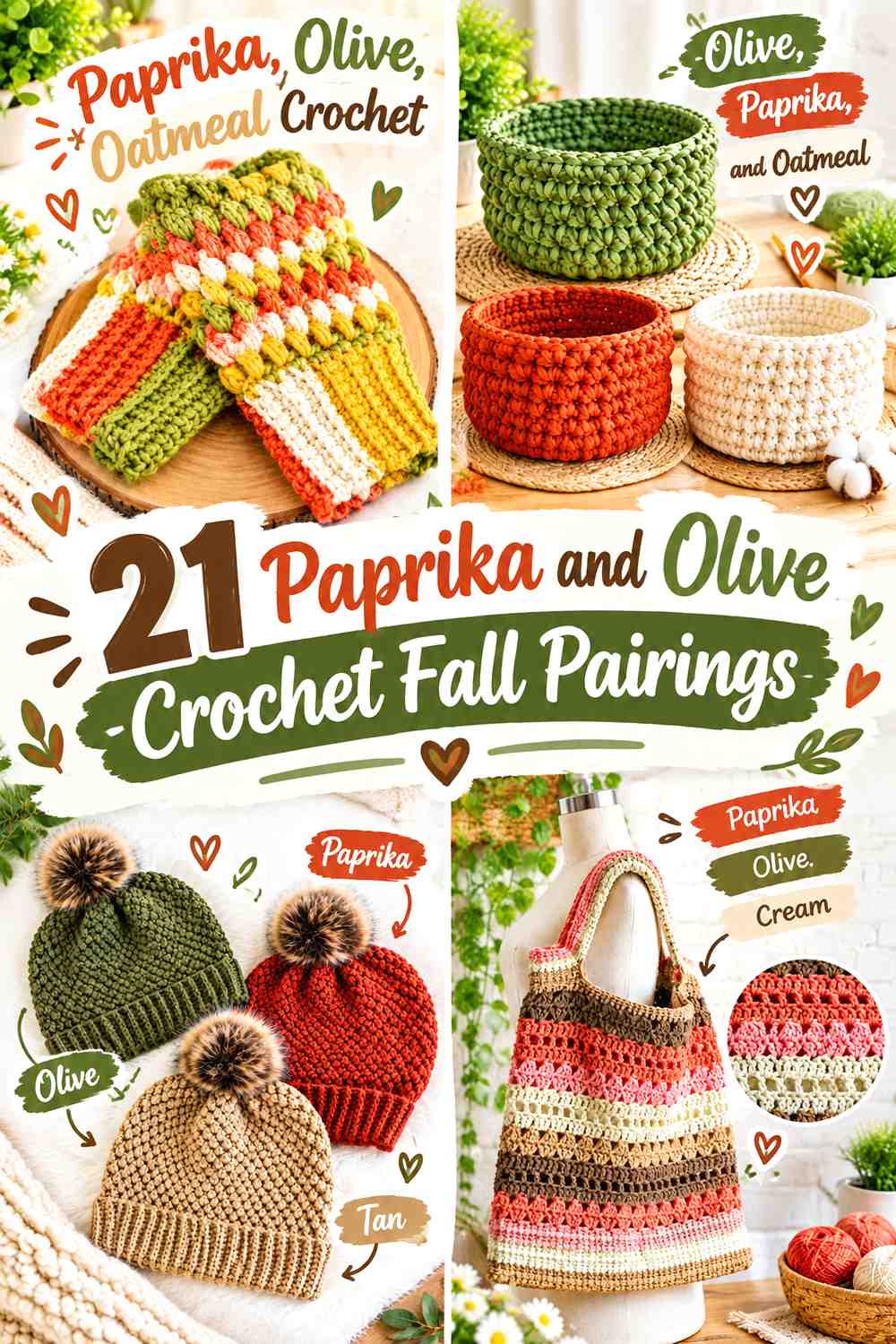
21 Paprika and Olive Crochet Fall Pairings
Paprika and olive give fall crochet a warm, grounded starting point without limiting you to one type of project. Paprika supplies the richer orange-red note, while olive adds a muted green that can either support the warmth or take the lead itself.
The important decision is not simply whether to use both colors. Their placement changes how a scarf, cardigan, bag, hat, or home accessory reads. Paprika can emphasize borders and texture, olive can create a quieter main field, and a carefully chosen neutral can keep the two fall colors from competing.
The tutorials linked below support the crochet construction concepts. The paprika-and-olive combinations are independent color adaptations, so you can use the tutorials while planning your own palette rather than assuming the creators used these exact colors.
Quick List
- Paprika Olive And Cream Crochet Skinny Scarf
- Olive Paprika And Charcoal Crochet Beanie
- Paprika Olive And Oatmeal Crochet Cardigan
- Paprika Olive And Camel Crochet Fall Scarf
- Olive Paprika And Natural Crochet Market Bag
- Paprika Olive And Cream Crochet Mug Cozy
- Olive Paprika And Mustard Crochet Headband
- Paprika Olive And Taupe Crochet Modern Vest
- Olive Paprika And Cream Crochet Shawl
- Paprika Olive And Camel Crochet Baby Hat
- Olive Paprika And Dusty Gold Crochet Floral Market Bag
- Paprika Olive And Oatmeal Crochet Puff Square Cushion
- Olive Paprika And Charcoal Crochet V Neck Sweater Vest
- Paprika Olive And Taupe Crochet Pocket Cardigan
- Olive Paprika And Ecru Crochet Hexagon Cardigan
- Paprika Olive And Mustard Crochet Cowl
- Paprika Olive And Cream Crochet Textured Market Bag
- Olive Paprika And Tan Crochet Beanie
- Paprika Olive And Chocolate Crochet Blanket Scarf
- Olive Paprika And Natural Crochet Basket
- Paprika Olive And Oatmeal Crochet Fingerless Gloves
How to Balance Paprika and Olive in Fall Crochet
Paprika and olive are both substantial earthy colors, so using them in identical amounts can sometimes make a project look visually dense. For larger crochet surfaces, decide which color should lead before you begin. A paprika-led scarf feels warmer and more saturated, while an olive-led cardigan or bag has a quieter green base with paprika acting as the stronger interruption.
The proportion can change within the same palette. On a cardigan, for example, olive might cover the body while paprika appears at cuffs and pockets. On a small mug cozy, paprika can comfortably occupy most of the surface because the total area is limited.
Keep Paprika and Olive Crochet Texture Visible
Different hues do not automatically create strong light-and-dark contrast. Your paprika and olive yarns may be distinct in color but surprisingly similar in value, especially when both are muted.
Place the yarns next to each other before committing to small motifs, narrow stripes, or textured stitch sections. A quick grayscale photo can also reveal whether details are disappearing. If paprika and olive merge too much, introduce cream, oatmeal, ecru, or another noticeably lighter shade around the area that needs definition.
Add Neutrals Without Losing the Paprika and Olive Focus
A third color should have a job. Cream can separate paprika from olive around motifs, charcoal can sharpen a wearable, and camel or oatmeal can soften the transition without becoming the main attraction.
Keep the neutral subordinate when you want the article’s central pairing to remain obvious. A neutral border, cuff, joining line, or occasional stripe can be enough. If the neutral occupies most of the project, paprika and olive can start reading as small accents rather than the defining fall palette.
1. Paprika Olive And Cream Crochet Skinny Scarf

Let paprika cover much of the scarf so the warm color remains visible when the scarf is folded or wrapped, then introduce olive in a narrower section or edge treatment. Cream can provide separation between the two earthy shades, especially if your chosen paprika and olive are close in darkness.
Let Paprika Lead the Crochet Scarf Length
A long scarf gives paprika enough uninterrupted space to establish the palette instead of becoming a series of small orange-red fragments. Keep olive concentrated toward an edge, end section, or repeated narrow accent so it supports rather than breaks up the scarf’s length.
Cream Can Separate Paprika and Olive at the Crochet Scarf Edge
If paprika and olive have similar values, a thin cream transition can keep the edge treatment readable. This is particularly useful around a shaped scarf border, where clear separation helps the outline remain visible rather than blending into the main fabric.
Creator Credit: TL Yarn Crafts
2. Olive Paprika And Charcoal Crochet Beanie
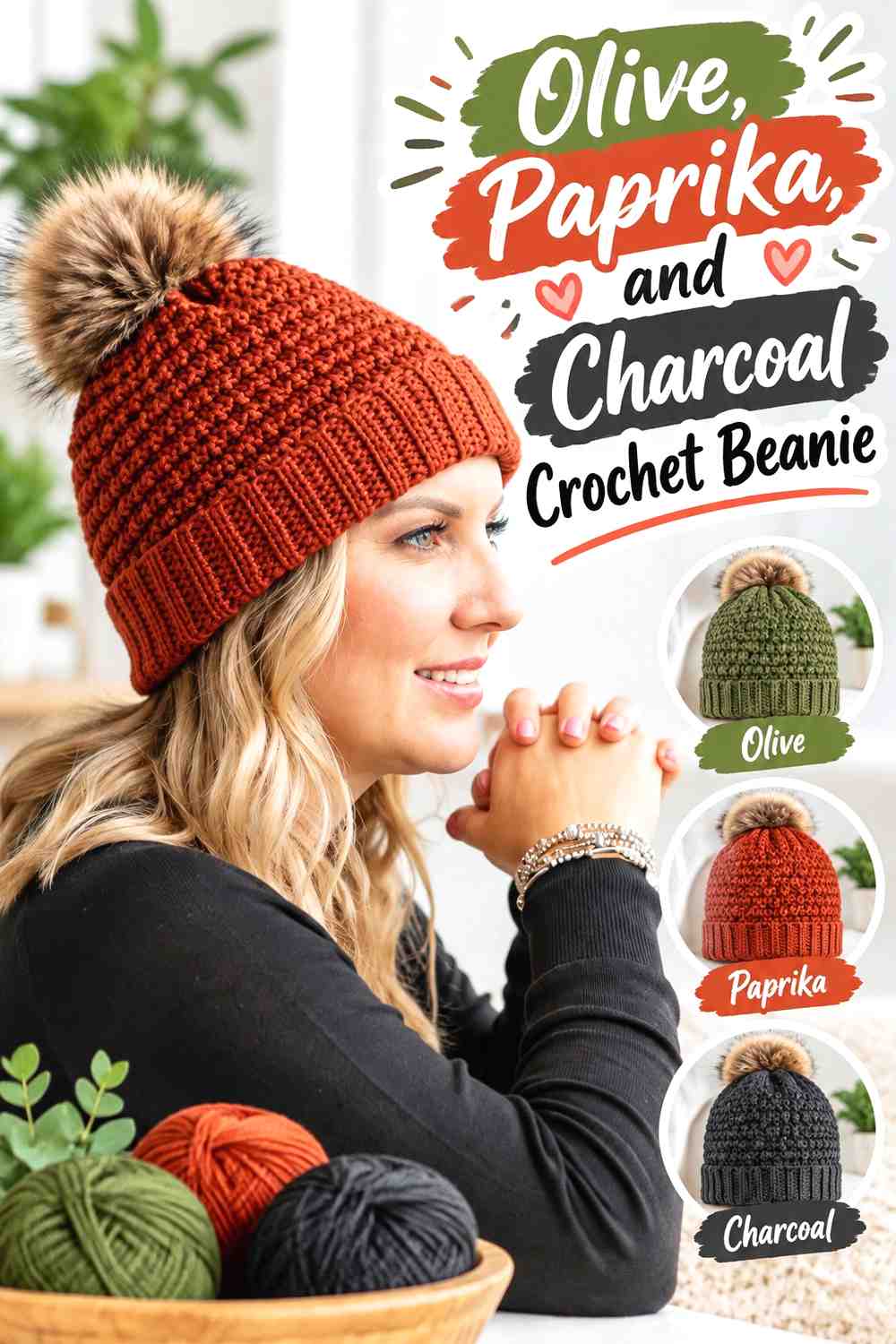
An olive-led beanie gives the hat a muted base, while paprika can be reserved for a deliberate contrast area rather than scattered throughout the crown. Charcoal introduces a darker anchor that can make the warm paprika accent feel more intentional.
Olive Works Well Across the Main Crochet Beanie Crown
Using olive across most of the crown creates a continuous background for the hat’s stitch pattern. If the beanie includes visible color changes or repeated texture, keeping that larger area consistent prevents the small surface from becoming overly divided.
Paprika Can Define the Olive Crochet Beanie Brim
The brim is a practical place to increase paprika because it creates a clear horizontal break without interrupting the crown. If paprika feels too strong as a full brim, alternate it with charcoal or limit it to a narrower band while keeping olive dominant above.
Creator Credit: Bella Coco
3. Paprika Olive And Oatmeal Crochet Cardigan
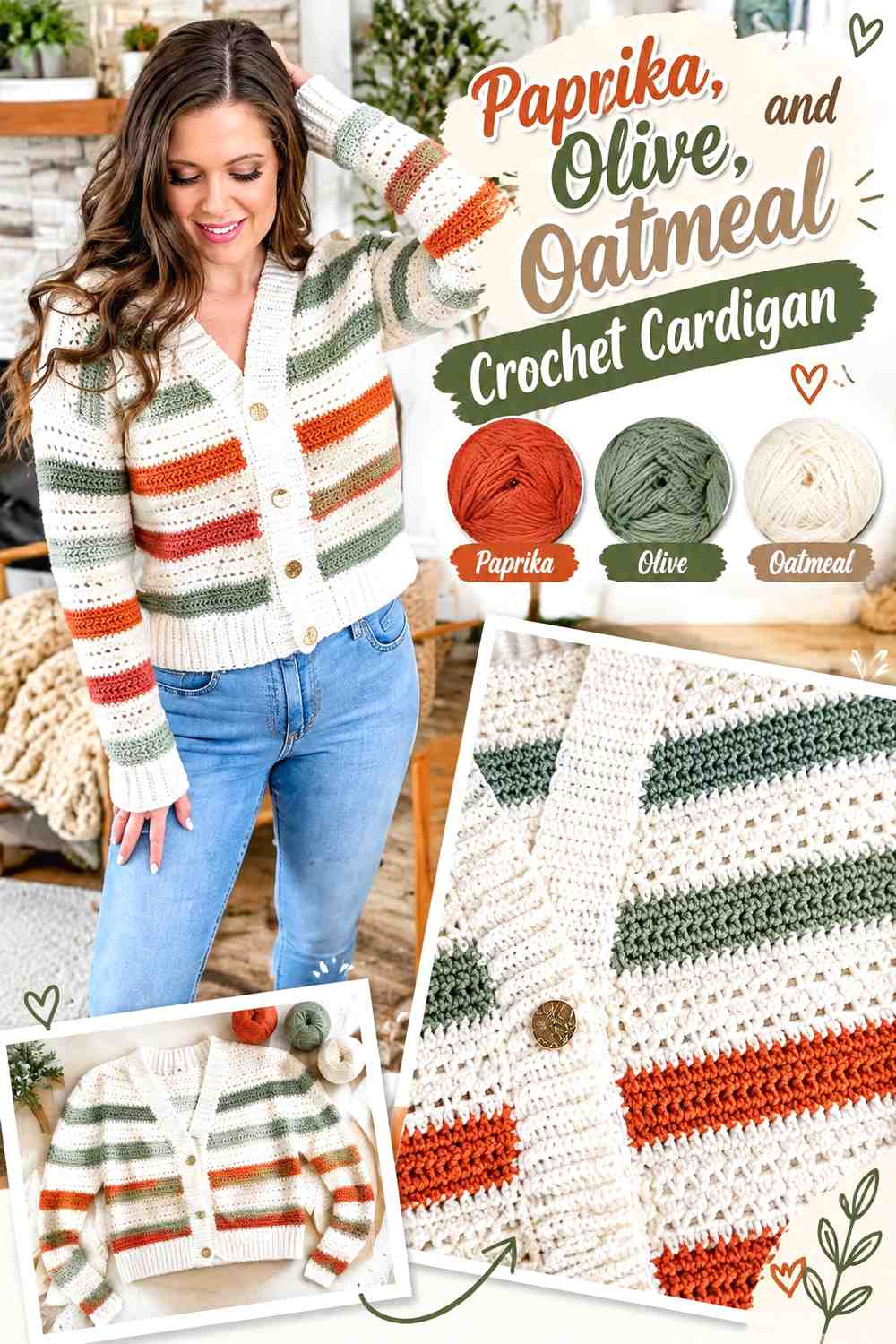
For a cardigan, paprika and olive need to work across much larger surfaces than they do on a hat or scarf. Use paprika as the warmer statement color on major panels and let olive repeat on sleeves, cuffs, or stripe sections; oatmeal can create breathing room where the two colors meet.
Paprika Can Anchor the Main Crochet Cardigan Panels
Keeping paprika on the front and back body areas gives the cardigan a recognizable warm base even when it is worn open. Olive can then repeat across sleeves or selected bands so the garment looks coordinated from the front, side, and back.
Olive Gives Paprika Crochet Sleeves a Cooler Counterweight
Sleeves offer enough area for olive to matter without competing directly with a paprika body. Repeating a small amount of paprika near the olive sleeves—such as through a cuff or stripe concept—can prevent the sleeves from looking detached from the rest of the cardigan.
Oatmeal Gives Paprika and Olive Crochet Stripes More Separation
When both main colors are muted, an oatmeal stripe can function as a visual pause. Keep it narrower than the paprika and olive sections if you want the fall colors, rather than the neutral, to define the finished cardigan.
Creator Credit: MJ’s Off The Hook Designs
4. Paprika Olive And Camel Crochet Fall Scarf
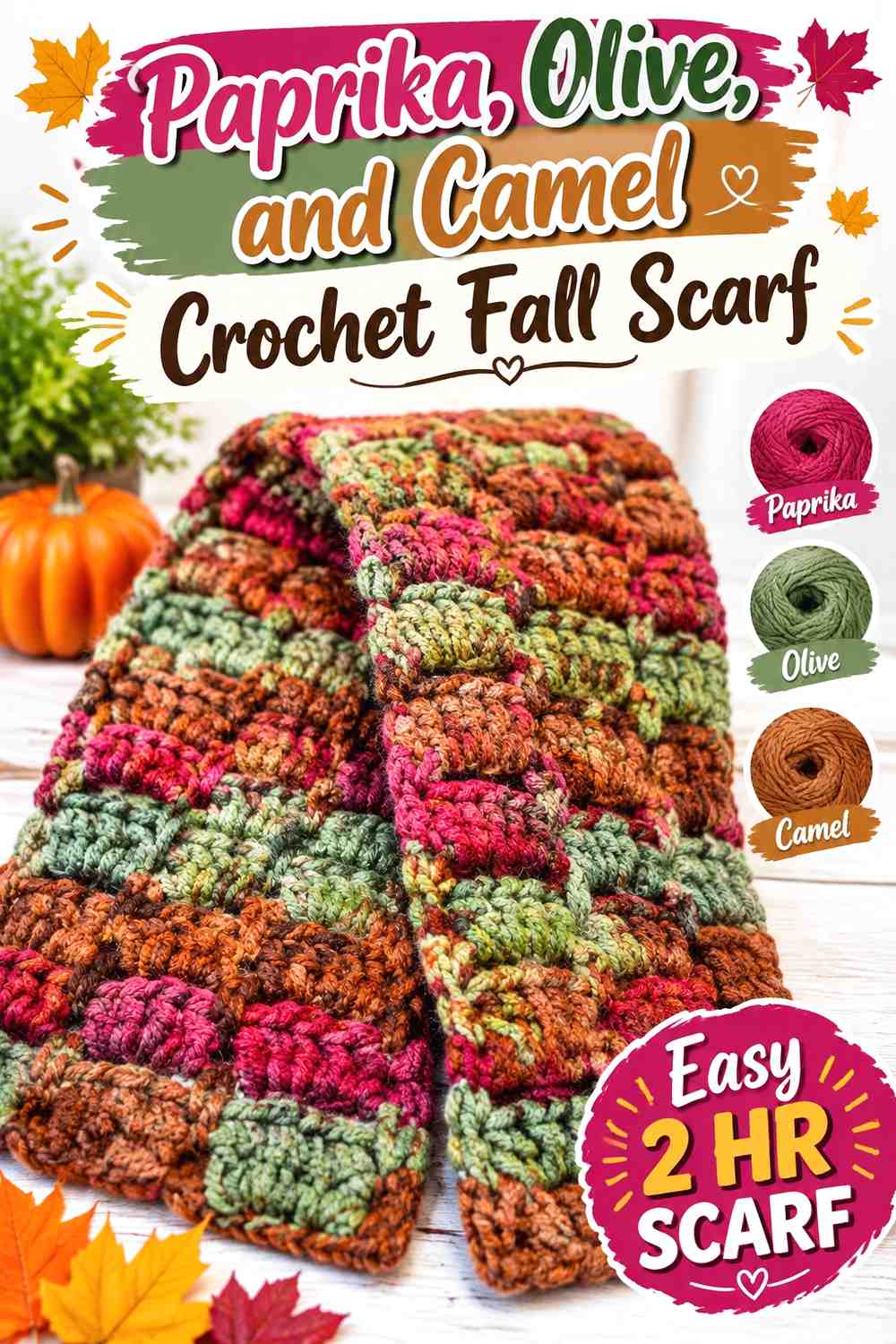
This scarf direction uses camel instead of a pale cream, keeping the entire scheme warm and relatively low contrast. Paprika should still be visibly warmer than the camel, while olive provides the color change that stops the scarf from becoming an all-brown composition.
Paprika Keeps the Crochet Fall Scarf From Becoming Too Neutral
If camel occupies a substantial portion of the scarf, repeat paprika often enough that it remains a defining color. Wider paprika sections work better than isolated tiny accents when you want the orange-red tone to survive folds and wrapping.
Olive Can Break Up Paprika and Camel Crochet Texture
Use olive where the scarf’s texture needs a noticeable change of hue rather than simply another warm shade. On a deeply textured scarf, avoiding constant color changes can also help the stitch relief remain easier to read.
Creator Credit: Atreyu Crochet
5. Olive Paprika And Natural Crochet Market Bag

Olive is a practical visual base for this market-bag palette because it can cover the broad body while paprika highlights structural areas. A natural yarn color can separate the two around handles or openwork sections without turning the bag into a high-contrast three-color design.
Olive Gives the Crochet Market Bag Body a Consistent Field
Keep olive across a large share of the bag body when the stitch pattern already creates plenty of visual movement. This allows open spaces and texture to remain the main surface detail while paprika is reserved for more deliberate emphasis.
Paprika Can Mark the Olive Crochet Market Bag Handles
Handles are repeated visual elements, so paprika placed there immediately connects both sides of the bag. If that amount of paprika feels too strong, keep the handles olive and use paprika in the upper finishing area instead.
Creator Credit: Home Handwork Diy
6. Paprika Olive And Cream Crochet Mug Cozy

A mug cozy is small enough for paprika to dominate without overwhelming the finished piece. Olive works well as a band or narrow repeated accent, while cream can clarify textured areas where two medium-value fall shades would otherwise merge.
Paprika Can Cover Most of the Crochet Mug Cozy Surface
Using paprika broadly makes the color recognizable even after the cozy wraps around a mug. Avoid dividing the small surface into too many equal stripes, since multiple narrow bands can make the stitch texture harder to appreciate.
Olive Gives a Paprika Crochet Mug Cozy a Clear Accent Band
Place olive where the color remains visible from the front rather than hiding it entirely near the back closure area. A consistent olive band also gives you a cleaner result than scattering isolated green stitches across an already compact project.
Creator Credit: love.life.yarn. by Amanda Saladin
7. Olive Paprika And Mustard Crochet Headband
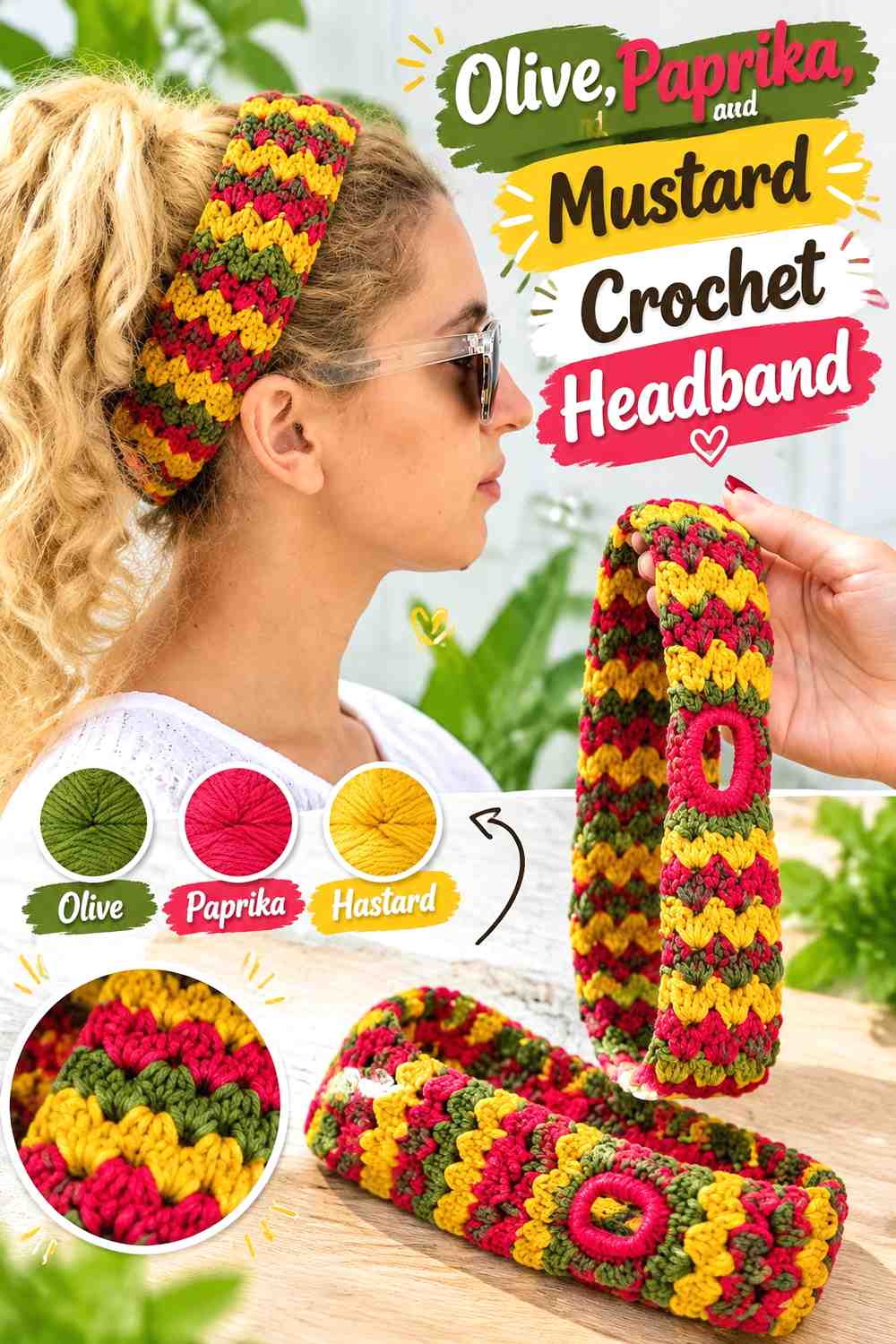
With a headband, the colors need to read clearly across a narrow strip. Olive makes a restrained main field, paprika provides a warm contrast, and mustard can be used sparingly to create a more layered autumn palette.
Olive Keeps the Crochet Headband Visually Continuous
Use olive across most of the band when the stitch pattern has raised or clustered texture. A consistent field prevents the narrow accessory from looking fragmented and lets the texture remain visible from one side to the other.
Paprika Should Repeat Clearly Against Olive on the Crochet Headband
One deliberate paprika section usually carries more visual weight than several tiny unrelated accents. If mustard is added, keep it secondary so paprika remains the primary warm counterpoint to the olive base.
Creator Credit: naztazia
8. Paprika Olive And Taupe Crochet Modern Vest

A vest offers broad front and back panels but no sleeves, making color distribution especially noticeable. Paprika can establish the main body, olive can emphasize the neckline or lower section, and taupe can soften transitions without pulling attention away from the two fall colors.
Paprika Can Give the Crochet Vest Front Panel More Visual Weight
Keeping paprika prominent on the front makes the warm shade visible even when the vest is layered over another garment. If the construction divides the front into sections, repeat paprika on both sides so one side does not look heavier than the other.
Olive Can Frame Paprika Around the Crochet Vest Neckline
A darker or cooler olive neckline can draw a clean boundary around a paprika body. Check the two yarns side by side first; if they are similar in value, a narrow taupe separator can prevent the neckline from disappearing into the body color.
Creator Credit: TCDDIY
9. Olive Paprika And Cream Crochet Shawl
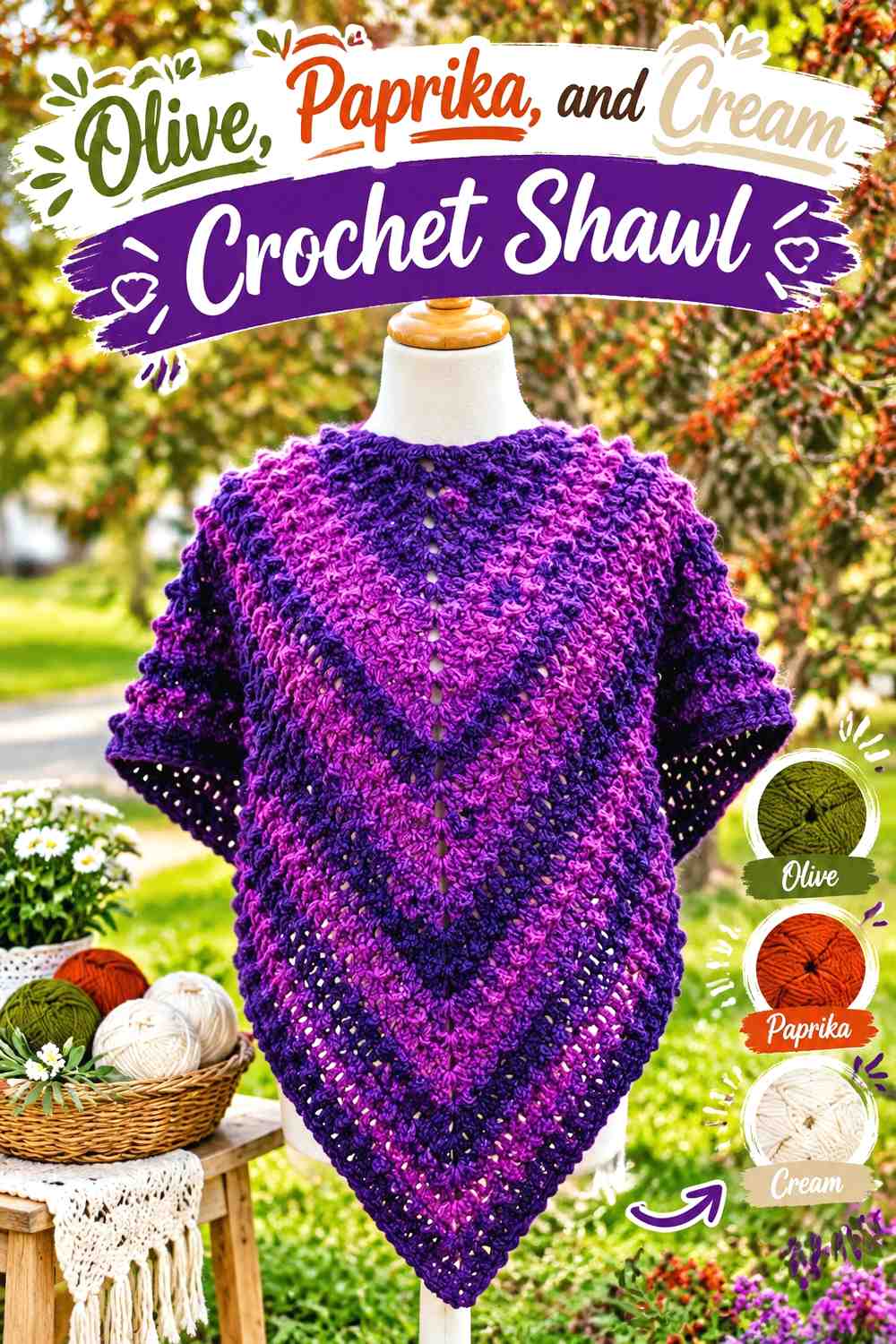
An olive-led shawl has enough surface area for the muted green to feel intentional, while paprika can become progressively more noticeable toward the edge. Cream is useful between the two when the shawl includes lace, openwork, or another stitch pattern that benefits from clearer color boundaries.
Olive Creates a Calm Main Field Across the Crochet Shawl
Keep much of the upper shawl olive so the color remains cohesive when the fabric is draped around the shoulders. Large uninterrupted areas also keep the eye focused on the shawl’s shape rather than frequent color changes.
Paprika Can Strengthen the Olive Crochet Shawl Border
Increasing paprika toward the outer edge gives the warmer color more impact without requiring it to dominate the center. A cream transition before the paprika border can be useful when the two earthy yarns otherwise look too similar from a distance.
Creator Credit: Bag-O-Day Crochet
10. Paprika Olive And Camel Crochet Baby Hat
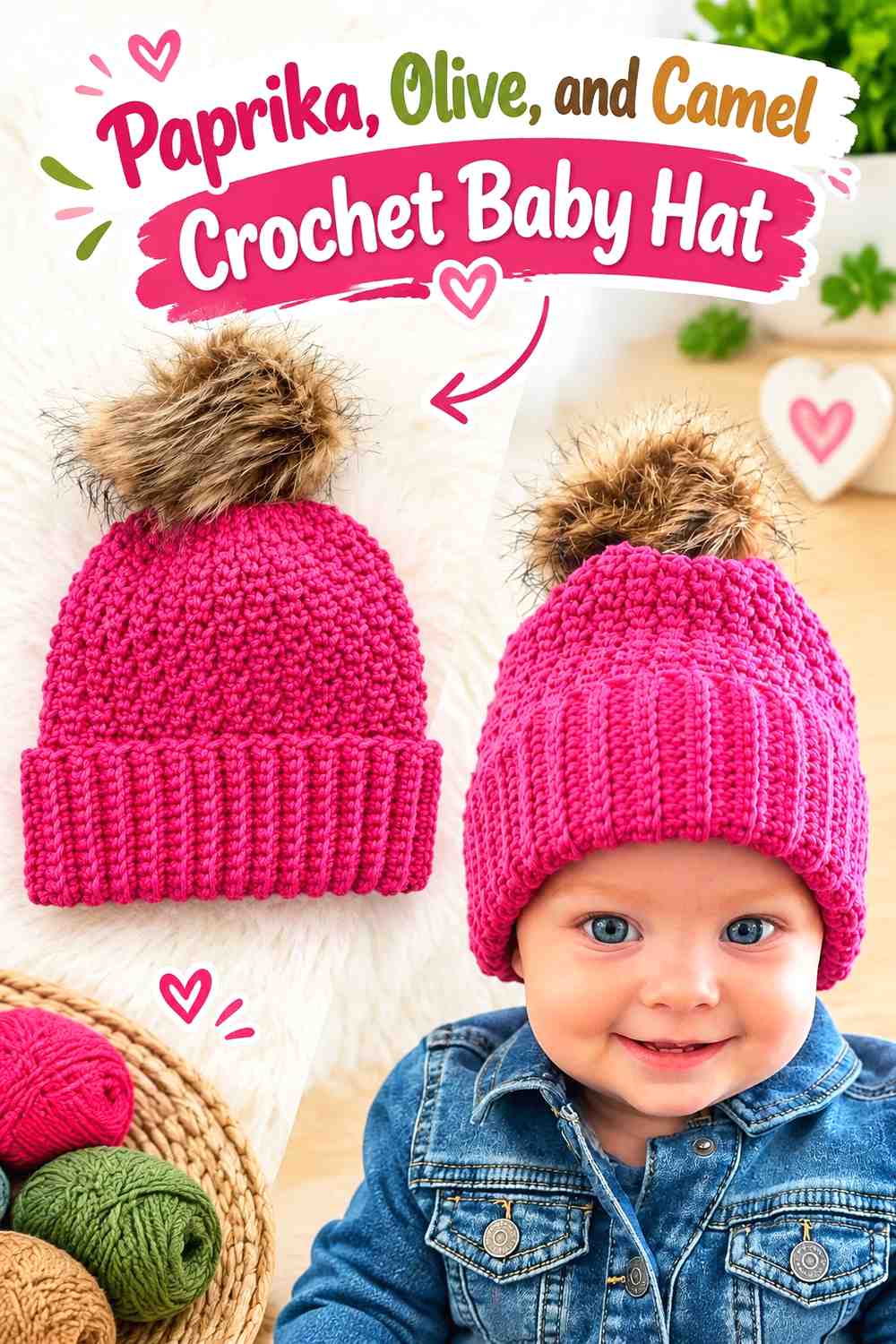
For a small hat, paprika and olive need clear jobs because there is little room for complicated color distribution. A paprika crown with an olive brim creates an immediate division, while camel can be limited to a small finishing detail if a third shade is wanted.
Paprika Keeps the Crochet Baby Hat Crown Warm and Unbroken
A mostly paprika crown avoids chopping the small hat into too many narrow color bands. This is particularly useful when the crochet texture already changes across the fabric and deserves room to remain visible.
Olive Gives the Paprika Crochet Baby Hat Brim Definition
Using olive at the brim visually separates the edge from the paprika crown. Before committing, compare the two yarns in natural light; if they are almost the same darkness, camel can provide a lighter transition without changing the earthy direction.
Creator Credit: Daisy Farm Crafts
11. Olive Paprika And Dusty Gold Crochet Floral Market Bag
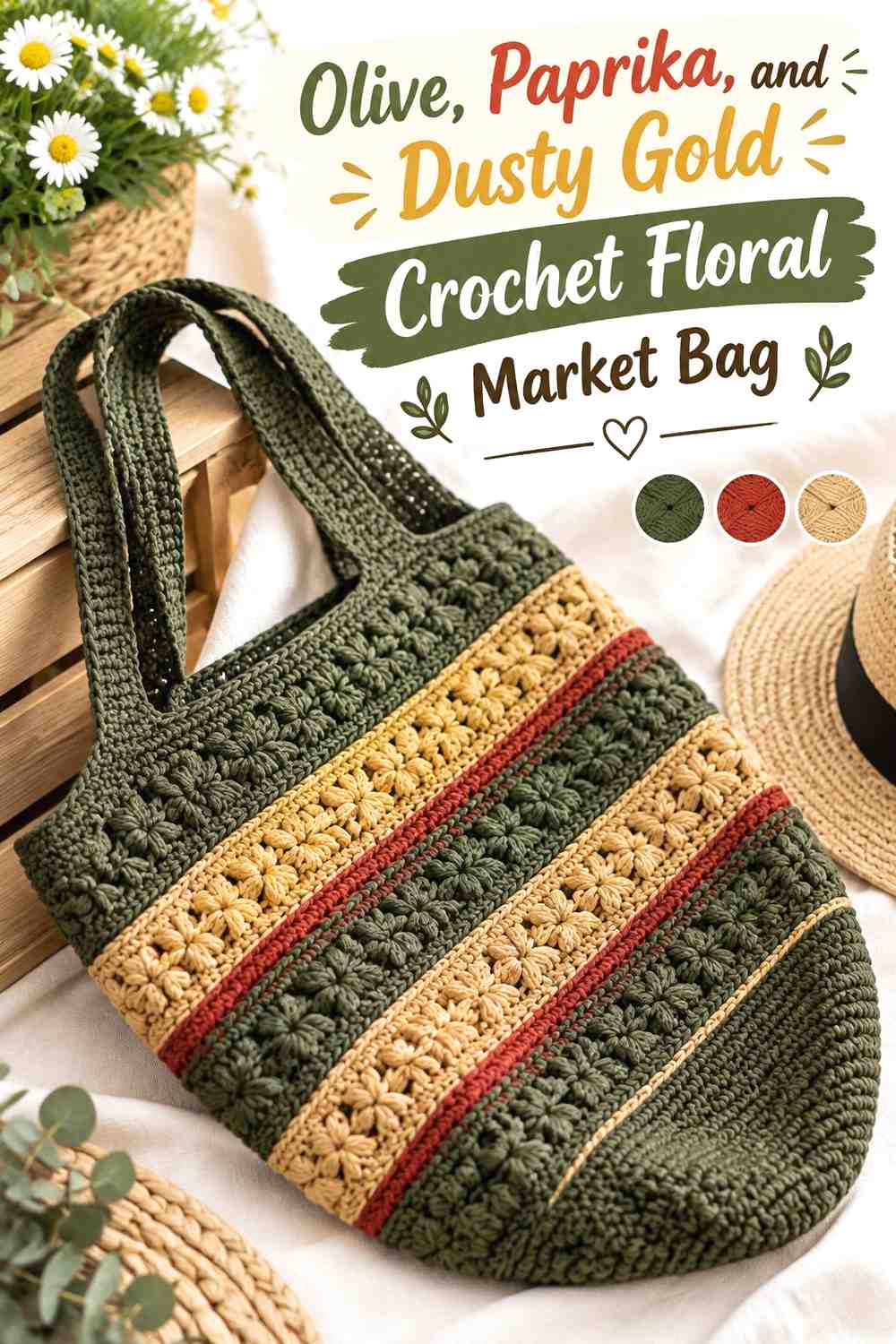
A floral or highly textured bag benefits from a controlled palette. Olive can cover the more continuous portions of the bag, while paprika highlights the flower-like texture and dusty gold adds a smaller third note rather than competing equally with both.
Paprika Can Bring Forward the Olive Crochet Bag’s Floral Texture
Place paprika where dimensional flower or puff details need stronger recognition against an olive field. Avoid putting paprika and dusty gold into every raised detail; alternating too many warm colors can weaken the clear flower-to-background relationship.
Olive Should Repeat Through the Paprika Crochet Market Bag Structure
Carry olive into enough of the base, upper edge, or handle area to connect the decorative body with the functional structure. This repetition keeps the green from looking like a background color that disappears once the bag reaches its top.
Creator Credit: Rich Textures Crochet
12. Paprika Olive And Oatmeal Crochet Puff Square Cushion
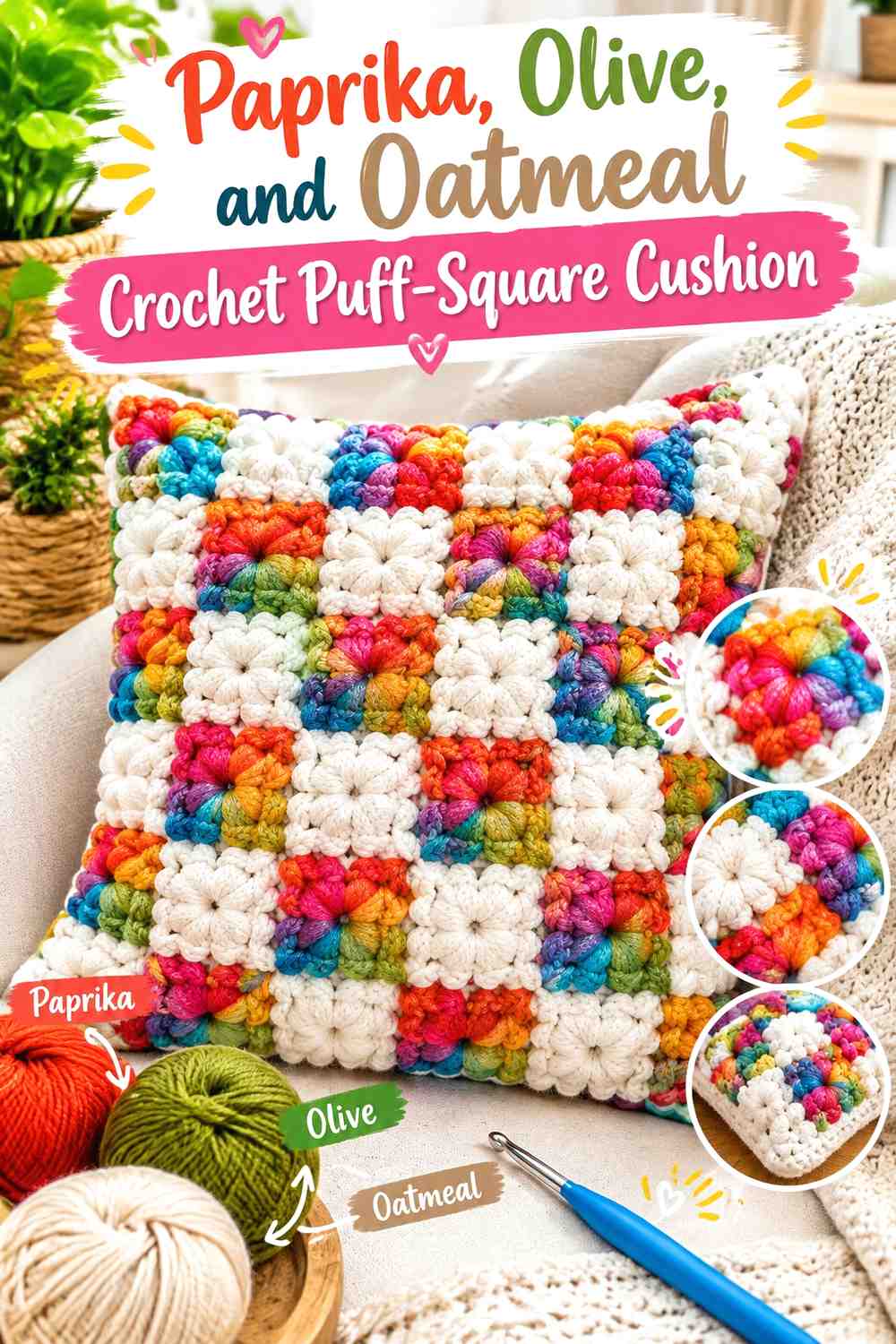
Small puff squares give paprika and olive many opportunities to alternate, but the project needs repetition to avoid looking random. Use oatmeal consistently as a joining or separating shade so the raised paprika and olive areas remain easy to distinguish.
Paprika and Olive Need a Repeating Crochet Cushion Motif Order
Choose a simple repeated arrangement rather than changing the color logic on every square. For example, paprika-led and olive-led motifs can alternate while oatmeal remains consistent around them, creating variation without losing the grid.
Oatmeal Can Keep Paprika and Olive Crochet Puff Squares Distinct
Raised texture already creates shadows, so two similarly dark yarns can lose definition inside small squares. Oatmeal around the motifs or joins creates lighter negative space and makes the puff texture easier to see across the cushion face.
Creator Credit: Hooked by Robin
13. Olive Paprika And Charcoal Crochet V Neck Sweater Vest
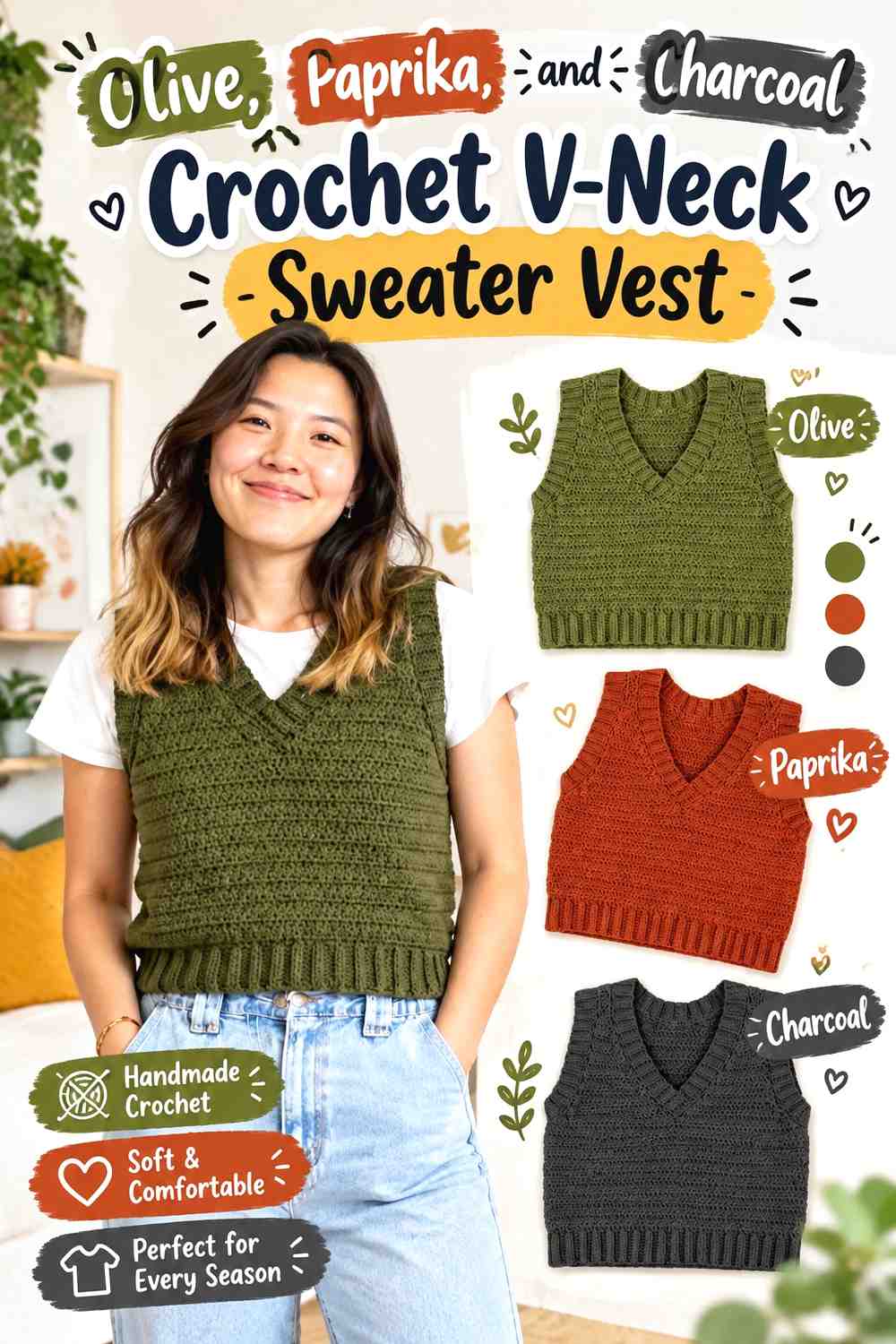
Olive works naturally across the body of a V-neck vest because it gives the garment a quiet base for layering. Paprika can trace the neckline or lower ribbing, while charcoal adds enough darkness to define edges without introducing another bright hue.
Olive Can Dominate the Crochet V-Neck Vest Body
A large olive field lets the V shape and garment silhouette remain more noticeable than a complicated stripe sequence. It also gives paprika a stronger role when that warmer shade appears in a smaller, strategically placed area.
Paprika Can Highlight the Olive Crochet V-Neck
The neckline is one of the first places the eye notices on a vest, so a paprika edging can establish the two-color relationship efficiently. If paprika feels too bright around the entire neck, alternate it with charcoal or move paprika to the lower ribbing instead.
Creator Credit: VivCrochets
14. Paprika Olive And Taupe Crochet Pocket Cardigan
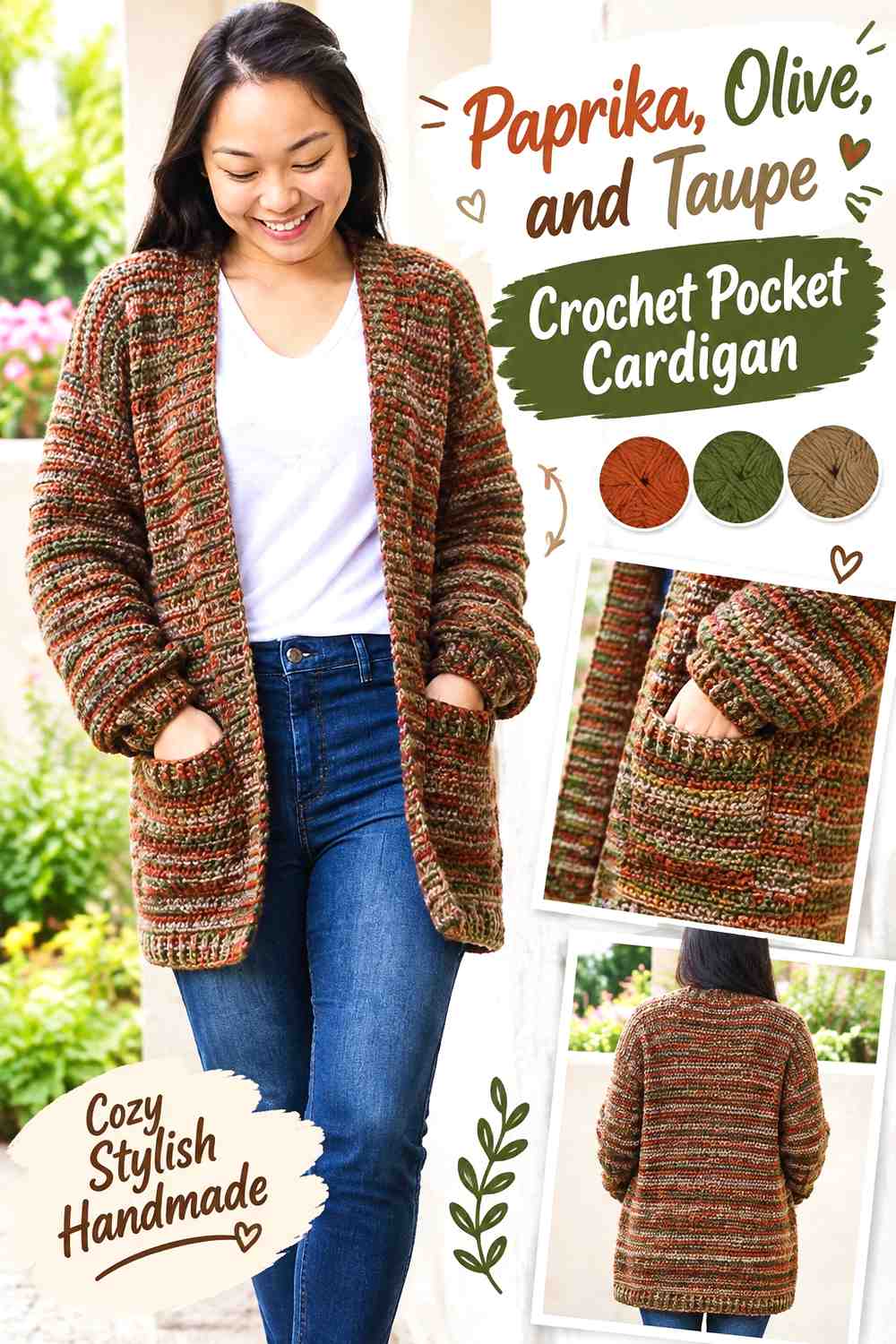
A pocket cardigan gives you several distinct color zones: body, sleeves, cuffs, edging, and pockets. Keep paprika dominant on the larger panels, then use olive to make the pockets or sleeve details intentional rather than treating them as unrelated accents.
Paprika Can Unify the Crochet Cardigan Body and Sleeves
Repeating paprika across the main body and at least part of the sleeves prevents the cardigan from appearing color-blocked by accident. Olive can then be concentrated at selected functional details instead of competing across every large panel.
Olive Can Turn Crochet Cardigan Pockets Into Paprika Accents
Olive pockets placed on a paprika body create a clear visual feature. Repeat a little olive elsewhere—such as cuffs or edging—so the pockets feel connected to the garment rather than looking like two separate patches.
Taupe Can Moderate Paprika and Olive Crochet Cardigan Edges
If the cardigan already has large paprika and olive areas, taupe is useful for quieter finishing. Keep it at the edge rather than expanding it across major panels if you want paprika and olive to remain the defining colors.
Creator Credit: forthefrills
15. Olive Paprika And Ecru Crochet Hexagon Cardigan

Hexagon construction naturally creates radiating color opportunities, so the main challenge is preventing too many short color changes from making the cardigan overly busy. Olive can establish the larger motif sections, paprika can repeat at controlled intervals, and ecru can separate stronger bands.
Olive Can Give the Crochet Hexagons a Stable Main Color
Let olive occupy more rounds or broader visual sections than paprika. Because the hexagons eventually become major garment areas, a clear dominant color keeps the finished cardigan from reading as a collection of equally competing stripes.
Paprika Should Repeat Predictably Across Olive Crochet Hexagons
Use the same paprika placement logic in both major hexagon pieces. Repetition matters here because mismatched color distribution can make one sleeve or front section look visually heavier after the cardigan takes shape.
Ecru Can Separate Paprika and Olive Around Crochet Cardigan Ribbing
Ecru works particularly well when moving from a multicolor hexagon area into a quieter finishing section. It creates a visual buffer before olive or paprika is repeated in ribbing, edging, or pockets.
Creator Credit: Make & Do Crew
16. Paprika Olive And Mustard Crochet Cowl
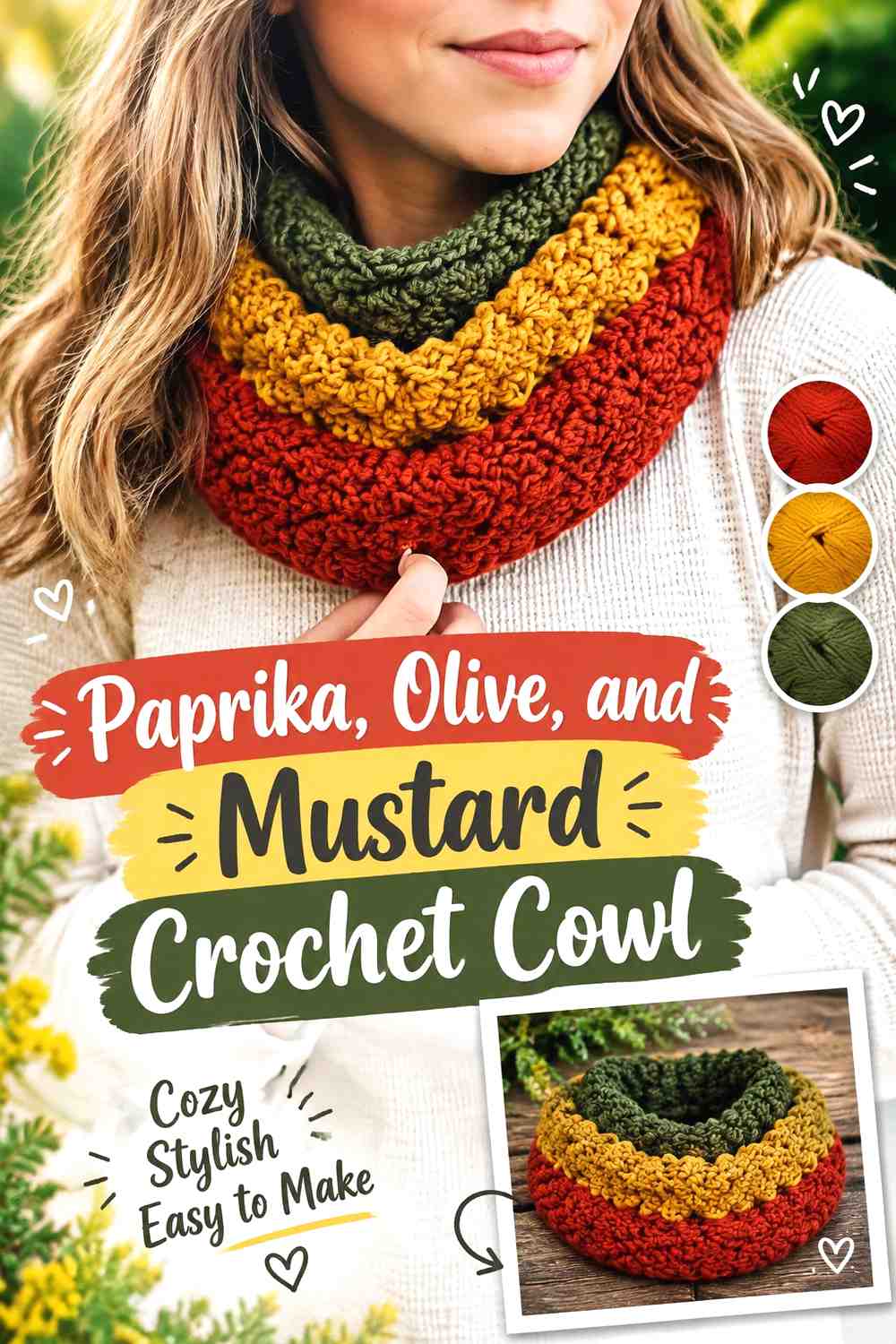
A cowl is viewed as a continuous loop, so the palette should work from every angle. Paprika can cover most of the fabric, olive can form a repeating band, and mustard can appear only occasionally so the accessory retains a clear two-color foundation.
Paprika Can Carry the Main Crochet Cowl Texture
Using paprika through the majority of a textured cowl lets shadows and raised stitches develop within one color. Constant switching between paprika and olive inside a compact textured repeat can make both the color and stitch pattern harder to read.
Olive Can Create a Deliberate Break Around the Paprika Crochet Cowl
A substantial olive band is easier to recognize than tiny scattered green accents once the cowl is gathered around the neck. If adding mustard, keep it narrower than the olive section so the palette does not turn into three equally dominant colors.
Creator Credit: Sigoni Macaroni
17. Paprika Olive And Cream Crochet Textured Market Bag
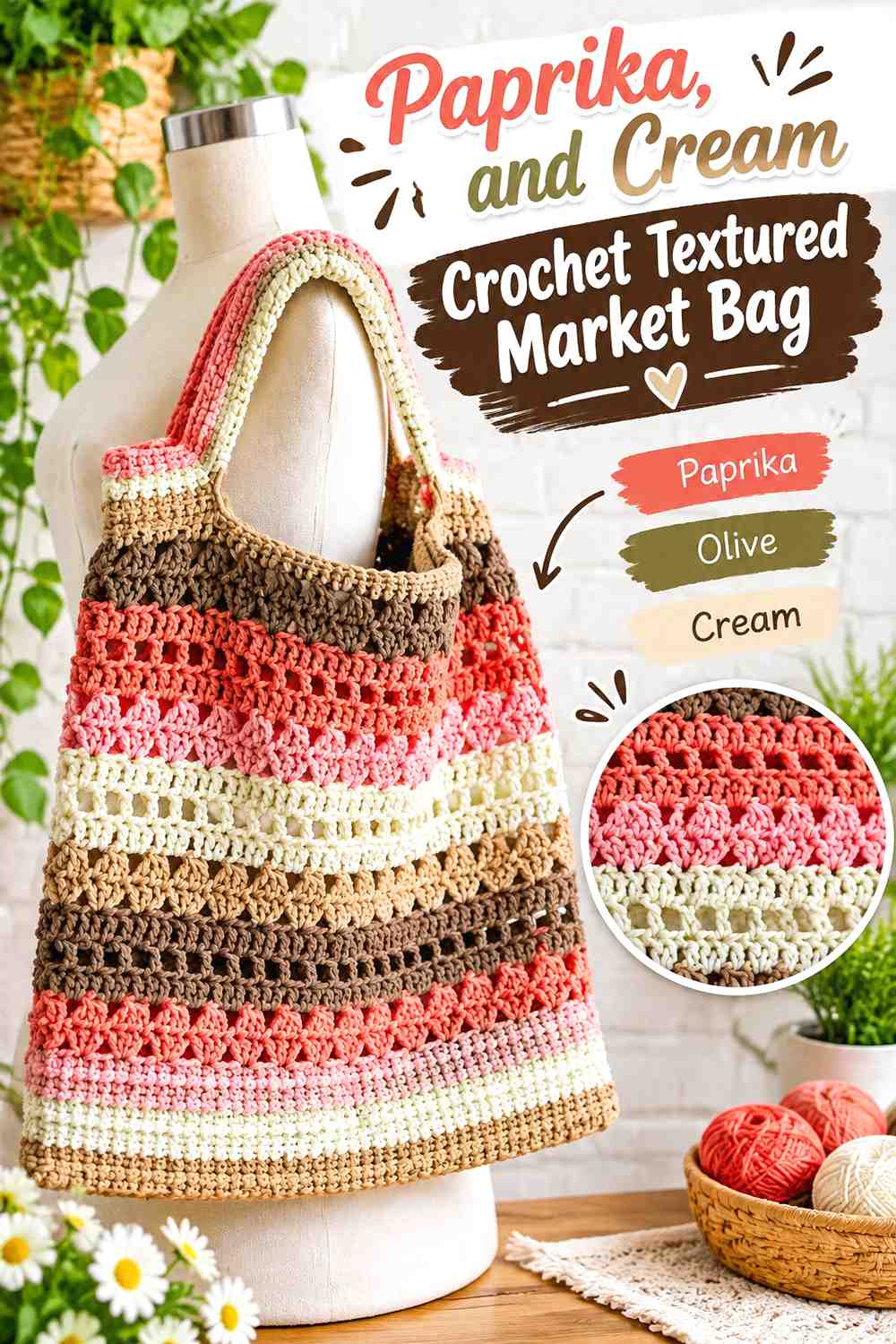
This version gives paprika the main role, making it noticeably different from the earlier olive-led market bags. Olive can mark the lower structural area and handles, while cream creates a lighter interruption within an otherwise deep autumn palette.
Paprika Can Showcase the Crochet Market Bag’s Side Texture
Keep long stretches of the bag body paprika when multiple stitch patterns already provide surface variety. The color continuity prevents texture changes and color changes from competing at every stage.
Olive Can Ground the Paprika Crochet Market Bag Base
A darker-looking olive base can visually anchor a paprika body and make the shift into the main stitch pattern easier to recognize. Repeating olive at the handles creates a top-to-bottom connection instead of leaving the green only at the bottom.
Creator Credit: Winding Road Crochet
18. Olive Paprika And Tan Crochet Beanie

This beanie keeps the palette softer than the charcoal version by using tan as the third shade. Olive should remain the main field, with paprika appearing as a controlled warm stripe or brim detail and tan used where a lower-contrast transition is helpful.
Olive Keeps the Crochet Beanie Crown Earthy and Consistent
A single olive crown gives the hat a quieter appearance and protects the visibility of any ribbing or vertical texture. This also leaves enough visual room for a paprika accent to register clearly.
Paprika Adds Warm Definition to an Olive Crochet Beanie
Use paprika at a location with a strong outline, such as a brim band or purposeful stripe. Tan can sit beside paprika if you want a gentler transition, but avoid giving all three colors identical stripe widths unless a strongly striped result is intentional.
Creator Credit: crochetdreamz
19. Paprika Olive And Chocolate Crochet Blanket Scarf

A blanket scarf has enough width for all three colors to develop without becoming tiny accents. Paprika can provide the largest warm areas, olive can interrupt them with broad cooler sections, and chocolate can define edges or occasional dark bands.
Paprika Needs Broad Sections on a Crochet Blanket Scarf
Large blocks of paprika suit the scale of a wide scarf better than many narrow stripes. Because the fabric will fold over itself, broader sections also make it more likely that paprika remains visible from different wearing angles.
Olive Can Balance Paprika Across the Crochet Blanket Scarf Width
Distribute olive across more than one area rather than confining it to a single end. Repetition keeps the palette balanced when the scarf is wrapped, while chocolate can be limited to framing or narrow separators where additional definition is needed.
Creator Credit: Fuad Azmat / YARNutopia by Nadia
20. Olive Paprika And Natural Crochet Basket

A crochet basket benefits from simple color zoning because its base, sides, and rim are easy to distinguish visually. Olive can dominate the sides, paprika can emphasize the rim or selected bands, and a natural tone can lighten the base or transitional area.
Olive Can Cover the Main Crochet Basket Walls
Using olive across the basket walls keeps the broad vertical surface visually consistent. If the construction creates strong horizontal texture, one stable color prevents that texture from competing with an excessive number of stripes.
Paprika Can Define the Olive Crochet Basket Rim
The upper edge is a practical place for paprika because it is visible even when the basket contains other items. Repeat paprika once lower on the basket if the rim otherwise feels disconnected from the olive-and-natural body.
Natural Can Lighten Paprika and Olive at the Crochet Basket Base
A natural base creates a lighter visual foundation without introducing another strong hue. Keep enough olive visible near the lower side wall so the transition from the base to the main basket color feels intentional.
Creator Credit: Melanie Ham
21. Paprika Olive And Oatmeal Crochet Fingerless Gloves
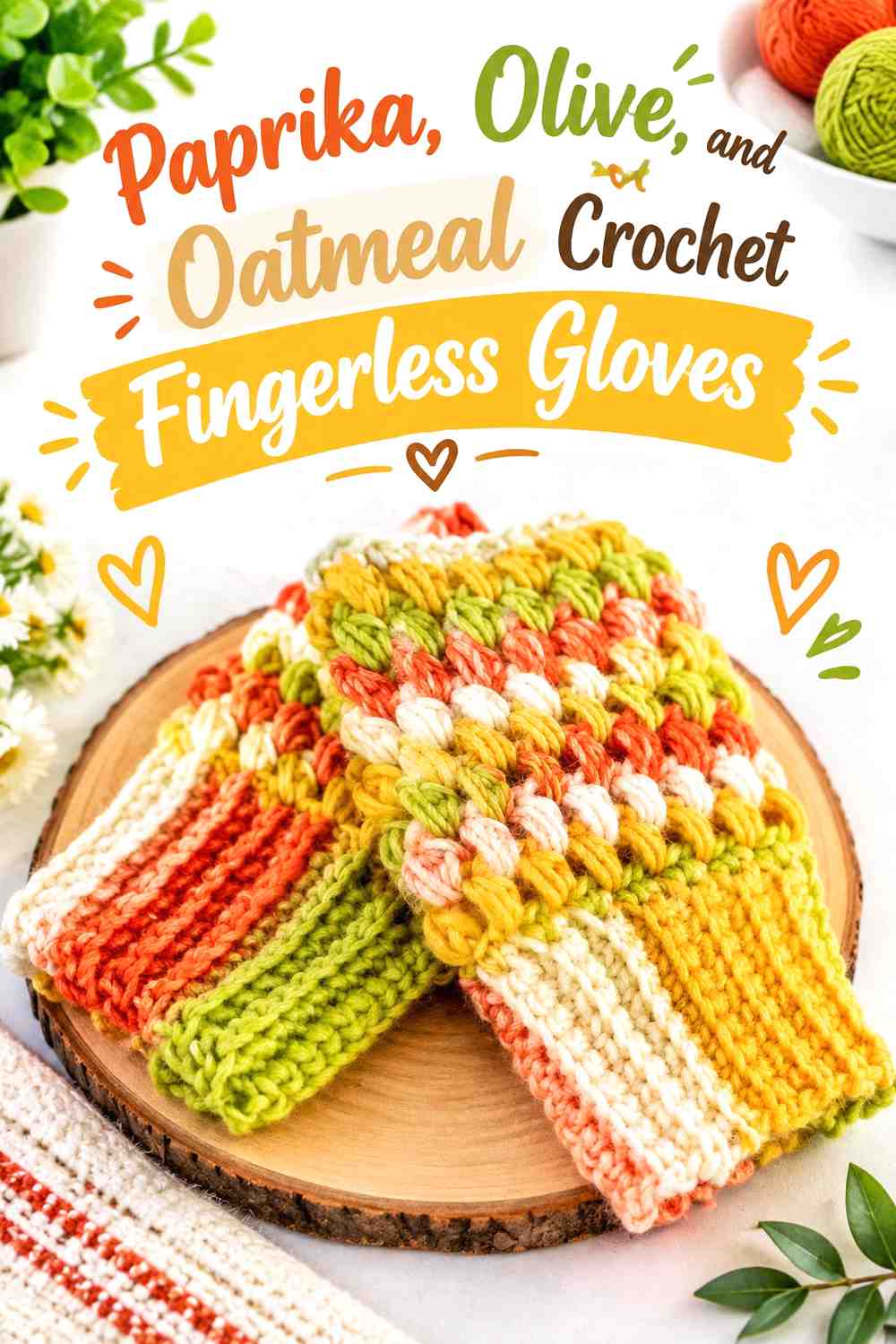
Fingerless gloves need matched color placement across two separate pieces. Paprika can provide the main hand color, olive can define the cuffs, and oatmeal can create a narrow transition that makes the warmer and cooler shades easier to distinguish.
Paprika Should Repeat in the Same Areas on Both Crochet Gloves
Plan the paprika placement as a pair rather than improvising each glove separately. Consistent positioning makes the gloves look intentional when worn together, particularly around the back of the hand where color differences are immediately visible.
Olive Can Give Paprika Crochet Fingerless Gloves Defined Cuffs
An olive cuff creates a clear lower boundary and keeps paprika focused across the hand. If paprika and olive are similar in value, a narrow oatmeal transition at the cuff can preserve separation without making oatmeal a third dominant color.
Creator Credit: B.Hooked Crochet
Comparing Paprika-Led and Olive-Led Crochet Fall Pairings
Paprika-led projects work well when you want the warmer color to remain visible across large areas. The skinny scarf, mug cozy, pocket cardigan, textured market bag, blanket scarf, and fingerless gloves all give paprika enough surface area to establish that direction.
Olive-led projects shift the same pairing toward a quieter, more muted result. The V-neck vest, shawl, basket, headband, and several hat and bag ideas use olive as the field while paprika becomes the warmer focal point.
For stronger definition, choose one of the palettes that includes cream, oatmeal, ecru, or charcoal. For a closer, more tonal autumn result, camel, tan, taupe, mustard, dusty gold, and chocolate keep the overall palette within an earthy range.
Conclusion
Paprika and olive can produce very different crochet results depending on proportion and placement. A paprika body with olive edging creates a different visual hierarchy from an olive body with paprika cuffs, even though the same two core colors are present.
Choose paprika-led layouts when you want more warm color across the finished surface. Choose olive-led layouts when you prefer a muted foundation with paprika appearing at borders, motifs, cuffs, handles, or other defined details. If the two yarns are too similar in value, use a lighter neutral around the area where stitch texture or motif definition matters most.
Once you choose a project, use the linked creator tutorial for its exact construction details and apply the palette according to the surface, borders, panels, motifs, or finishing areas that make sense for that particular item.
Frequently Asked Questions
Do paprika and olive have enough contrast for crochet?
Sometimes, but not automatically. The hues are different, yet particular paprika and olive yarns can have similar lightness. Place the yarns side by side or view a photo in grayscale before using them for small motifs or narrow details. If they visually merge, add cream, oatmeal, ecru, or another clearly lighter shade where separation matters.
Should paprika or olive be the dominant crochet color?
Either can lead. Paprika gives a project a warmer and more saturated direction, while olive creates a quieter earthy base. Choose according to the amount of surface each color will cover and where you want the eye to focus.
What neutral works with paprika and olive crochet?
Cream and oatmeal create noticeable lightness without introducing another strong hue. Taupe, camel, and tan produce a lower-contrast earthy result, while charcoal can give edges and wearable details stronger definition.
How can I stop paprika and olive crochet stripes from looking too busy?
Give one color wider or more frequent sections and use the other as a supporting shade. On large items such as scarves and cardigans, broad color areas usually give stitch texture more room to remain visible than many narrow alternating bands.
Can paprika and olive work in crochet granny squares or motifs?
Yes. Decide which color belongs in the center, outer motif area, and joins before making a large number of squares. If paprika and olive are close in value, a lighter joining or border color can prevent adjacent motifs from visually merging.
Where should paprika accents go on an olive crochet garment?
Cuffs, neckline edging, lower ribbing, pockets, or selected stripe sections are useful options because they repeat across recognizable garment features. Repeating paprika in at least two visible areas can make the accent feel connected rather than accidental.
How do I substitute a different paprika or olive yarn shade?
Preserve the relationship between the colors rather than searching for an exact commercial match. For paprika, look for a warm orange-red or softened red-orange with similar depth. For olive, choose a muted green that still differs clearly enough from the paprika. Most importantly, recheck the light-and-dark contrast after making either substitution.