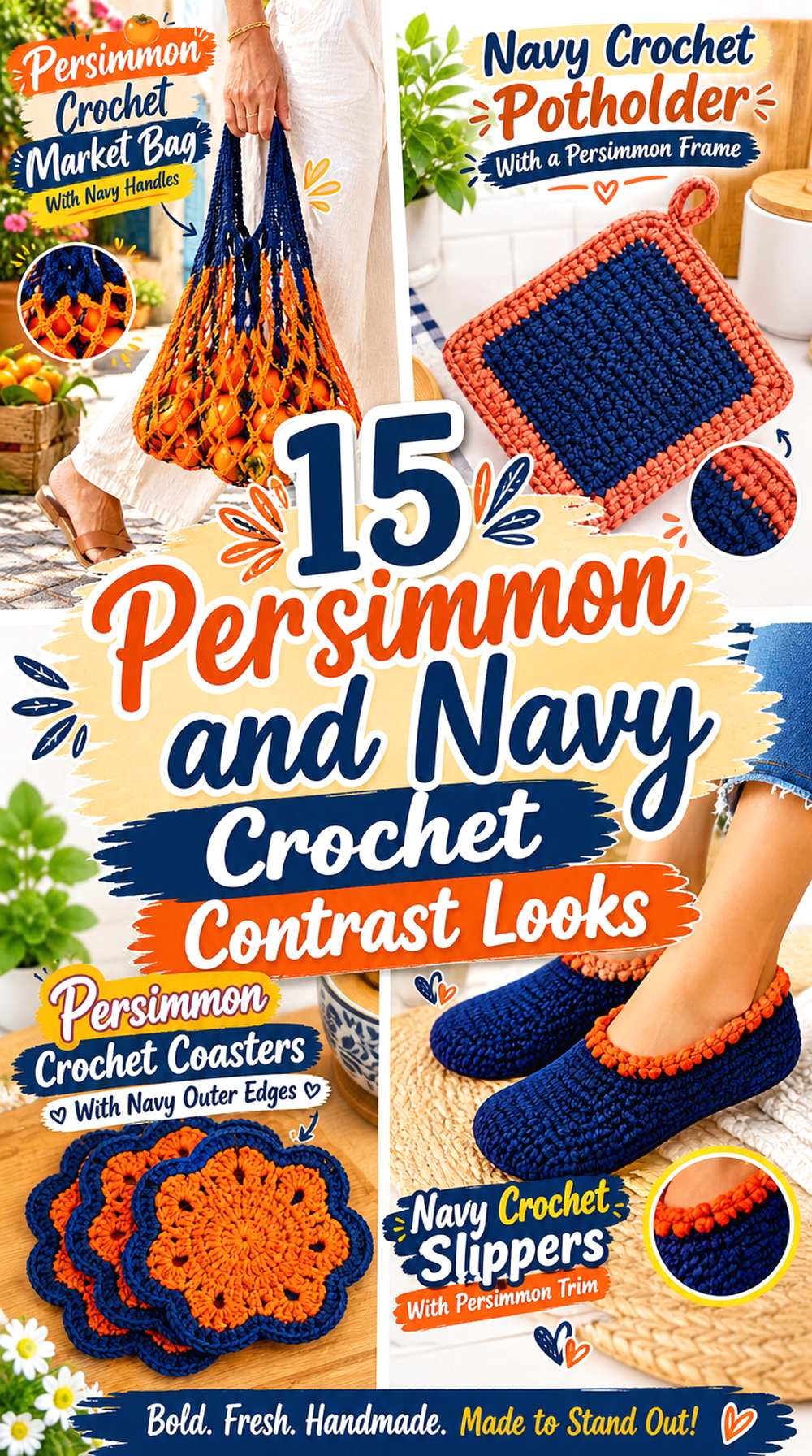
15 Persimmon and Navy Crochet Contrast Looks
Persimmon and navy create a strong two-color crochet relationship because they can stay visually distinct even when both shades have substantial presence. In these looks, persimmon serves as the warmer color while navy provides a deep, cooler anchor. The key is deciding whether that contrast should cover large sections or appear only at structural details.
On garments, navy can outline persimmon necklines, armholes, cuffs, and borders without dividing every panel into equal color blocks. On bags and home pieces, it can define handles, rims, edges, joins, or motif boundaries. The arrangement can also be reversed: navy makes an effective main field when smaller persimmon details need to carry the warmth.
These 15 crochet looks use the same two colors in different proportions and placements so you can compare bold color blocking, controlled edging, motif contrast, and smaller accent strategies.
Quick List
- Persimmon And Navy Granny Square Crochet Tote
- Persimmon Crochet Sweater Vest With Navy Ribbing
- Persimmon And Navy Crochet Bucket Hat
- Navy Crochet Blanket With Persimmon Contrast Bands
- Persimmon Crochet Scarf With Navy End Panels
- Persimmon Crochet Basket With A Navy Rim
- Navy Crochet Fingerless Gloves With Persimmon Cuffs
- Persimmon Crochet Mug Cozy With Navy Edging
- Persimmon And Navy Ruffled Crochet Scrunchie
- Navy Crochet Slippers With Persimmon Trim
- Persimmon Crochet Poncho With A Navy Border
- Persimmon Crochet Coasters With Navy Outer Edges
- Navy Crochet Potholder With A Persimmon Frame
- Persimmon Crochet Shawl With Navy Edging
- Persimmon Crochet Market Bag With Navy Handles
How to Balance Persimmon and Navy in Crochet Contrast Looks
Persimmon and navy do not need equal surface area to look like an intentional pair. In fact, giving one shade a clear dominant role can make the contrast easier to read. A mostly persimmon vest with narrow navy ribbing will look very different from a garment split evenly between the two colors, even though the palette is identical.
Think first about where the crochet piece already has natural boundaries. Cuffs, borders, handles, rims, motif rounds, necklines, and outer edges are useful places for the supporting color because the change reinforces the construction rather than looking randomly inserted.
For large pieces, test the yarns together before committing to broad sections. The named shades can vary between yarn lines, so what matters is whether your particular persimmon and navy remain distinct enough to show the shapes, motifs, and textures you want to emphasize.
Use Navy to Define Persimmon Crochet Without Overpowering It
Navy can create a strong outline against persimmon, but its visual weight means relatively small areas may be enough. A navy border around a persimmon shawl or poncho can clearly frame the shape without requiring navy stripes across the whole body.
This is particularly useful when the crochet texture itself is decorative. If a persimmon panel contains visible ribbing, openwork, or raised texture, adding frequent navy changes can compete with those details. Keeping navy near boundaries allows the stitch surface and the color contrast to do separate jobs.
The reverse approach works on compact accessories. Navy can cover most of a glove, slipper, or potholder while persimmon appears at the cuff, trim, or perimeter. In those cases, the smaller warm section becomes easier to notice precisely because the surrounding field is so dark.
1. Persimmon And Navy Granny Square Crochet Tote

A granny square tote gives persimmon and navy repeated locations rather than forcing one uninterrupted color block. Persimmon can lead inside the individual motifs, while navy separates squares, defines outer motif rounds, or continues into the upper edge and handles. This approach keeps the warm color visible throughout the bag but gives each square enough dark definition to remain distinct.
Persimmon Can Lead Each Navy-Framed Crochet Tote Motif
Place persimmon consistently in a prominent part of each square if you want the tote to read primarily as warm-toned. Repeating that location builds rhythm across the bag and prevents individual motifs from looking unrelated.
If persimmon occupies several rounds within a square, reserve enough navy around it to preserve visible separation when neighboring motifs are joined.
Navy Can Connect Persimmon Crochet Squares Through Joins and Handles
Navy is particularly useful where several motifs meet because it can create a continuous visual structure around repeated persimmon areas. Carrying navy into the tote’s upper edge or handles also prevents the darker shade from appearing only between squares.
If navy starts dominating the bag, reduce its area inside the motifs before removing it from the joins, where the contrast does more organizational work.
Creator Credit: Fiber Flux
2. Persimmon Crochet Sweater Vest With Navy Ribbing
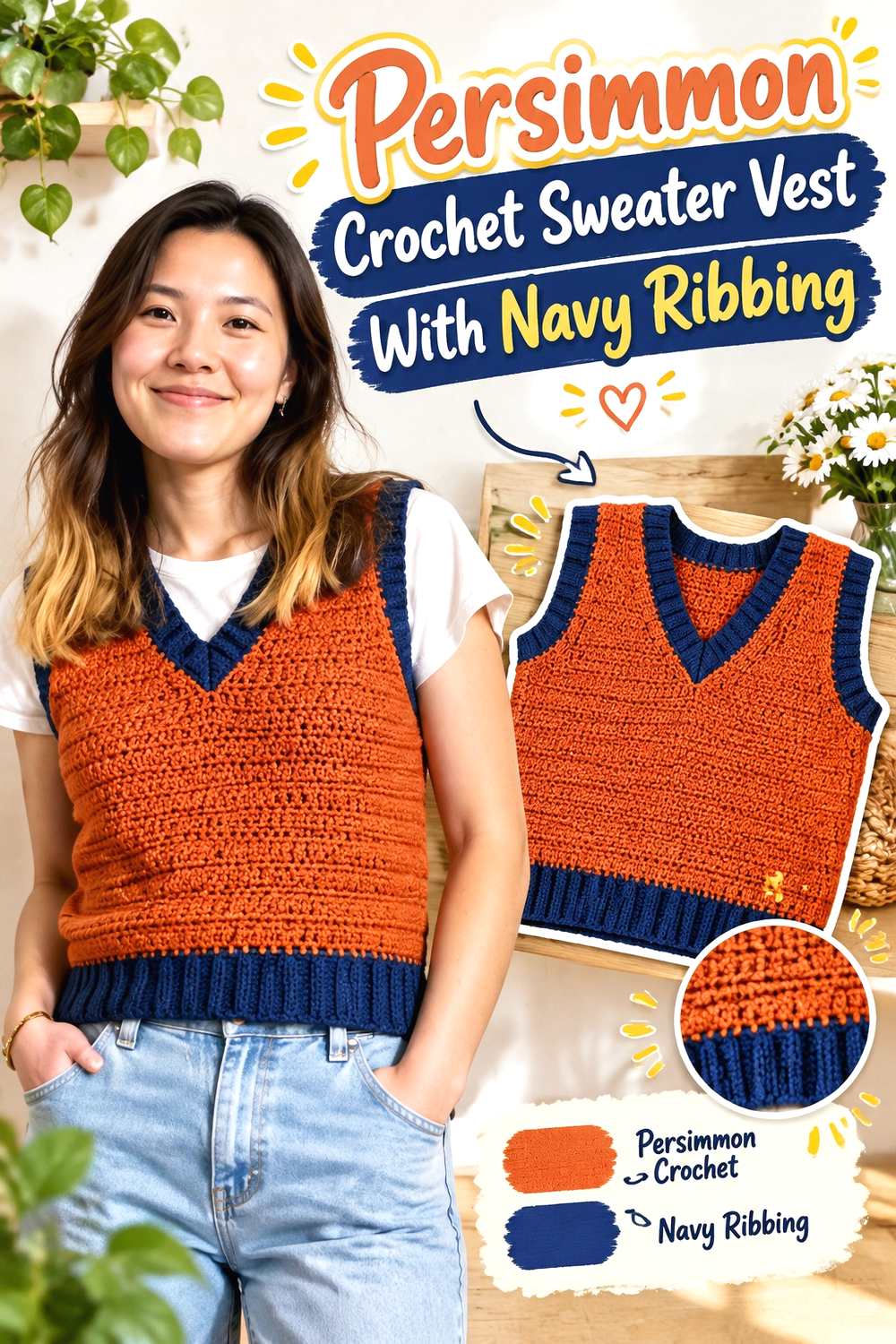
A sweater vest makes it easy to keep persimmon dominant while assigning navy to structural edges. Persimmon can cover the front and back panels, with navy following the neckline, armholes, or lower ribbing. The result uses contrast to trace the garment’s shape rather than turning the body into alternating color sections.
Persimmon Should Carry the Main Navy-Trimmed Crochet Vest Panels
Large persimmon panels establish the warm color before any dark trim is added. Keeping those panels mostly uninterrupted also lets stitch texture remain visible without competing against repeated horizontal color changes.
Check the front and back together before expanding the navy accents. The vest should still read as persimmon-led from more than one angle.
Navy Can Sharpen Persimmon Crochet Necklines and Armholes
Navy around the neckline and armholes gives the openings a clear visual boundary. Because those areas repeat around the garment, even narrow navy finishing can feel substantial.
If the trim begins to overpower the persimmon body, keep the navy narrower rather than adding equal-width dark bands everywhere.
Creator Credit: VivCrochets
3. Persimmon And Navy Crochet Bucket Hat
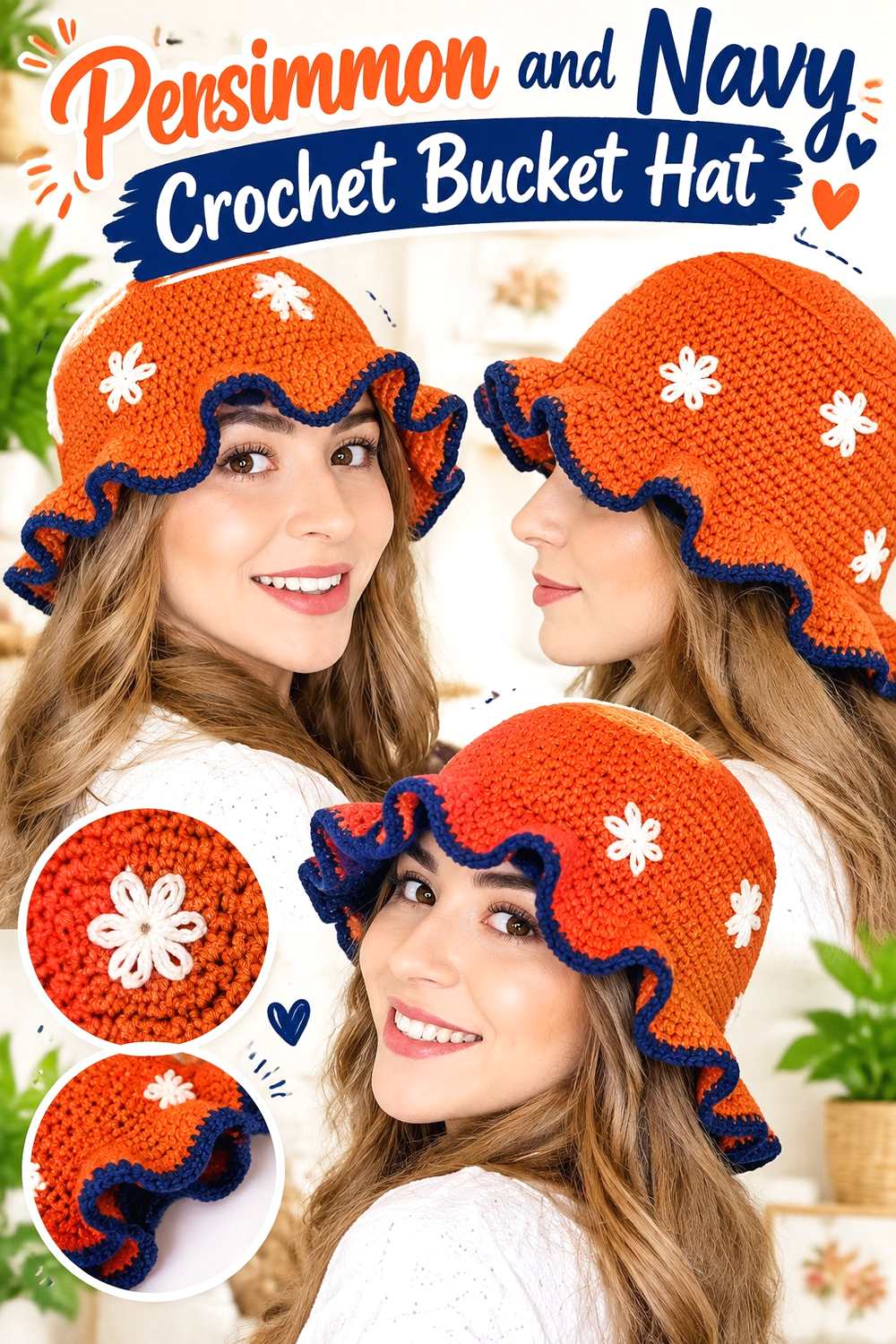
A bucket hat can divide the palette between crown, sides, and brim without becoming overly complicated. Persimmon can lead across the crown and upper section, while navy becomes more visible around the brim. That placement puts the darkest color at the widest outer boundary of the hat.
Persimmon Keeps the Navy-Accented Crochet Hat Warm-Led
Using persimmon continuously over most of the crown and sides prevents the compact hat from becoming visually chopped into many short stripes. It also gives textured stitches one continuous color field.
If you want additional navy above the brim, repeat it as one controlled band rather than adding several unrelated interruptions.
Navy Gives the Persimmon Crochet Bucket Hat a Strong Brim
A navy brim can visually ground the lighter, warmer upper portion and clearly mark the change in the hat’s silhouette. Because the brim occupies a noticeable area, you may not need navy elsewhere in equal amounts.
Check the color balance with the brim folded and lying naturally before deciding whether another navy accent is necessary.
Creator Credit: Brunaticality
4. Navy Crochet Blanket With Persimmon Contrast Bands
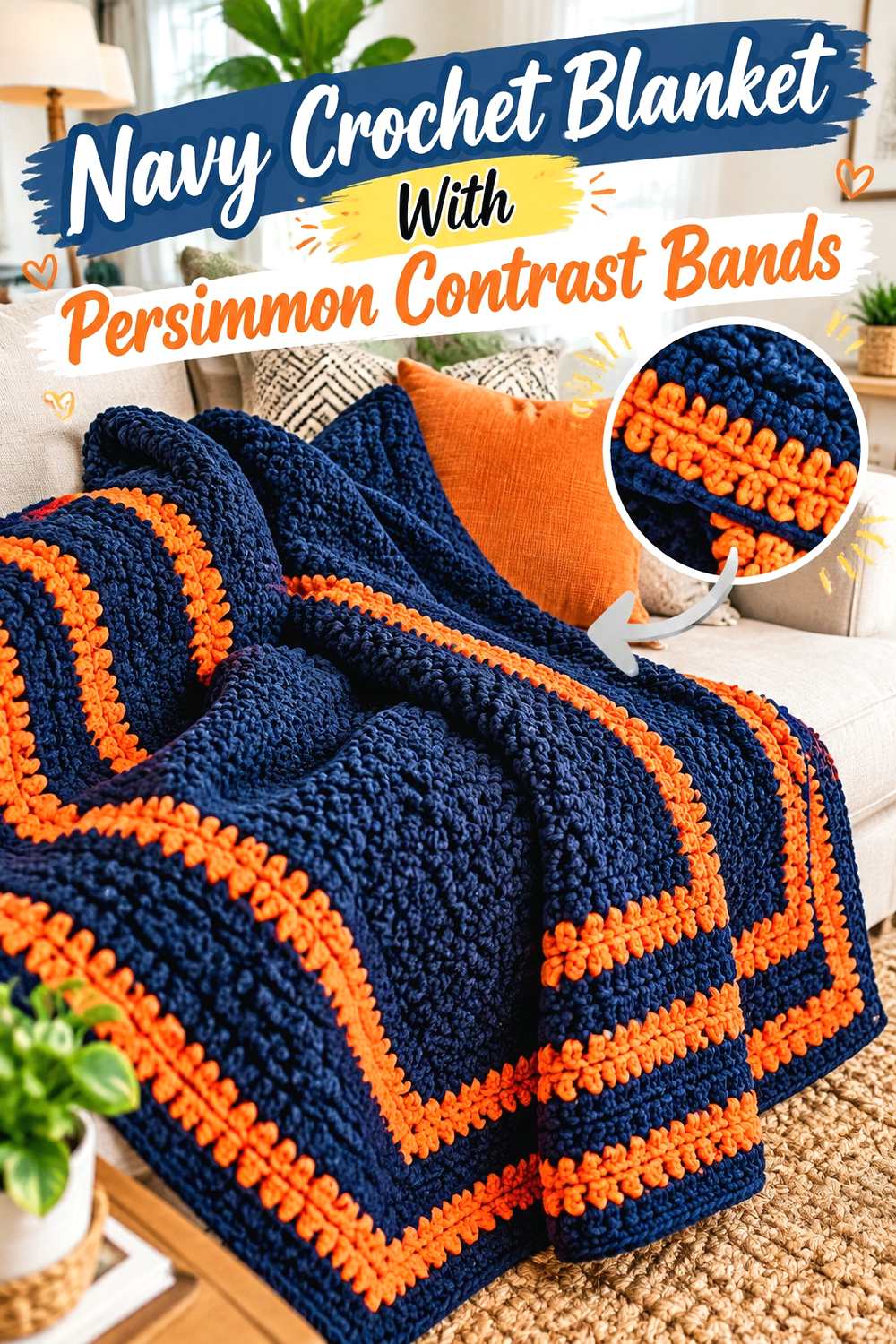
A blanket can reverse the palette by letting navy cover the larger field while persimmon appears at planned intervals. The dark foundation gives persimmon bands or blocks strong separation, but repetition is important: one isolated warm stripe can look disconnected across a large surface.
Navy Can Give Persimmon Crochet Blanket Accents More Separation
Keep enough uninterrupted navy between persimmon sections for the warm color to remain individually visible. If the persimmon areas sit too close together, the blanket can shift toward an almost equal color split.
A larger navy field also gives textured or patterned sections room to remain visible without every change being defined by color.
Persimmon Needs Repetition Across the Navy Crochet Blanket
Repeat persimmon through the blanket rather than concentrating it entirely at one end. The intervals do not need to occupy equal amounts of space, but they should establish a recognizable color rhythm.
If you want a quieter version, make the persimmon sections narrower while keeping their placement consistent.
Creator Credit: CJ Design
5. Persimmon Crochet Scarf With Navy End Panels
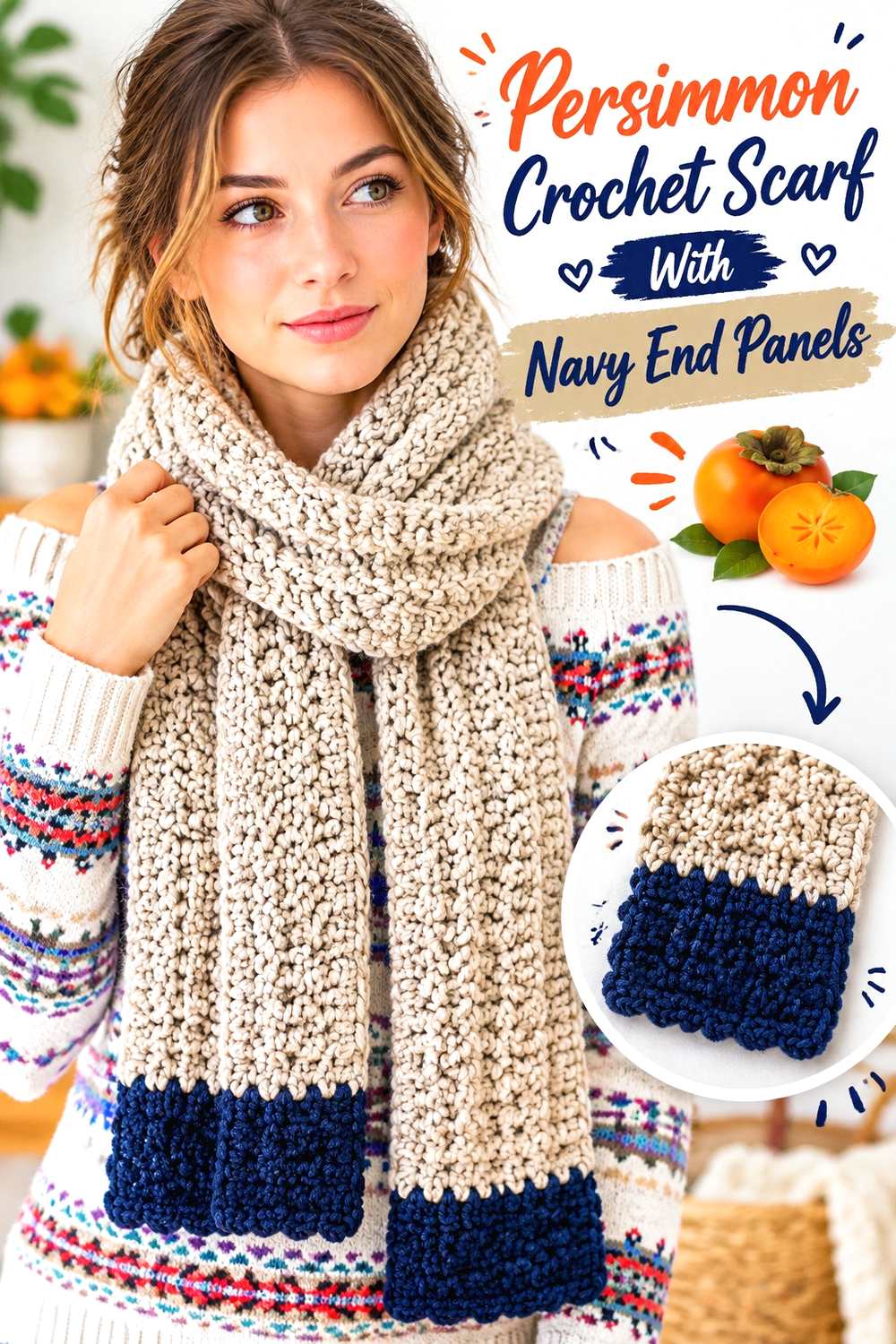
A long scarf can stay predominantly persimmon while navy creates a clear finish at both ends. This avoids frequent striping through the central length and gives the accessory two balanced dark stopping points.
Persimmon Can Run Continuously Through the Navy-Ended Crochet Scarf
Keeping the central length persimmon lets stitch texture provide most of the visual movement. This is useful if the scarf construction already has pronounced rows, ribs, or other surface details.
If the persimmon section feels too dominant, enlarge both navy end areas rather than inserting random dark stripes in the middle.
Navy Should Balance Both Ends of the Persimmon Crochet Scarf
Using navy at both ends keeps the darker color visible whether the scarf hangs straight or is wrapped. Aim for similar visual weight on each end so one side does not appear unfinished.
Optional fringe or edge details can repeat one of the existing colors instead of introducing a third shade that competes with the two-color plan.
Creator Credit: B.Hooked Crochet
6. Persimmon Crochet Basket With A Navy Rim
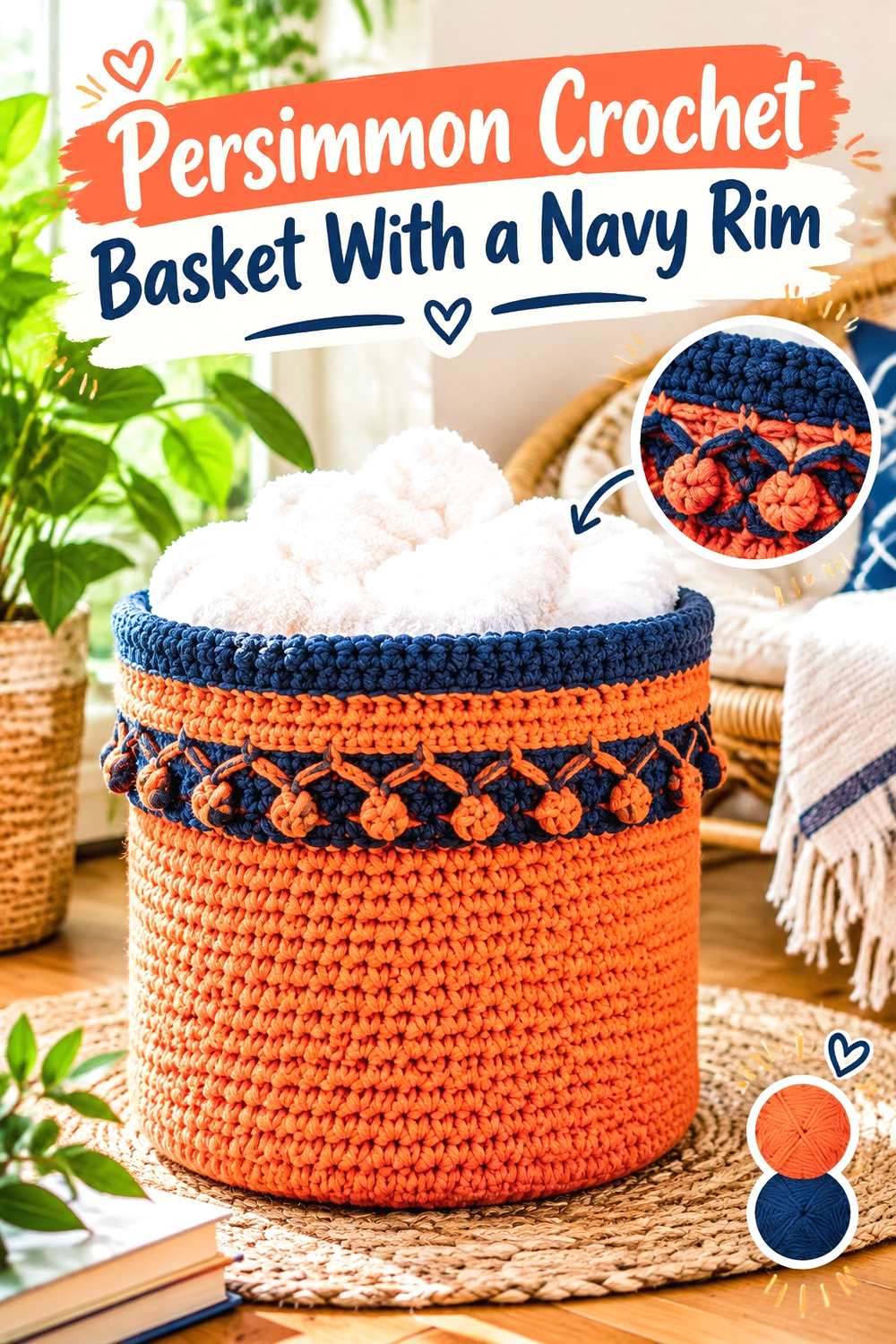
A crochet basket works well with a straightforward body-and-rim division. Persimmon can occupy most of the sides while navy circles the opening, placing the darkest shade at a structural boundary that is already visually important.
Persimmon Can Cover the Main Navy-Rimmed Crochet Basket Body
An uninterrupted persimmon body lets the basket’s shape and dense surface remain the main features. Scattered navy sections through the center are unnecessary unless you specifically want a striped basket.
If handles or openings are part of the construction, decide whether they belong visually with the persimmon body or navy rim before adding another color change.
Navy Can Frame the Persimmon Crochet Basket Opening
A navy upper section gives the basket a clear dark line around its opening. This can be enough contrast for the entire project, especially when persimmon already covers a large area.
Keep the rim proportional to the basket body. A very deep navy section will shift the piece toward a more equal two-color arrangement.
Creator Credit: TL Yarn Crafts
7. Navy Crochet Fingerless Gloves With Persimmon Cuffs

Fingerless gloves are compact enough for navy to carry most of the surface while persimmon appears in clearly repeated cuffs. Using the same color arrangement on both hands matters more here than creating a complicated distribution.
Navy Should Stay Consistent Across Both Persimmon-Cuffed Crochet Gloves
Use navy similarly on the right and left glove so the pair looks coordinated when the hands are together. If one glove has noticeably more persimmon elsewhere, the imbalance can be more obvious than it would be on a single accessory.
Let the navy body remain the stable part of the pair before deciding whether another accent is needed.
Persimmon Gives the Navy Crochet Gloves a Warm Cuff Boundary
Persimmon at both wrists creates a strong transition against the darker hand sections. Because the cuffs already have a separate structural role, the warm color looks purposeful there.
If you repeat persimmon near another opening, use a smaller amount so the cuffs remain the primary accent.
Creator Credit: naztazia
8. Persimmon Crochet Mug Cozy With Navy Edging
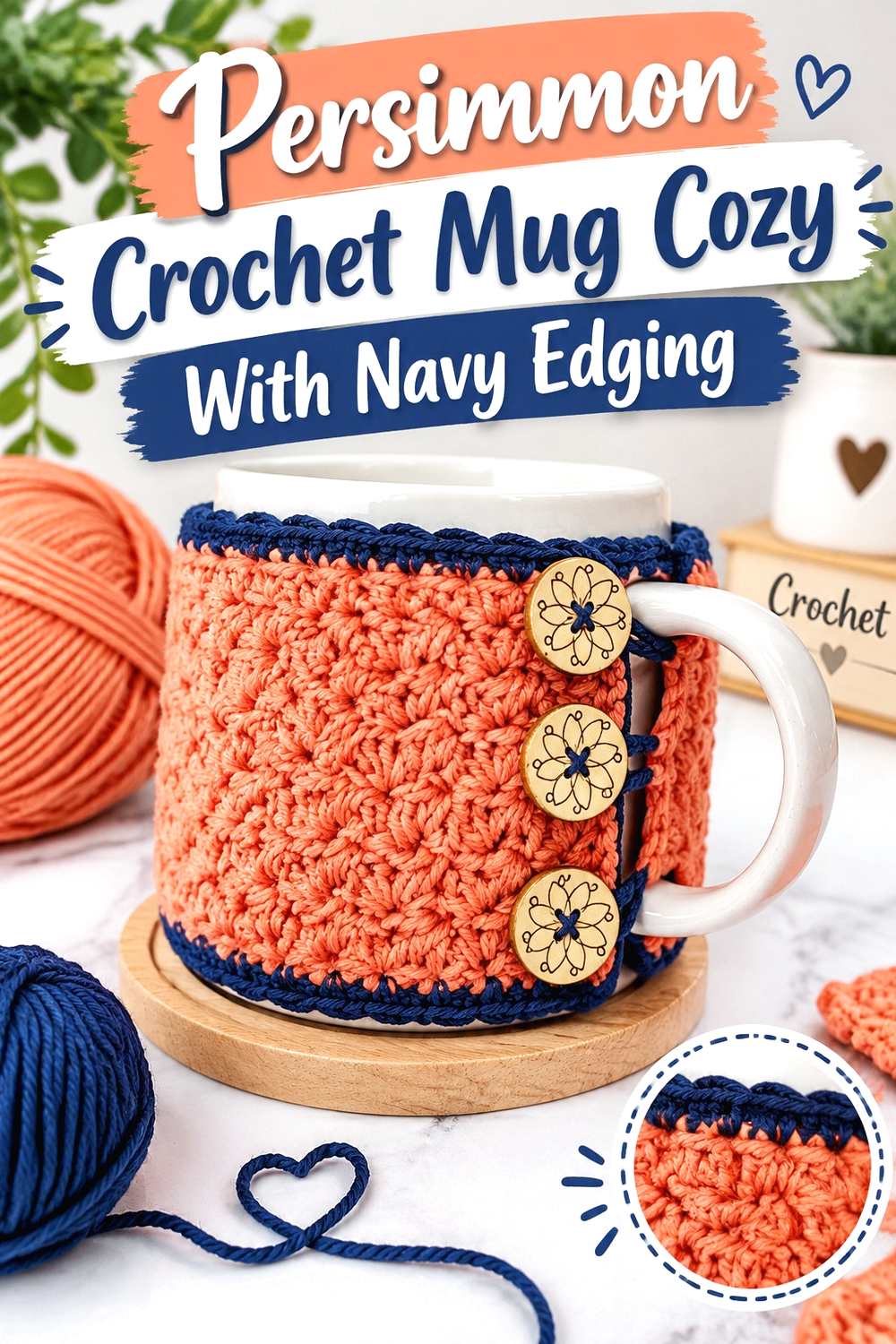
A mug cozy has limited surface area, so a simple persimmon field with navy edging provides enough contrast without making the small project overly busy. Navy can emphasize an outer edge, fastening area, or other narrow structural detail.
Persimmon Keeps the Navy-Edged Crochet Mug Cozy Uncluttered
Using persimmon across the central band creates one clear background for any stitch texture. Several alternating navy stripes could make the compact surface look much busier than the same arrangement on a scarf or blanket.
Keep the warm section broad if persimmon is meant to remain the obvious main color.
Navy Can Mark Persimmon Crochet Mug Cozy Boundaries
Use navy where the cozy naturally ends or changes function, such as around an outer edge or fastening section. The dark color then helps define the construction instead of appearing as an arbitrary decoration.
If navy is visible only in one tiny spot, consider repeating a restrained amount on another edge so the contrast feels connected.
Creator Credit: Dreamee Crochet
9. Persimmon And Navy Ruffled Crochet Scrunchie
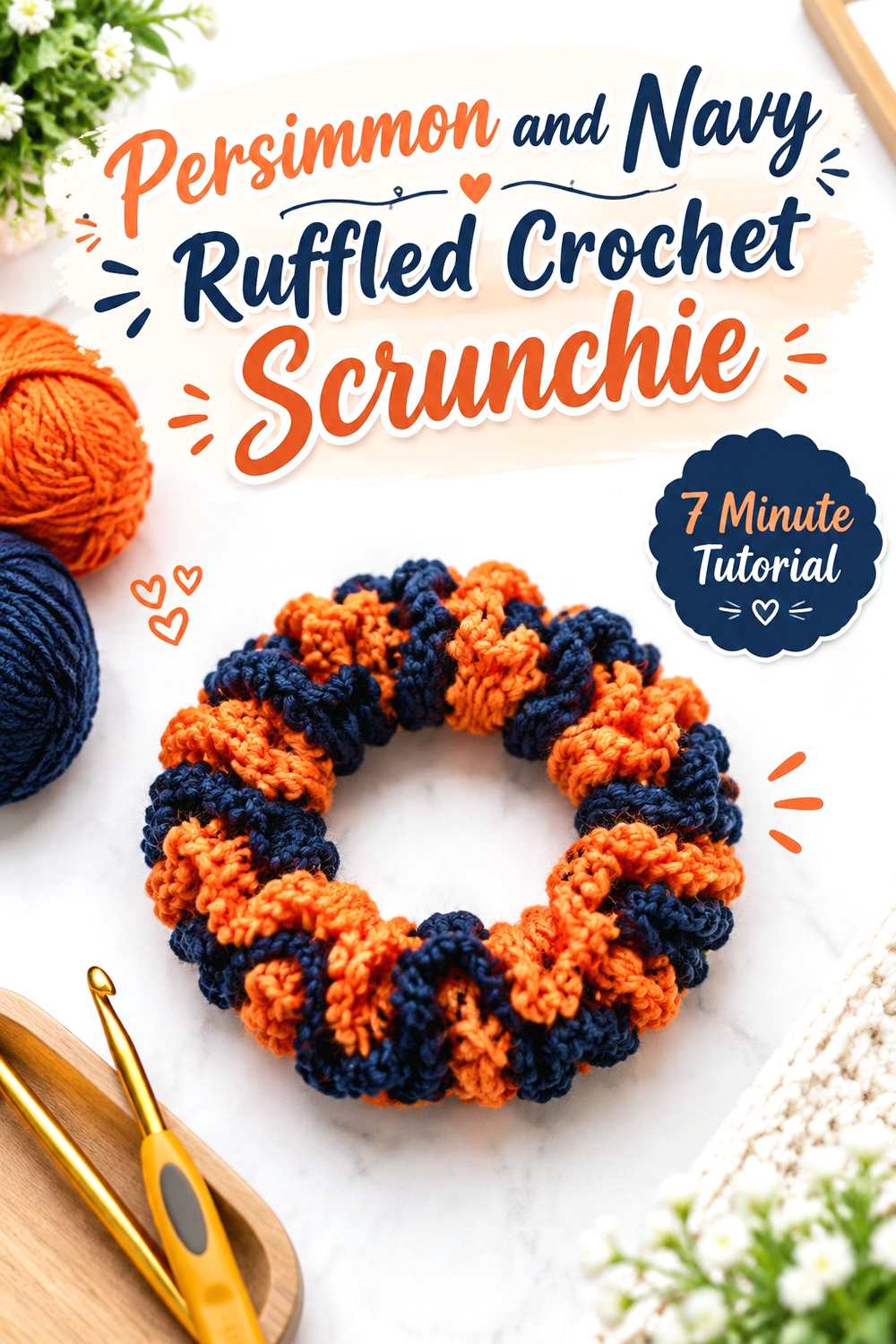
A scrunchie allows the colors to overlap visually as the fabric gathers. Navy can sit closer to the inner section while persimmon occupies more of the outer ruffle, allowing the warm shade to become increasingly visible as the scrunchie expands.
Navy Can Anchor the Inner Persimmon Crochet Scrunchie
Keeping navy near the inner gathered area creates a dark base that appears in small flashes between folds. It supports the outer color without requiring the two shades to alternate evenly.
Make sure enough navy remains visible for the contrast to look intentional once the scrunchie is gathered.
Persimmon Can Lead the Outer Navy Crochet Ruffle
Persimmon works well at the widest visible edge because the ruffle displays more surface there. This lets persimmon dominate the finished accessory even when navy occupies part of the inner construction.
For a darker variation, reverse the positions rather than breaking both colors into numerous tiny sections.
Creator Credit: Noor’s Knits
10. Navy Crochet Slippers With Persimmon Trim
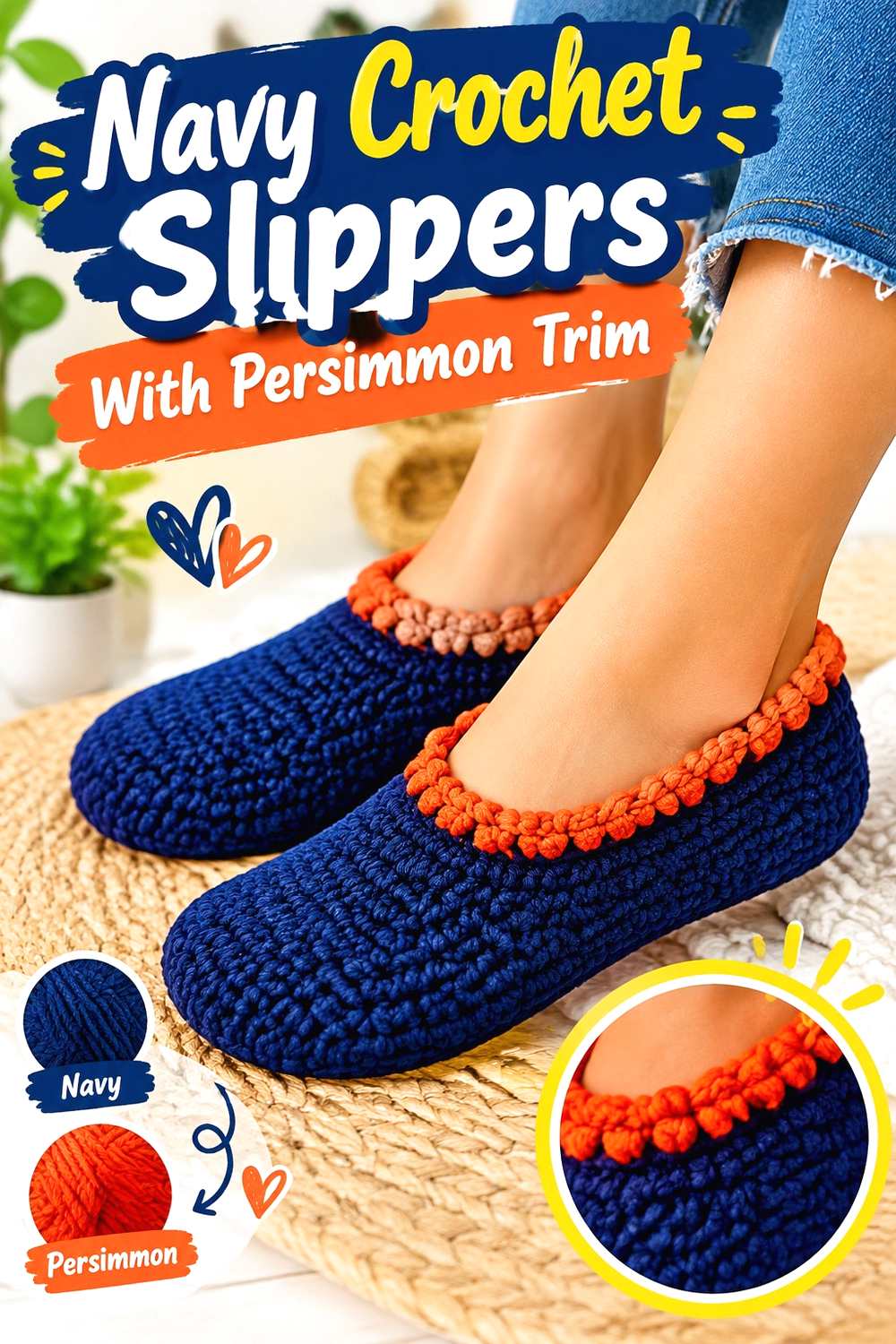
Slippers benefit from mirrored color placement across the pair. Navy can cover most of each upper, while persimmon outlines the opening or another small finishing area. The contrast is strong enough that a narrow warm trim can still remain obvious.
Navy Can Keep Both Persimmon-Trimmed Crochet Slippers Coordinated
Work the navy distribution consistently across the pair before adding the contrasting finish. This gives both slippers the same dark visual foundation and makes any difference in the persimmon placement easier to notice.
Avoid adding unrelated blocks of persimmon to only one slipper unless an intentionally mismatched pair is the goal.
Persimmon Can Define the Navy Crochet Slipper Openings
A persimmon edge around each opening creates a warm outline without competing with the larger navy upper. Since the contrast is concentrated at a narrow boundary, keeping the trim visually even matters.
Compare the finished pair side by side before deciding whether a second persimmon detail would improve or clutter the design.
Creator Credit: Littlejohn’s Yarn
11. Persimmon Crochet Poncho With A Navy Border
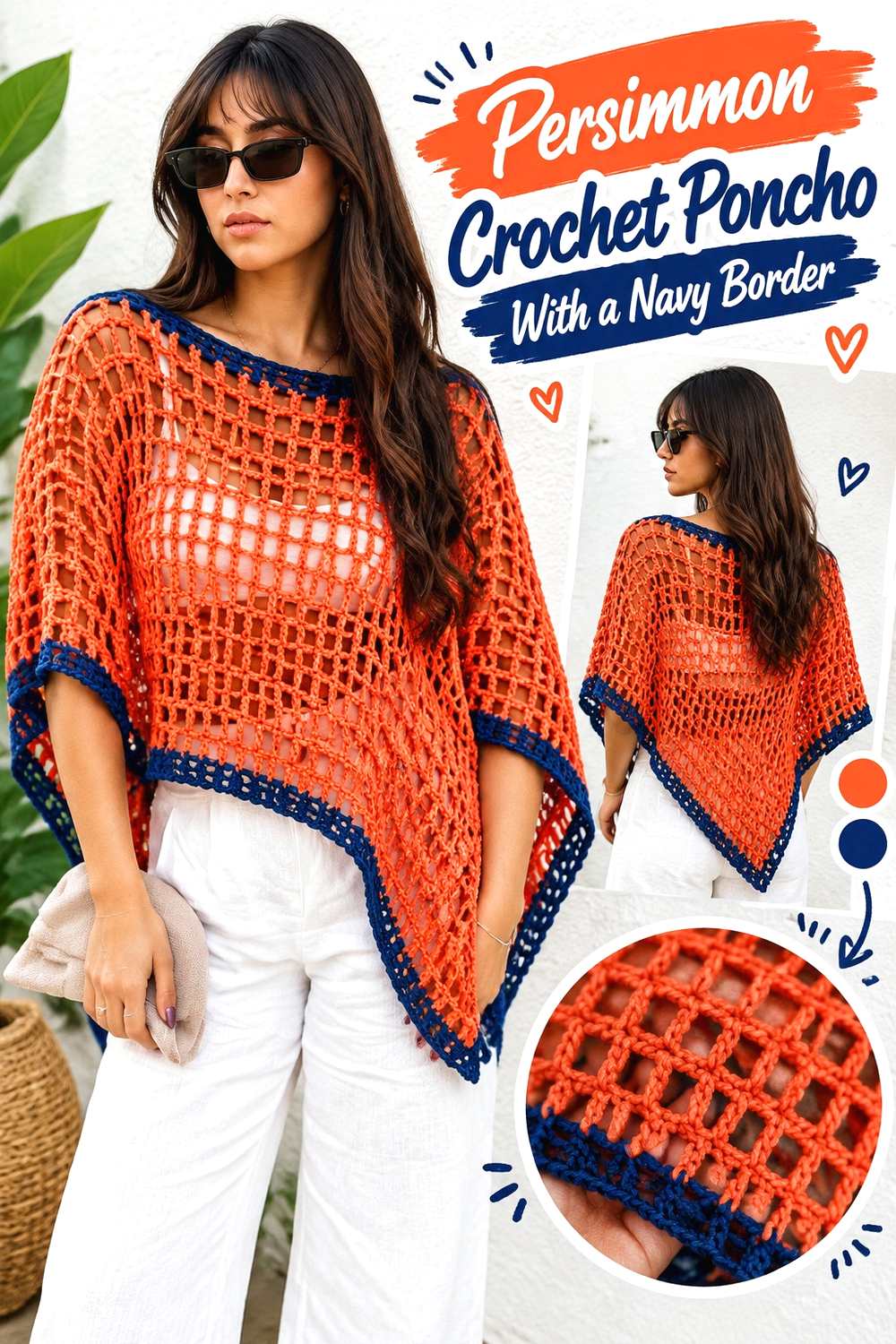
The broad surface of a poncho gives persimmon room to function as a true main color. Navy can then trace the neckline, lower edge, or another major boundary without dividing the full garment into competing blocks.
Persimmon Can Keep the Navy-Bordered Crochet Poncho Visually Open
A large continuous persimmon area allows the shape and stitch pattern to remain readable across the front and back. This is especially useful if the poncho contains openwork or directional texture that already supplies visual movement.
Keep the warm color balanced around the garment so navy does not appear to weigh down only one side.
Navy Can Outline the Persimmon Crochet Poncho Silhouette
Navy works effectively along the outer edge because it follows the poncho’s existing shape. A narrower dark border preserves persimmon dominance, while a deeper one moves the design closer to an equal two-color split.
Repeat navy at the neckline if you want the dark outline to feel connected from top to bottom.
Creator Credit: Lorena
12. Persimmon Crochet Coasters With Navy Outer Edges
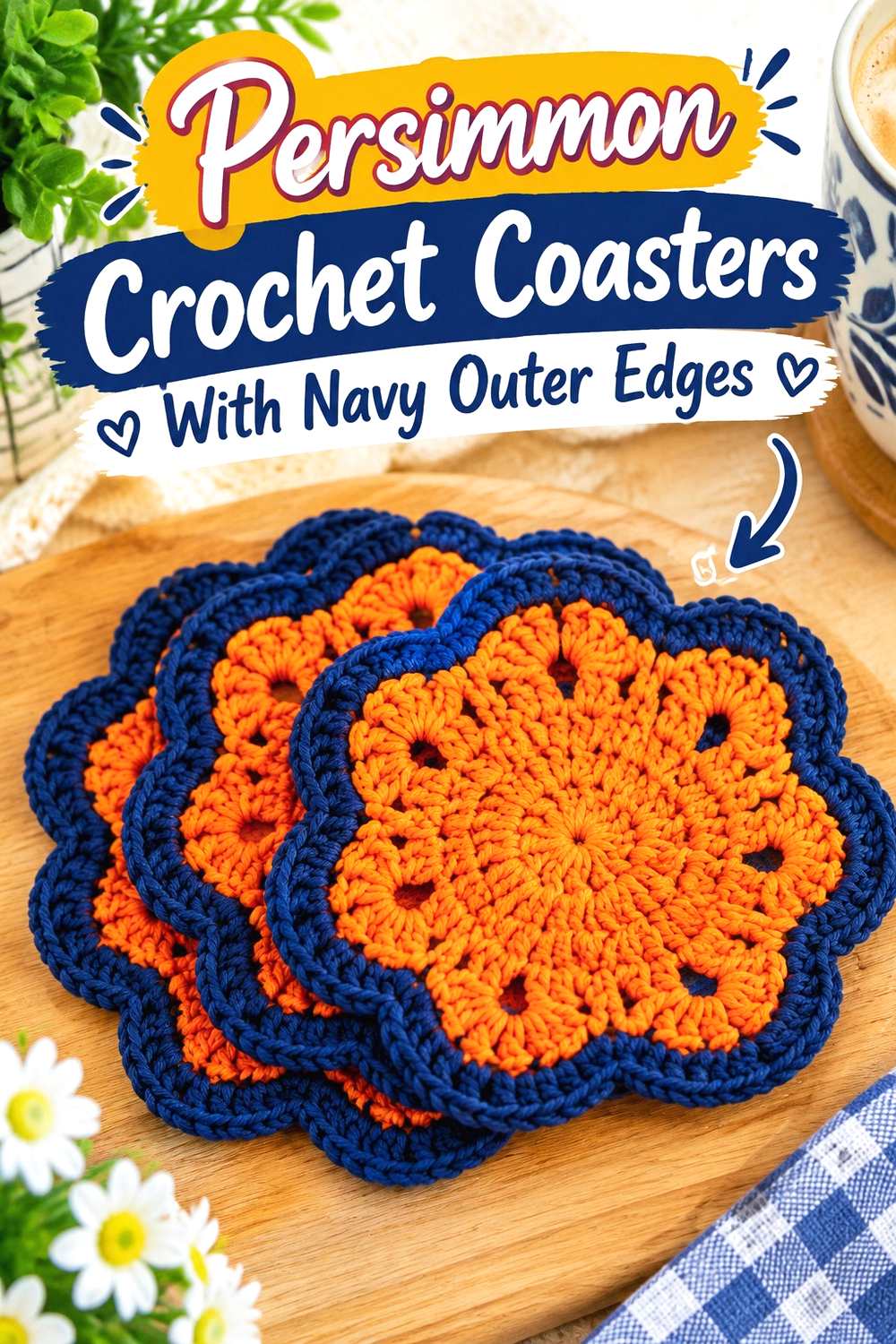
Coasters provide a compact format for a centered color hierarchy. Persimmon can fill most of each coaster, while navy emphasizes the final outer shape. Repeating the same arrangement across a set makes the palette feel organized.
Persimmon Can Fill the Centers of Navy-Edged Crochet Coasters
Keeping persimmon broad through the center prevents the small project from becoming overly segmented. If the coaster includes visible texture, one dominant color also lets that texture stay readable.
Use similar persimmon proportions throughout the set if you want the coasters to look closely coordinated.
Navy Can Clarify Persimmon Crochet Coaster Edges
Navy around the perimeter can emphasize scallops, curves, or another decorative outline because it sits directly against the warmer center. The border does not need to be wide to create a noticeable change.
If you vary the navy edge between coasters, repeat the variation systematically rather than changing widths at random.
Creator Credit: Designs by Phanessa
13. Navy Crochet Potholder With A Persimmon Frame
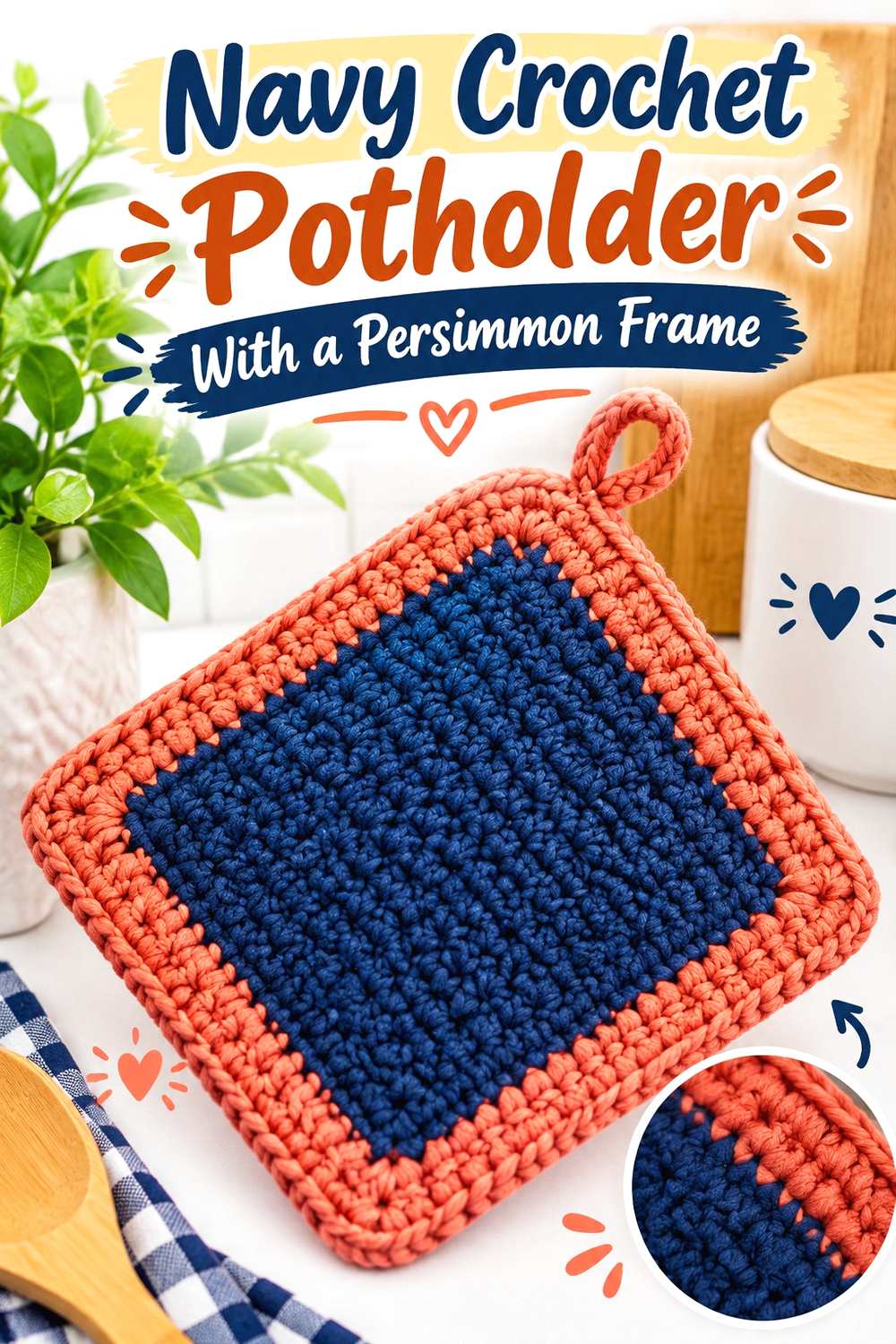
A potholder can use navy as a broad central field while persimmon defines the outside. The warm perimeter keeps the darker center from becoming visually flat and gives the square or rectangular outline a deliberate color boundary.
Navy Can Carry the Main Persimmon-Framed Crochet Potholder Surface
Use navy across the larger central area when you want stitch density and surface texture to remain the primary visual features. Persimmon can then stay out of the main field instead of interrupting it with frequent stripes.
For a functional potholder, follow the source tutorial’s material and construction guidance rather than assuming color choice says anything about heat suitability.
Persimmon Can Frame the Navy Crochet Potholder Perimeter
A persimmon border places the warmer shade where it remains visible from every side. If the design includes a hanging detail, repeating persimmon there can connect that feature to the outer frame.
Keep the border narrow enough for navy to remain the obvious main field if that is your intended hierarchy.
Creator Credit: My Crochet Space
14. Persimmon Crochet Shawl With Navy Edging
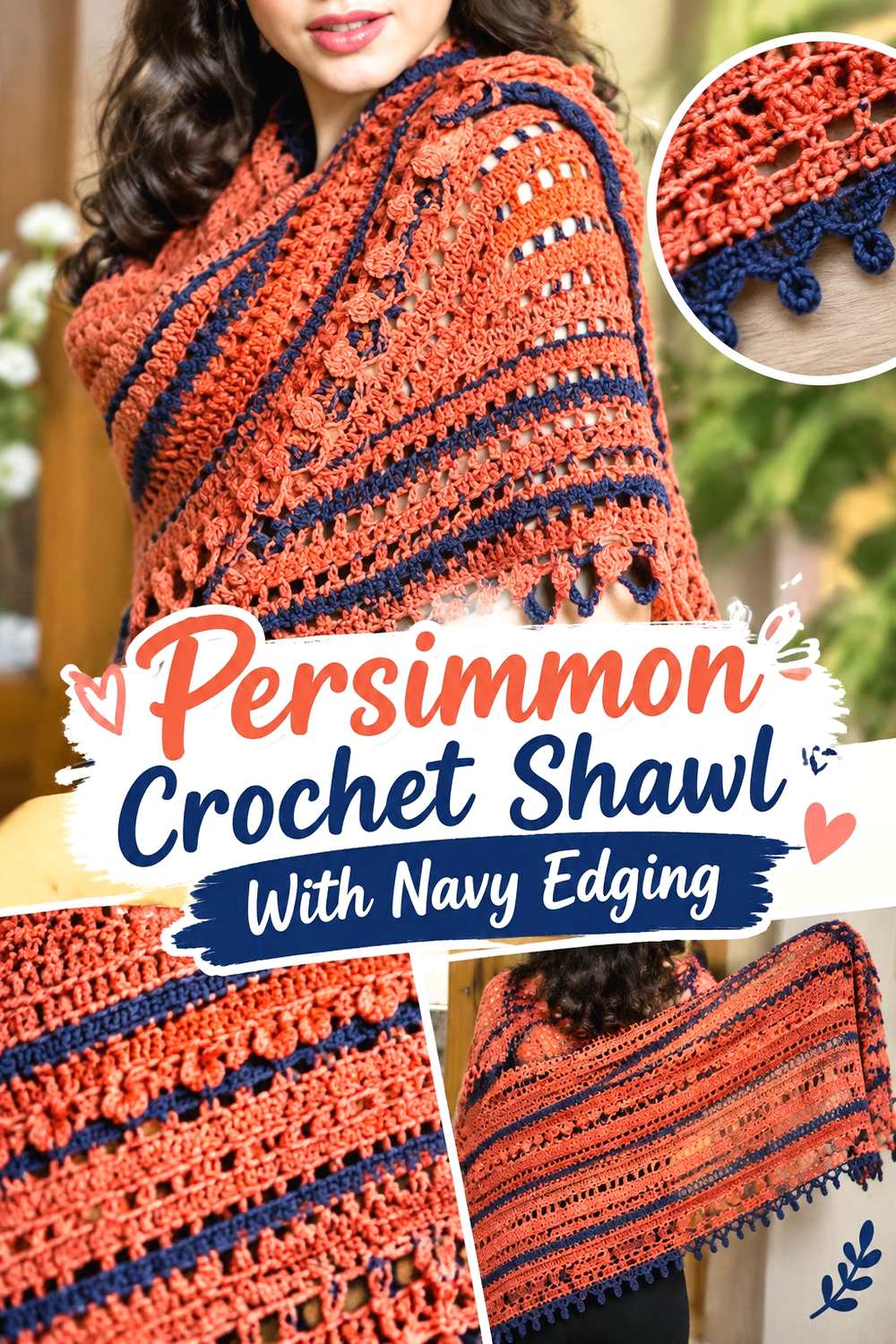
A triangle shawl can carry a large persimmon field while navy follows the widening outer edge. Because the border becomes more visually substantial as the shawl expands, even a relatively restrained navy section can have a strong effect.
Persimmon Can Lead the Main Navy-Edged Crochet Shawl Field
Keeping most of the shawl persimmon lets the expanding shape and any openwork remain continuous. Frequent color changes through the center could compete with that geometry.
If you want more navy, add it toward the outside rather than inserting isolated dark sections near the starting point.
Navy Can Give the Persimmon Crochet Shawl a Defined Finish
A navy border creates a clear dark boundary around the warmer field and can make the outer edge easier to distinguish visually. The wider that navy section becomes, the more balanced the two colors will appear.
Compare the shawl from a distance before deciding how much dark edging the persimmon center needs.
Creator Credit: The Crochet Crowd
15. Persimmon Crochet Market Bag With Navy Handles
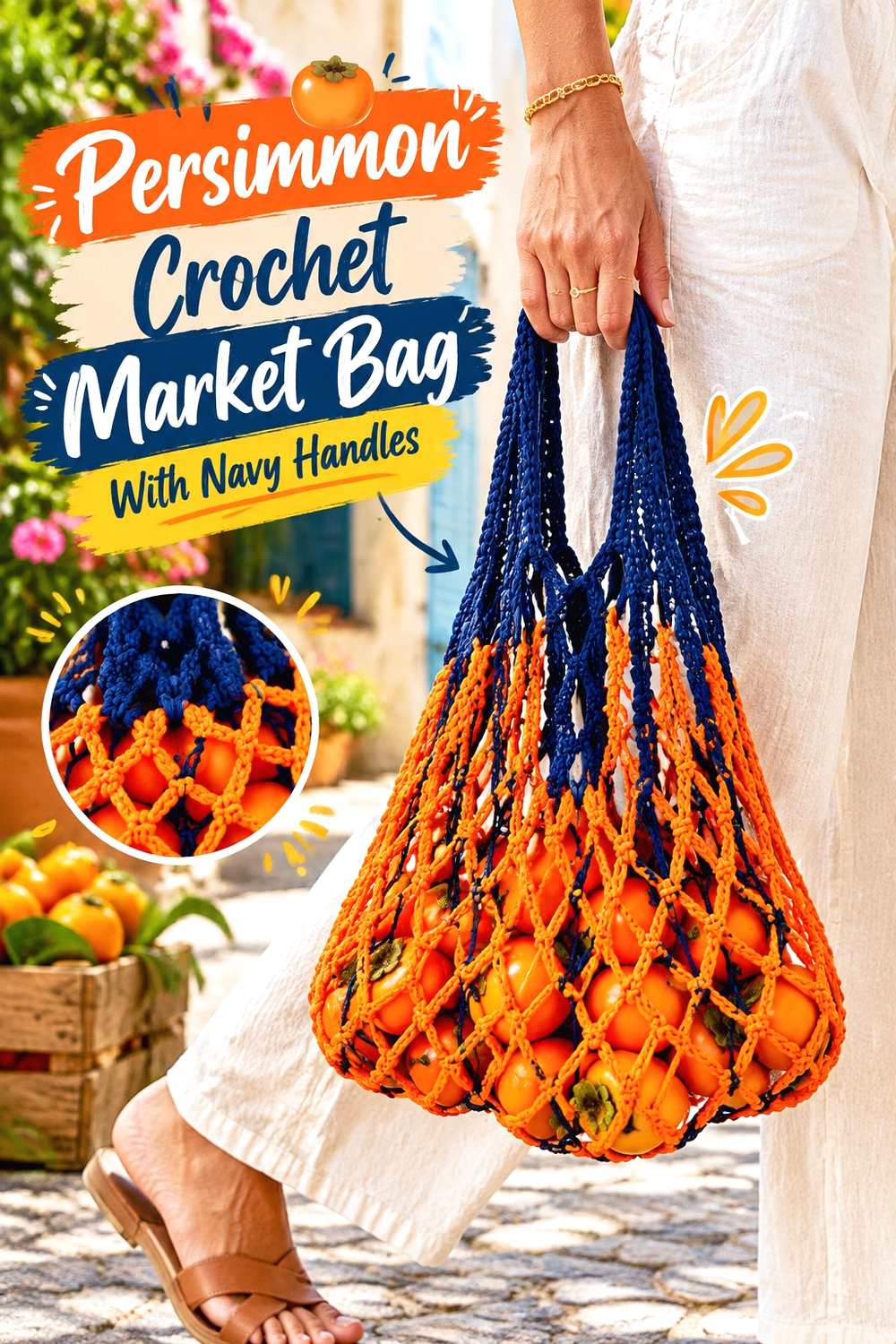
A market bag provides useful structural locations for a darker accent. Persimmon can dominate the open or textured body while navy appears through the handles and upper finishing area, placing contrast where the bag naturally changes from body to carrying sections.
Persimmon Can Keep the Navy-Handled Crochet Market Bag Body Warm
Use persimmon consistently across the main bag body if the stitch structure already creates plenty of pattern. Introducing frequent navy stripes through openwork can make color compete with the holes and repeated texture.
Keeping navy out of most of the central area also makes the handles more distinct.
Navy Can Connect Persimmon Crochet Market Bag Handles to the Top Edge
Carry navy through both handles and, if appropriate to the construction, a small upper section so the dark color appears connected rather than attached only at two isolated points.
If the navy band becomes too deep, it may visually shorten the persimmon body. Reduce the accent area while retaining enough repetition to connect the handles.
Creator Credit: Home Handwork Diy
Comparing Persimmon and Navy Crochet Contrast Strategies
The strongest persimmon-led looks are the vest, basket, poncho, shawl, scarf, and market bag, where the warm color can cover broad uninterrupted areas and navy stays close to structural boundaries. These are useful directions when you want navy to sharpen the design without becoming an equal partner.
For a darker overall appearance, the blanket, gloves, slippers, and potholder can reverse that hierarchy. Navy becomes the visual field, while persimmon provides smaller warm interruptions.
Motif-based and gathered pieces—the granny square tote and scrunchie in particular—allow the two colors to interact more frequently. In those projects, consistency of repetition matters more than keeping one shade confined to a single border.
Conclusion
Persimmon and navy can create much more than one standard two-color crochet look. The main decision is how much visual area each shade should receive and whether the contrast belongs inside the surface or around its structural boundaries.
Choose persimmon-dominant arrangements when you want the warm color to define the project, then use navy at rims, handles, borders, cuffs, joins, and garment openings. Reverse the balance when you want a deeper overall result with smaller persimmon accents. For motif projects, repeat the color roles consistently so individual squares or sections stay connected.
Once you have chosen the contrast direction, use the linked creator tutorials for the exact construction of each piece and adapt only the color distribution to your persimmon-and-navy plan.
Frequently Asked Questions
Do Persimmon and Navy Have Enough Contrast for Crochet?
They can, but check your actual yarns rather than relying only on their color names. Persimmon shades can vary, and some navy yarns are much darker than others. Place the skeins together and look at them from a distance. If important motifs, borders, or texture seem to merge, a grayscale photo can help you check whether the two colors differ enough in light-dark value.
Should Persimmon or Navy Be the Main Crochet Color?
That depends on the visual direction you want. A persimmon-dominant piece will emphasize the warmer side of the palette, with navy providing strong definition at smaller details. A navy-dominant piece will look considerably darker, so even narrow persimmon cuffs, borders, or bands can become noticeable. Decide on the dominant color before planning individual accents so the proportions do not drift toward an unintended 50/50 split.
Where Does Navy Work Best on a Persimmon Crochet Garment?
Navy is especially useful around existing garment boundaries such as necklines, armholes, cuffs, lower edges, and front bands. Those locations allow the darker color to reinforce the shape of the garment. If navy appears in several areas, repeat it with a clear hierarchy rather than making every trim equally wide. This helps persimmon remain dominant while navy still connects different parts of the wearable.
How Can I Keep Persimmon and Navy Crochet From Looking Too Busy?
Avoid changing colors simply because another row or section is available. Give one shade a larger continuous area, then place the second color where it has a specific purpose: separating motifs, defining an edge, marking a cuff, outlining a rim, or connecting handles. Larger color blocks generally create a calmer result than many narrow alternating sections, especially on already textured crochet.
Can I Substitute a Different Orange for Persimmon?
Yes. Look for a warm orange or orange-red shade that preserves the relationship you wanted with navy rather than trying to match a particular commercial color name. If your replacement is much lighter, the contrast will become stronger; if it is darker or more muted, the transition may become less pronounced. Compare the replacement directly against your chosen navy before committing to a large project.
Can I Replace Navy With Another Dark Blue in These Crochet Looks?
Yes. Preserve the role navy plays in the scheme: it should remain the deeper, cooler color when you want the same contrast logic. A lighter blue will reduce the visual weight of borders and trims, while an extremely dark blue may make small persimmon details appear more prominent. Test the two yarns together around the exact motif, cuff, border, or edge where the contrast matters most.