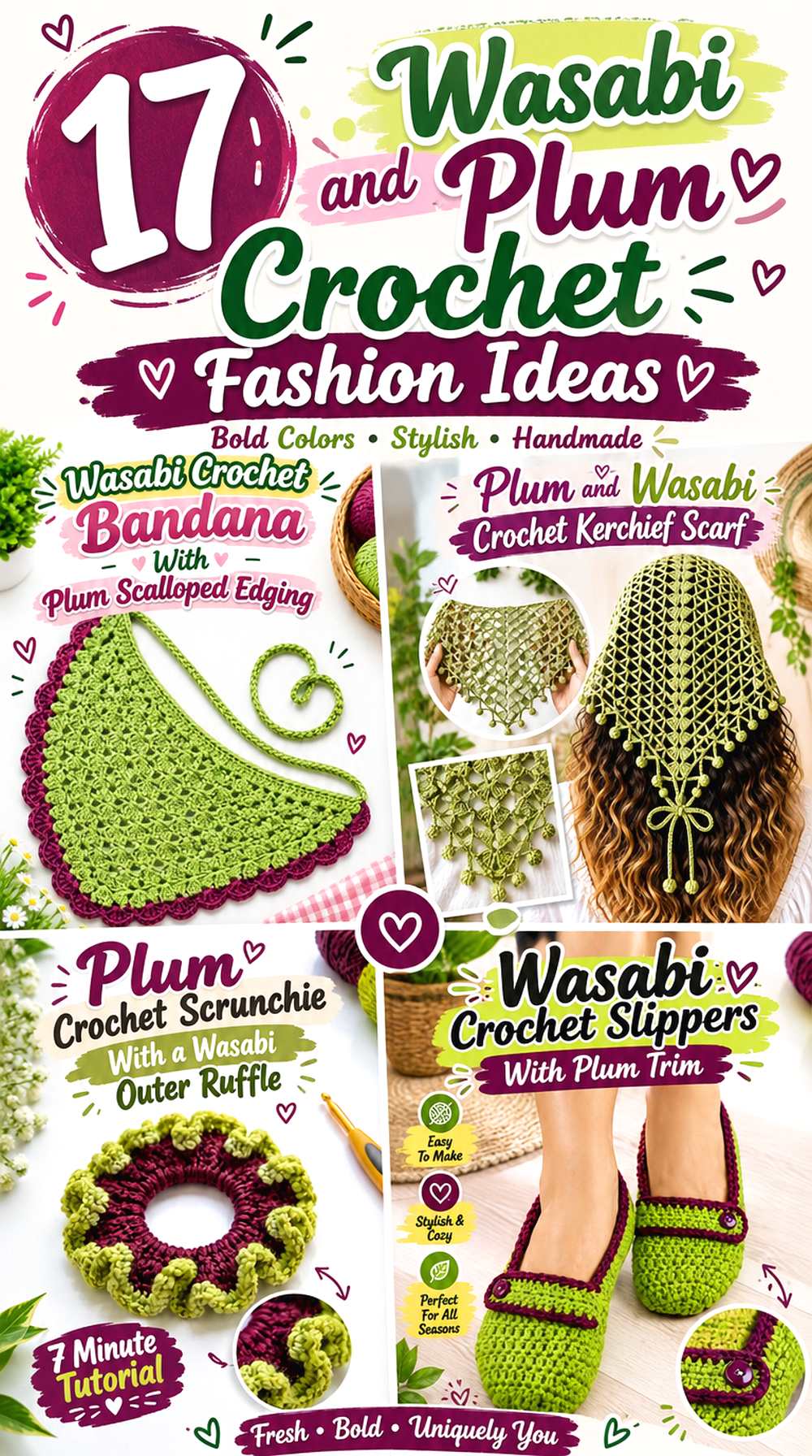
17 Wasabi and Plum Crochet Fashion Ideas
Wasabi and plum create an unusual crochet fashion palette because the two colors bring very different visual weights. Wasabi is bright enough to become an immediate focal point, while plum supplies a darker anchor that can keep larger garments and accessories from looking overly vivid.
The most wearable combinations do not require equal amounts of both colors. A plum cardigan can use wasabi only at cuffs and edging, while a crop top can let wasabi cover most of the body and reserve plum for straps or borders. Small accessories such as berets, scrunchies, and headbands can tolerate a more concentrated color split because there is less surface competing for attention.
The 18 ideas below explore different ways to control that contrast through garment panels, collars, ribs, motifs, hems, straps, trims, and other construction boundaries.
Quick List
- Plum Crochet Cardigan With Wasabi Cuffs And Edging
- Wasabi Crochet Sweater Vest With Plum Hood And Trim
- Wasabi And Plum Crochet Bucket Hat
- Plum Crochet Tote With Wasabi Handles
- Wasabi Crochet Scarf With Plum Ends
- Plum Crochet Poncho With Wasabi Border
- Plum Crochet Balaclava With Wasabi Face Edging
- Wasabi Crochet Fingerless Gloves With Plum Cuffs
- Plum Crochet Leg Warmers With Wasabi Bands
- Wasabi And Plum Crochet Granny Shrug
- Plum Crochet Skirt With Wasabi Waist And Hem
- Plum Crochet Beret With Wasabi Band
- Wasabi Crochet Ear Warmer With Plum Center Detail
- Plum Crochet Scrunchie With A Wasabi Outer Ruffle
- Wasabi Crochet Slippers With Plum Trim
- Plum And Wasabi Crochet Kerchief Scarf
- Wasabi Crochet Bandana With Plum Scalloped Edging
How to Balance Wasabi and Plum Across Crochet Fashion
Wasabi usually needs less surface area than plum to remain noticeable. That makes it useful for cuffs, hems, borders, straps, pocket edges, and motif centers when you want the garment to stay mostly dark. On a plum cardigan, skirt, poncho, or pair of leg warmers, small repeated areas of wasabi can create enough contrast without dividing the whole piece into equal blocks.
The relationship can be reversed on smaller or lighter pieces. A wasabi crop top, bandana, or pair of gloves can carry the brighter color across most of the surface because the overall object is smaller. Plum can then concentrate at edges where the darker value gives the shape more definition.
Whichever color dominates, repeat the supporting shade in more than one logical place when possible. A wasabi cuff can connect visually to a wasabi neckline; a plum tote handle can connect to a plum upper border. Purposeful repetition generally looks more controlled than isolated contrast.
Keep Wasabi and Plum Contrast Connected to Garment Structure
Strong color contrast becomes easier to manage when it follows parts of the crochet piece that already have visual boundaries. Ribbing, armholes, necklines, hems, sleeve cuffs, hat brims, bag handles, and scarf ends give you natural stopping points for a color change.
Texture should also influence placement. If a garment contains pronounced cables, clusters, granny stitches, or openwork, covering every texture change with a new color can make the surface unnecessarily busy. Let the stitch pattern provide some of the variation and use wasabi or plum to emphasize only the details that need stronger separation.
If your exact yarn shades differ from the names in this article, preserve the relationship instead of chasing an exact commercial match. Look for a sharp yellow-green to fill the wasabi role and a noticeably deeper purple to fill the plum role, then compare them directly before committing to a large garment.
1. Plum Crochet Cardigan With Wasabi Cuffs And Edging
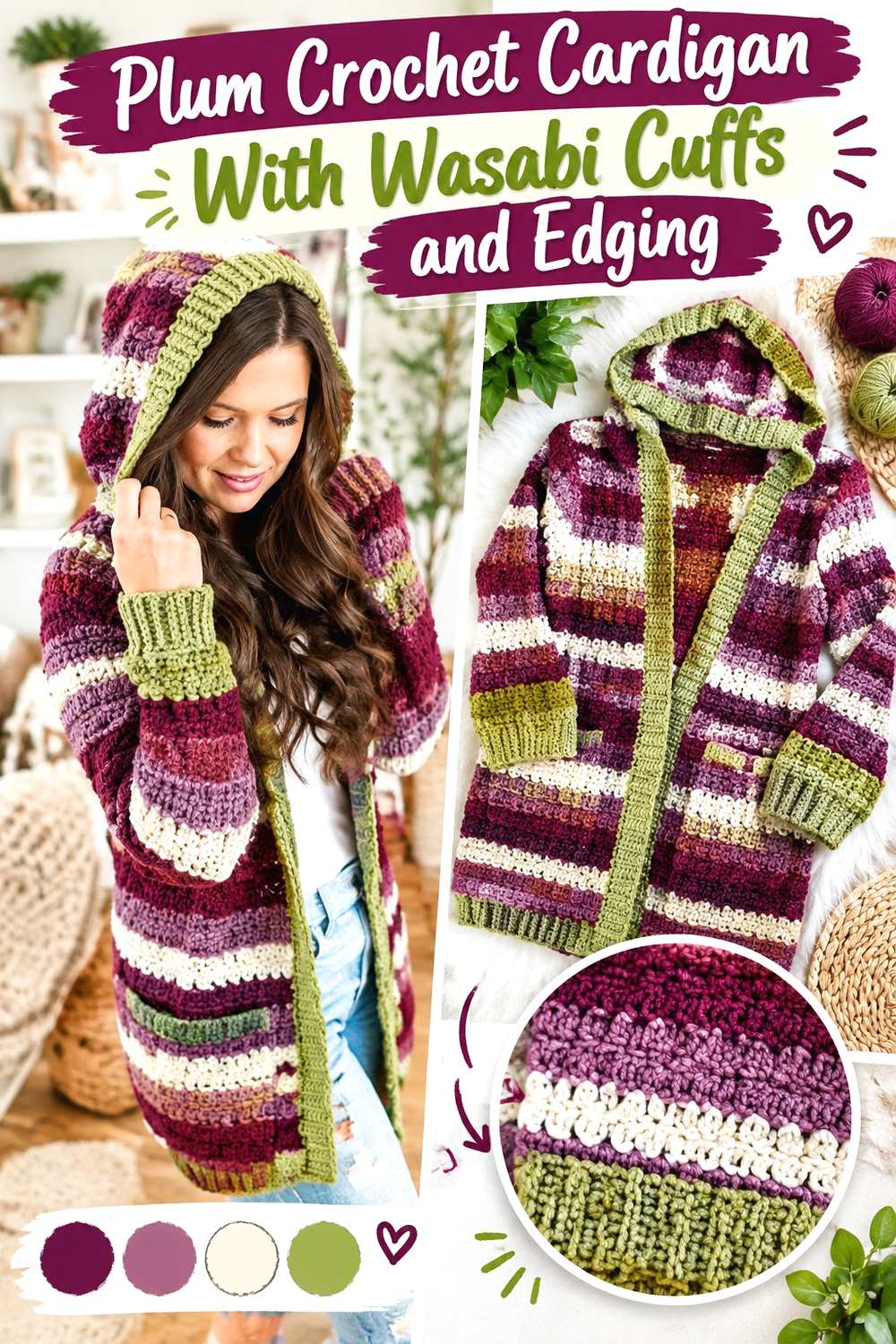
A cardigan gives plum enough space to act as a deep foundation while wasabi marks selected garment boundaries. Keep the body and most of the sleeves plum, then repeat wasabi at cuffs, the front opening, or the lower edge. This arrangement makes the brighter color visible from several angles without breaking the large panels into competing blocks.
Plum Keeps the Wasabi-Trimmed Crochet Cardigan Grounded
Use plum across the front, back, and major sleeve areas if you want the cardigan to remain the darker piece in an outfit. Large continuous plum panels also give textured crochet a stable background.
If you add wasabi to every seam and pocket, the bright shade can start competing with the main panels. Choose the most visible boundaries first.
Wasabi Can Trace the Plum Crochet Cardigan Edges
Wasabi works particularly well at repeated boundaries such as cuffs and front bands. Connecting those areas with the same bright accent makes the color plan look deliberate instead of adding one isolated green detail.
Keep wasabi edging relatively controlled if plum is meant to remain dominant.
Creator Credit: MJ’s Off The Hook Designs
2. Wasabi Crochet Sweater Vest With Plum Hood And Trim
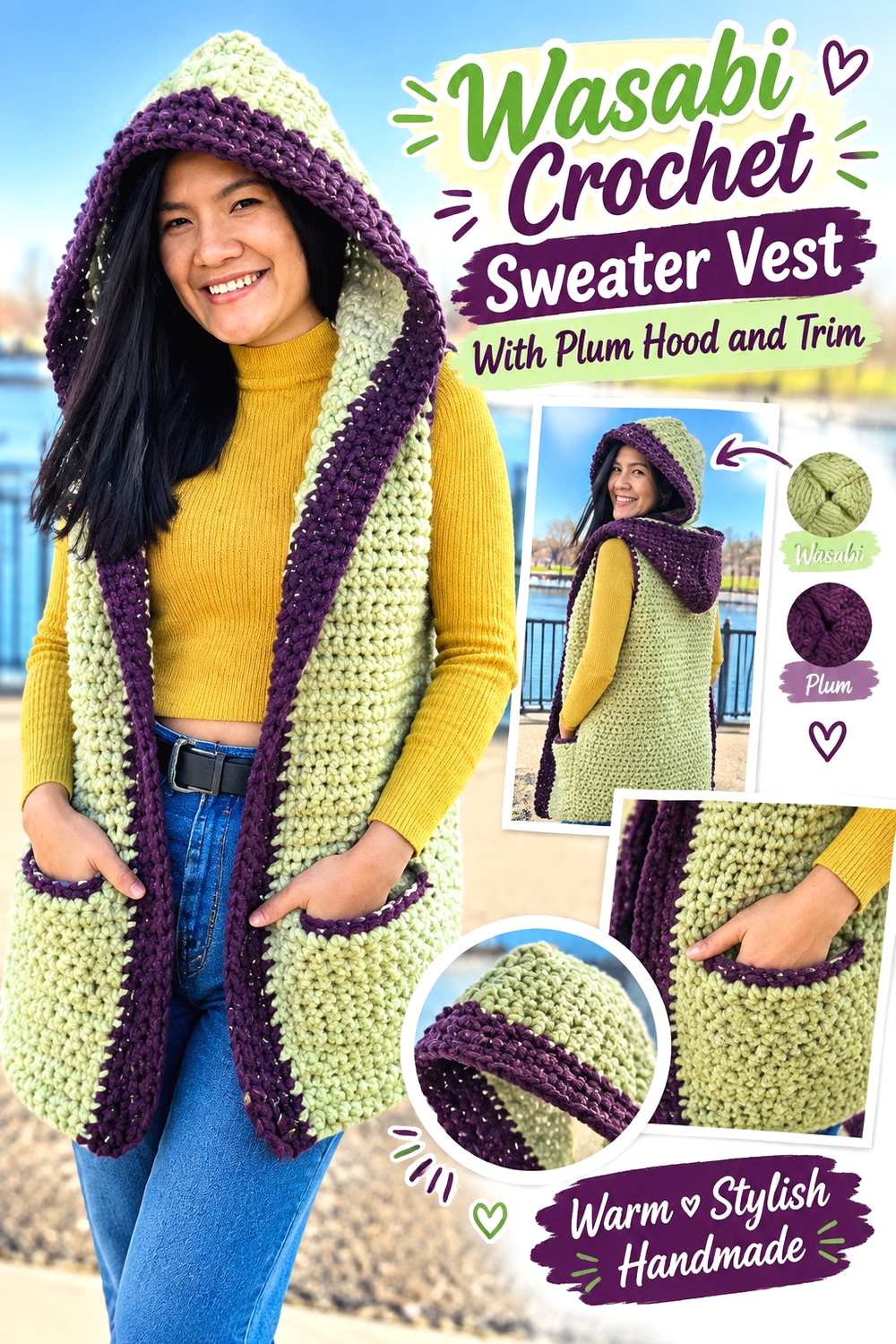
A hooded vest can reverse the balance by using wasabi across the main body while plum concentrates around the hood, collar, pockets, or other finishing sections. The darker plum gives the brighter body a strong frame and can visually connect several functional details.
Wasabi Can Lead the Main Plum-Trimmed Crochet Vest Panels
Let wasabi occupy the broad front and back areas if you want the vest to be the statement piece. Keeping that color uninterrupted also prevents the garment from becoming heavily striped.
Before adding plum, view the vest body as a whole and identify which boundaries need the strongest definition.
Plum Can Anchor the Wasabi Crochet Hood and Pockets
A plum hood creates a substantial dark area near the top of the vest, so repeat plum lower on the garment through edging or pocket details. That keeps all the dark color from appearing concentrated around the shoulders.
If the hood already uses a large amount of plum, smaller lower accents may be enough.
Creator Credit: KnitcroAddict
3. Wasabi And Plum Crochet Bucket Hat
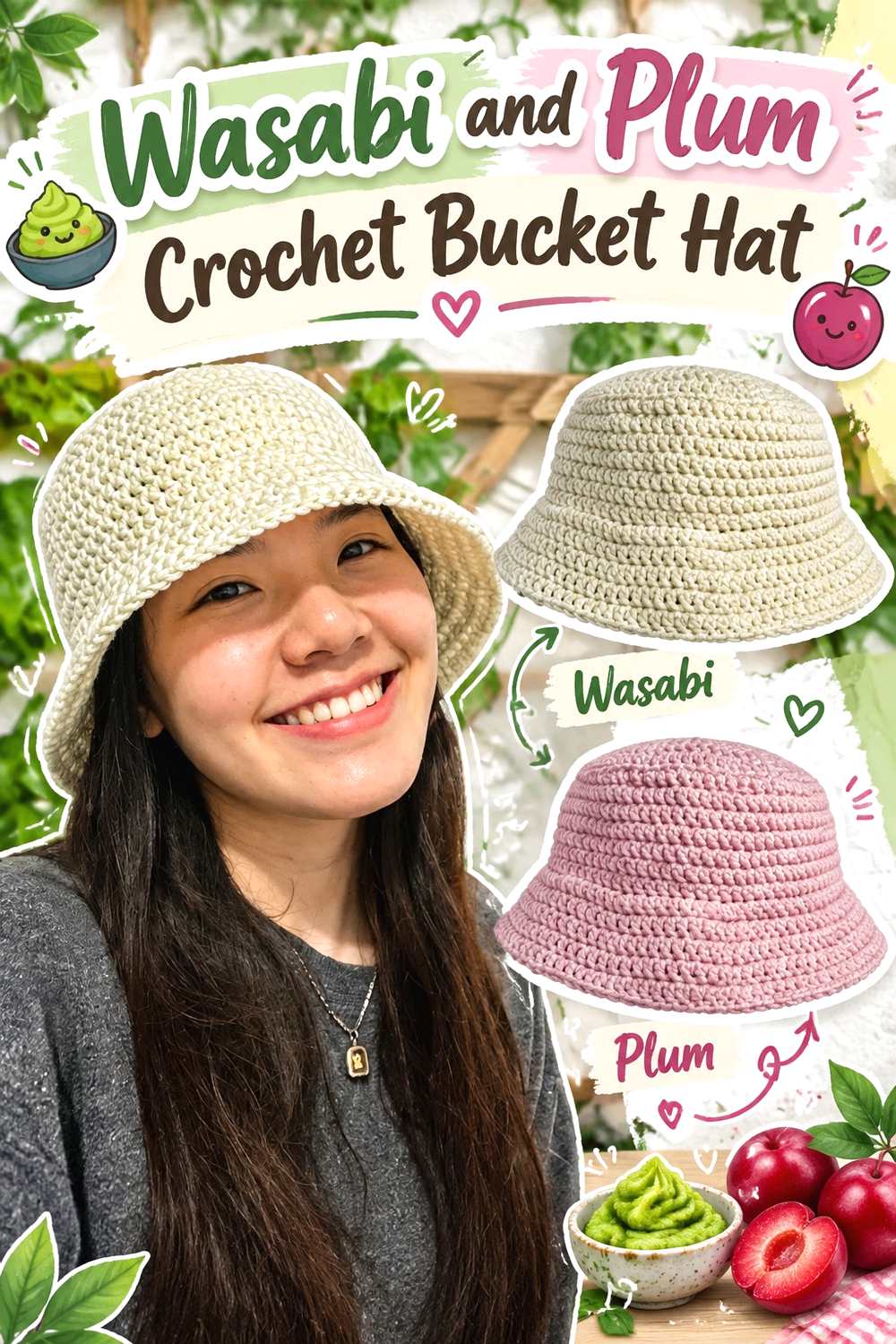
A bucket hat offers three clear zones: crown, sides, and brim. Wasabi can cover the crown and upper body while plum takes over at the brim, or the colors can alternate in broader sections. Keeping the contrast tied to the hat’s changing silhouette prevents the small accessory from looking unnecessarily fragmented.
Wasabi Can Brighten the Upper Plum Crochet Bucket Hat
Wasabi across the crown makes the lighter color immediately visible from above and around the upper portion. Continue it far enough down the sides that it reads as a deliberate field rather than a small top patch.
Avoid adding many thin plum stripes if the hat’s shape already provides enough visual division.
Plum Can Ground the Wasabi Crochet Bucket Hat Brim
The brim is a useful place for plum because it forms the widest outer boundary. The darker shade can visually contain the brighter wasabi upper section.
If the plum brim feels too heavy, reduce how far the color travels upward rather than eliminating the dark edge entirely.
Creator Credit: VivCrochets
4. Plum Crochet Tote With Wasabi Handles
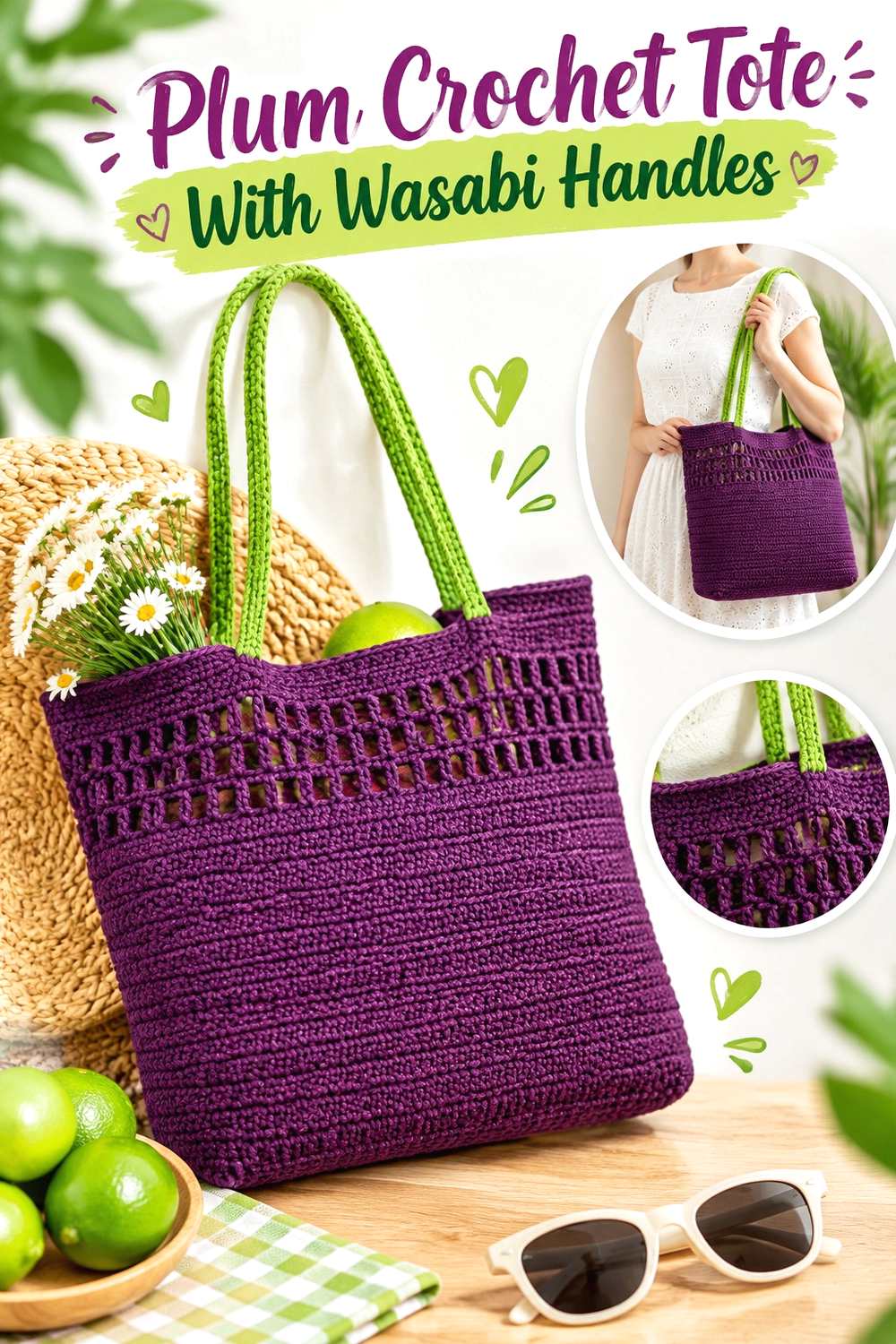
A fashion tote can stay mostly plum while wasabi is concentrated around the carrying areas. Using the brighter color for handles and a narrow upper border draws attention upward and keeps the main bag body visually stable.
Plum Gives the Wasabi-Handled Crochet Tote a Deep Main Field
Keep the bag body plum when texture, mesh, or repeated stitches already create enough pattern. Large wasabi sections through the middle can compete with those structural details.
If the tote uses an open stitch, check that the darker plum still gives you the overall appearance you want when the bag is filled.
Wasabi Can Connect the Plum Crochet Tote Handles to the Opening
Wasabi handles look more integrated when the same color appears in a narrow upper band. That creates a visual connection between the straps instead of making them look attached as unrelated accents.
Keep both handles balanced in color coverage so the tote stays symmetrical.
Creator Credit: forthefrills
5. Wasabi Crochet Scarf With Plum Ends
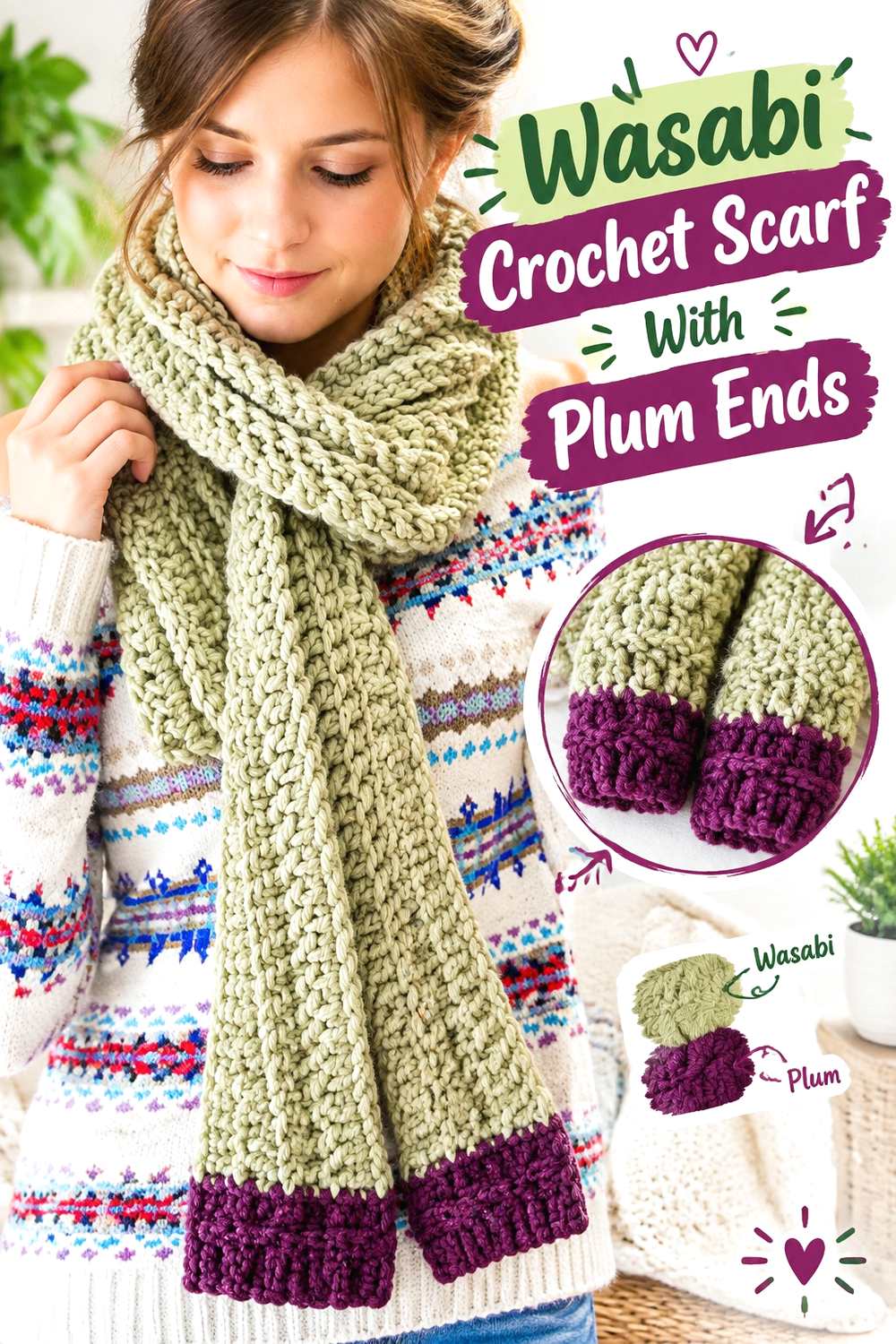
A long scarf lets wasabi cover a substantial central section while plum provides clear stopping points at both ends. This avoids frequent striping and keeps the bright color dominant without allowing it to run uninterrupted from end to end.
Wasabi Can Run Through the Main Plum-Ended Crochet Scarf
Use wasabi through most of the length if the scarf’s stitch texture is already visually active. One continuous color allows ribs or other repeated stitch details to remain easier to follow.
If the wasabi feels too intense, lengthen both plum sections rather than inserting random dark bands through the center.
Plum Should Balance Both Ends of the Wasabi Crochet Scarf
Repeat plum with similar visual weight at each end. The symmetry becomes particularly noticeable when the scarf hangs straight or is folded around the neck.
If fringe is added, using one of the existing palette colors keeps the finish connected to the main scheme.
Creator Credit: B.Hooked Crochet
6. Plum Crochet Poncho With Wasabi Border
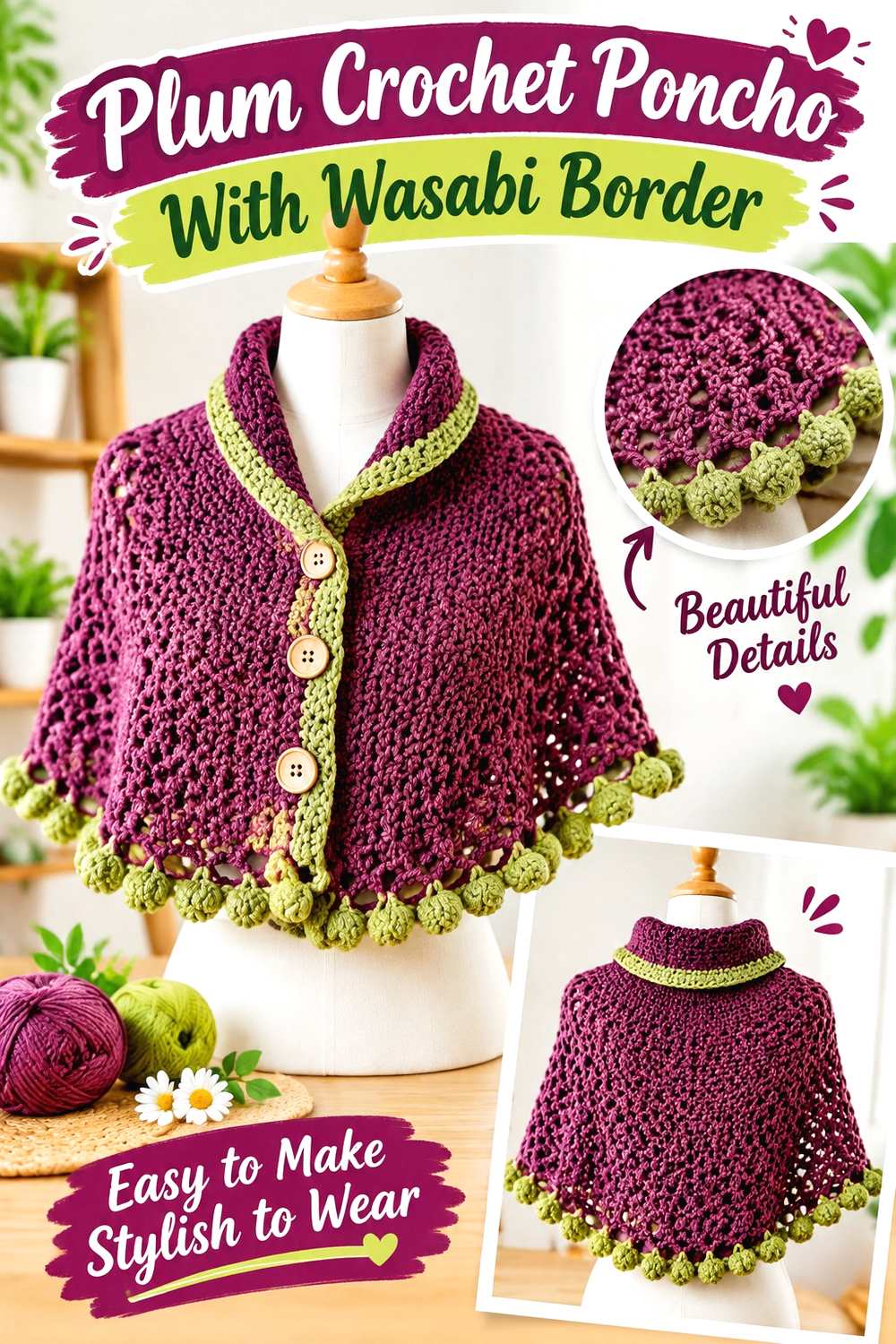
A poncho provides a broad plum surface where the darker color can stay uninterrupted. Wasabi then has enough impact along the neckline or lower border without needing to occupy large portions of the body.
Plum Lets the Wasabi-Bordered Crochet Poncho Texture Lead
Plum across the main panels creates continuity from front to back. If the poncho contains openwork or strong texture, limiting color changes keeps those stitch features from competing with frequent bands.
Maintain similar plum coverage across both sides of the garment.
Wasabi Can Outline the Plum Crochet Poncho Silhouette
A wasabi outer border emphasizes the width and shape of the poncho. Repeating a smaller amount around the neckline can connect the top and bottom finishing details.
A very wide wasabi border will shift the piece toward a more equal two-color design, so adjust the depth according to which color you want to dominate.
Creator Credit: Handwork diy
7. Plum Crochet Balaclava With Wasabi Face Edging
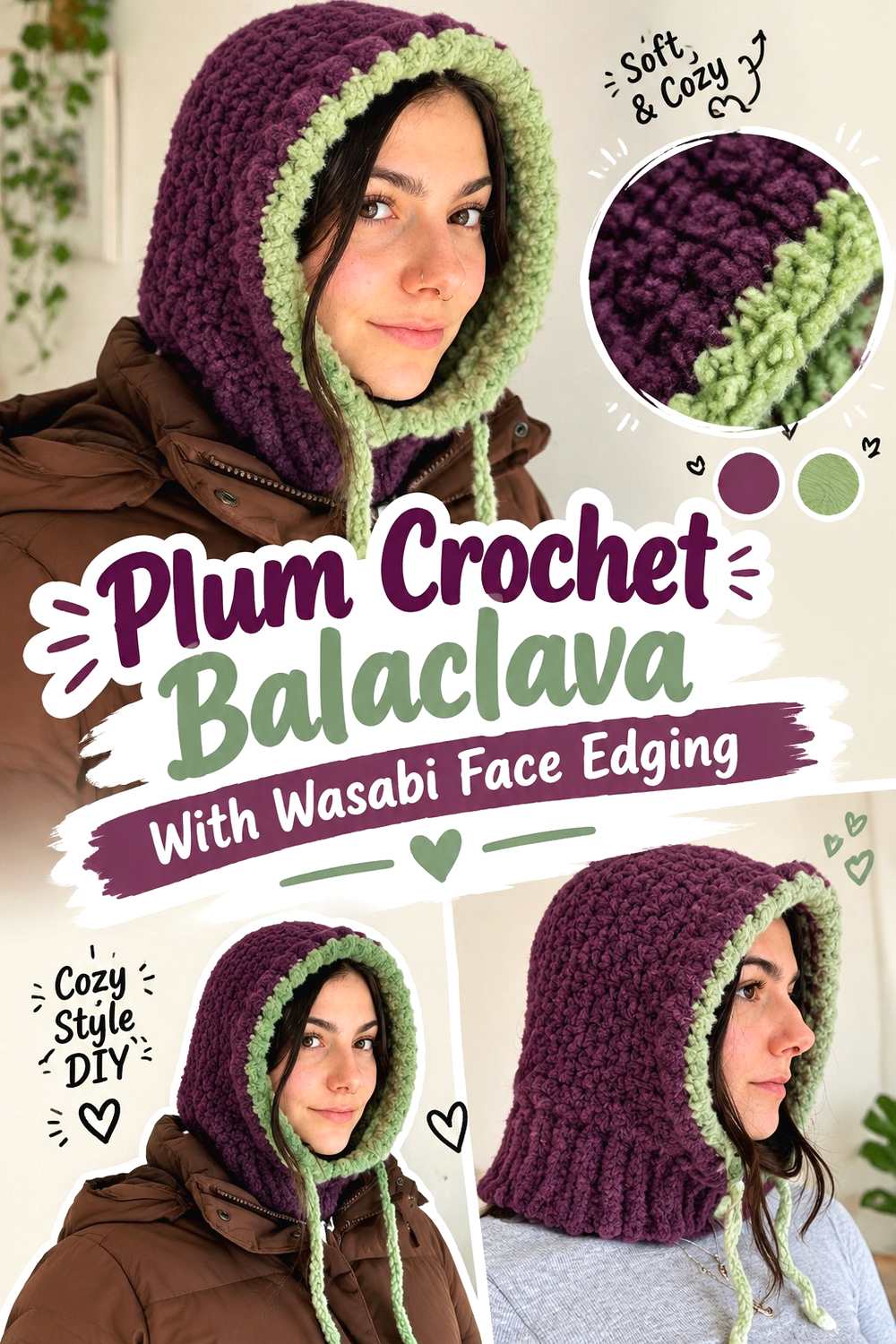
A balaclava makes the face opening an obvious place for contrast. Plum can cover most of the hood and lower section, while wasabi follows the opening or drawstring detail. The brighter color then frames the face area without covering the entire accessory.
Plum Can Carry the Main Wasabi-Edged Crochet Balaclava
Using plum across the crown and body creates a consistent dark field around the head. This also keeps shaping lines easier to read than a layout with frequent small color changes.
Reserve wasabi until the main silhouette is established.
Wasabi Can Define the Plum Crochet Balaclava Face Opening
A narrow wasabi edge around the opening creates a clear boundary against plum. Because the line surrounds a focal area, a relatively small amount of bright color remains noticeable.
If a drawstring is part of the chosen construction, repeating wasabi there can connect it to the face edging.
Creator Credit: Natalie
8. Wasabi Crochet Fingerless Gloves With Plum Cuffs
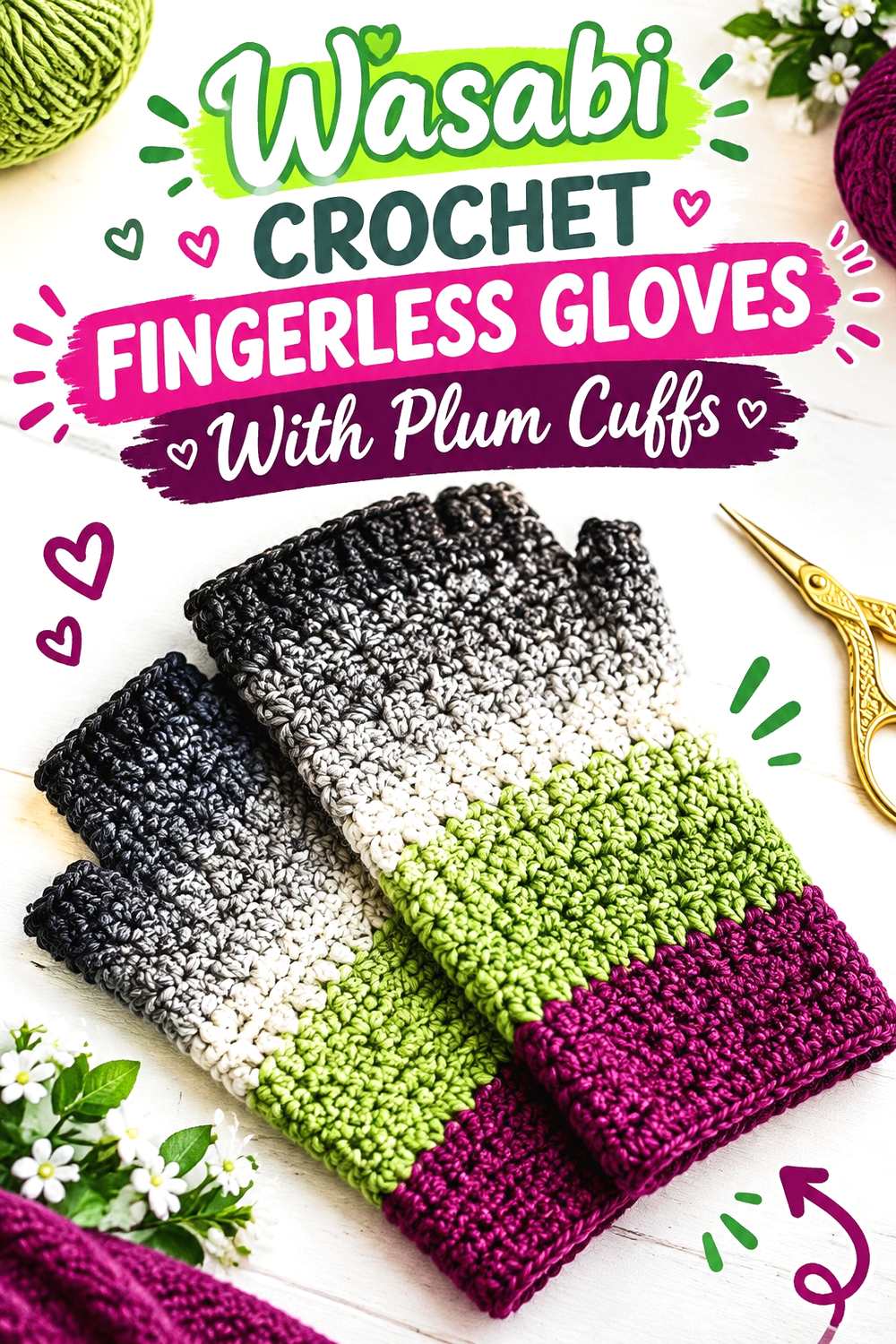
Fingerless gloves are small enough for wasabi to dominate while plum provides a darker transition at the wrist. Matching the color distribution across both gloves is important because the two pieces are often viewed together.
Wasabi Should Match Across Both Plum-Cuffed Crochet Gloves
Keep the wasabi hand sections similar on the left and right glove. Even a creative palette can look unplanned when one glove contains substantially more of the brighter color.
Finish both main sections before deciding whether another plum detail is necessary.
Plum Can Ground Wasabi Crochet Glove Cuffs
Plum cuffs create a clear dark base beneath the brighter hand sections. If the gloves contain shell or other decorative texture, limiting plum to the wrist also leaves those details in one continuous color.
A small second plum accent near the upper edge can work, but keep it subordinate to the cuffs.
Creator Credit: Hooked by Robin
9. Plum Crochet Leg Warmers With Wasabi Bands
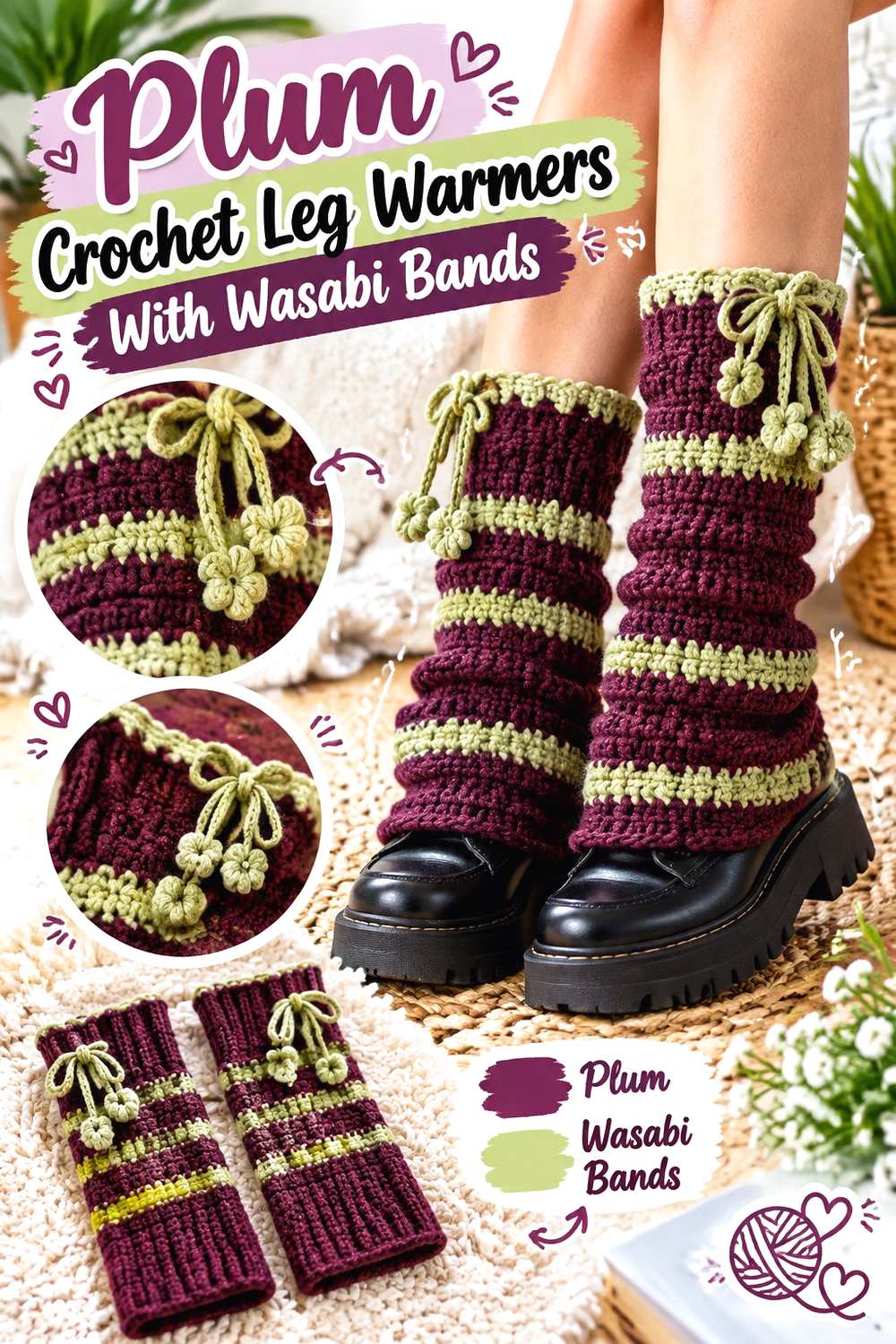
Leg warmers offer enough vertical length for intentional color blocking. Plum can cover most of each piece while wasabi appears near the top, lower edge, or in one repeated band. Matching the placement across both legs helps the contrast look purposeful.
Plum Should Stay Consistent Across Both Wasabi-Accented Crochet Leg Warmers
Use similar plum proportions on each leg warmer before introducing the brighter bands. Matching placement matters because differences become obvious when both pieces are worn together.
If you want an asymmetrical look, make the difference intentional rather than the result of inconsistent color changes.
Wasabi Bands Can Break Up Plum Crochet Leg Warmers Strategically
Place wasabi around an existing visual transition such as an upper ribbed section or flare. That connects the color change to the shape instead of inserting it randomly through the middle.
One or two stronger wasabi areas can be more effective than numerous narrow stripes.
Creator Credit: ikoxun
10. Wasabi And Plum Crochet Granny Shrug
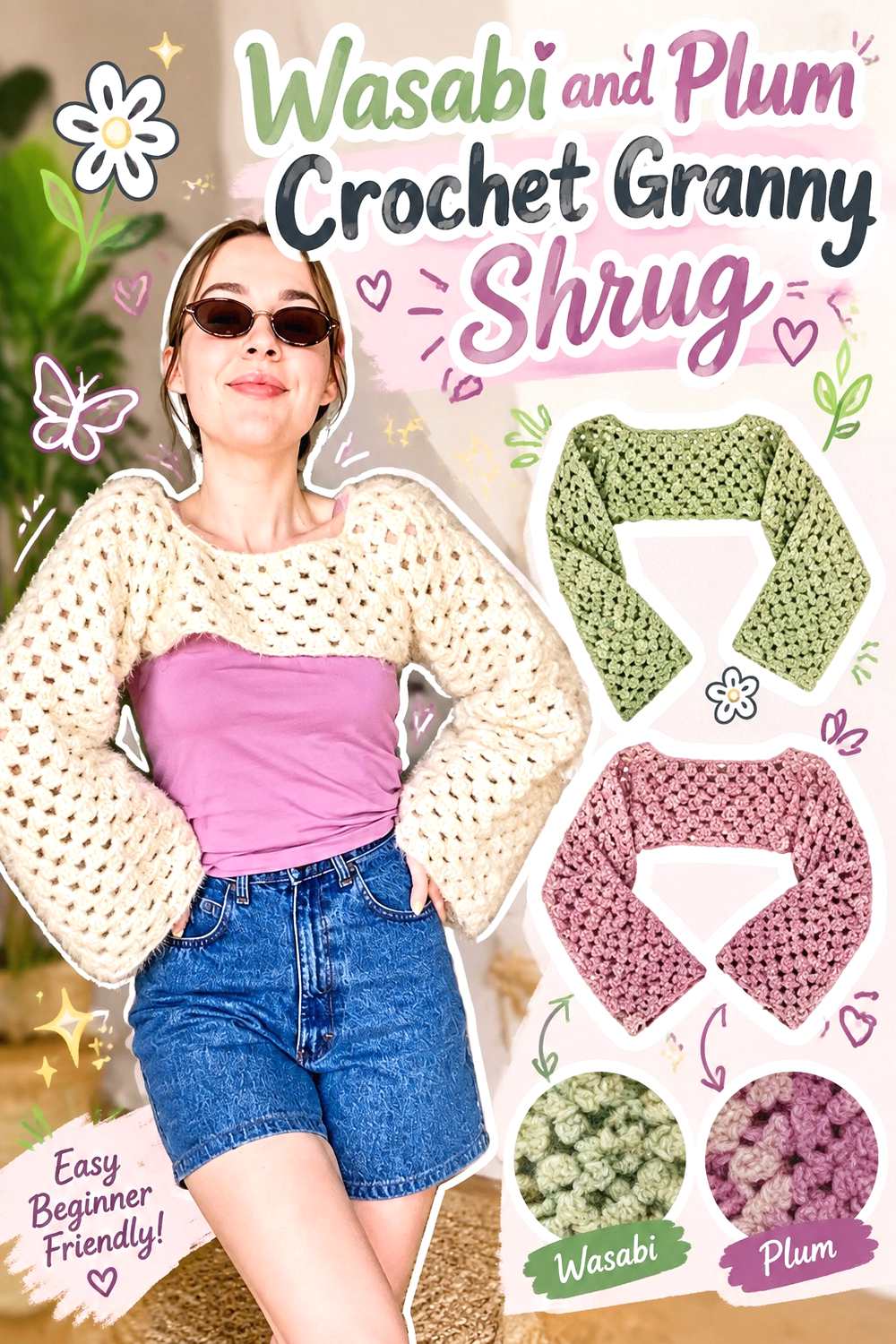
A granny-style shrug naturally creates repeated clusters and openings, so color placement should support that texture rather than overwhelm it. Wasabi can dominate the torso and upper sleeve area while plum appears at sleeve ends, the neckline, or selected granny sections.
Wasabi Can Keep the Plum-Accented Crochet Shrug Light-Looking
Using wasabi through continuous granny sections helps repeated clusters read as one surface. Frequent alternating colors could make every cluster compete for attention.
If you introduce plum within the main field, repeat it predictably rather than changing placement from section to section.
Plum Can Define Wasabi Crochet Shrug Sleeves and Edges
Plum around the cuffs or outer opening gives the open granny texture a darker boundary. This can be particularly useful around sleeve ends where the shape needs a visual stopping point.
Repeat a modest amount of plum elsewhere so the cuffs do not look disconnected from the body.
Creator Credit: HayHay Crochet
11. Plum Crochet Skirt With Wasabi Waist And Hem
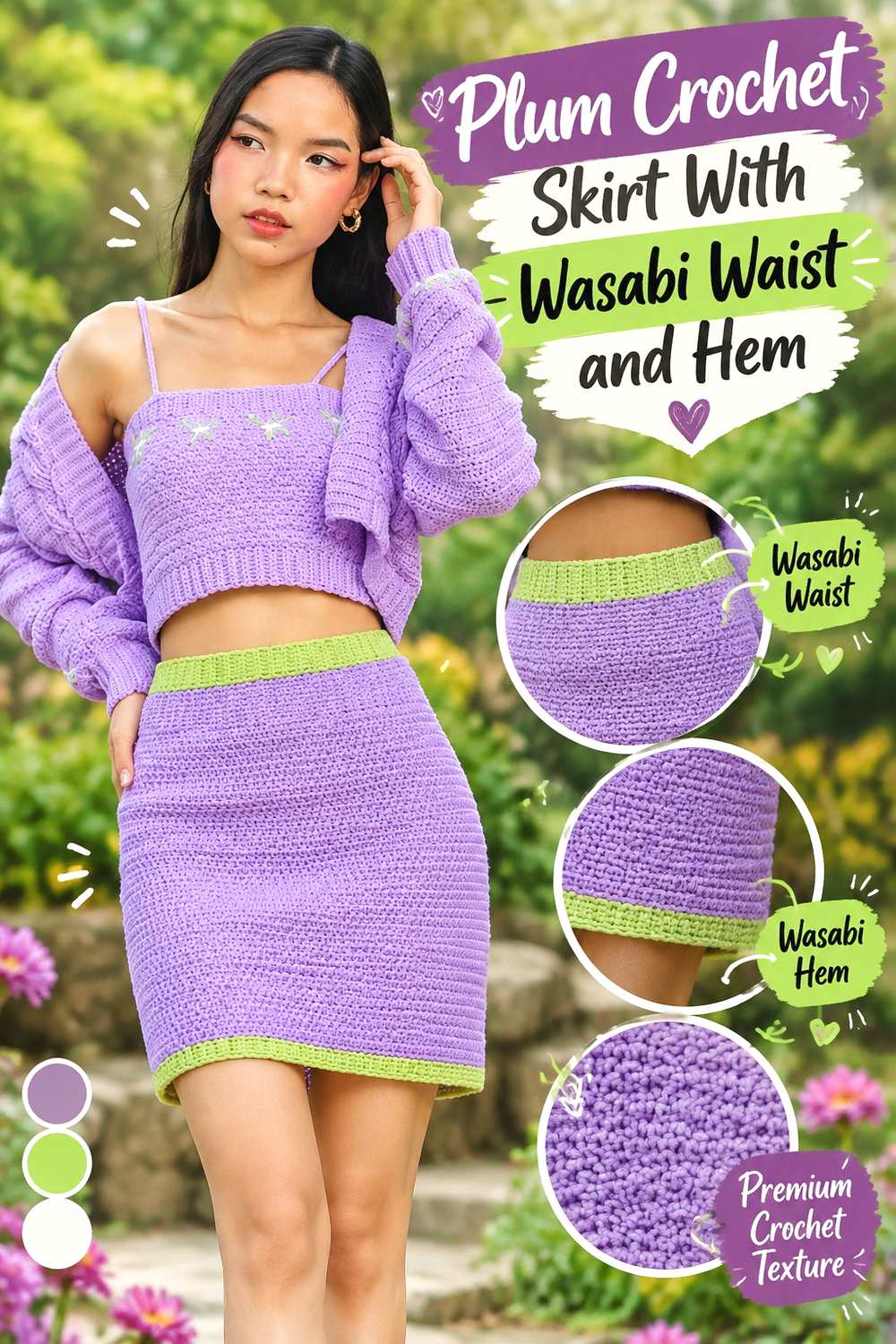
A skirt provides a large vertical surface that can remain mostly plum while wasabi appears at the top and bottom. Using the brighter color at both boundaries creates a controlled frame without interrupting the body with several horizontal stripes.
Plum Can Lead the Main Wasabi-Trimmed Crochet Skirt
Keep the central skirt area plum if you want the silhouette to remain visually continuous. A single dark body also allows ribbing or other surface texture to provide detail without competing with multiple colors.
Consider the full garment length before deciding how much wasabi to add at either end.
Wasabi Can Connect the Plum Crochet Skirt Waist and Hem
Repeating wasabi at both the waistband and lower edge makes the bright shade feel deliberately distributed. The two accents do not need to be identical in width, but they should look related.
If the hem is highly decorative, a narrower wasabi waist can keep the lower section as the stronger accent.
Creator Credit: Chenda DIY
12. Plum Crochet Beret With Wasabi Band
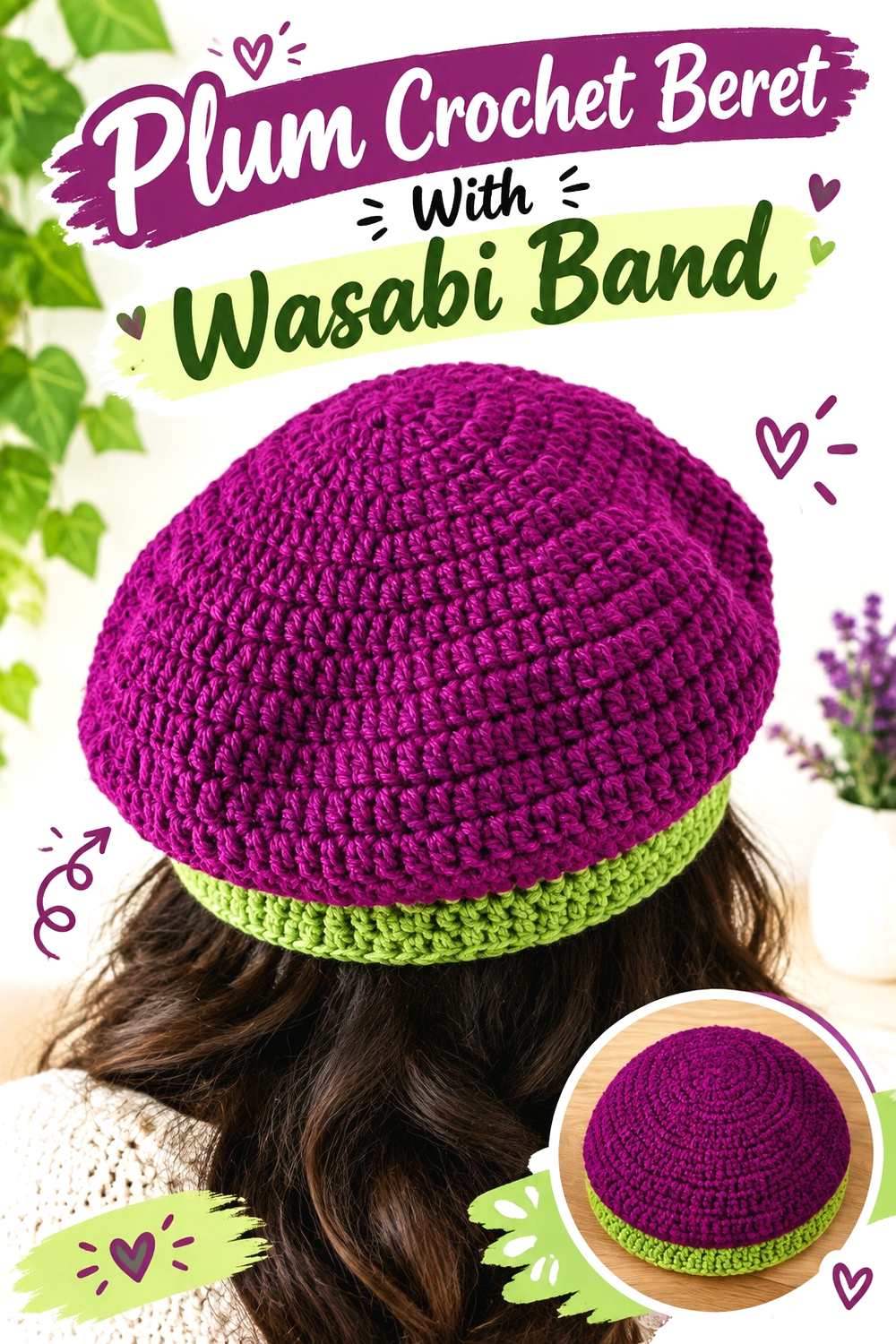
A beret can stay predominantly plum while wasabi appears around the fitted band. This keeps the broad crown dark and lets the brighter shade emphasize the point where the hat narrows toward the head.
Plum Can Preserve the Classic Shape of a Wasabi-Banded Crochet Beret
Keeping the wide crown in plum prevents the rounded top from being divided by unnecessary bands. The silhouette and crochet texture then supply most of the visual interest.
If the crown already has pronounced stitch detail, a single main color can make that detail easier to see.
Wasabi Can Give the Plum Crochet Beret Band a Clear Contrast
A wasabi lower band is small relative to the crown but highly visible around the head. That makes it a useful place for bright color when you want contrast without changing the entire beret.
Keep the band consistent around the circumference so the color reads as a clean finish.
Creator Credit: Crochet con Sole
13. Wasabi Crochet Ear Warmer With Plum Center Detail
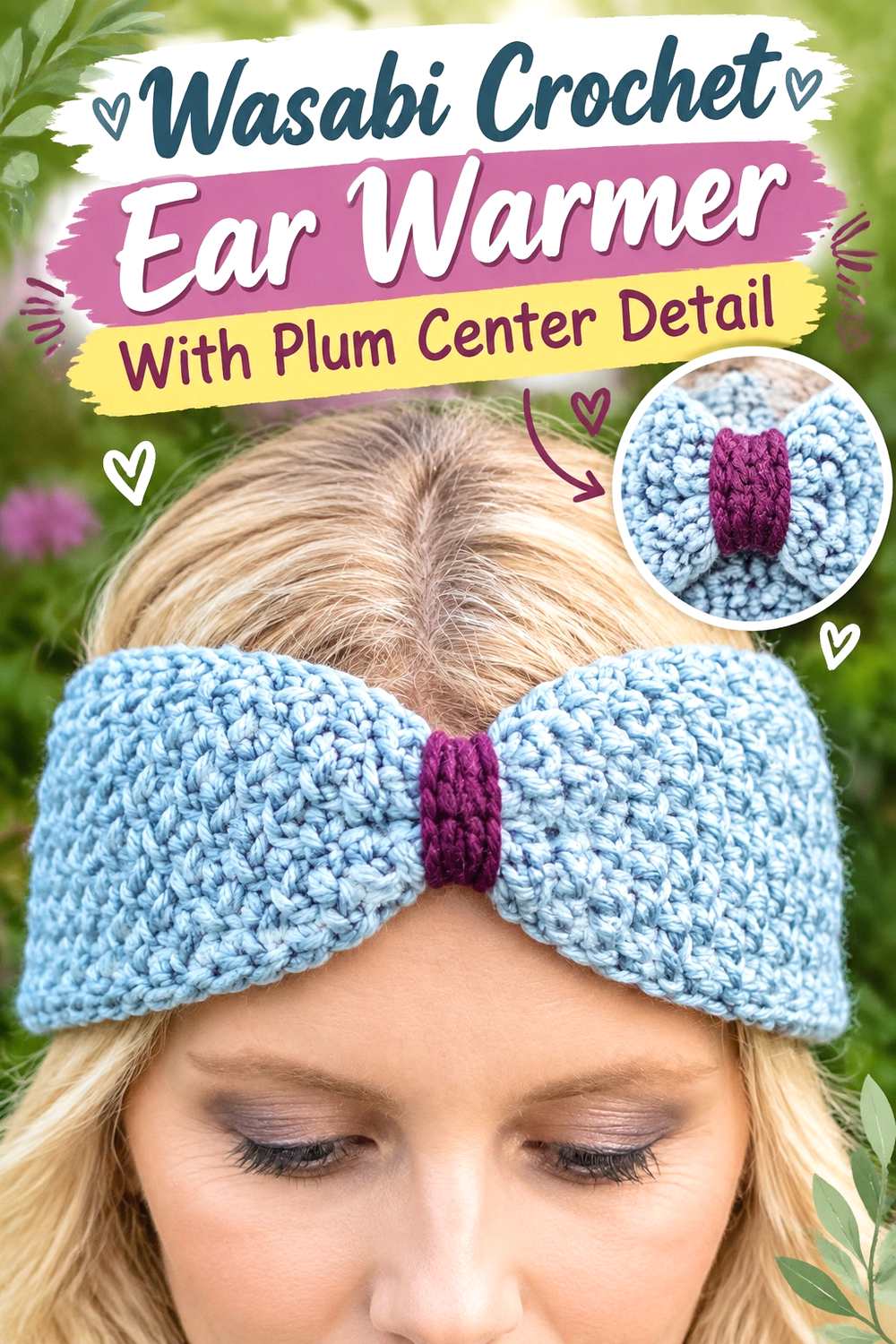
An ear warmer has such limited surface that wasabi can cover most of it without needing several color changes. Plum works well around the gathered or central detail because it draws attention to the front while leaving the rest of the band continuous.
Wasabi Can Carry the Main Plum-Accented Crochet Ear Warmer
A mostly wasabi band keeps textured stitches easy to follow across the accessory. Breaking the narrow strip into many equal sections could make it appear shorter and busier.
Use plum only where you want the strongest visual emphasis.
Plum Can Focus Attention on the Wasabi Crochet Ear Warmer Center
If the design has a gathered or twisted-looking center, plum can emphasize that point without needing to travel around the entire band.
For a more balanced two-color version, repeat a very narrow plum edge rather than making the whole back section dark.
Creator Credit: Naztazia
14. Plum Crochet Scrunchie With A Wasabi Outer Ruffle
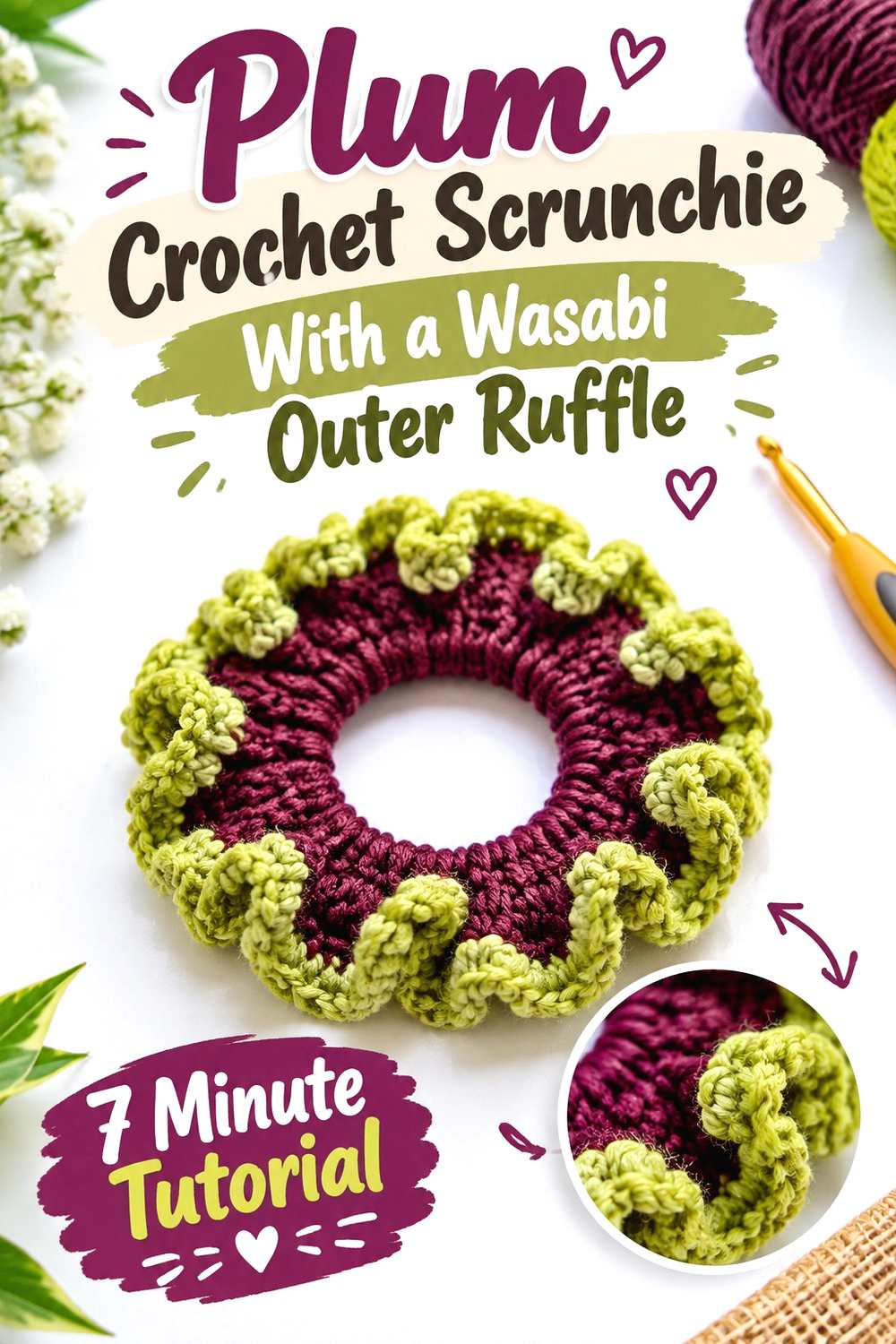
A gathered scrunchie lets the two colors overlap visually. Plum can sit closer to the elastic while wasabi expands into the outer ruffle, allowing flashes of the darker color to appear between the brighter folds.
Plum Can Anchor the Inner Wasabi Crochet Scrunchie
Keeping plum close to the elastic creates a dark visual center. Because much of that area becomes gathered, plum can support the palette without taking over the finished accessory.
Check the scrunchie when stretched as well as relaxed to see how much plum remains visible.
Wasabi Can Lead the Outer Plum Crochet Scrunchie Ruffle
The outer ruffle occupies the most visible area, making it an effective place for wasabi. The bright edge becomes especially noticeable when the scrunchie is worn rather than lying flat.
If you want a more plum-dominant version, reverse the two roles instead of alternating tiny bands.
Creator Credit: Noor’s Knits
15. Wasabi Crochet Slippers With Plum Trim
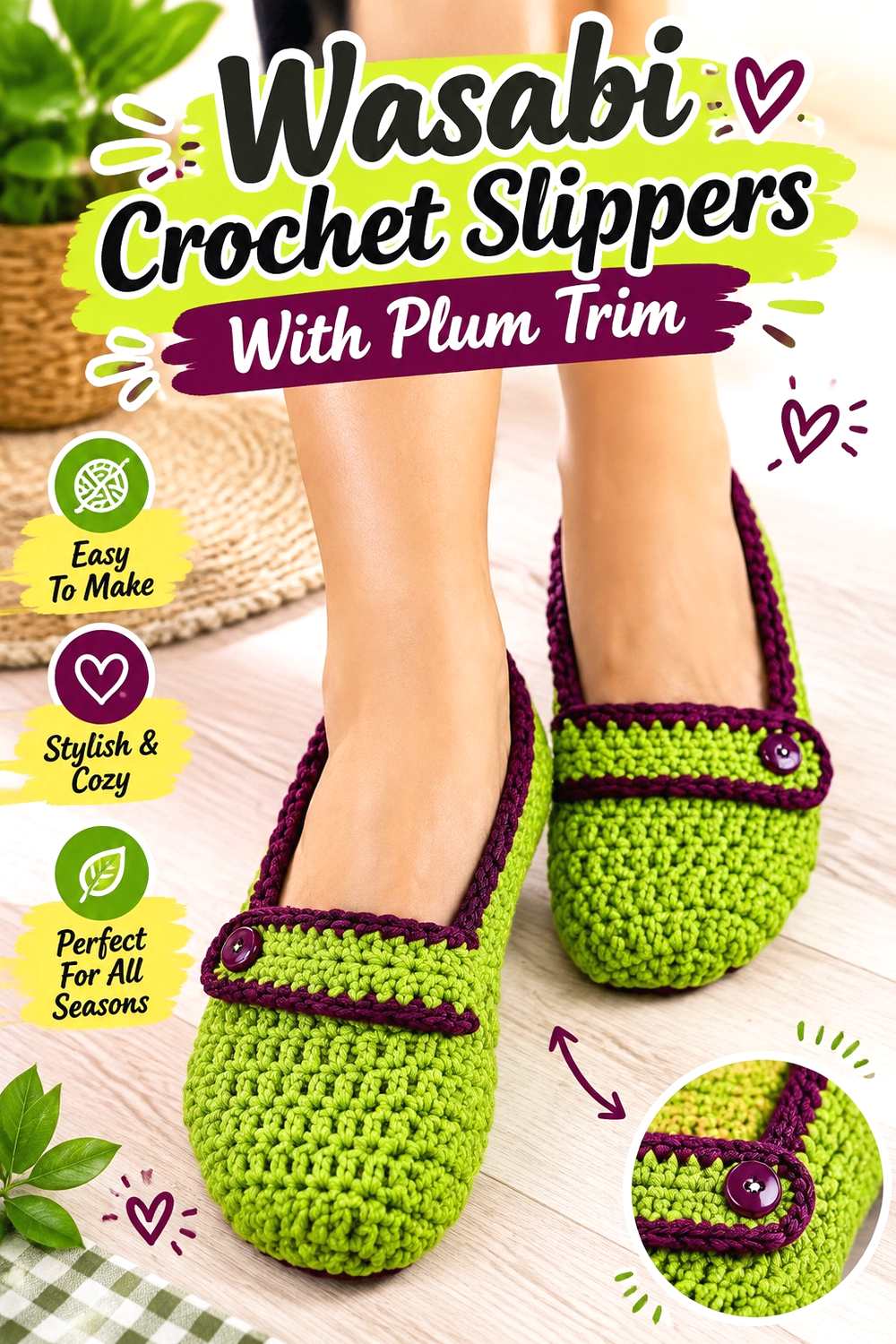
Crochet slippers benefit from a simple mirrored palette. Wasabi can cover most of each upper, while plum defines the openings or another narrow finishing detail. Keeping both slippers consistent is more important than adding several additional accent areas.
Wasabi Should Match Across Both Plum-Trimmed Crochet Slippers
Work the wasabi body similarly on the pair so neither slipper looks noticeably brighter or darker than the other. This gives you a stable base before applying plum.
Lay the pair together before finishing to check that the color boundaries align visually.
Plum Can Define Wasabi Crochet Slipper Openings
A plum edge around each opening creates a strong boundary against the bright upper. Since this trim is visible on both slippers at once, evenness matters.
If you add another plum detail, keep it small enough that the openings remain the main dark accent.
Creator Credit: Littlejohn’s Yarn
16. Plum And Wasabi Crochet Kerchief Scarf
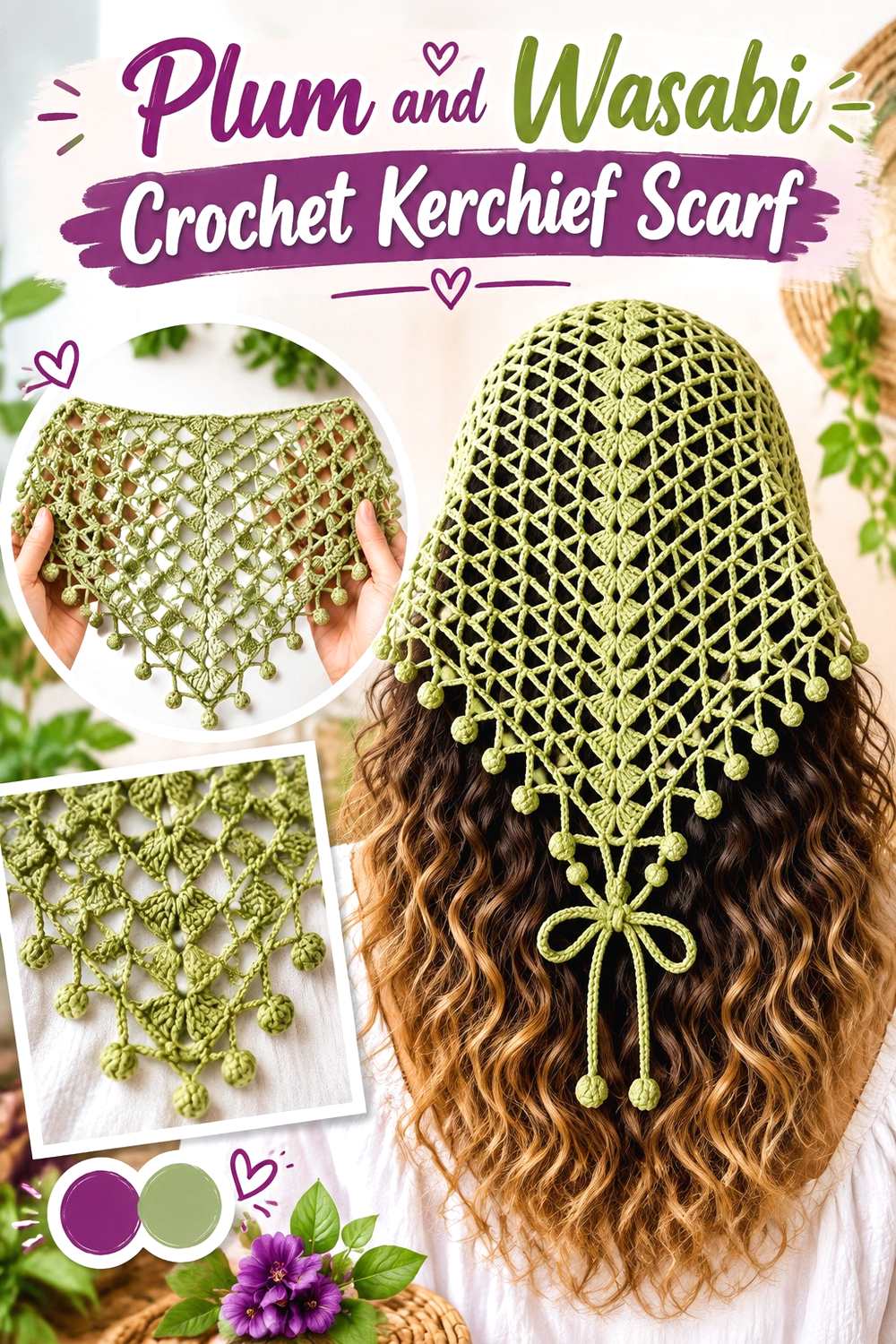
A kerchief-style scarf can use plum as its main field with wasabi concentrated along ties or an outer decorative edge. Because the piece can be worn in different positions, the accent should remain visible whether it is used near the neck or as a head accessory.
Plum Can Give the Wasabi-Accented Crochet Kerchief a Dark Foundation
Plum through the central section gives the triangular or scarf-like shape a continuous base. Keeping this part in one shade is particularly useful when the stitch pattern already produces visible texture.
If the central area becomes too visually heavy, expand wasabi at the perimeter rather than adding unrelated interior stripes.
Wasabi Can Outline the Plum Crochet Kerchief Scarf
Use wasabi along an edge, tie, or finishing section so the bright shade follows the shape of the accessory. This helps the color remain noticeable when the piece is folded.
Repeat wasabi on both ties when applicable so the accent looks balanced from either side.
Creator Credit: zhaia croche
17. Wasabi Crochet Bandana With Plum Scalloped Edging
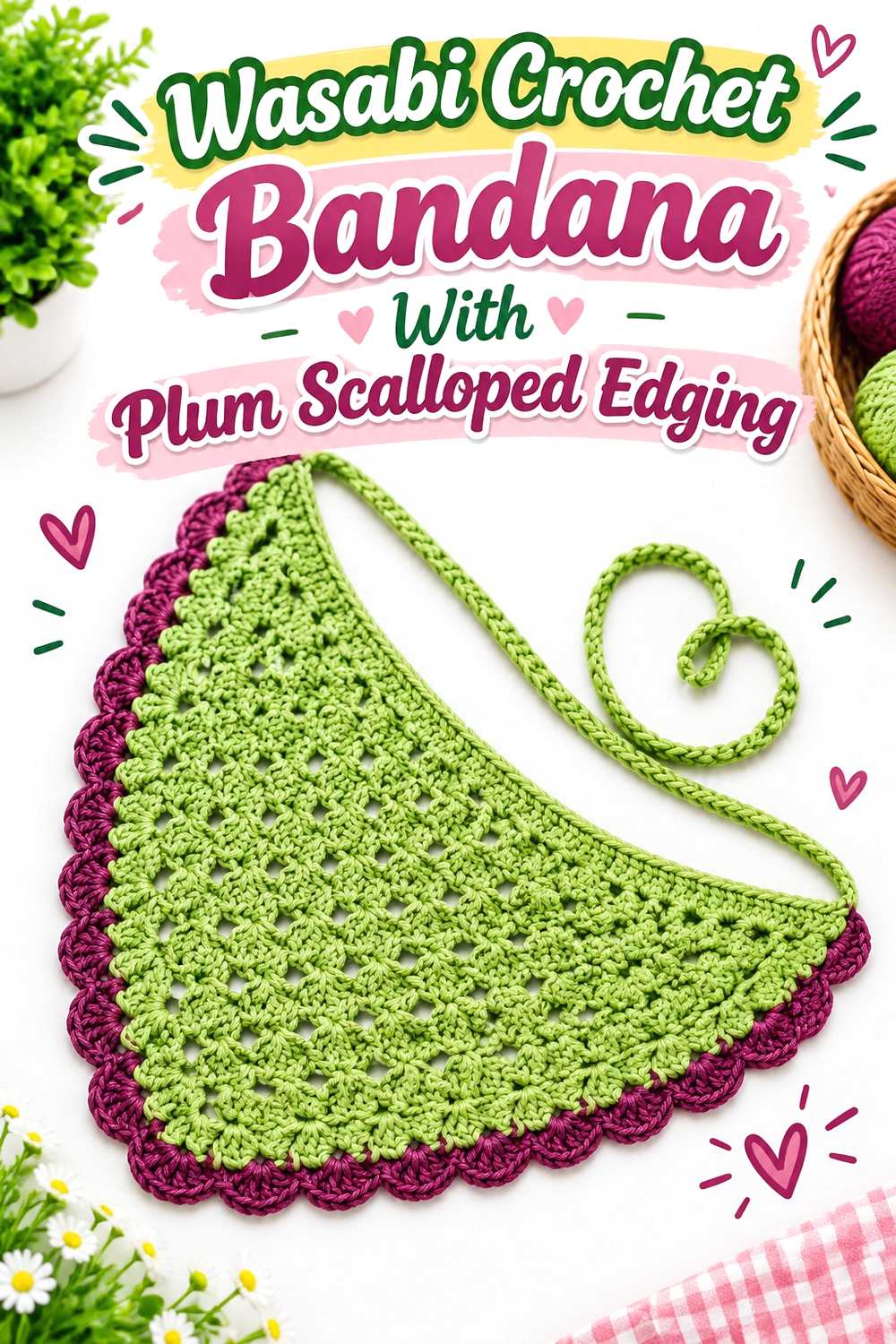
A crochet bandana can let wasabi fill the triangular center while plum follows the outside edge. This creates a bright central field framed by a darker perimeter, which is useful when the edging itself has decorative shaping.
Wasabi Can Keep the Plum-Edged Crochet Bandana Center Clear
Using wasabi continuously through the main triangle lets granny clusters or another open stitch remain the dominant surface pattern. Avoid adding plum inside every repeat if you want the edging to stay visually special.
Check how the center looks once the bandana is folded into its worn position before deciding whether it needs more contrast.
Plum Can Make the Wasabi Crochet Bandana Scallops More Visible
Plum along a scalloped or shaped outer border separates that decorative outline from the wasabi center. The dark edge can also continue into the ties so those parts feel connected.
If the plum border becomes too wide, it may visually reduce the wasabi center, so keep the two areas proportional to your intended dominant color.
Creator Credit: Yarn Stash with Marching North
Comparing Wasabi and Plum Crochet Fashion Directions
For darker wardrobe pieces, the cardigan, poncho, skirt, beret, leg warmers, and kerchief scarf let plum occupy most of the visible surface. Wasabi works as a controlled accent at structural edges, making these options useful when you want the yellow-green color to remain noticeable without dominating the outfit.
The vest, crop top, gloves, slippers, bandana, and ear warmer reverse that relationship. Wasabi becomes the first color you notice, while plum provides boundaries and visual weight.
The bucket hat, granny shrug, scrunchie, and other smaller accessories can support a more balanced split because their total surface is limited. In these pieces, deciding exactly where the color change occurs matters more than insisting on one shade covering most of the project.
Conclusion
Wasabi and plum offer a wide range of crochet fashion directions because the palette can shift dramatically simply by changing which shade occupies the larger area.
Use plum as the main field when you want a darker cardigan, skirt, poncho, hat, or winter accessory with controlled wasabi highlights. Let wasabi dominate when the project is smaller or when the bright green is meant to become the outfit’s main handmade accent. For balanced pieces, attach color changes to clear construction features such as cuffs, hems, straps, bands, borders, and garment openings.
Before beginning a full piece, compare your actual yarns together and check whether their contrast remains clear in the stitch texture you plan to use. Follow each credited creator tutorial for construction details, then apply the wasabi-and-plum color arrangement independently.
Frequently Asked Questions
Do Wasabi and Plum Have Enough Contrast for Crochet Fashion?
They can create substantial contrast when the wasabi is a noticeably brighter yellow-green and the plum is considerably darker. Because yarn color names are not standardized, compare your actual skeins side by side. If important borders or motifs seem to blend, a grayscale photo can help you judge the difference in light and dark value.
Should Wasabi or Plum Dominate a Crochet Garment?
Either can dominate, but the result changes significantly. Plum across most of a cardigan, skirt, or poncho produces a darker garment with concentrated wasabi accents. Wasabi across a crop top, vest, or smaller accessory makes the piece much brighter, so plum edging becomes important for definition. Choose the dominant shade before planning individual color changes.
Where Should Wasabi Go on a Plum Crochet Cardigan or Vest?
Wasabi can work well at repeated structural locations such as cuffs, a front band, neckline, pocket edges, or lower hem. You do not need to use all of these at once. Select two or three connected areas so the brighter shade repeats without overtaking the plum body.
How Can I Make Wasabi and Plum Crochet Look Less Busy?
Reduce the number of color changes and increase the size of each color area. A plum skirt with a wasabi waistband and hem will usually look more controlled than one with numerous narrow alternating stripes. Let stitch texture provide some of the detail instead of asking both texture and color to compete everywhere.
Can I Replace Wasabi With Another Green?
Yes. To preserve the same overall direction, look for another bright yellow-green that remains clearly lighter or more vivid than the plum. Moving toward a very dark olive would create a much lower-contrast palette, while a pale lime could make the contrast sharper.
Can I Replace Plum With Burgundy or Dark Purple?
You can, but the palette will shift. A dark purple close to plum preserves the original cool, deep supporting role most closely. Burgundy introduces more red and creates a warmer relationship with wasabi. Whichever shade you choose, keep enough light-dark separation for cuffs, borders, motifs, and other small details to remain visible.
Where Should Plum Go on a Mostly Wasabi Crochet Accessory?
Use plum where the accessory naturally needs an outline or transition: a hat brim, glove cuff, slipper opening, bandana border, crop-top strap, or bag handle. These areas let the darker shade define the shape without interrupting the wasabi field unnecessarily.