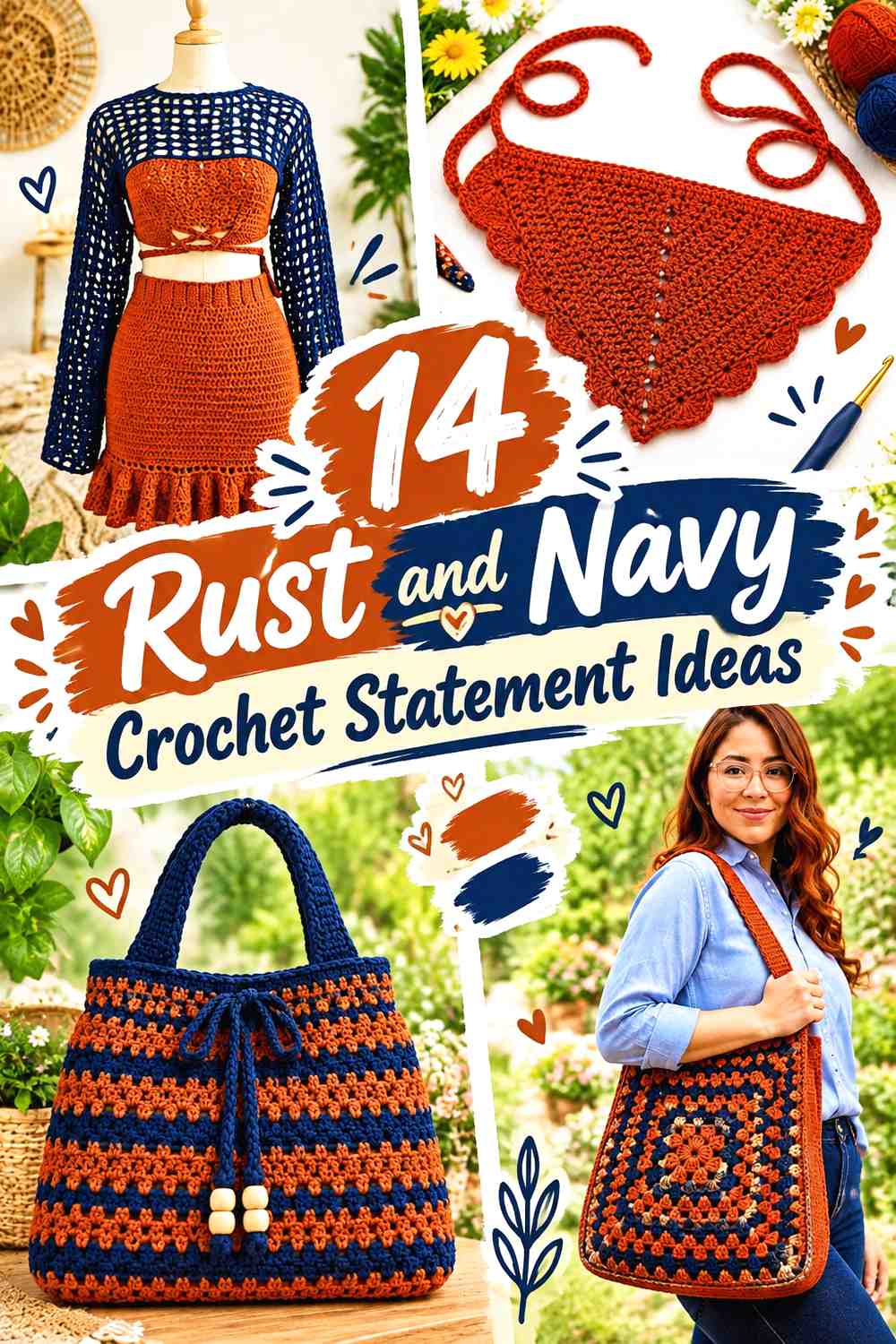
14 Rust and Navy Crochet Statement Ideas
Rust and navy give statement crochet a useful push-and-pull between warmth and depth. Rust can draw attention to oversized sleeves, checkerboard blocks, borders, brims, and accessories, while navy can give a large garment enough visual weight to keep the warmer shade from taking over every surface.
The strongest versions of this palette usually give the colors different jobs rather than dividing every project exactly in half. A rust cardigan can use navy to frame the cuffs and opening, while a navy balaclava can reserve rust for graphic checks. A skirt or sweater vest can take the opposite approach and make the two shades deliberately compete through larger blocks.
The tutorials below support the crochet construction concepts. The rust-and-navy palettes are independent color adaptations, so the creators do not necessarily use these exact colors in their original projects.
Quick List
- Rust And Navy Color Block Crochet Cardigan
- Rust And Navy Checkerboard Crochet Sweater Vest
- Navy And Rust Mesh Crochet Top
- Rust And Navy Crochet Statement Poncho
- Rust And Navy Checkered Crochet Skirt
- Navy And Rust Crochet Statement Pants
- Navy And Rust Checker Accent Crochet Balaclava
- Rust And Navy Crochet Bucket Hat
- Navy And Rust Motif Crochet Shawl
- Rust And Navy Crochet Infinity Scarf
- Rust And Navy Block Color Crochet Tote
- Navy And Rust Crochet Crossbody Bag
- Rust And Navy Scalloped Crochet Bandana
- Navy And Rust Mesh Crochet Shrug
Decide Whether Rust or Navy Should Carry the Statement
Rust naturally attracts attention when it occupies large uninterrupted areas, especially on sleeves, skirt panels, hats, bags, and borders. If you want the finished crochet piece to feel warm-color-led, let rust cover the feature you most want noticed and use navy to frame it.
Navy works differently. It can cover a larger garment area without requiring every secondary detail to compete with it. On cardigans, pants, shawls, and shrugs, that makes navy useful as a visual anchor while rust concentrates attention around cuffs, motifs, edges, or graphic blocks.
Neither shade needs to stay in one role throughout the article. A statement wardrobe becomes more varied when a rust-led hat sits beside a navy-led shrug, even though both use the same two-color family.
Use Rust and Navy Contrast Where Crochet Structure Needs Definition
Hue difference does not automatically guarantee strong light-and-dark contrast. A deep rust and dark navy may both reproduce as relatively dark values, which can soften the boundary between checkerboard blocks, narrow stripes, motifs, and ribbing.
Place your actual yarns together before committing to a large colorwork garment. View them from several feet away and, if useful, take a grayscale photo. If the colors begin to merge, use them in broader sections where hue difference is enough to communicate the design, or introduce the lighter of your two shades around the detail you most want to separate.
1. Rust And Navy Color Block Crochet Cardigan
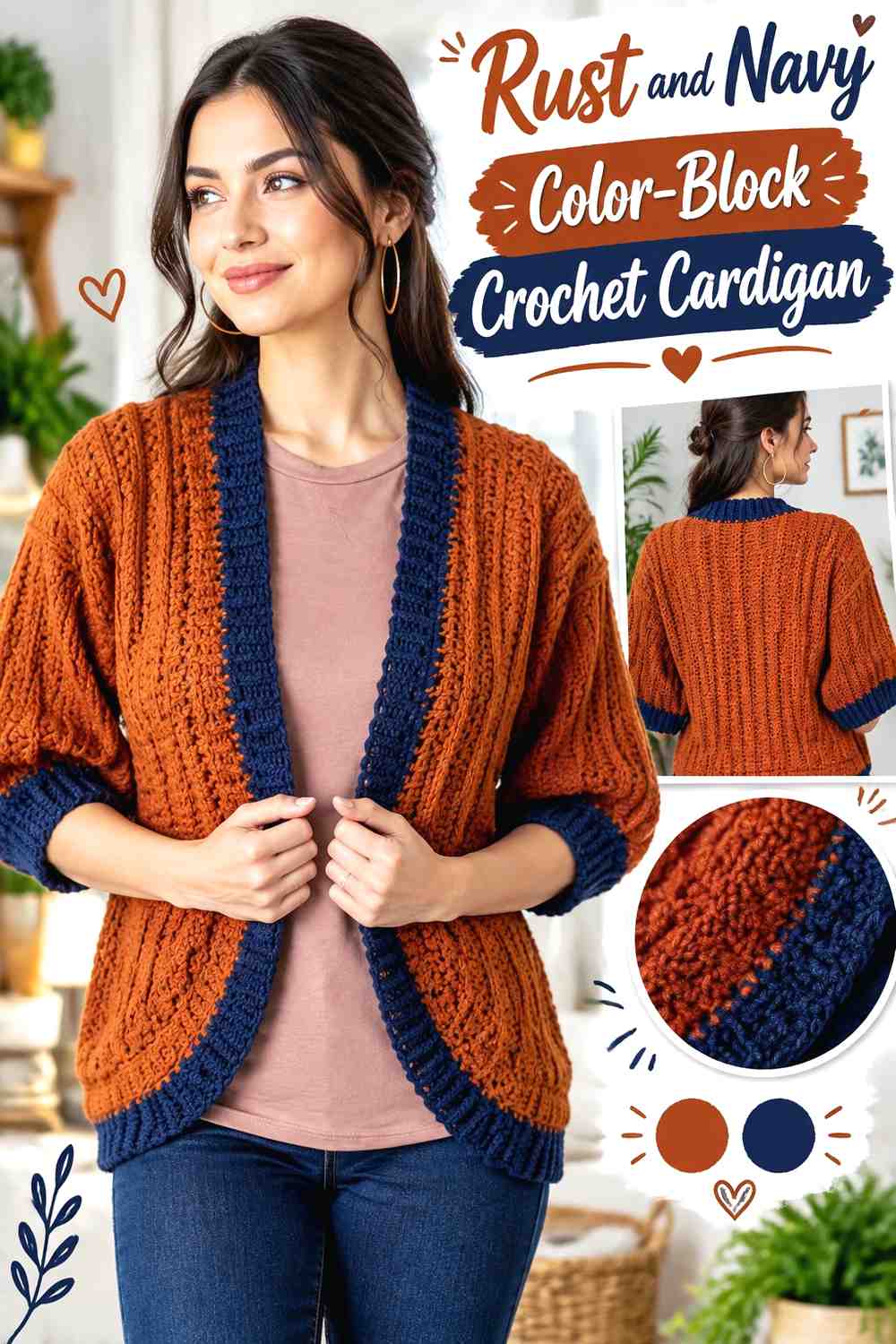
A cardigan gives rust and navy enough surface area to create large, deliberate color zones instead of relying on narrow stripes. Rust can lead through the front and back panels while navy defines sleeves, cuffs, or the front band. Because the cardigan remains open, consider the clothing visible underneath when deciding how much of each color should surround the neckline.
Rust Can Carry the Main Crochet Cardigan Panels
Using rust across the torso makes the cardigan immediately read as a warm statement layer. Large uninterrupted sections also let stitch texture remain visible without being repeatedly divided by color changes.
If you plan to wear the cardigan over mostly dark tops, keep some navy away from the entire inner opening. Otherwise, the navy edge and underlayer can merge visually and make the rust panels look narrower than intended.
Navy Gives Rust Crochet Cardigan Edges a Stronger Frame
Cuffs and a front band are natural places for navy because they already mark structural boundaries. Repeating navy in those areas connects the two sleeves to the garment opening without requiring navy stripes across every rust panel.
If a full navy hem makes the cardigan feel too outlined, keep the darker shade at the cuffs and front opening and let rust continue uninterrupted to the lower edge.
Creator Credit: TCDDIY
2. Rust And Navy Checkerboard Crochet Sweater Vest
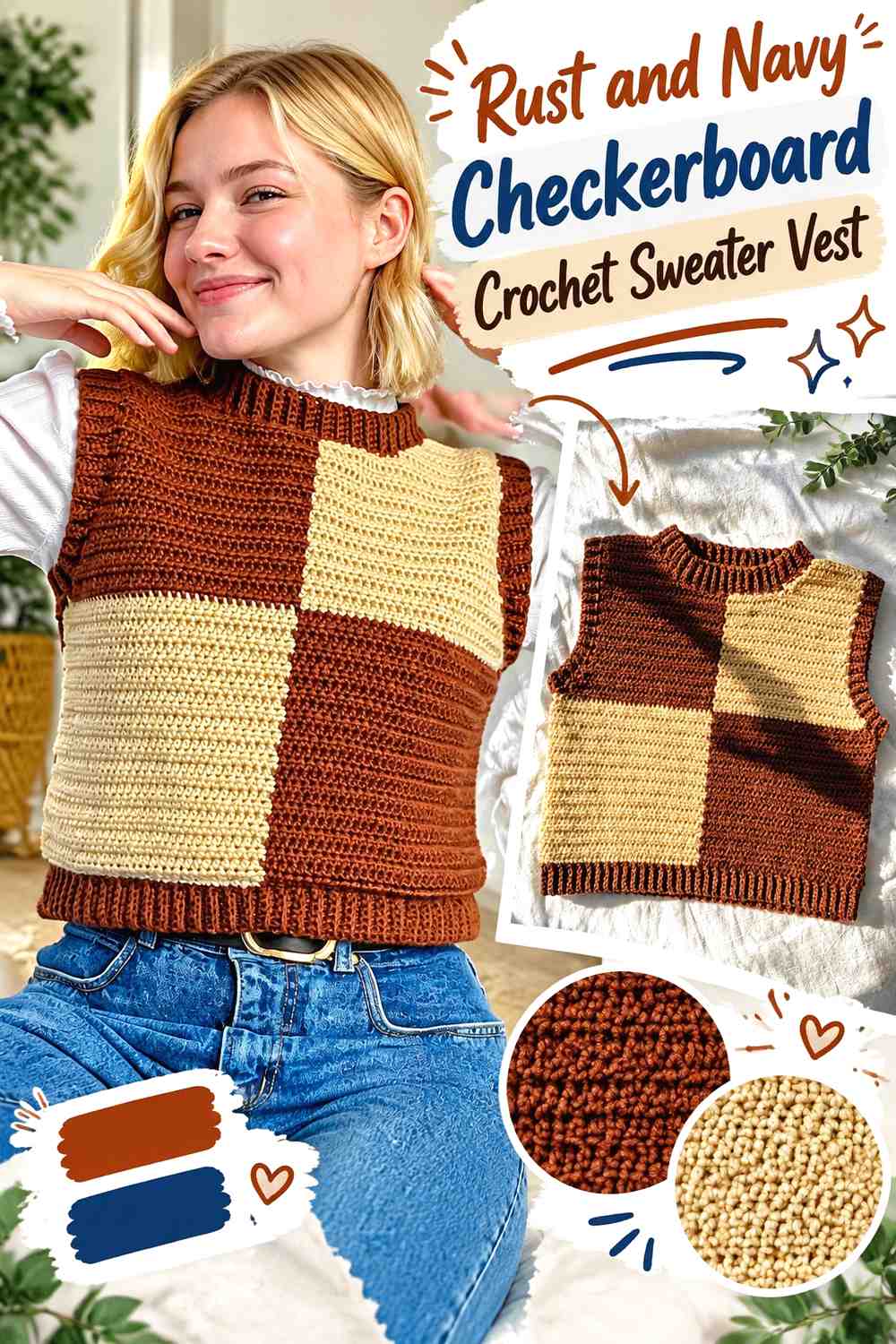
Checkerboard colorwork gives rust and navy nearly equal opportunities to be seen, making it one of the stronger graphic directions in this collection. The important decision is not simply alternating the colors, but checking how the blocks interact with the neckline, shoulders, and armholes once shaping interrupts the grid.
Rust and Navy Checks Need Enough Size to Read Across the Vest
Large rust-and-navy blocks make the checkerboard visible from normal outfit-viewing distance. Very small checks can become visually busy once the neckline and armholes begin cutting through the repeat.
Before committing to the whole vest, place a sample against the shirt you expect to wear underneath. The underlayer becomes a third visible color around every opening.
Navy Ribbing Can Contain the Rust Checkerboard Pattern
A navy neckline, armhole edge, or lower ribbing can create a consistent frame around alternating rust-and-navy blocks. This is useful when the body already carries plenty of color changes and does not need another mixed-color edge.
For a warmer result, reverse the idea and use rust ribbing. Keep the edging mostly one color so it reads as a frame rather than another checkerboard zone.
Creator Credit: Hayhay Crochet
3. Navy And Rust Mesh Crochet Top
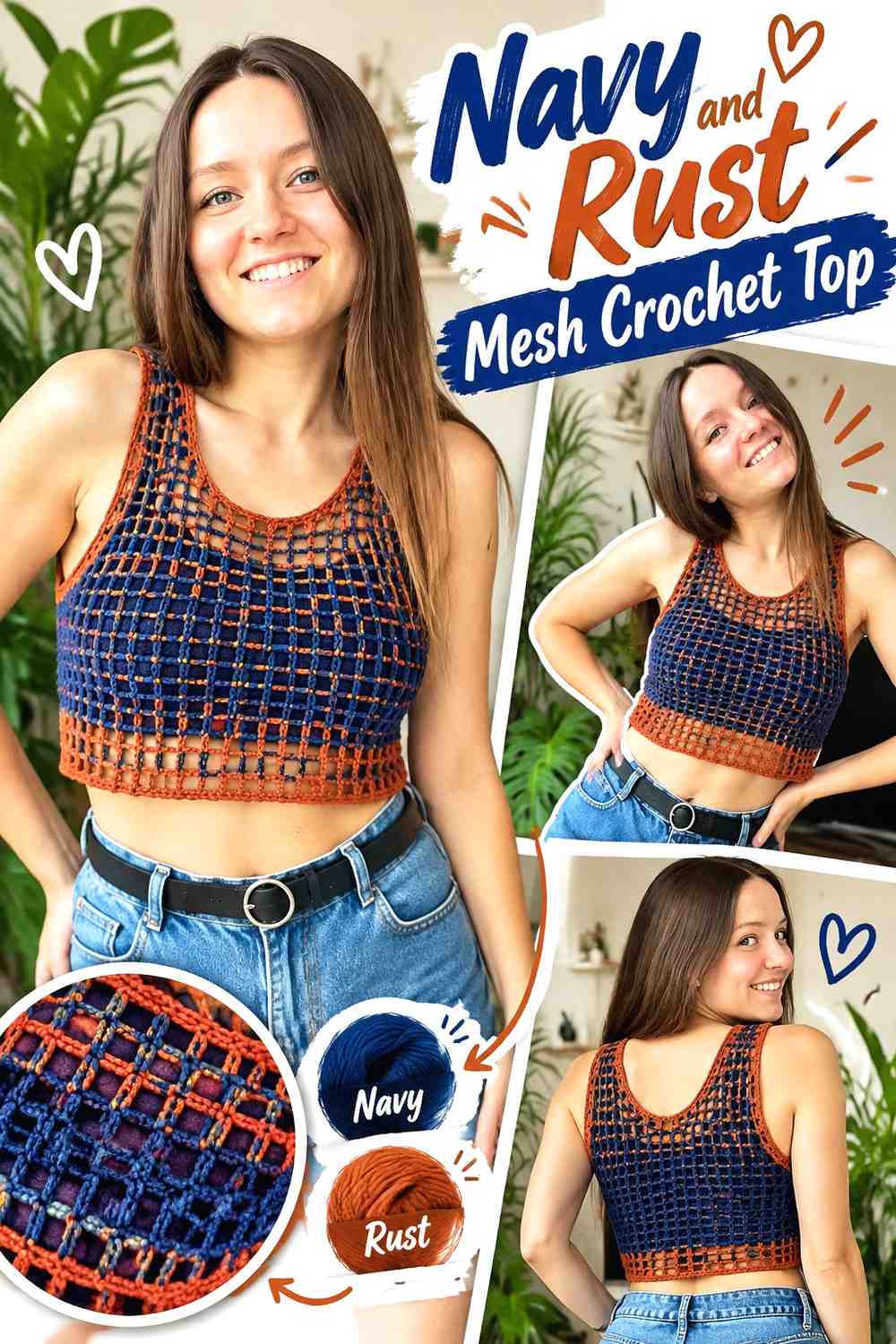
Openwork changes the behavior of both colors because the layer underneath remains visible through the crochet. Navy can dominate the main mesh panels while rust defines the neckline, straps, or hem, but the final effect will depend partly on what color is worn beneath the top.
Navy Mesh Changes With the Layer Under the Crochet Top
Navy openwork over a light underlayer creates more visible stitch separation than navy worn over another dark color. Test your swatch over the tank, camisole, or other layer you realistically expect to wear.
That check matters before deciding whether additional rust is needed. A high-contrast underlayer may already give the navy mesh plenty of definition.
Rust Can Concentrate Attention Around the Navy Crochet Top Edges
Rust at the neckline or lower hem creates a warm boundary around the navy body without interrupting the mesh across every row. One substantial rust edge often has more impact than several narrow, scattered stripes.
If the top includes straps, repeating rust there can connect the upper and lower accents while leaving most of the navy surface uninterrupted.
Creator Credit: by Kristine
4. Rust And Navy Crochet Statement Poncho
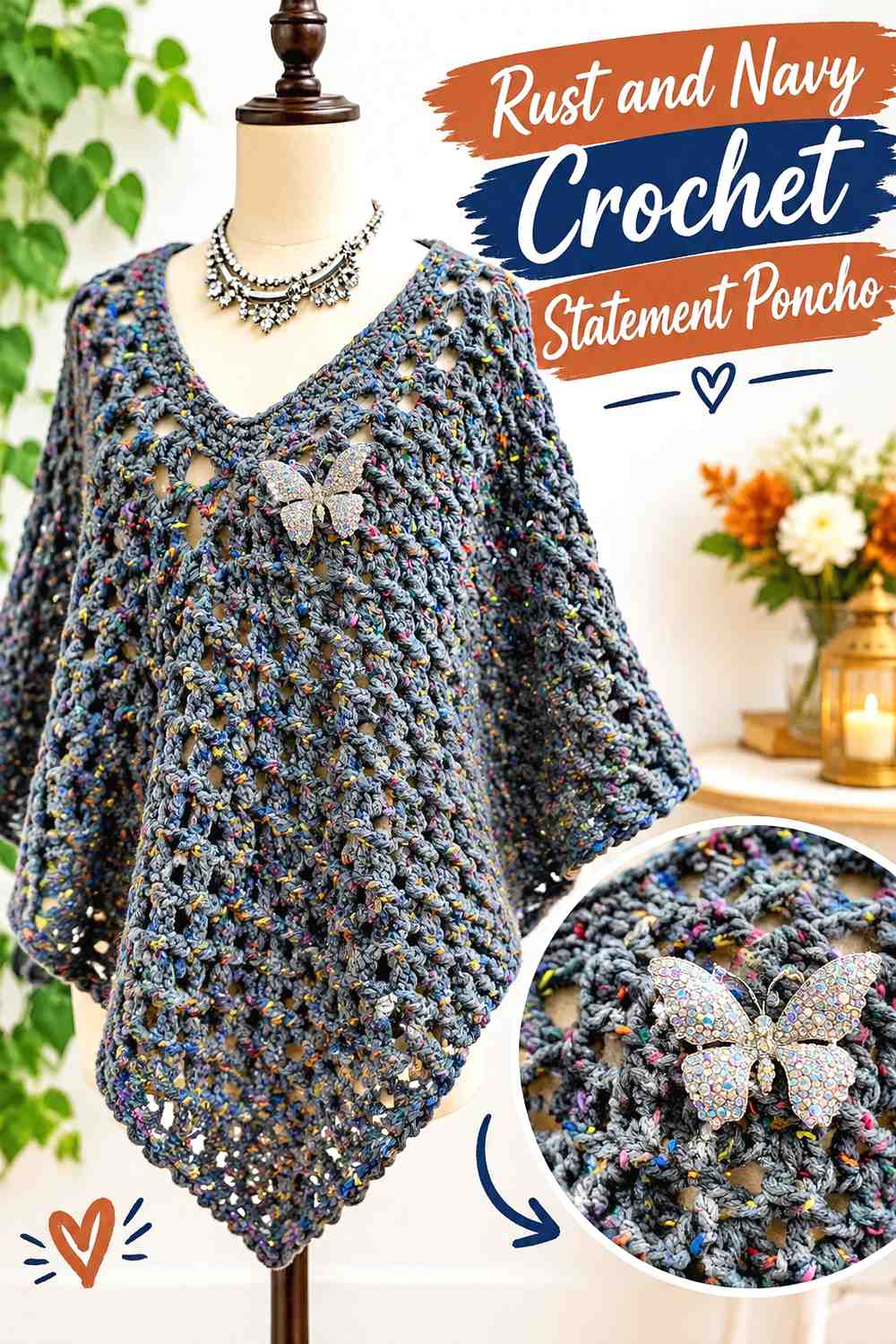
A poncho has a broad silhouette, so even an apparently small border can occupy considerable visual space. Rust can dominate the body while navy defines the neckline and lower perimeter. This creates a clear warm center surrounded by darker boundaries rather than chopping the large surface into many bands.
Rust Gives the Crochet Poncho a Broad Warm Statement
Covering most of the poncho in rust makes color itself part of the silhouette. Since the garment already has considerable width, allow the central area enough uninterrupted rust to keep the crochet texture visible.
If a full rust surface feels too heavy in your chosen shade, introduce one broad navy section rather than many thin stripes. Larger divisions suit the scale of a poncho better.
Navy Can Anchor the Rust Crochet Poncho Neckline and Border
Navy around the neckline gives the upper opening definition, while a lower navy border visually closes the large rust field. The two placements do not need identical widths.
Keep the neckline narrower if the lower border already makes a strong statement. This prevents the navy from enclosing the rust so completely that the poncho begins to look uniformly framed.
Creator Credit: Bag-O-Day Crochet
5. Rust And Navy Checkered Crochet Skirt

A checkered skirt brings rust and navy into repeated blocks across an area that moves significantly when worn. Larger checks keep that movement readable, while smaller alternating sections create a busier graphic surface. Decide whether rust or navy should also control the waistband before treating the checks as a perfectly equal split.
Rust and Navy Checks Need a Consistent Crochet Skirt Rhythm
Keep the block sequence predictable across the broadest part of the skirt. An inconsistent switch can become more noticeable when the repeated pattern wraps around the body.
If shaping changes the width higher or lower on the skirt, look at the whole panel before deciding where the checker sequence should change. Color placement should support the silhouette rather than force every section into identical blocks.
Navy Can Give the Rust Crochet Skirt a Defined Waist
A solid navy waistband provides visual separation between the checkerboard body and the top worn above it. It also gives one of the two shades a clear structural role beyond the alternating checks.
If your usual tops are dark navy or black, a rust waistband may create better separation. Test the skirt palette beside the clothes you expect to pair with it.
Creator Credit: Chenda DIY
6. Navy And Rust Crochet Statement Pants
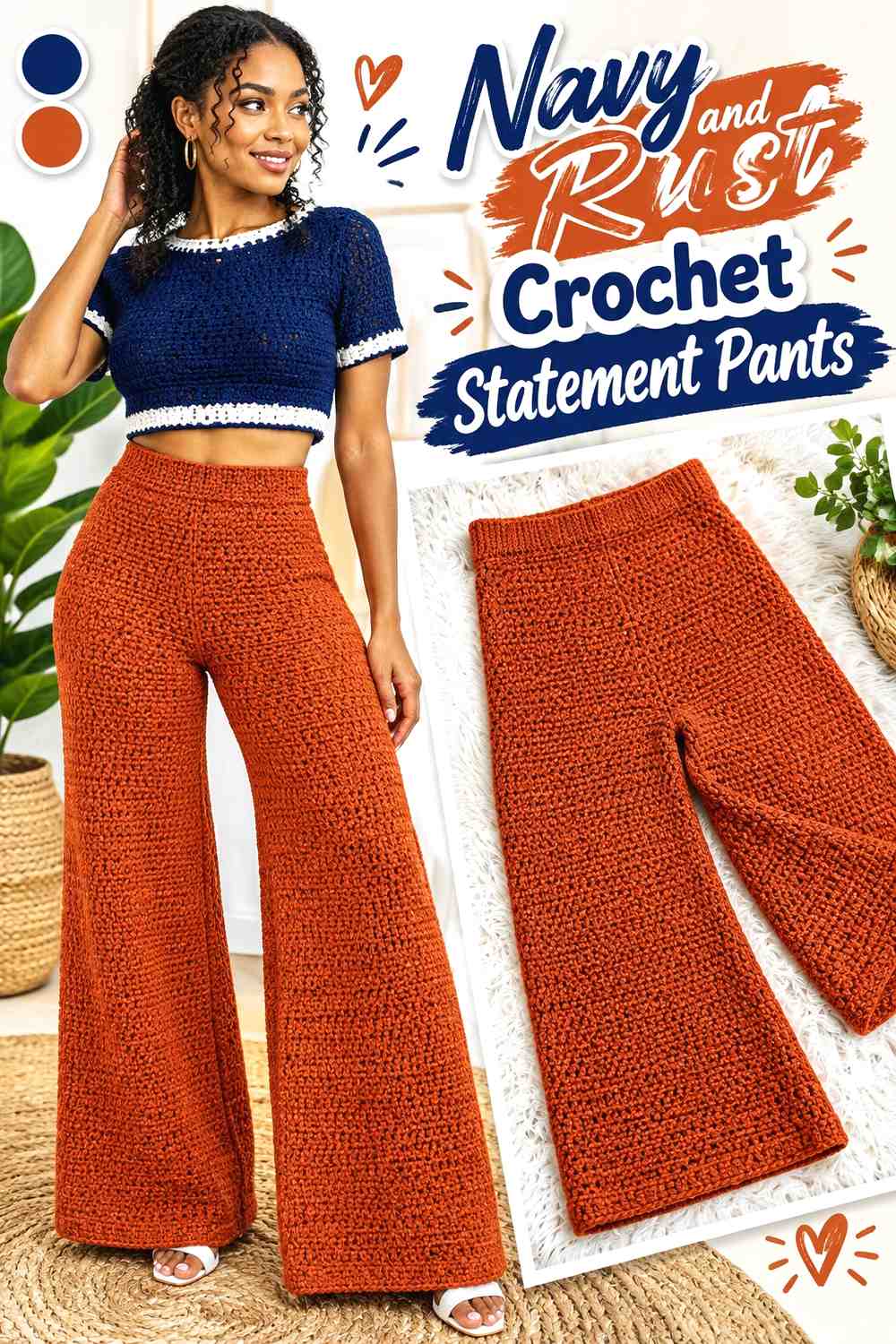
Crochet pants create long vertical surfaces, making them particularly suitable for navy-led color blocking with rust concentrated where you want the eye to travel. A navy body can keep the legs visually continuous, while rust appears at the waistband, lower legs, or broad side sections.
Navy Keeps the Crochet Pants Leg Line Visually Continuous
Using navy through most of each leg avoids breaking the silhouette into many short horizontal segments. That continuity gives the pants a strong base even before rust is introduced.
If the stitch pattern is textured, make sure your navy yarn allows enough definition to remain visible. Very dark yarn can make subtle texture less noticeable under indoor lighting.
Rust Side Sections Can Add a Vertical Accent to Navy Crochet Pants
A rust section running along part of the outer leg creates a different effect from rust cuffs or horizontal bands. It emphasizes length instead of cutting across it.
Keep both sides balanced unless intentional asymmetry is central to the design. On pants, mismatched color placement can be especially obvious because the legs are viewed together.
Creator Credit: Kali’s Threads
7. Navy And Rust Checker Accent Crochet Balaclava
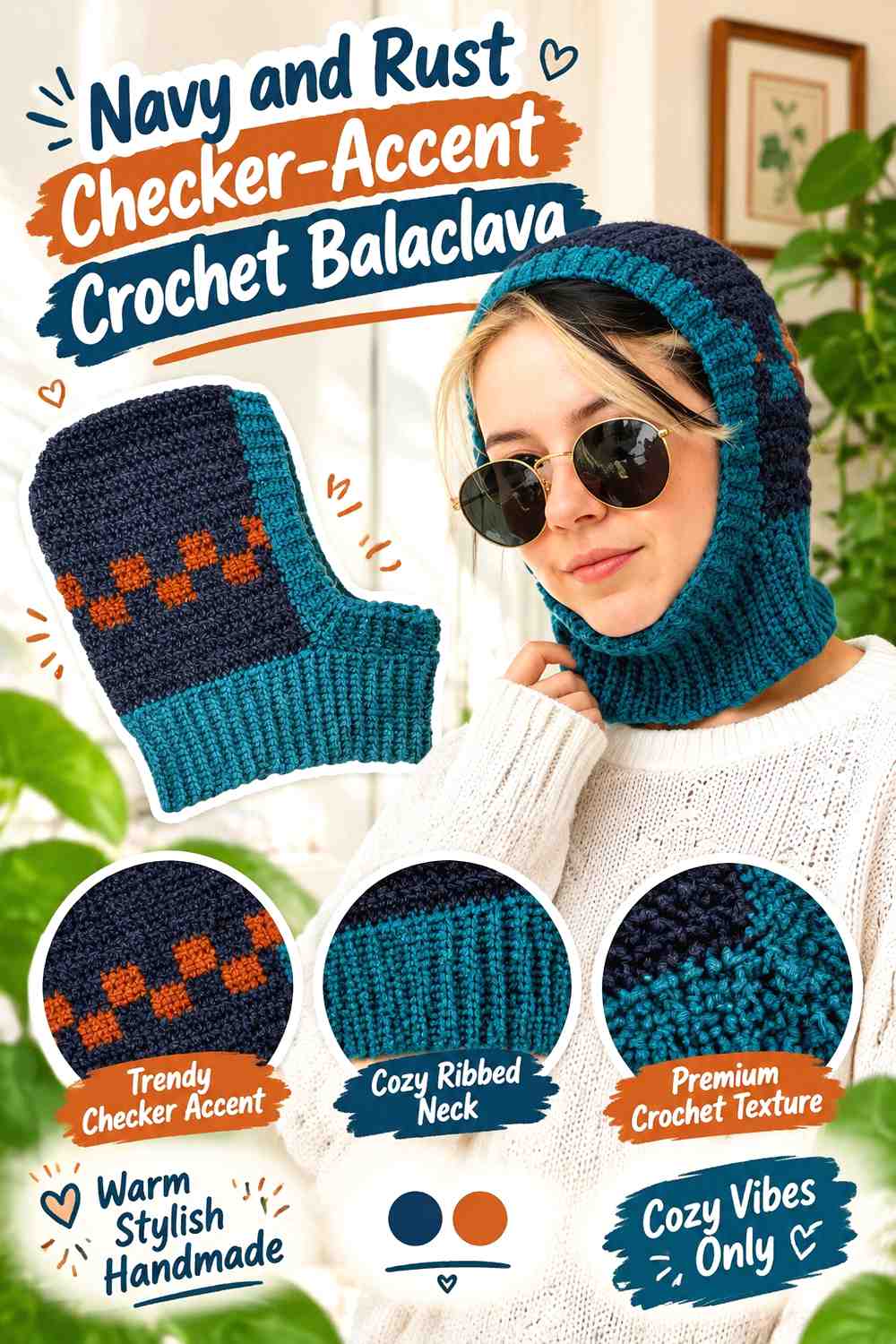
A balaclava offers a smaller canvas than a sweater but puts the color close to the face, so modest rust details can have significant impact. Navy can cover most of the hood while rust fills selected checker areas or defines part of the face opening.
Navy Gives the Crochet Balaclava a Strong Main Field
Using navy across the hood keeps the overall silhouette cohesive. It also provides enough uninterrupted space for an optional rust checker detail to look intentional rather than crowded.
If the navy is very dark, check the ribbed or textured areas under the lighting where you expect to wear the hood. Texture that is obvious while crocheting may appear subtler once worn.
Rust Checks Can Break Up the Navy Crochet Balaclava
Rust checker accents provide concentrated warm contrast without dividing every part of the hood. Position the stronger color where it can be seen from the front or side rather than hiding most of it toward the back.
If the checks already create enough rust, keep the face edging navy. Adding rust to both the graphic detail and every boundary can make a compact accessory feel overworked.
Creator Credit: made in the moment
8. Rust And Navy Crochet Bucket Hat
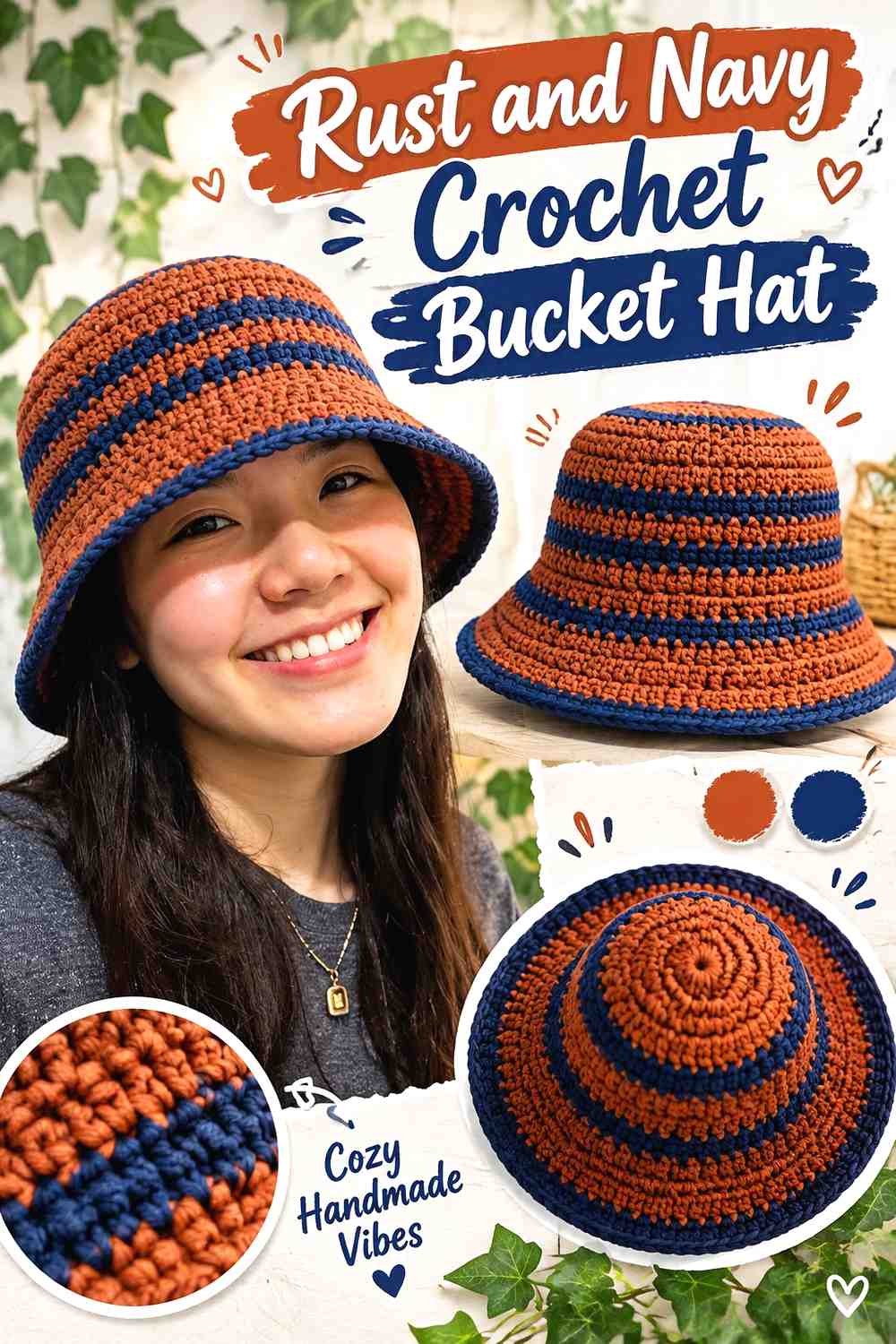
A bucket hat naturally divides into crown, sides, and brim, so rust and navy can be separated without inventing extra stripes. A rust crown and side section paired with a navy brim creates a warm upper area and darker lower frame that remains visible from several angles.
Rust Can Dominate the Crochet Bucket Hat Crown
Keeping the crown and upper sides rust makes the hat read clearly as rust-led even if the brim occupies a noticeable area. A continuous main color also lets the hat shape stay cleaner than frequent narrow bands.
If you want additional navy, introduce one side band rather than alternating colors throughout the entire crown.
Navy Makes the Rust Crochet Bucket Hat Brim More Graphic
The brim projects outward, so navy there often appears stronger than the same amount of color near the crown. This makes it an efficient place to use the darker shade.
Before repeating navy elsewhere, view the finished or partially finished hat from the front. The brim may already provide all the navy needed for a clear two-color statement.
Creator Credit: VivCrochets
9. Navy And Rust Motif Crochet Shawl

A motif-based shawl gives rust and navy repeated areas that can create movement across a much larger accessory. Navy can control most motifs or connecting areas while rust appears in selected motif centers or groups. The color distribution should still make sense after the shawl is draped rather than only while it lies flat.
Navy Can Connect the Crochet Shawl Motifs
Using navy consistently across joining areas or the outer portions of motifs helps separate individual rust focal points. It also gives the shawl a darker underlying rhythm when the fabric folds.
Lay several completed motifs together before committing to the entire project. This reveals whether rust feels deliberately repeated or randomly scattered.
Rust Motifs Need Strategic Placement Across the Navy Crochet Shawl
Rust near the center back creates a different statement from rust concentrated at the lower points or outer ends. Decide which area you expect to remain most visible when the shawl is worn.
If the rust sections disappear when wrapped around the shoulders, move some of the accent closer to the edges rather than simply increasing its amount everywhere.
Creator Credit: Ophelia Talks Crochet
10. Rust And Navy Crochet Infinity Scarf
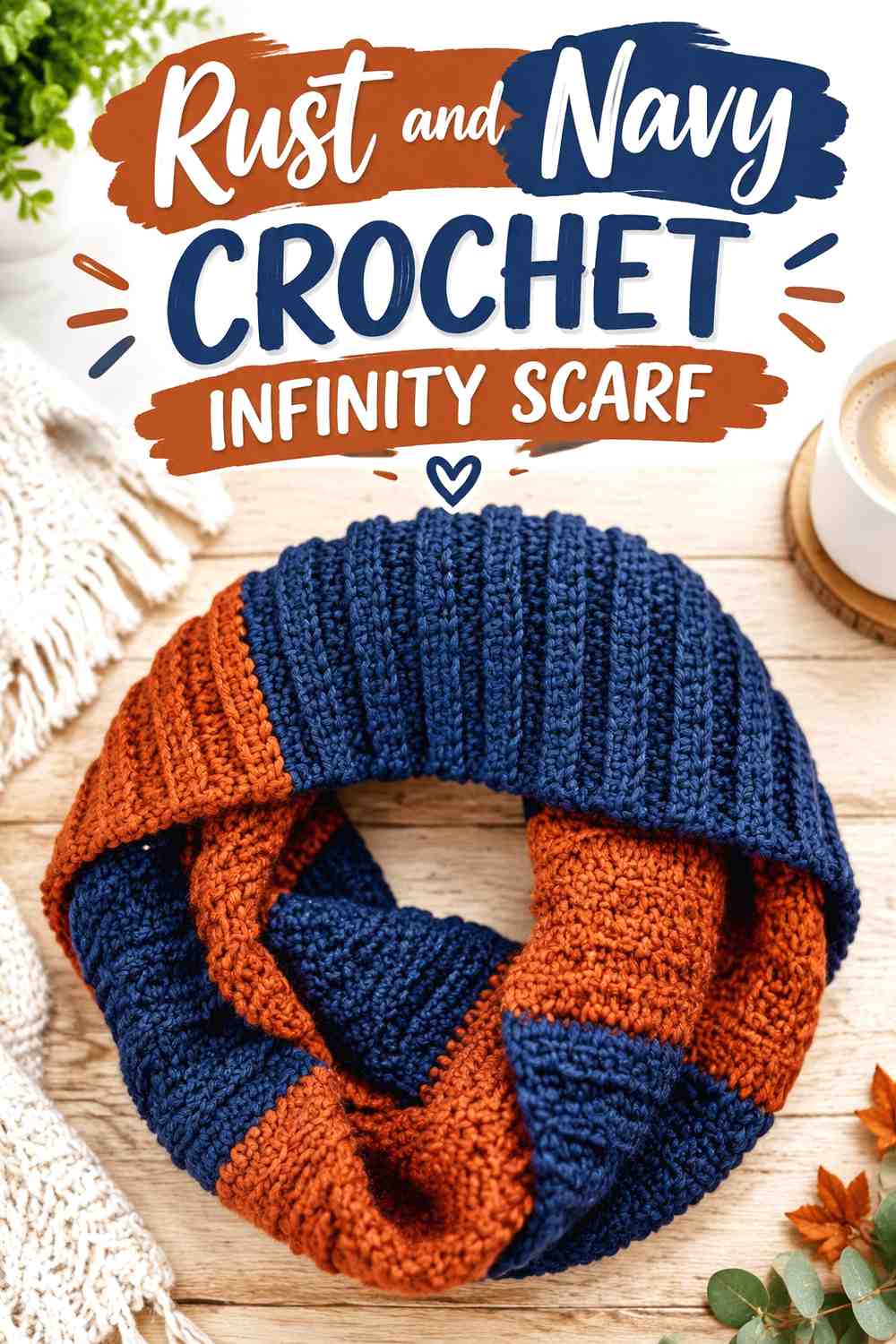
An infinity scarf repeatedly folds over itself, which means color placement can overlap in unpredictable ways. A rust-dominant body with controlled navy sections makes it easier for both colors to remain visible after wrapping.
Rust Can Carry Most of the Crochet Infinity Scarf
Using rust for the majority of the fabric produces a strong warm accessory without requiring complicated colorwork. It also keeps the central stitch texture visually consistent.
Before finalizing a navy section, loop the scarf around the neck in roughly its intended arrangement. A stripe that looks prominent while flat may disappear inside a fold.
Navy Sections Should Repeat Clearly Through the Rust Crochet Scarf
One isolated navy band can vanish depending on how the scarf is worn. Repeating navy in two or more separated areas increases the chance that at least part of the contrast remains visible.
Keep the bands broad enough to survive folding. Numerous thin navy stripes may blend visually once several scarf layers sit on top of one another.
Creator Credit: Sigoni Macaroni
11. Rust And Navy Block Color Crochet Tote
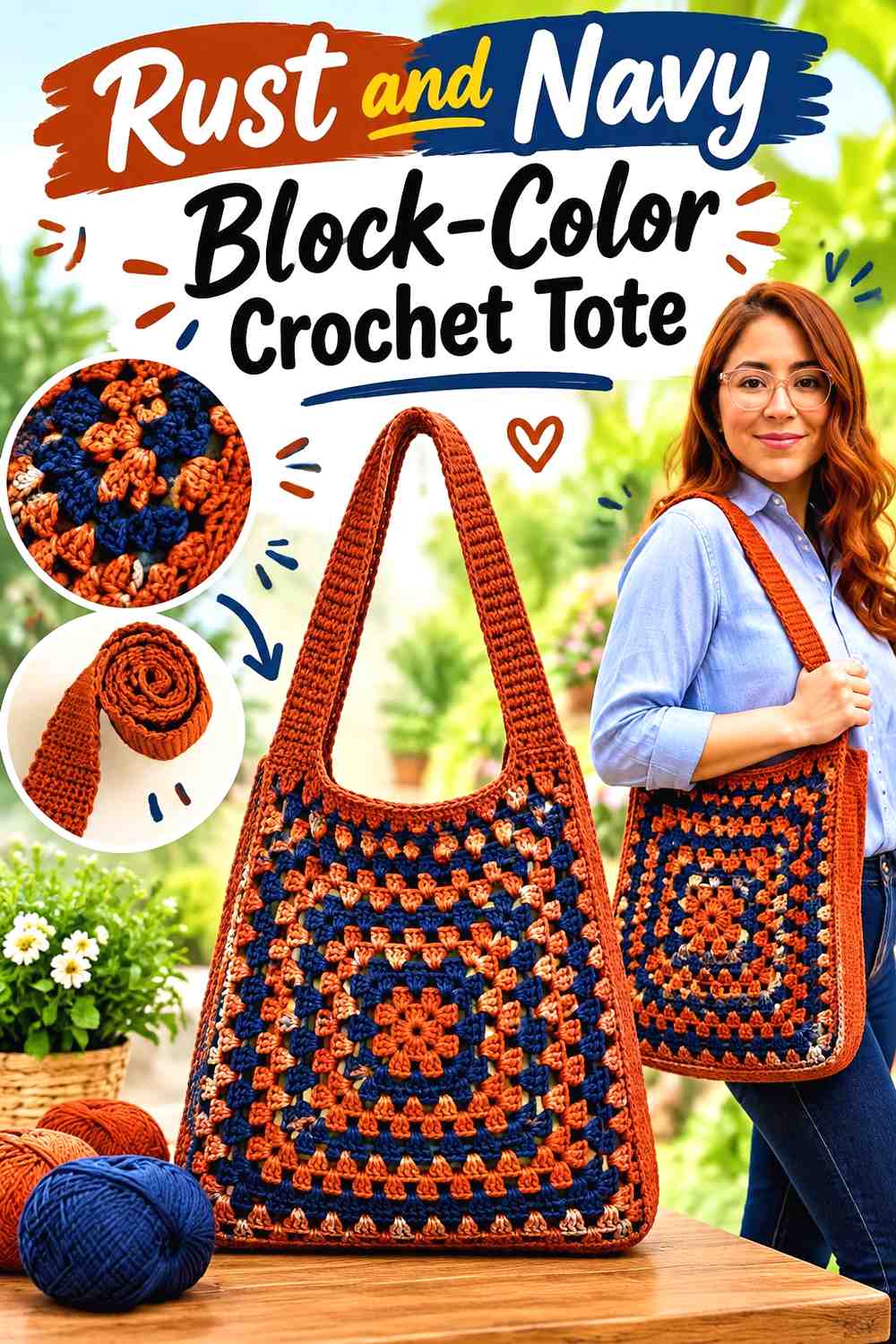
A tote has enough flat surface for rust and navy to create bold blocks without the fit considerations of a garment. Rust can carry the largest sections while navy defines the sides, base, strap, or alternating square areas. Because the bag moves independently from the clothing, it can hold a stronger color split than many wearables.
Rust Makes the Crochet Tote a Warm Outfit Focal Point
Use rust across one or both broad bag faces when you want the tote to deliver most of the outfit’s warm color. Large rust panels also make the bag easy to coordinate with navy clothing without trying to match every accessory.
If the tote construction already contains visible blocks, use those divisions for the color changes rather than adding unrelated stripes.
Navy Can Give the Rust Crochet Tote Structural Definition
Navy along the sides, base, or strap can visually frame the rust bag body. A darker strap is especially noticeable because it continues above the main bag.
If navy appears on the strap and side band, consider leaving the top edge rust. Outlining every structural section can reduce the visual impact of the larger rust face.
Creator Credit: Brunaticality
12. Navy And Rust Crochet Crossbody Bag
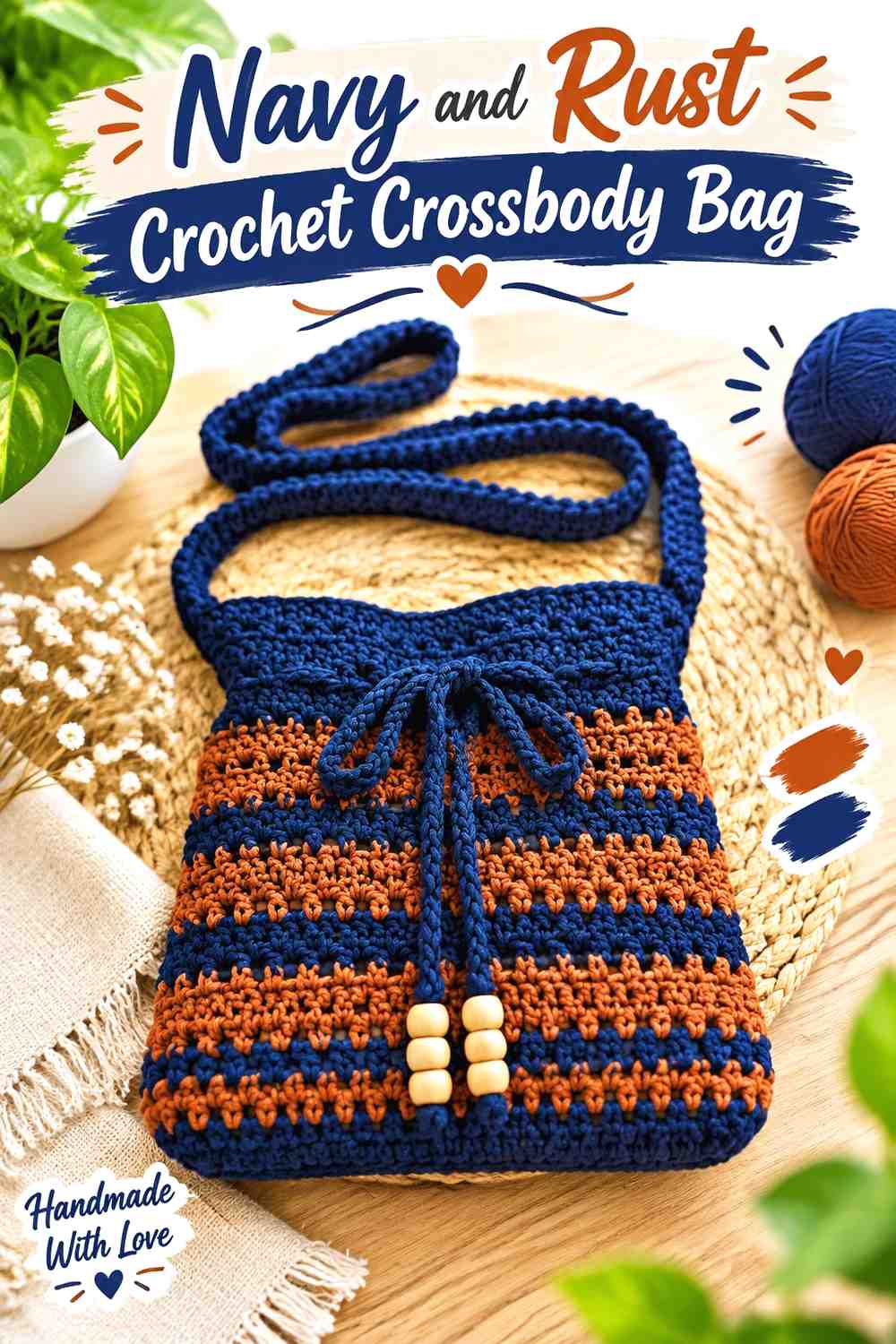
A crossbody bag places the strap directly across the outfit, so strap color matters almost as much as the bag body. Navy can dominate the main bag while rust runs through the strap or selected front details, creating a line of warm color that extends beyond the bag itself.
Navy Gives the Crochet Crossbody Bag a Strong Main Shape
Using navy across most of the body creates a compact dark focal area that can sit against rust, beige, denim, cream, or other outfit colors without dividing the bag into too many sections.
If the bag has noticeable surface texture, check whether it remains visible in your navy yarn before introducing additional color solely to create definition.
Rust Makes the Navy Crochet Crossbody Strap Part of the Design
A rust strap carries color across a larger portion of the outfit than a small front motif would. That makes the strap an effective accent even though it contains less total yarn than the bag body.
Repeat rust once on the bag itself—perhaps around an upper edge or selected panel—if the strap otherwise seems unrelated to the navy body.
Creator Credit: Chompu Handicrafts
13. Rust And Navy Scalloped Crochet Bandana

A bandana is compact enough for rust to dominate without overwhelming an entire outfit. Use rust across the main triangular field and navy along the scalloped edge or ties. The darker outline can help the decorative border remain recognizable against hair or clothing.
Rust Gives the Crochet Bandana a Concentrated Statement Color
A continuous rust body keeps the triangle easy to read and lets openwork or stitch texture provide most of the surface interest.
If your rust is especially dark, compare it with the navy edging before finishing the entire piece. Two dark shades can still work together, but the border will read more through hue difference than light-and-dark contrast.
Navy Can Define the Rust Crochet Bandana Scalloped Edge
A navy scallop creates a repeating dark outline around the warmer central field. Because the edging already has a decorative silhouette, the navy does not need additional striping inside the main triangle.
Carrying navy into the ties gives the border another connection point and keeps the rust center visually contained.
Creator Credit: PassioKnit Kelsie
14. Navy And Rust Mesh Crochet Shrug
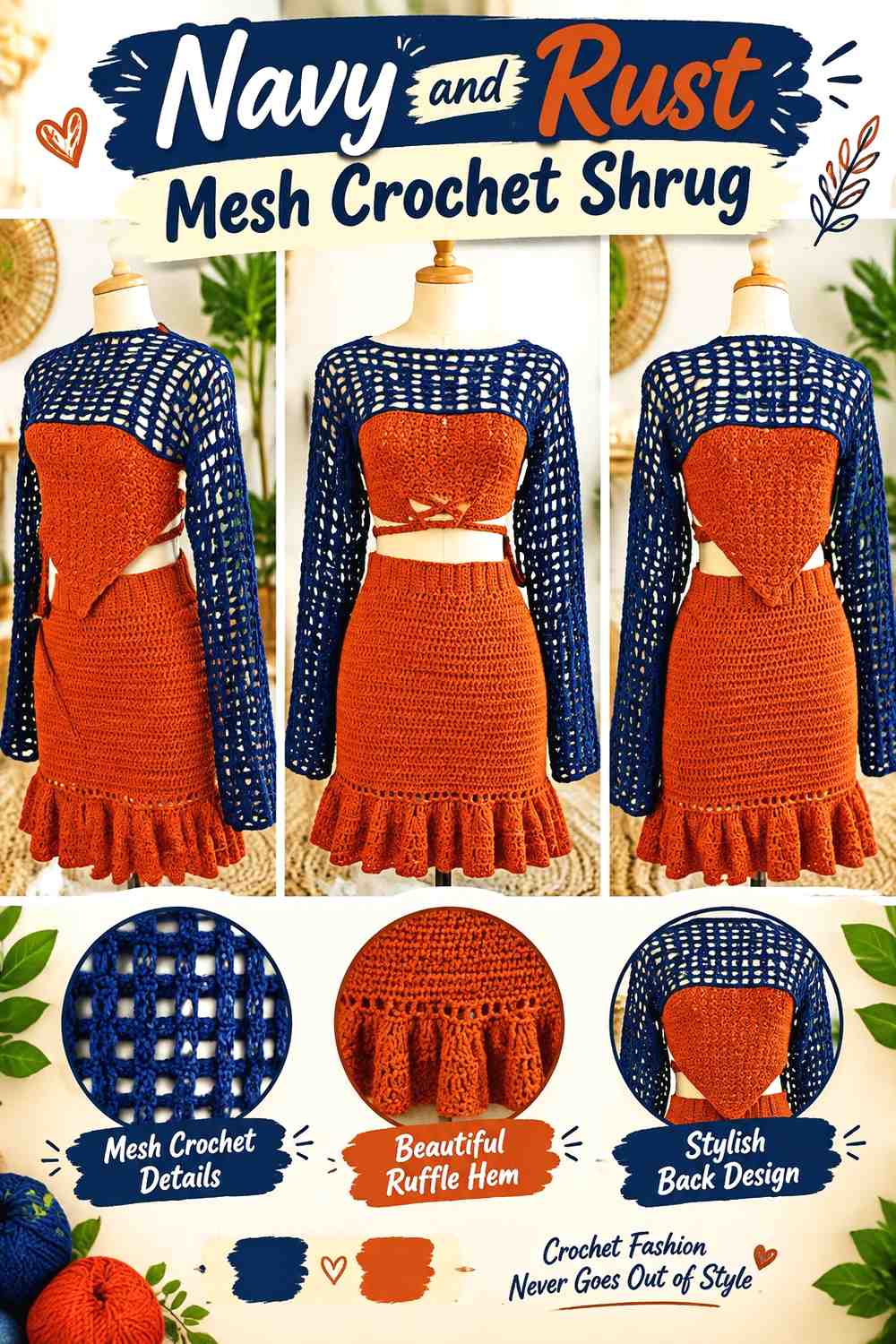
A mesh shrug leaves much of the outfit beneath it visible, so navy can provide an outer framework without covering the entire underlying color. Rust at the cuffs and front opening creates warm stopping points around the openwork and can connect the shrug to rust accessories elsewhere in the outfit.
Navy Mesh Lets the Crochet Shrug Layer Over Other Colors
The open structure means the top underneath becomes visually mixed with navy. Test a small mesh sample over light and dark clothes before choosing the final rust placement.
If navy already contrasts strongly with the underlayer, you may need less rust than expected to make the shrug feel deliberately two-colored.
Rust Cuffs Can Give the Navy Crochet Shrug a Strong Finish
Cuffs create matching endpoints on both arms and are therefore efficient locations for rust. They add warmth without interrupting the navy mesh across the sleeves and back.
Repeat a narrow amount of rust around the front opening only if the cuffs need a stronger connection. Keeping the body navy preserves the shrug’s open, continuous look.
Creator Credit: LaDenser Crochets
Comparing Rust and Navy Crochet Statement Directions
For the strongest graphic colorwork, the checkerboard sweater vest, checkered skirt, and checker-accent balaclava make the relationship between rust and navy part of the visible pattern itself.
If you prefer one dominant color with a controlled contrasting edge, look at the rust cardigan, poncho, bucket hat, bandana, or navy mesh shrug. These pieces allow one shade to cover the major surface while the second clarifies cuffs, openings, brims, or borders.
The pants, shawl, infinity scarf, tote, and crossbody bag offer more flexible placement. Their long sections, motifs, folds, or straps let you decide whether rust should appear as a concentrated accent or occupy a much larger share of the finished project.
Conclusion
Rust and navy make statement crochet most effective when the colors do more than alternate. Rust can direct attention toward sleeves, checks, borders, hat crowns, straps, and bag panels, while navy can establish darker garment fields, frame warm sections, or keep large silhouettes visually grounded.
For bold graphic contrast, start with the checkerboard vest or skirt. For a single strong focal garment, consider the cardigan, poncho, pants, or shrug. Smaller pieces such as the bucket hat, bandana, balaclava, scarf, and bags let you use the same palette without committing to a full rust-and-navy outfit.
Whichever project you choose, compare the actual yarns before planning the color layout. Two colors that look dramatically different in skeins can become much closer once worked into textured crochet, particularly when both are dark in value.
Frequently Asked Questions
Should Rust or Navy Be the Main Color in a Statement Crochet Piece?
Either can lead, but the scale of the project changes the effect. Rust across a full poncho or cardigan creates a much larger warm statement than rust across a bandana or hat. Navy can be useful on broad garment areas when you want rust concentrated around selected features.
Decide first which part of the finished item should attract attention, then place the dominant color there.
Do Rust and Navy Have Enough Contrast for Crochet Colorwork?
They can, but the actual yarn shades matter. A dark brick-like rust and deep navy may have similar light-and-dark values even though their hues are clearly different.
Place the yarns together and view them from a distance. A grayscale photo can also show whether checkerboard blocks or narrow details will remain distinct.
How Can I Keep a Rust and Navy Crochet Garment From Looking Too Busy?
Give the palette larger visual zones. A navy sweater body with rust cuffs is quieter than a garment containing many narrow alternating stripes. Similarly, large checkerboard blocks are easier to interpret than numerous tiny rust-and-navy changes.
Let stitch texture provide some of the visual interest instead of asking color to decorate every section.
Where Should I Put Rust on a Mostly Navy Crochet Project?
Look for existing structural features: cuffs, borders, straps, waistbands, brims, motif centers, face edging, or selected panels. These areas already create visual transitions, so the color change has a clear reason.
Repeating rust in one secondary location can keep the accent connected without spreading it across the whole item.
Can I Add a Neutral to Rust and Navy Crochet?
Yes. A cream, oatmeal, beige, gray, or another neutral can provide separation when your rust and navy yarns are both dark. Keep the third shade’s role controlled so it does not turn a focused two-color statement into three competing main colors.
On motif or checkerboard projects, a neutral can be particularly useful around joins, borders, or small details that need extra value contrast.
How Do I Substitute Different Rust or Navy Yarn Shades?
Preserve the intended relationship rather than matching the names alone. If navy is supposed to be the deepest anchor, choose a substitute that remains darker or visually weightier than the rust. If rust is meant to provide the stronger focal color, keep enough warmth and saturation for it to remain noticeable.
Always compare the replacement yarns together. Shade names such as “rust” and “navy” cover a wide range of actual colors.