20 Wasabi and Dusty Mauve Crochet Looks
Wasabi and dusty mauve create an unusual crochet pairing because neither shade has to behave like a standard neutral. Wasabi brings a fresh yellow-green direction, while dusty mauve adds a softened pink-purple counterpoint. The combination can look graphic when the colors are clearly separated or quieter when one shade covers most of the piece and the other appears only at edges, motifs, or accessories.
The most useful way to work with this pairing is to decide which color should lead before starting. A cardigan with a large wasabi body and dusty mauve cuffs will read very differently from the same cardigan with dusty mauve panels and small wasabi details. The 20 looks below explore those shifts across garments and accessories without requiring every project to divide the two colors equally.
Quick List
- Wasabi Led And Dusty Mauve Trimmed Crochet Cardigan
- Dusty Mauve And Wasabi Ribbed Crochet Crop Top
- Dusty Mauve V Neck And Wasabi Accent Crochet Sweater
- Wasabi And Dusty Mauve Color Block Crochet Bucket Hat
- Dusty Mauve And Wasabi Crochet Bandana
- Wasabi And Dusty Mauve Granny Square Crochet Cardigan
- Dusty Mauve Crochet Tank Top With Wasabi Edging
- Wasabi And Dusty Mauve Crochet Mesh Top
- Dusty Mauve And Wasabi Striped Crochet Skirt
- Wasabi And Dusty Mauve Crochet Dress
- Wasabi Crochet Tote With Dusty Mauve Details
- Dusty Mauve Crochet Shoulder Bag With Wasabi Border
- Wasabi And Dusty Mauve Color Block Crochet Scarf
- Dusty Mauve Crochet Beanie With Wasabi Accent
- Wasabi And Dusty Mauve Crochet Headband
- Dusty Mauve Crochet Balaclava With Wasabi Framing
- Wasabi And Dusty Mauve Crochet Poncho
- Dusty Mauve And Wasabi Crochet Capelet
- Wasabi Crochet Fingerless Gloves With Dusty Mauve Cuffs
- Dusty Mauve And Wasabi Crochet Leg Warmers
How to Balance Wasabi and Dusty Mauve in Crochet Wearables
Start by assigning the colors different jobs. One can cover the largest areas of a garment while the other defines cuffs, ribbing, necklines, straps, borders, or motif centers. This gives the palette a hierarchy instead of making the eye decide between two equally strong blocks of color.
The right balance also depends on the size of the project. A small hat can handle abrupt wasabi-and-dusty-mauve color blocking without becoming visually complicated. Across a dress or long cardigan, repeating smaller amounts of the secondary color can produce a more connected result than dividing the entire garment into two large halves.
Check Wasabi and Dusty Mauve Contrast Before You Commit
Wasabi and dusty mauve can vary considerably from yarn to yarn, so compare the actual skeins rather than relying only on their color names. If both shades have similar lightness, small stripes, mesh details, or motif centers can start to blend even though the hues are different.
Place the yarns side by side and view them from a distance. A quick grayscale photo can also help reveal whether there is enough light-and-dark separation for the placement you have planned. If the values are close, use larger color sections. If the values are clearly different, smaller edging and motif details can remain easier to distinguish.
1. Wasabi Led And Dusty Mauve Trimmed Crochet Cardigan

Let wasabi cover most of the cardigan body and sleeves if you want the green to establish the outfit from a distance. Dusty mauve can then appear around cuffs, the front opening, and the lower edge, where a smaller amount creates repetition without cutting the main panels into competing blocks.
Wasabi Works Best Across the Large Crochet Cardigan Panels
Large front and back panels give wasabi enough uninterrupted area to establish itself as the dominant shade. If the cardigan already contains visible stitch texture, keeping these broad areas in one color also prevents frequent changes from distracting from that texture.
Dusty Mauve Can Define Wasabi Cardigan Cuffs and Edges
Use dusty mauve where the cardigan naturally ends or changes direction, such as cuffs, neckline finishing, or the front band. Repeating dusty mauve in more than one of these locations makes the contrast look intentional rather than like an unrelated strip added at the end.
Creator Credit: TCDDIY
2. Dusty Mauve And Wasabi Ribbed Crochet Crop Top
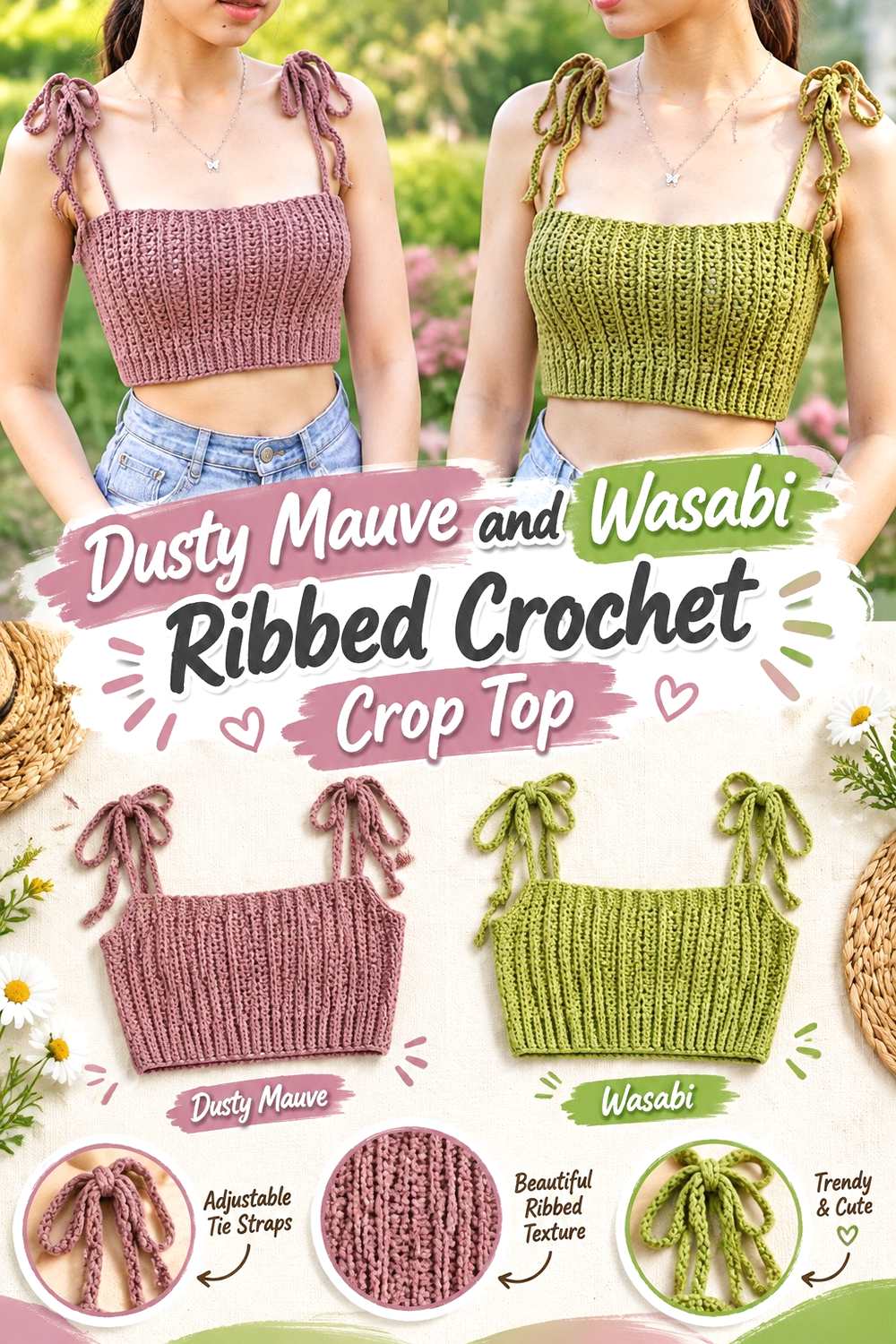
A crop top gives the palette less surface area, so a dusty mauve body with controlled wasabi detailing can keep the design clear. Wasabi can outline the straps, upper edge, or lower finish instead of taking over half of the top.
Dusty Mauve Keeps the Crochet Crop Top Visually Unified
Using dusty mauve through the main ribbed surface allows the texture to remain continuous instead of interrupting it with frequent color changes. This is especially useful when the fabric already has strong vertical or horizontal lines.
Wasabi Gives Dusty Mauve Crop-Top Edges More Definition
Wasabi can be concentrated along a narrow lower edge or straps where even a small amount is easy to notice. If the two yarns are close in value, make the wasabi section slightly broader rather than relying on a very thin line that may disappear into the dusty mauve.
Creator Credit: Chenda DIY
3. Dusty Mauve V Neck And Wasabi Accent Crochet Sweater

For a V-neck sweater, dusty mauve can provide the main field while wasabi is reserved for areas that naturally frame the garment. The V-neck itself creates a strong visual line, so repeating wasabi there and at the cuffs can connect the upper and lower portions of the sweater.
Dusty Mauve Lets the Crochet Sweater Shape Stay Prominent
Keeping the torso mostly dusty mauve prevents the palette from competing with the V-shaped neckline and sleeve silhouette. It also gives you a larger uninterrupted area if the sweater stitch pattern already produces substantial texture.
Wasabi Can Trace the Dusty Mauve V-Neck Without Taking Over
A wasabi neckline treatment can emphasize the V without requiring another major color block. Repeat the same green at the cuffs or lower edge if the neckline alone feels visually isolated.
Creator Credit: forthefrills
4. Wasabi And Dusty Mauve Color Block Crochet Bucket Hat
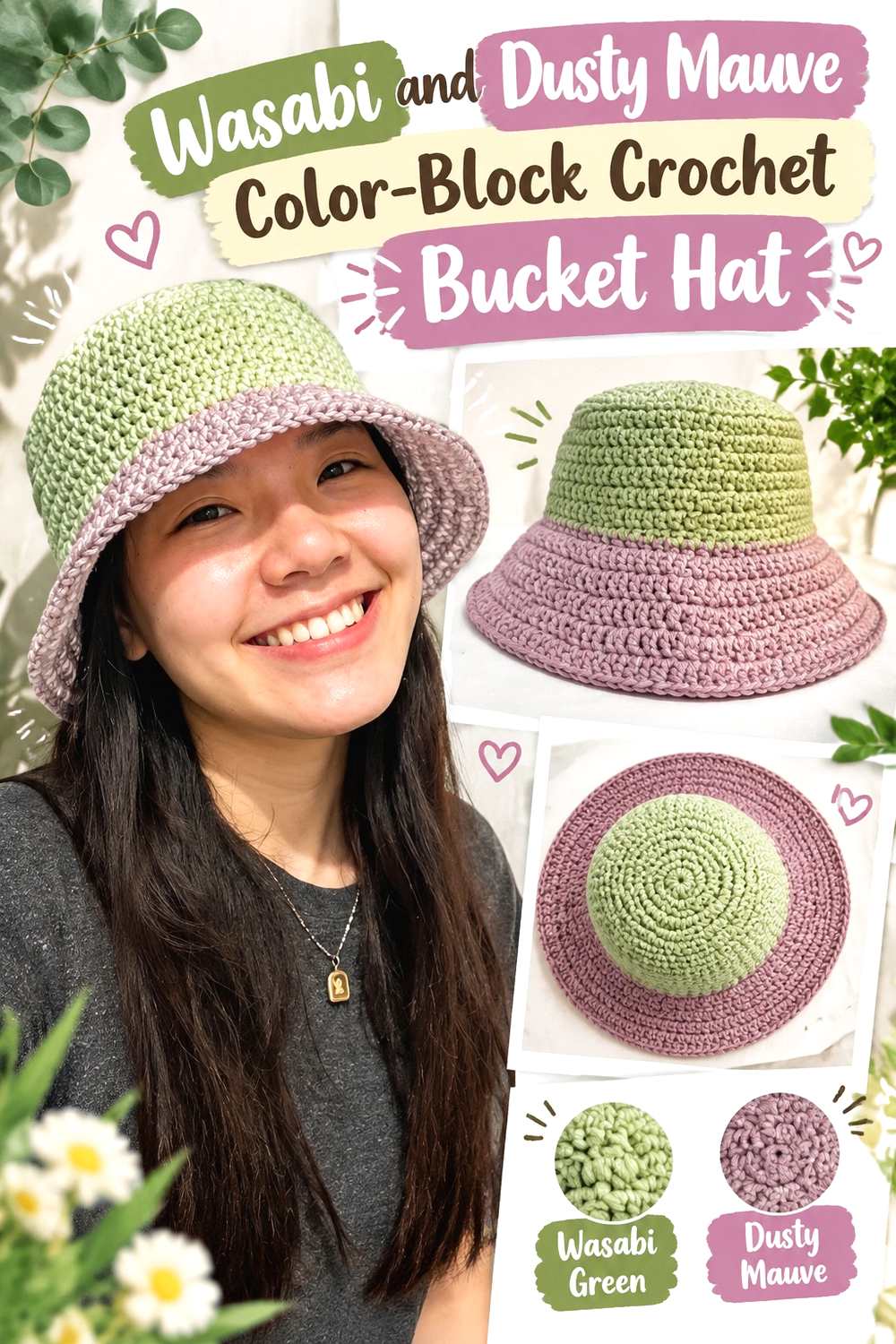
A bucket hat suits more direct color blocking because the crown, sides, and brim already provide natural placement zones. Wasabi can lead through the crown and body while dusty mauve takes over the brim, or the arrangement can be reversed for a softer first impression.
Wasabi Can Carry the Crochet Bucket Hat Crown
Placing wasabi on the upper portion concentrates the brighter green direction close to the face without requiring it to cover the whole hat. Keep the crown and side section connected in wasabi when you want a larger, cleaner color field.
Dusty Mauve Gives the Wasabi Bucket Hat Brim a Clear Finish
A dusty mauve brim creates an obvious stopping point for the wasabi section. If you want stronger integration, repeat a narrow dusty mauve detail higher on the hat rather than introducing another unrelated color.
Creator Credit: VivCrochets
5. Dusty Mauve And Wasabi Crochet Bandana
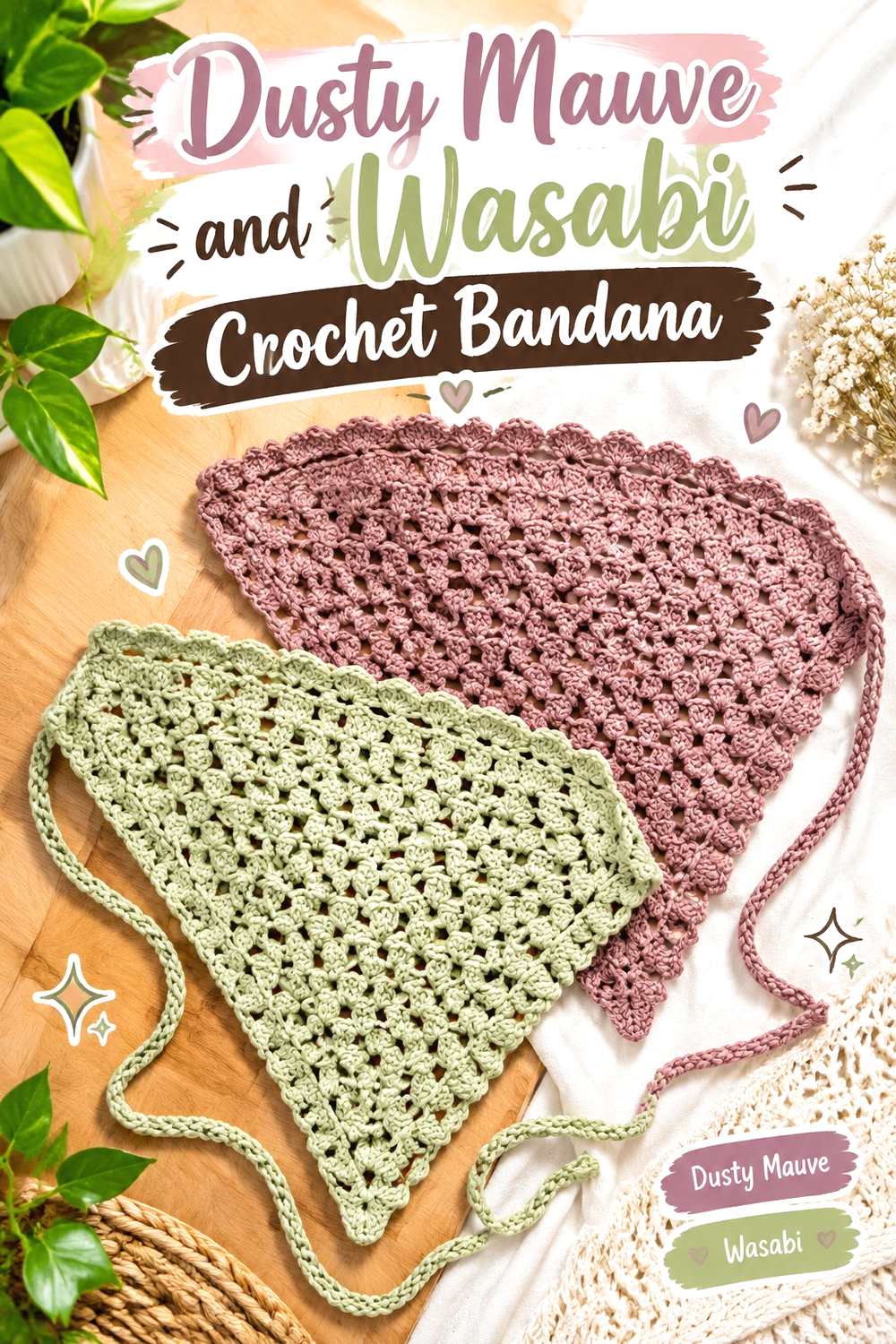
The triangular shape of a bandana makes progressive color placement more noticeable than it would be on a rectangular accessory. Dusty mauve can dominate the triangle while wasabi is introduced around the outer edge and ties.
Dusty Mauve Keeps the Crochet Bandana Center Calm
Use dusty mauve through the main triangle when you want the bandana to read as one primary color from the front. This approach is particularly useful when open spaces or granny-style clusters already create visual movement.
Wasabi Can Frame the Dusty Mauve Bandana Triangle
A wasabi outer row, tie area, or narrow edge creates separation around the dusty mauve center. Check the two yarns at the actual stitch scale before committing, since a very fine wasabi outline will be less effective when their lightness is similar.
Creator Credit: HayHay Crochet
6. Wasabi And Dusty Mauve Granny Square Crochet Cardigan

Granny squares give both colors repeated places to appear without demanding an equal split across the garment. Try dusty mauve centers with wasabi outer sections, then control how strongly either color dominates through the arrangement of the finished motifs.
Dusty Mauve Centers Can Repeat Across Wasabi Crochet Squares
Putting dusty mauve in repeated motif centers distributes the color across the cardigan instead of collecting it in one panel. The repetition helps the mauve remain visible even when each individual section is relatively small.
Wasabi Outer Rounds Can Connect Dusty Mauve Granny Squares
Using wasabi toward the edges of motifs can make neighboring squares relate more strongly once they are joined. If both colors compete too much at the motif level, make the outer wasabi area larger so the finished cardigan develops a clearer dominant field.
Creator Credit: Viktoria e Svitlana Marongiu
7. Dusty Mauve Crochet Tank Top With Wasabi Edging

A dusty mauve tank can keep the torso visually simple while wasabi marks the neckline, straps, and arm openings. This placement works especially well when you want the green to function as a repeated outline rather than a broad second panel.
Dusty Mauve Gives the Crochet Tank Top a Consistent Main Field
Use dusty mauve across the front and back so the garment has one continuous base color. This leaves the silhouette and stitch surface easier to read than alternating narrow stripes across the entire torso.
Wasabi Can Outline Dusty Mauve Tank-Top Openings
The neckline and armholes are logical places for wasabi because the color follows existing garment boundaries. Keep the thickness of the wasabi treatment consistent when possible so one opening does not visually outweigh the others.
Creator Credit: Val Crochê & Vlogs
8. Wasabi And Dusty Mauve Crochet Mesh Top
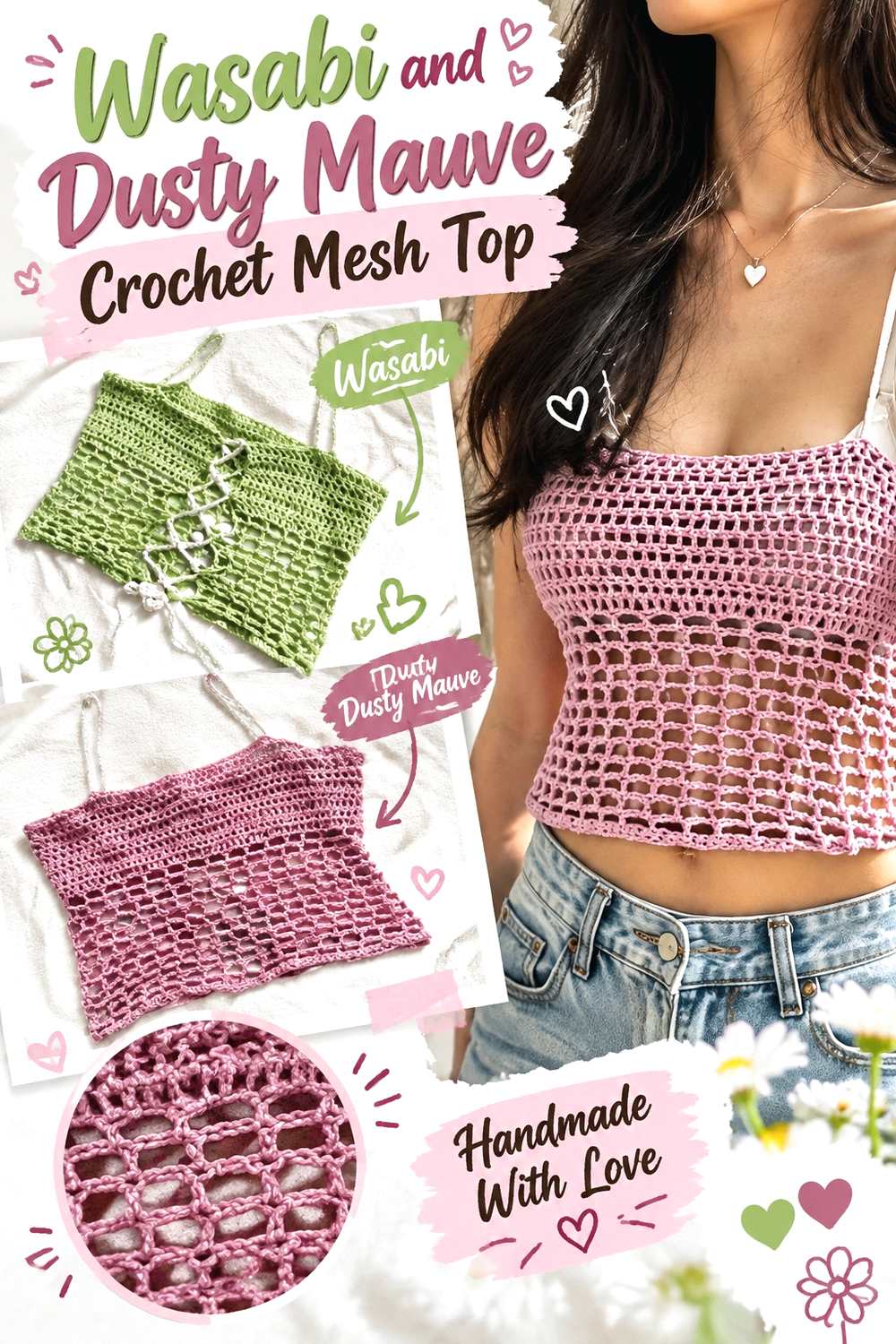
Mesh exposes more of the layer underneath, so the two crochet colors are not the only colors affecting the finished look. Use wasabi through the main mesh when you want it to dominate, then place dusty mauve in broader bands where it will remain recognizable despite the open fabric.
Wasabi Mesh Changes With the Layer Worn Underneath
Because the background shows through open crochet, check your wasabi yarn against the tops you are likely to layer beneath it. A neutral underlayer can make the green-and-mauve relationship easier to read than another strong clothing color showing through every opening.
Dusty Mauve Needs Enough Width to Read Against Wasabi Mesh
Tiny dusty mauve details can become visually fragmented in an open stitch pattern. A larger hem section, sleeve band, or repeated stripe gives dusty mauve enough area to remain distinct from both the wasabi crochet and the clothing beneath it.
Creator Credit: jana
9. Dusty Mauve And Wasabi Striped Crochet Skirt
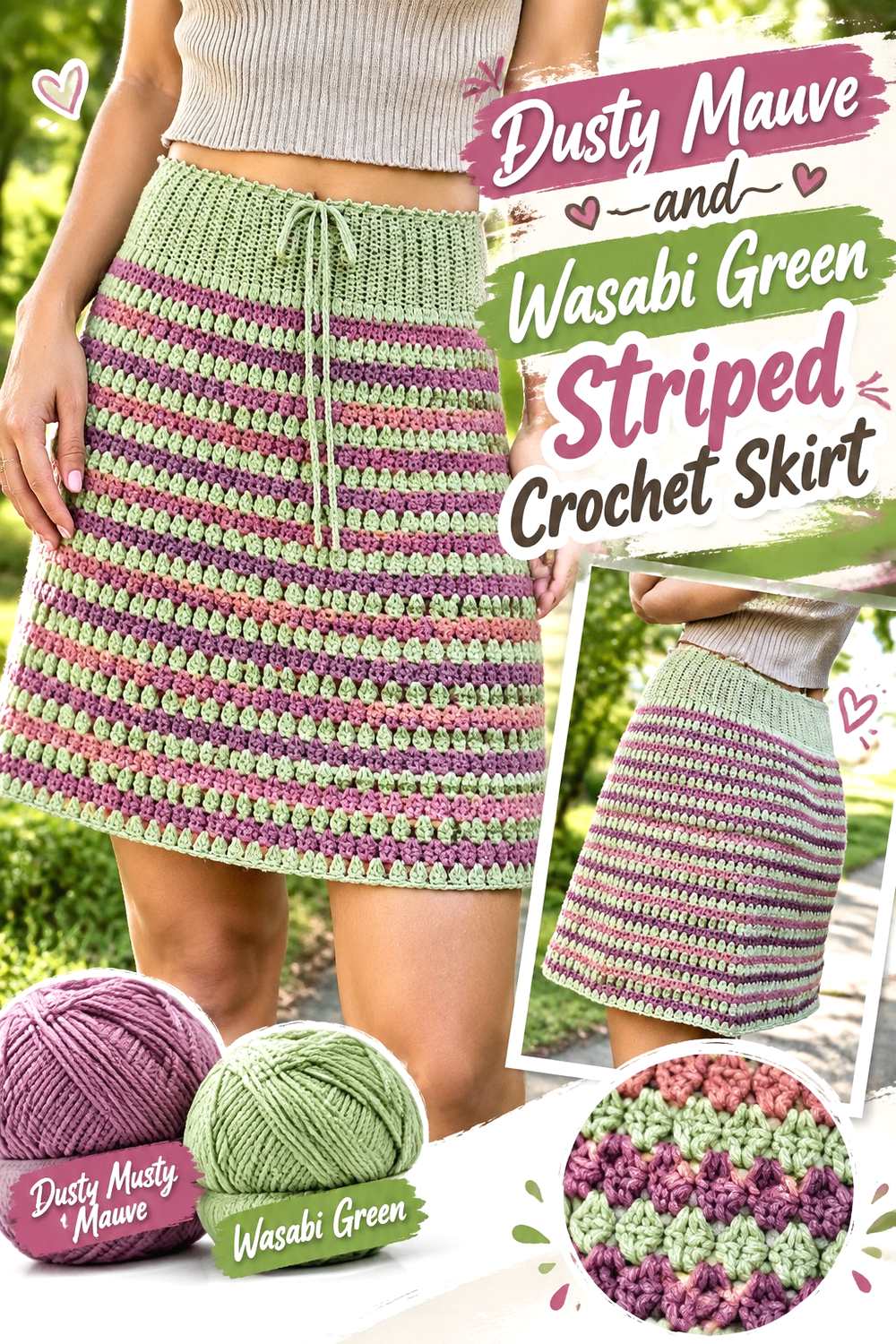
A skirt provides enough vertical length to explore stripes without turning the entire outfit into equal bands. Dusty mauve can occupy the waistband and larger body sections, while slimmer wasabi stripes repeat lower down the skirt.
Dusty Mauve Can Anchor the Crochet Skirt Waist
Keeping the upper portion dusty mauve gives the skirt a stable visual starting point before additional color is introduced. It also prevents a strong wasabi band from becoming the only feature drawing attention to the waistband.
Wasabi Stripes Should Repeat Clearly Through the Dusty Mauve Skirt
Use wasabi more than once if it is functioning as a stripe color. A single green stripe can look detached, while repeated wasabi sections establish an obvious relationship across the length of the skirt.
Creator Credit: KnitcroAddict
10. Wasabi And Dusty Mauve Crochet Dress

A dress offers enough area for the palette to become overwhelming if both colors change constantly. Instead, divide them by garment zones: wasabi through one major area and dusty mauve through another, with a smaller repeat to connect the sections.
Dusty Mauve Can Soften a Large Wasabi Crochet Dress Surface
If wasabi dominates the body, dusty mauve can interrupt it around straps, upper sections, or finishing edges. Those smaller mauve areas provide breaks without making the dress appear assembled from unrelated color blocks.
Wasabi and Dusty Mauve Need Repetition Across a Longer Crochet Dress
When one color appears only at the top and the other only at the bottom, the two sections can feel disconnected. Repeating a narrow amount of the secondary shade elsewhere—without copying the exact same proportions—can create a stronger visual link.
Creator Credit: Krystal Everdeen
11. Wasabi Crochet Tote With Dusty Mauve Details
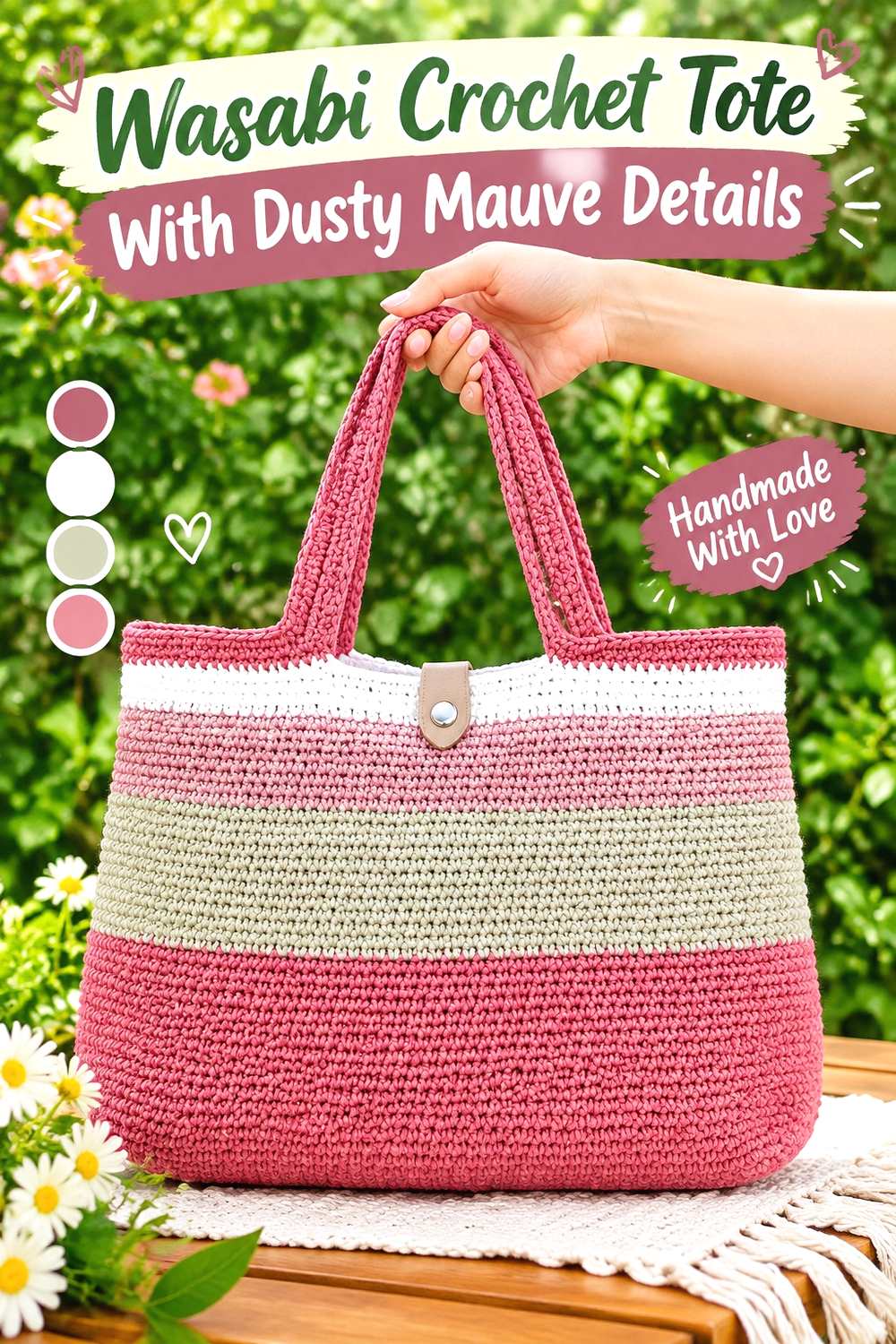
A tote can carry a stronger concentration of wasabi because the color is separated from the rest of an outfit. Dusty mauve works well on handles, the upper edge, or another repeated structural detail rather than as scattered decorative patches.
Wasabi Gives the Crochet Tote Body One Clear Main Color
Use wasabi across the largest bag surfaces when you want the tote to act as the green statement piece in the outfit. Keeping the main body consistent also makes it easier to see any stitch texture used across the bag.
Dusty Mauve Can Connect the Wasabi Tote Handles and Opening
Dusty mauve is especially useful where it can repeat around the top of the bag and along the handles. This creates an intentional relationship between functional areas instead of placing the mauve randomly across the wasabi body.
Creator Credit: naztazia
12. Dusty Mauve Crochet Shoulder Bag With Wasabi Border
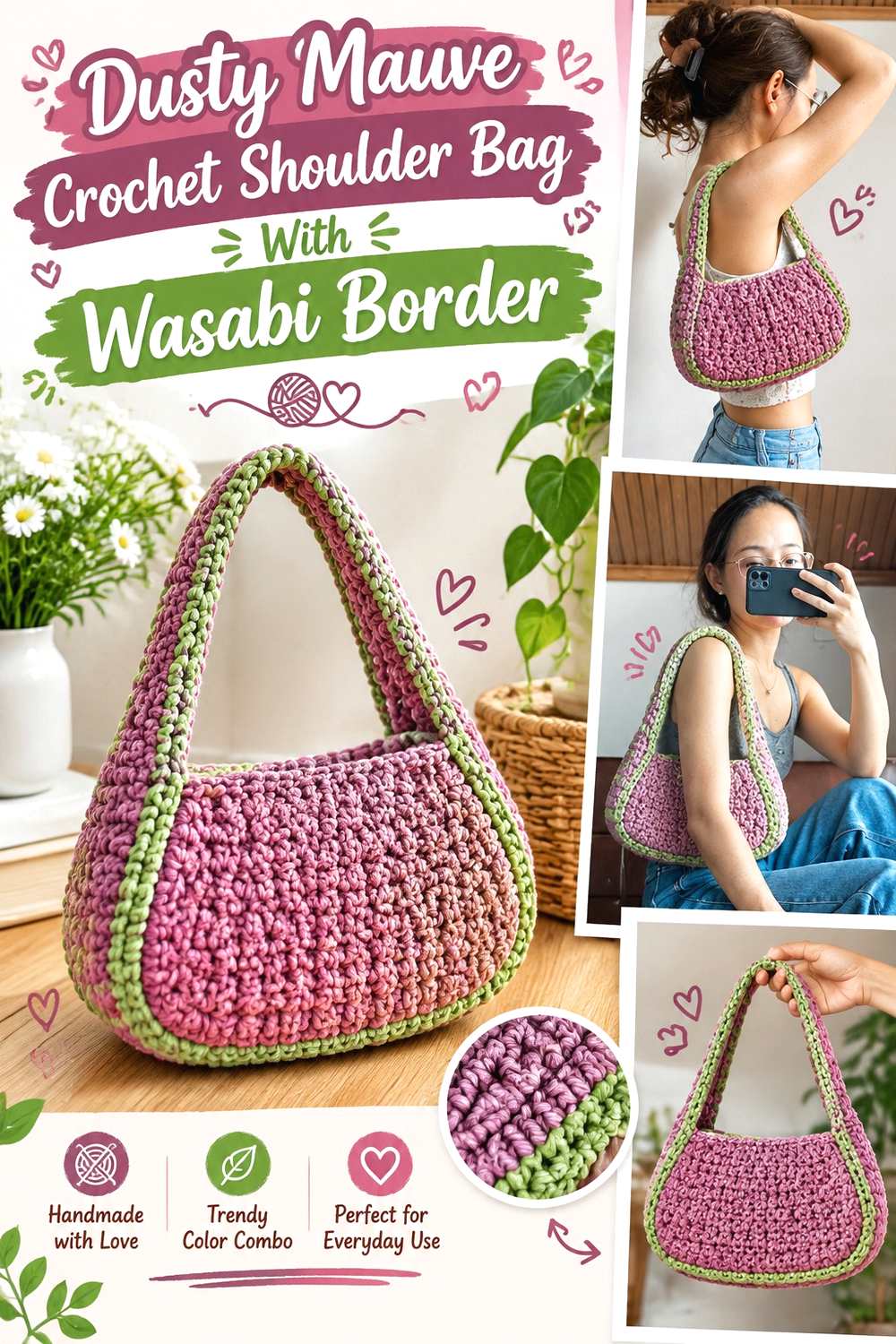
A small shoulder bag can reverse the tote arrangement by using dusty mauve as the main shade and wasabi as the framing color. Because the border and strap are highly visible, the green can have significant impact without using much yarn.
Dusty Mauve Keeps the Crochet Shoulder Bag Body Versatile
A dusty mauve body lets the shape of the bag remain visually clear and provides a muted base for the stronger yellow-green accent. Avoid scattering small wasabi patches through the center unless the stitch design gives those accents a clear reason to be there.
Wasabi Can Frame the Dusty Mauve Bag and Continue Into the Strap
Running wasabi around the outer edge and into part or all of the strap makes the contrast follow the bag’s construction. If a full green strap feels too dominant, use dusty mauve for the majority and repeat wasabi closer to the attachment points.
Creator Credit: ABoC Studio
13. Wasabi And Dusty Mauve Color Block Crochet Scarf
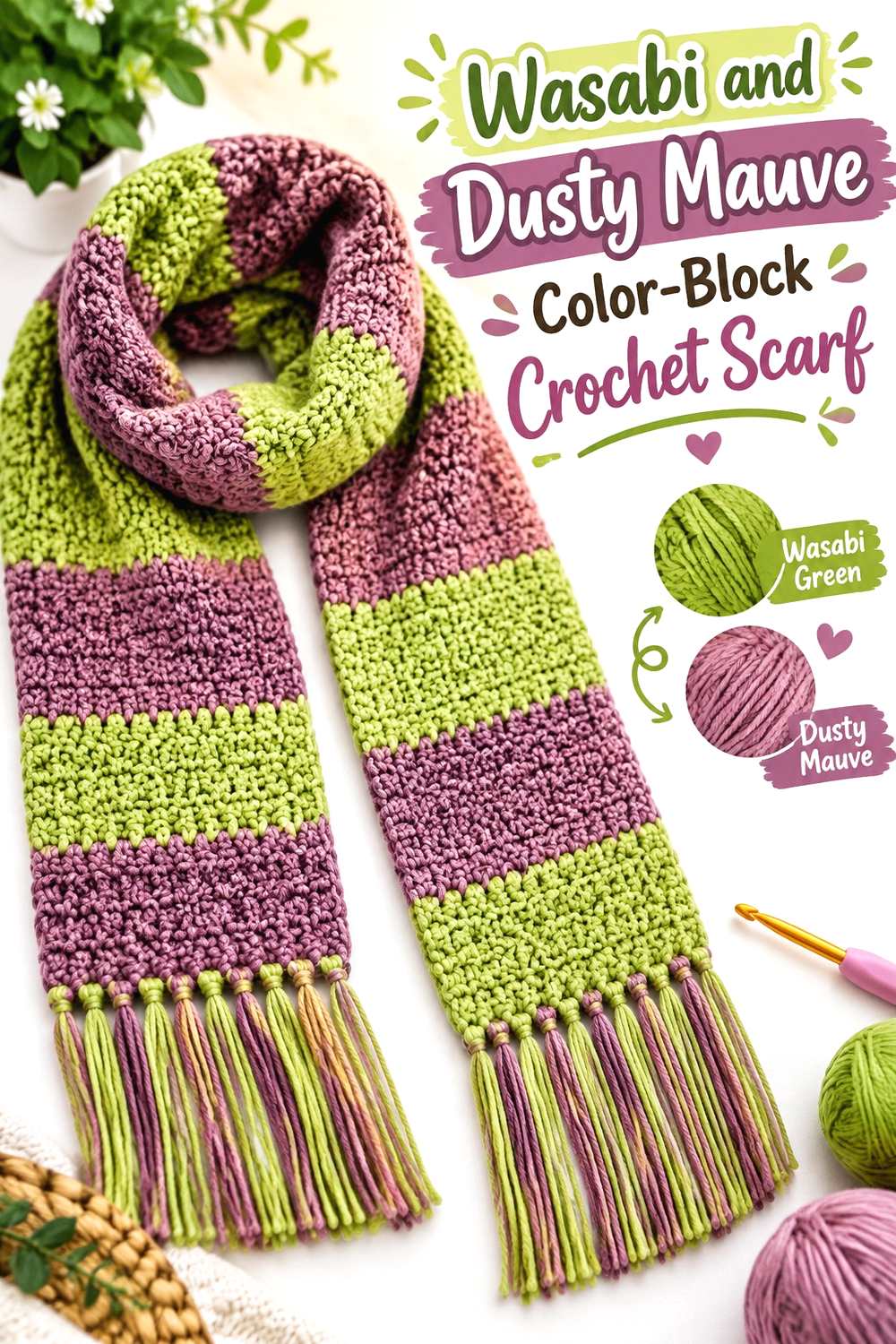
A scarf makes it easy to compare the colors in long sections. Instead of alternating every few rows, use broader wasabi and dusty mauve blocks so each shade has enough room to establish itself and the crochet texture remains visible.
Wasabi Blocks Need Enough Length to Balance Dusty Mauve
If dusty mauve covers most of the scarf, repeat wasabi at more than one point or give the green a substantial end section. One isolated narrow band may look accidental on a long accessory.
Dusty Mauve Can Separate Repeated Wasabi Scarf Sections
Dusty mauve works well as the quieter space between stronger wasabi blocks. Keep the sequence irregular if you want a less mechanical appearance, but repeat both colors enough that the overall arrangement still feels connected.
Creator Credit: The Crochet Crowd
14. Dusty Mauve Crochet Beanie With Wasabi Accent

A dusty mauve beanie can take a small wasabi accent without losing its primary identity. The fold, crown, or a controlled stripe can carry the green depending on where you want the strongest contrast to sit.
Dusty Mauve Can Cover Most of the Crochet Beanie
Keeping the hat body dusty mauve allows ribbing or other stitch texture to remain uninterrupted. It also makes wasabi more noticeable when the green finally appears.
Wasabi Works Well on a Dusty Mauve Beanie Brim or Stripe
A wasabi brim places the contrast near the face, while a higher stripe keeps the green farther from the edge. Compare both arrangements before crocheting the accent because the same two colors can produce very different emphasis depending on placement.
Creator Credit: Bag-O-Day Crochet
15. Wasabi And Dusty Mauve Crochet Headband

A headband has very little surface area, so complicated color distribution is unnecessary. A simple wasabi band with dusty mauve at the twist or center detail can communicate the full palette without chopping the accessory into many narrow stripes.
Wasabi Can Establish the Crochet Headband From Edge to Edge
Use wasabi through most of the band when you want a clean green accessory rather than a miniature patchwork piece. Continuous color also keeps ribbed or raised texture easier to follow visually.
Dusty Mauve Can Mark the Wasabi Headband Center
Place dusty mauve where a twist, overlap, or visual center already exists. Concentrating the secondary color at an existing feature gives it a purpose and prevents a small headband from becoming overly busy.
Creator Credit: MJ’s Off The Hook Designs
16. Dusty Mauve Crochet Balaclava With Wasabi Framing
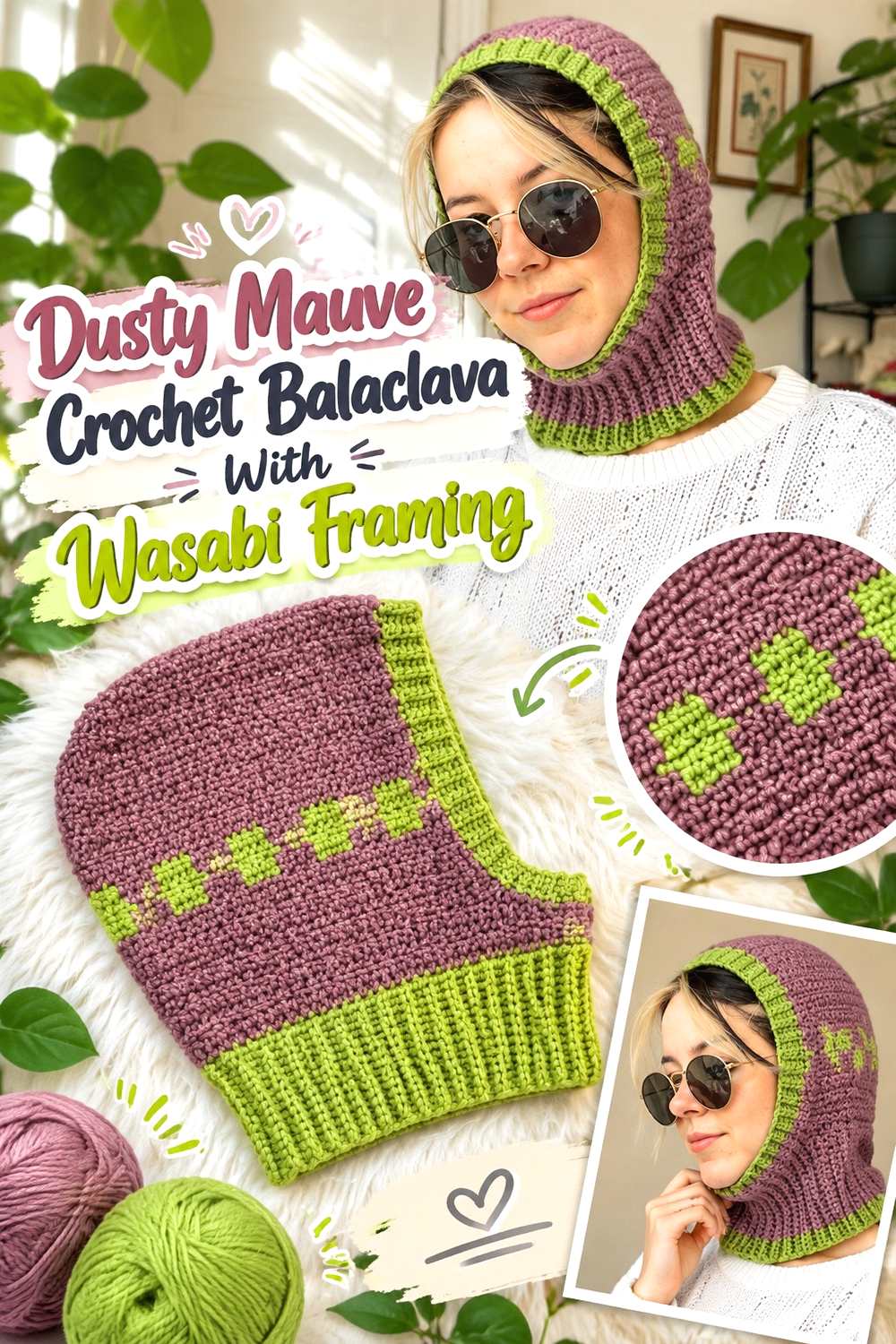
A balaclava naturally frames the face, which makes edging color unusually important. Dusty mauve can cover most of the hood while wasabi follows the face opening and possibly the lower edge.
Dusty Mauve Keeps the Crochet Balaclava Hood Visually Continuous
Keeping the larger hood area dusty mauve prevents frequent color changes from competing with the face opening. The muted main field also makes a narrow wasabi accent more apparent.
Wasabi Can Define the Dusty Mauve Balaclava Opening
Use wasabi around the face opening if you want the yellow-green shade to become the strongest local accent. Repeating a small amount near the bottom edge can keep that green from appearing disconnected from the rest of the hood.
Creator Credit: made in the moment
17. Wasabi And Dusty Mauve Crochet Poncho
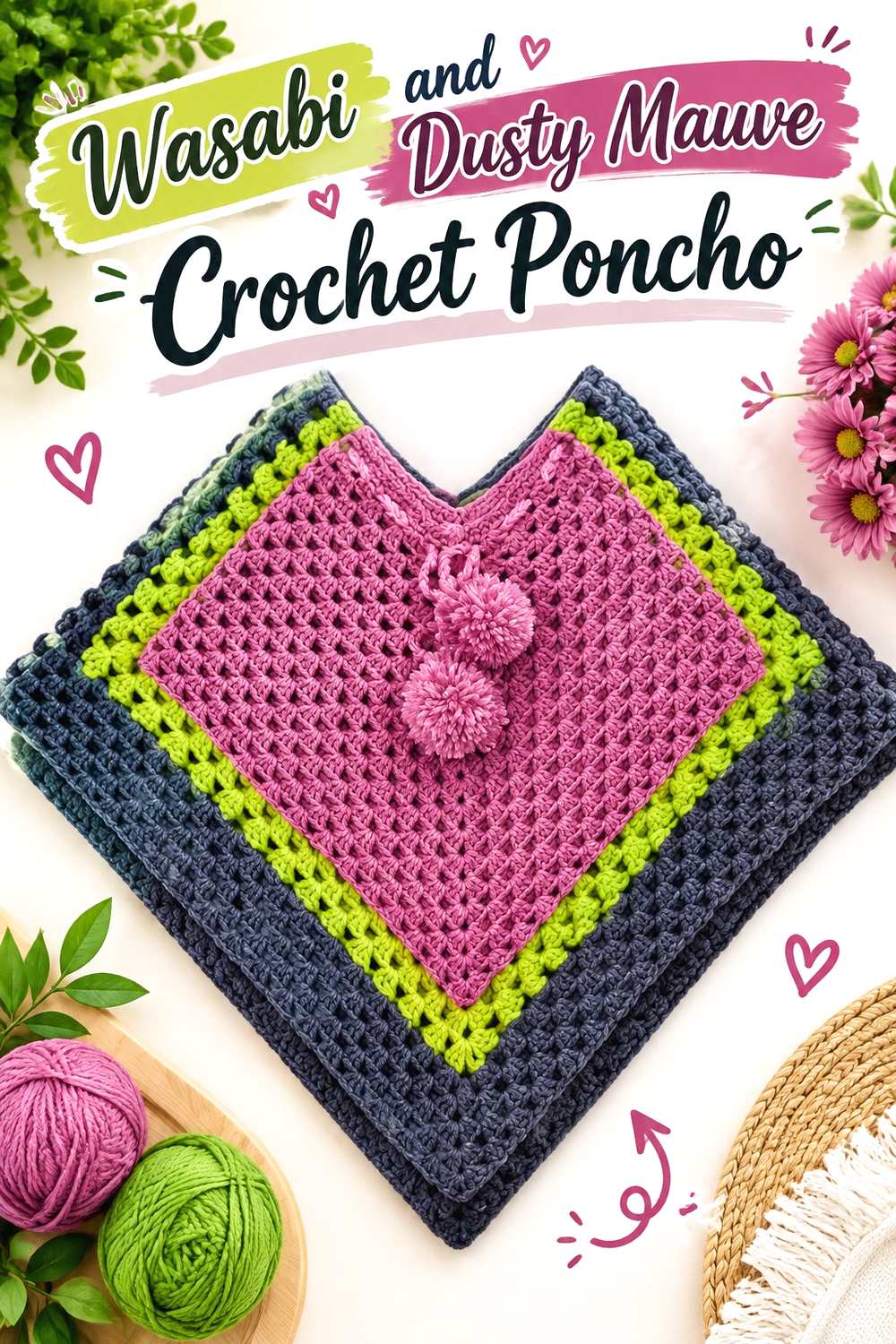
A poncho creates one of the largest color fields in this collection, so control the palette through broad areas rather than constant alternation. Wasabi can dominate the center or shoulder zone while dusty mauve forms wider lower sections or edging.
Wasabi Can Concentrate Color Around the Crochet Poncho Shoulders
Placing wasabi higher on the garment keeps the green visible even when the poncho is layered over another outfit. The shoulder area can act as the main color block while dusty mauve gradually takes more space lower down.
Dusty Mauve Can Reduce the Visual Weight of Repeated Wasabi Sections
If wasabi feels too dominant across a large poncho, increase the width of dusty mauve areas rather than adding a third strong color. A clearer two-color hierarchy is usually easier to coordinate with the clothing worn underneath.
Creator Credit: Crochet with Clare
18. Dusty Mauve And Wasabi Crochet Capelet
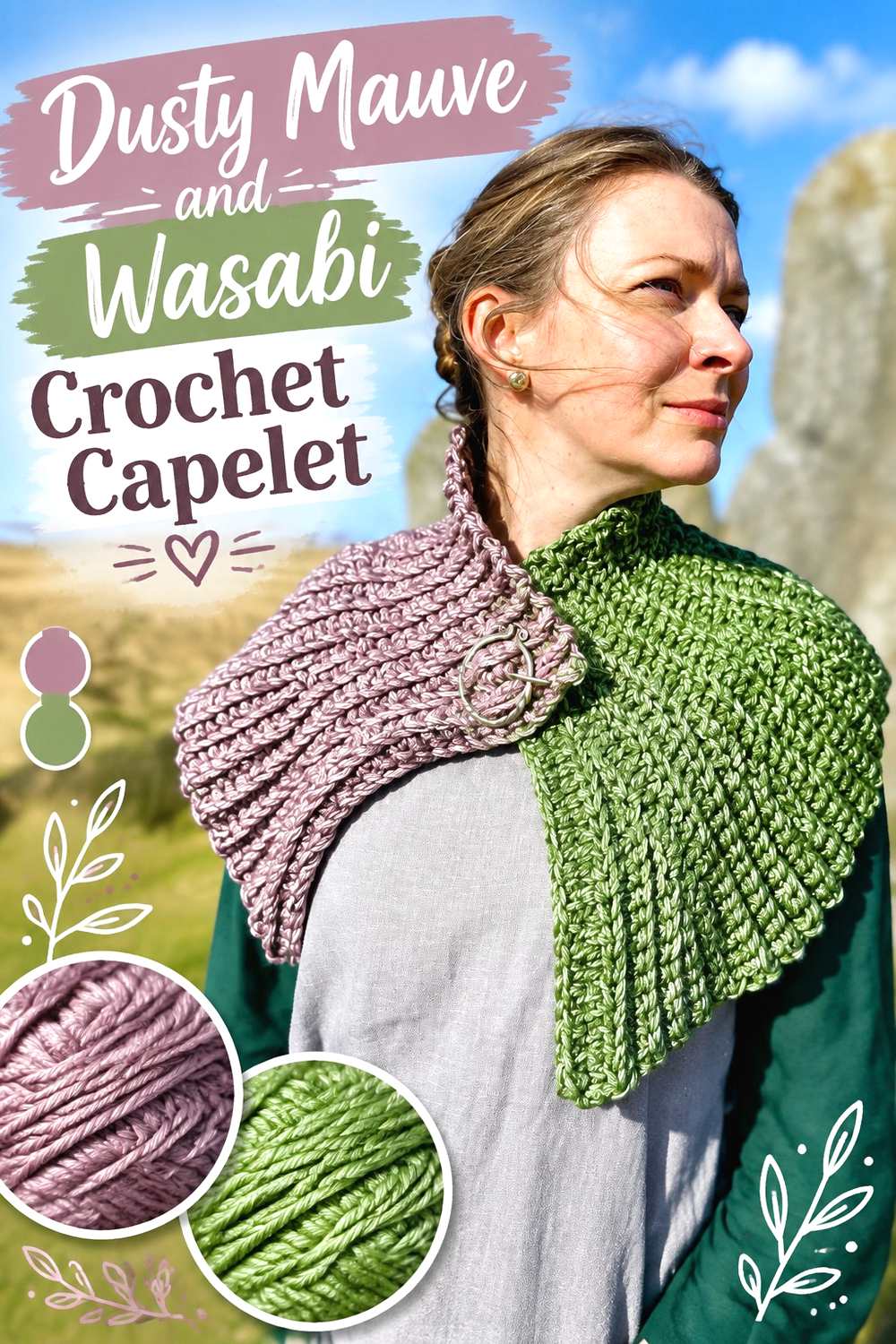
A capelet concentrates color around the shoulders and upper torso. Dusty mauve can act as the broad main shade while wasabi traces the neck edge or lower border, allowing the green to remain noticeable without dominating the short garment.
Dusty Mauve Lets the Crochet Capelet Drape Read Clearly
A mostly dusty mauve surface keeps the eye on the overall curved or layered shape of the capelet. Large alternating color blocks could make a short piece appear visually segmented before the silhouette has a chance to register.
Wasabi Can Give the Dusty Mauve Capelet a Defined Outer Edge
Wasabi works effectively along the lower edge because the color forms a clear finish around the whole piece. Consider repeating a smaller wasabi line near the neckline if you want the green distributed across both the top and bottom.
Creator Credit: Ophelia Talks Crochet
19. Wasabi Crochet Fingerless Gloves With Dusty Mauve Cuffs

Fingerless gloves give you a small place to use a stronger wasabi field without committing an entire garment to the green. Dusty mauve cuffs can anchor the color at the wrist and make the pair coordinate with mauve-heavy sweaters or outerwear.
Wasabi Keeps the Crochet Fingerless Gloves Visually Bold but Simple
Use wasabi through most of the hand area rather than creating many tiny stripes. A single dominant field also makes it easier for both gloves to look coordinated even if minor handmade variations appear.
Dusty Mauve Cuffs Can Ground the Wasabi Crochet Gloves
A dusty mauve cuff creates a clear transition between the gloves and whatever sleeve sits behind them. Repeat the same proportion on both gloves so the wasabi-to-mauve relationship remains consistent as a pair.
Creator Credit: ElyseCrochets 💌
20. Dusty Mauve And Wasabi Crochet Leg Warmers
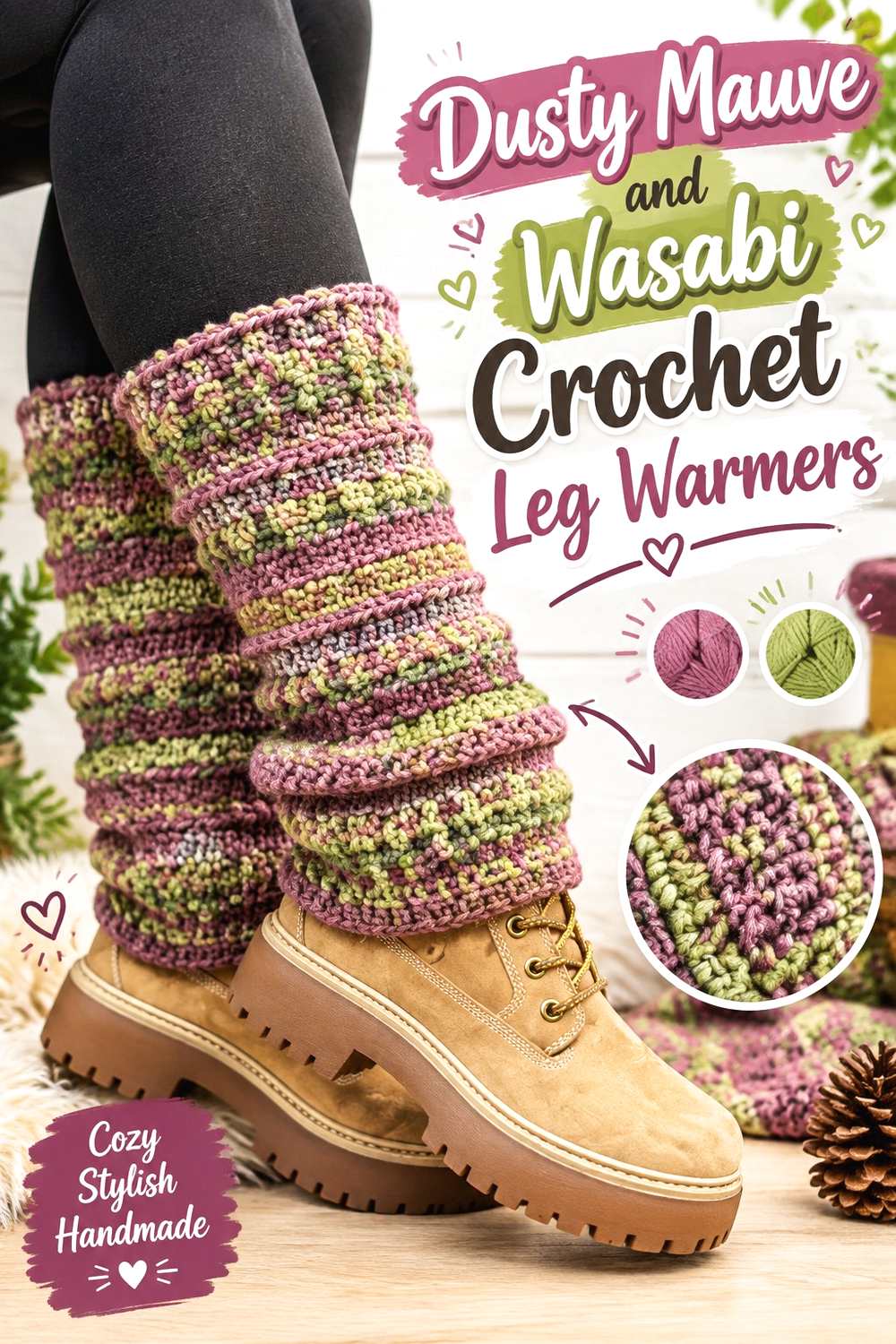
Leg warmers offer enough length for color blocking but look more cohesive when the pair follows one shared color plan. Dusty mauve can dominate with wasabi near the upper and lower edges, or the colors can reverse if you want the green to have more overall presence.
Dusty Mauve Can Carry Most of Each Crochet Leg Warmer
Keeping the center dusty mauve gives both pieces a strong visual connection and leaves room for stitch texture to remain readable. It also makes wasabi bands easier to notice without needing multiple accent colors.
Wasabi Should Repeat Consistently Across Both Dusty Mauve Leg Warmers
Use the same general wasabi placement on each leg so the pair reads as deliberate. If the green appears at both ends, keep an eye on proportion—a very wide wasabi section at one end and a tiny line at the other can shift the visual balance more than expected.
Creator Credit: Dress it up Debra
Choosing Between These Wasabi and Dusty Mauve Crochet Looks
For the strongest wasabi presence, the cardigan, tote, gloves, mesh top, and wasabi-led poncho give the green enough surface area to establish the look immediately. These options work particularly well when dusty mauve is being used as a framing or finishing shade.
For a softer dusty-mauve-led direction, consider the V-neck sweater, tank top, shoulder bag, beanie, balaclava, capelet, or leg warmers. Here, wasabi is more useful as a deliberate accent than as an equal second field.
Motif and stripe projects—including the granny square cardigan, scarf, skirt, and dress—need a little more planning. Check the yarns at the scale of the actual stripe or motif before making a large number of repeated pieces. Two colors that look clearly different as full skeins may become less distinct once divided into small crochet sections.
Conclusion
Wasabi and dusty mauve become much easier to use together once each color has a defined role. If you want the yellow-green shade to lead, give wasabi uninterrupted areas on cardigan panels, bags, accessories, or upper garment sections and use dusty mauve to frame them. For a quieter look, reverse those roles and let dusty mauve take the larger field.
The most important checkpoint is not whether the two yarn labels match the color names exactly, but whether their actual lightness, saturation, and placement create the separation you want. Compare the yarns before committing to a large section, then use the linked creator tutorials for the exact construction of each crochet project.
Frequently Asked Questions
Do wasabi and dusty mauve have enough contrast for crochet?
They can, but the answer depends on the actual yarn shades. Two skeins may be different in hue while still having similar lightness. Compare them side by side and consider a grayscale photo if you need to check whether small motifs, borders, or stripes will remain distinct.
Should wasabi or dusty mauve be the dominant crochet color?
Either can lead. Wasabi creates a stronger green-forward direction when it covers large garment panels, while dusty mauve gives the palette a softer overall base and allows wasabi to function as a concentrated accent. Decide based on the amount of visual emphasis you want from the green.
Where should I place wasabi on a dusty mauve crochet garment?
Necklines, cuffs, lower borders, straps, motif edges, and other natural garment boundaries are useful starting points. These locations give wasabi a clear purpose rather than scattering it randomly through the dusty mauve surface.
Can I use wasabi and dusty mauve in granny squares?
Yes. Try assigning one color to repeated centers and the other to larger outer sections. Before making many motifs, crochet one complete sample and check whether the two shades remain distinct at the smaller scale.
What if my wasabi and dusty mauve yarns look too similar in value?
Increase the size of each color area instead of relying on tiny alternating details. Broader bands or larger motif sections make hue differences easier to recognize. You can also introduce a neutral between the colors when the project genuinely needs additional separation.
How can I substitute a different wasabi or dusty mauve yarn?
Preserve the relationship between the two shades rather than chasing an exact name. For wasabi, look for another yellow-green with a similar level of brightness or softness. For dusty mauve, choose a muted pink-purple that still has enough value separation from your green for the intended placement.
Can wasabi and dusty mauve work with a neutral third color?
Yes, especially when a two-color project feels too concentrated. Cream, gray, brown, black, or another neutral can be used strategically, but it should have a defined role such as a join, narrow border, or background. Avoid giving all three colors equal visual weight unless that balanced multicolor effect is intentional.