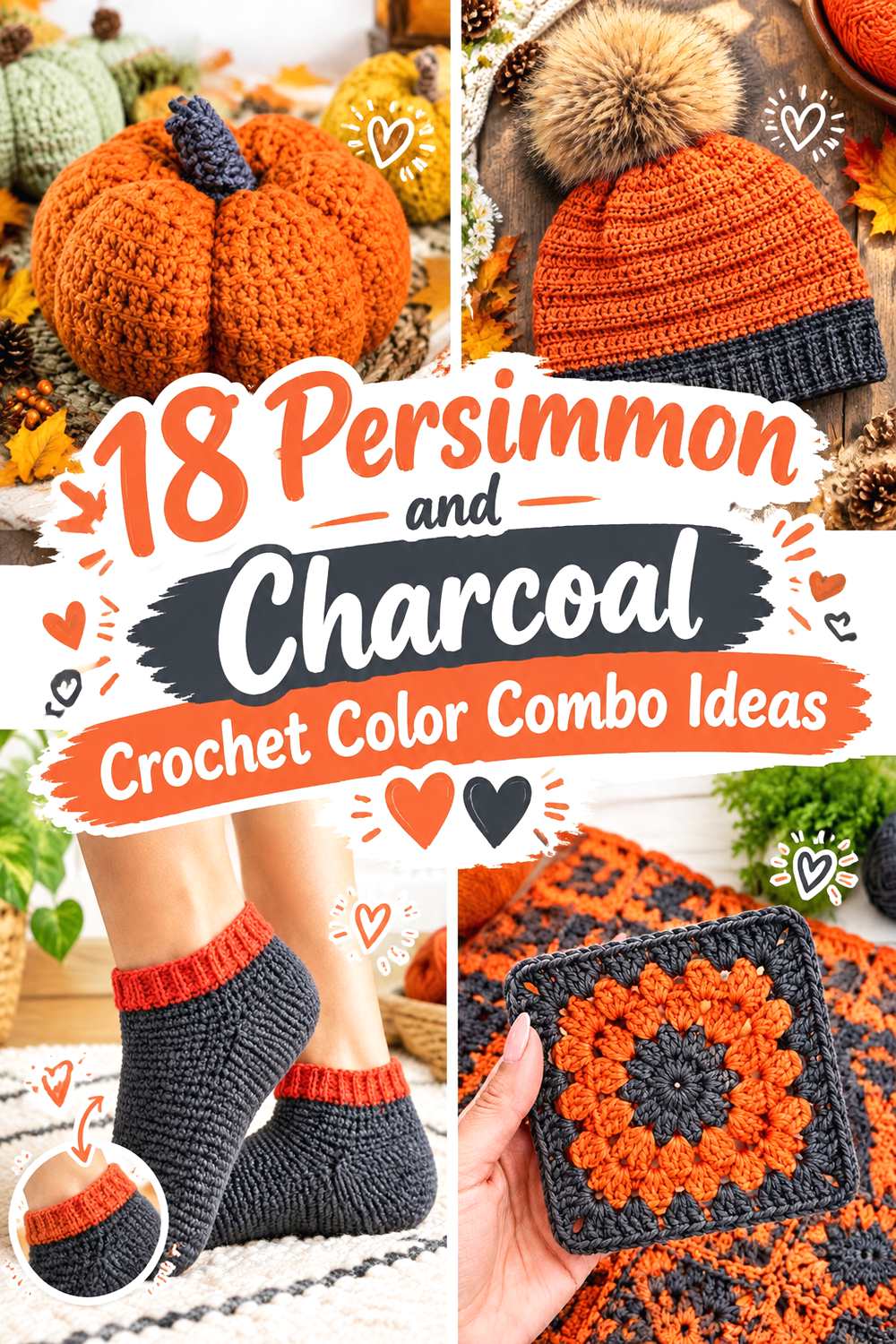
18 Persimmon and Charcoal Crochet Color Combo Ideas
Persimmon and charcoal create a useful crochet pairing because the colors can do very different jobs. Persimmon brings a warm orange-red note to the surface, while charcoal supplies a dark neutral that can frame shapes, separate motifs, or reduce the amount of strong color in a larger project.
The combination becomes more interesting when the balance changes from project to project. A pillow can give persimmon most of the visible surface and use charcoal only at the edge, while a cardigan may work better with charcoal across the body and persimmon limited to pockets, cuffs, or trim. The following ideas focus on those placement decisions rather than simply repeating the same two yarn colors.
Quick List
- Persimmon Crochet Pillow With Charcoal Edging
- Charcoal Crochet Cardigan With Persimmon Pockets
- Persimmon And Charcoal Color Block Crochet Tote Bag
- Charcoal Crochet Blanket With Persimmon Stripes
- Charcoal Crochet Storage Basket With A Persimmon Rim
- Persimmon Crochet Bucket Hat With A Charcoal Brim
- Charcoal Crochet Headband With A Persimmon Twist
- Persimmon And Charcoal Crochet Placemat And Coaster Set
- Charcoal Crochet Vest With Persimmon Front Accents
- Persimmon Crochet Mug Cozy With Charcoal Edging
- Charcoal Crochet Scarf With Persimmon Ends
- Persimmon And Charcoal Crochet Poncho
- Charcoal Crochet Cowl With A Persimmon Accent Band
- Persimmon And Charcoal Crochet Granny Square
- Charcoal Crochet Socks With Persimmon Cuffs
- Persimmon Crochet Beanie With A Charcoal Brim
- Persimmon Crochet Pumpkin With A Charcoal Stem
- Charcoal Crochet Shawl With A Persimmon Border
How to Balance Persimmon and Charcoal in Crochet
You do not need to divide these colors evenly. In fact, giving one shade a larger visual role usually makes the placement easier to read. Persimmon can lead when you want the warm color to define the finished item, with charcoal reserved for borders, cuffs, handles, joins, or other structural details.
The reverse approach makes charcoal the main field and uses persimmon to draw attention to selected areas. This is particularly useful for garments and accessories because the accent can be repeated at cuffs, pockets, brims, edges, or motif centers instead of covering the whole piece.
Check Persimmon and Charcoal Contrast Before Starting
Persimmon and charcoal are different in hue, but the exact light-and-dark difference depends on the yarns you choose. Place the skeins beside one another before committing to a detailed motif. A quick grayscale photo can also help reveal whether the two shades remain clearly separated in value.
This matters most around small motifs, narrow stripes, textured borders, and raised crochet details. When the colors are too close in value, use the lighter yarn across the detailed area and reserve the darker charcoal for larger sections or outlines.
1. Persimmon Crochet Pillow With Charcoal Edging
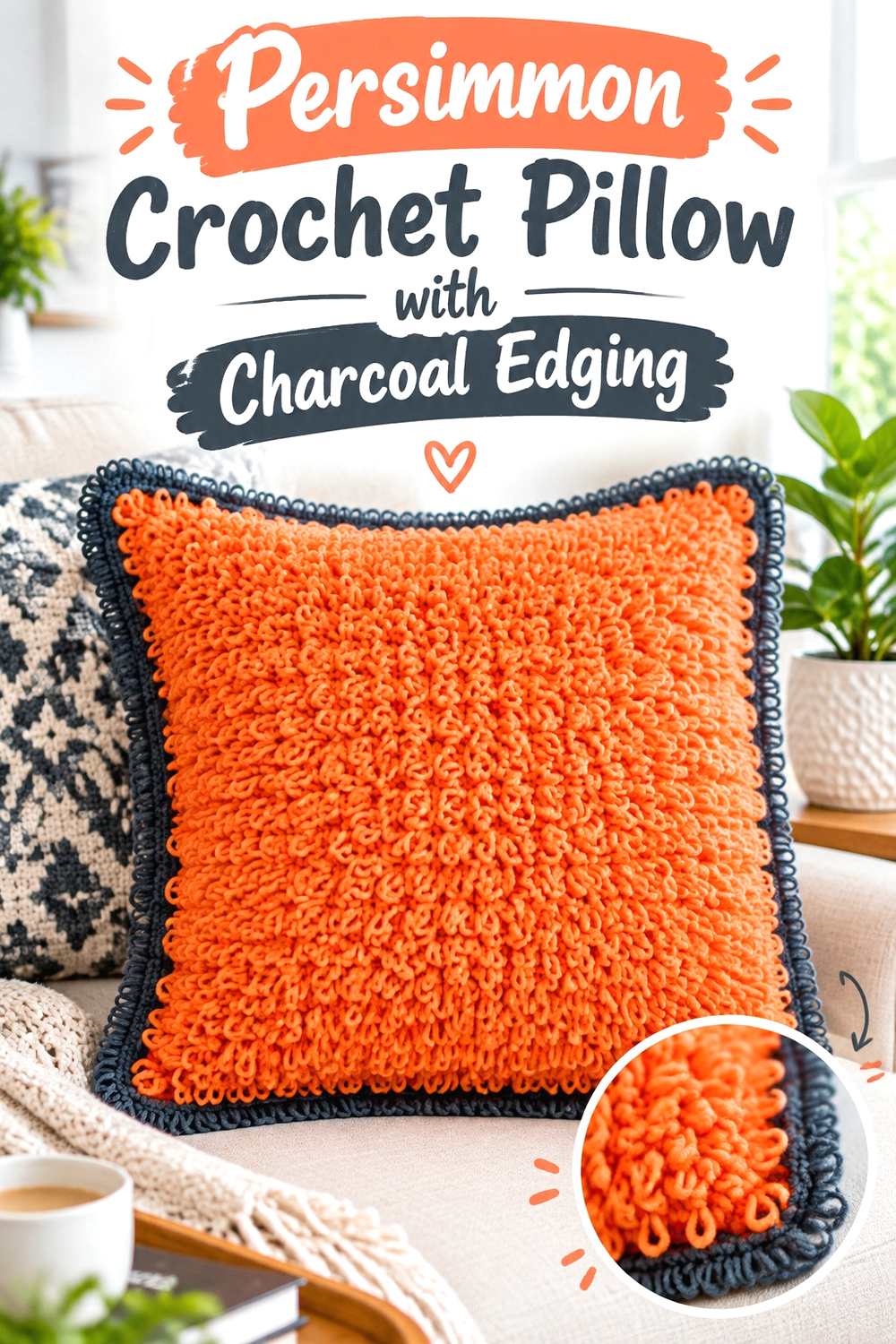
Let persimmon cover most of the crochet pillow face so the warm color reads as the main decor statement. Charcoal can then frame the perimeter, appear on the back, or define a small repeated detail. Keeping the darkest shade away from most of the center prevents it from competing with surface texture.
Persimmon Keeps the Crochet Pillow Surface Unified
A broad persimmon field is especially useful when the pillow has noticeable loops, raised stitches, cables, or other texture. Too many charcoal interruptions can break that texture into separate visual blocks, while a largely continuous persimmon surface lets the stitch pattern remain the main feature.
Charcoal Gives the Persimmon Pillow a Defined Outer Edge
Use charcoal where a clear boundary is useful, such as the final edging or a narrow band close to the perimeter. If the border begins to look too heavy, reduce its visual width rather than adding more persimmon accents elsewhere.
Creator Credit: MJ’s Off The Hook Designs
2. Charcoal Crochet Cardigan With Persimmon Pockets
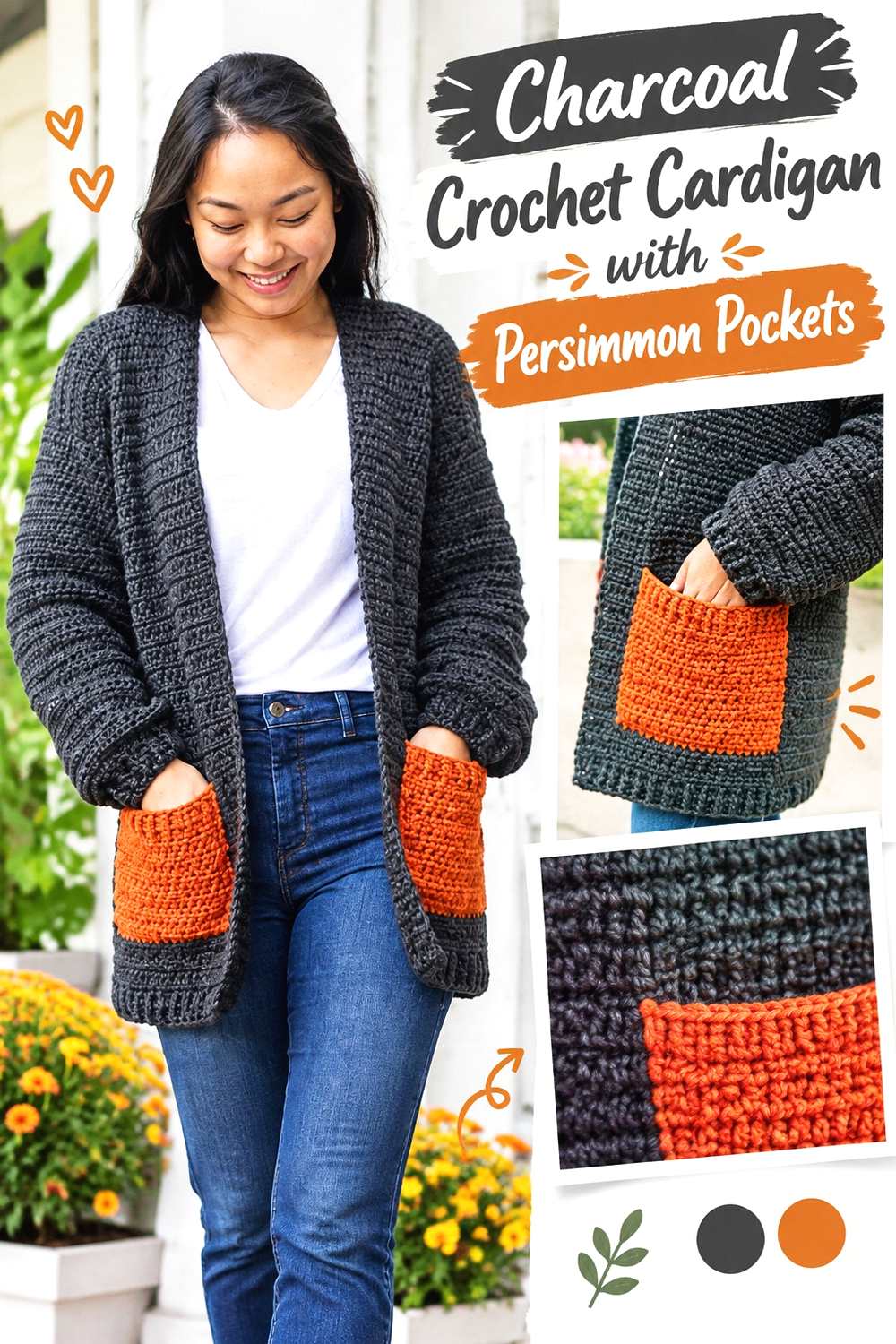
Charcoal can handle most of the cardigan body, sleeves, and neckline while persimmon marks smaller features such as pockets or cuffs. That distribution gives the warm shade clear destinations without dividing large garment panels into too many competing areas.
Charcoal Creates a Continuous Base Across the Crochet Cardigan
Keeping the back and major front panels charcoal gives the garment one visual foundation. This is particularly helpful on a longer or oversized cardigan, where large blocks of both colors could otherwise make the body look segmented.
Persimmon Can Connect Crochet Cardigan Pockets and Cuffs
Repeat persimmon in at least two garment areas if you want it to feel integrated rather than attached as an afterthought. Persimmon pockets plus narrow persimmon cuffs are one option; persimmon edging at the neckline can provide another repetition point.
Creator Credit: For The Frills
3. Persimmon And Charcoal Color Block Crochet Tote Bag
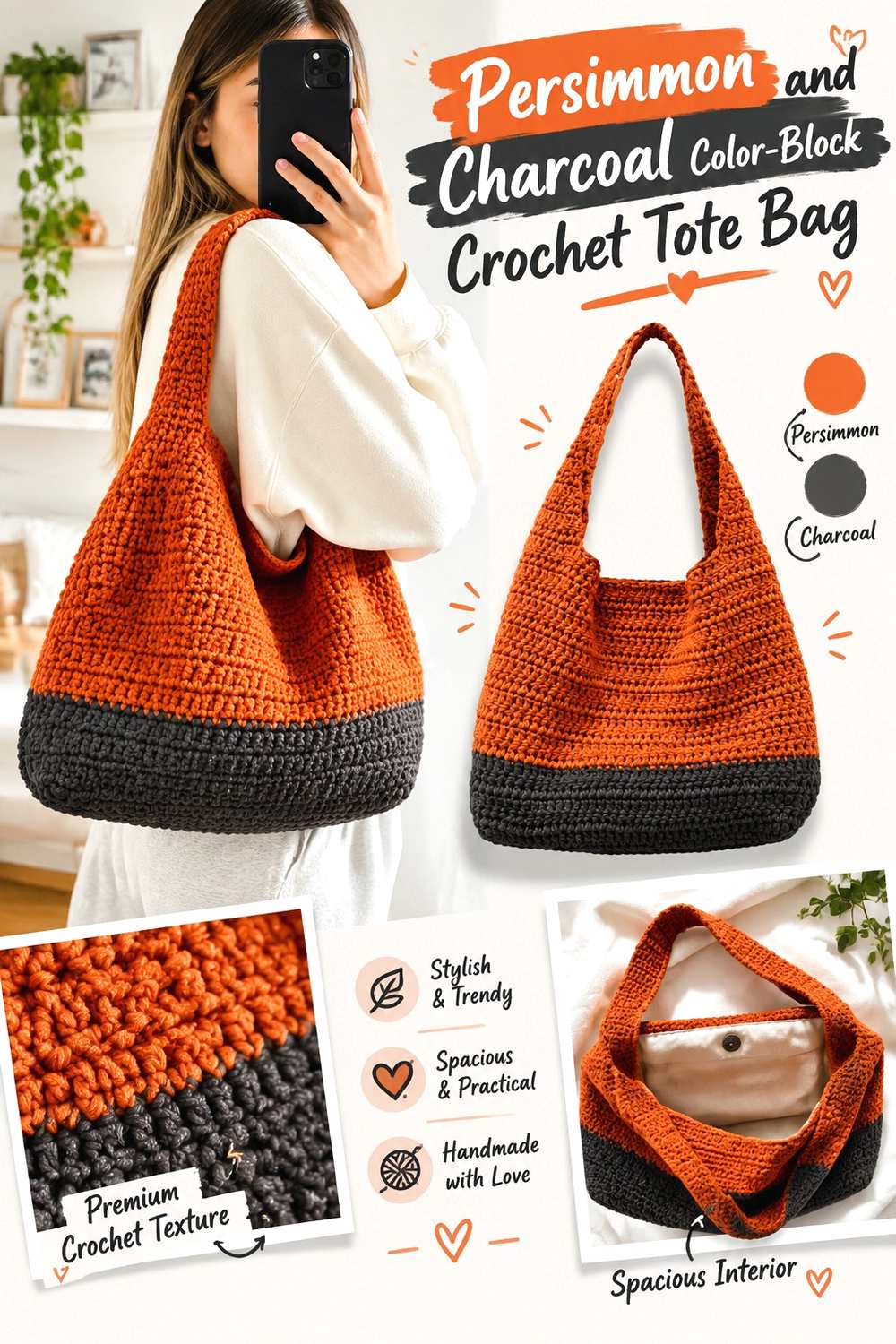
A tote gives both colors enough surface area to work as large blocks. Persimmon can occupy the upper bag body while charcoal anchors the base, or the arrangement can be reversed when you want the bag to read darker overall. The handles provide another useful place to repeat the supporting shade.
Charcoal Can Ground the Persimmon Crochet Tote Base
Placing charcoal across the visually heavier bottom portion creates a clear lower anchor. Carry a small amount of charcoal upward through handles or edging so the base does not look disconnected from the rest of the bag.
Persimmon Works Better in Broad Crochet Tote Sections Than Tiny Speckles
If persimmon is supposed to be the dominant color, give it a substantial area rather than scattering isolated stitches throughout charcoal. Broad sections make the two-color concept easier to read and keep the bag from appearing unnecessarily busy.
Creator Credit: crochet daniela
4. Charcoal Crochet Blanket With Persimmon Stripes
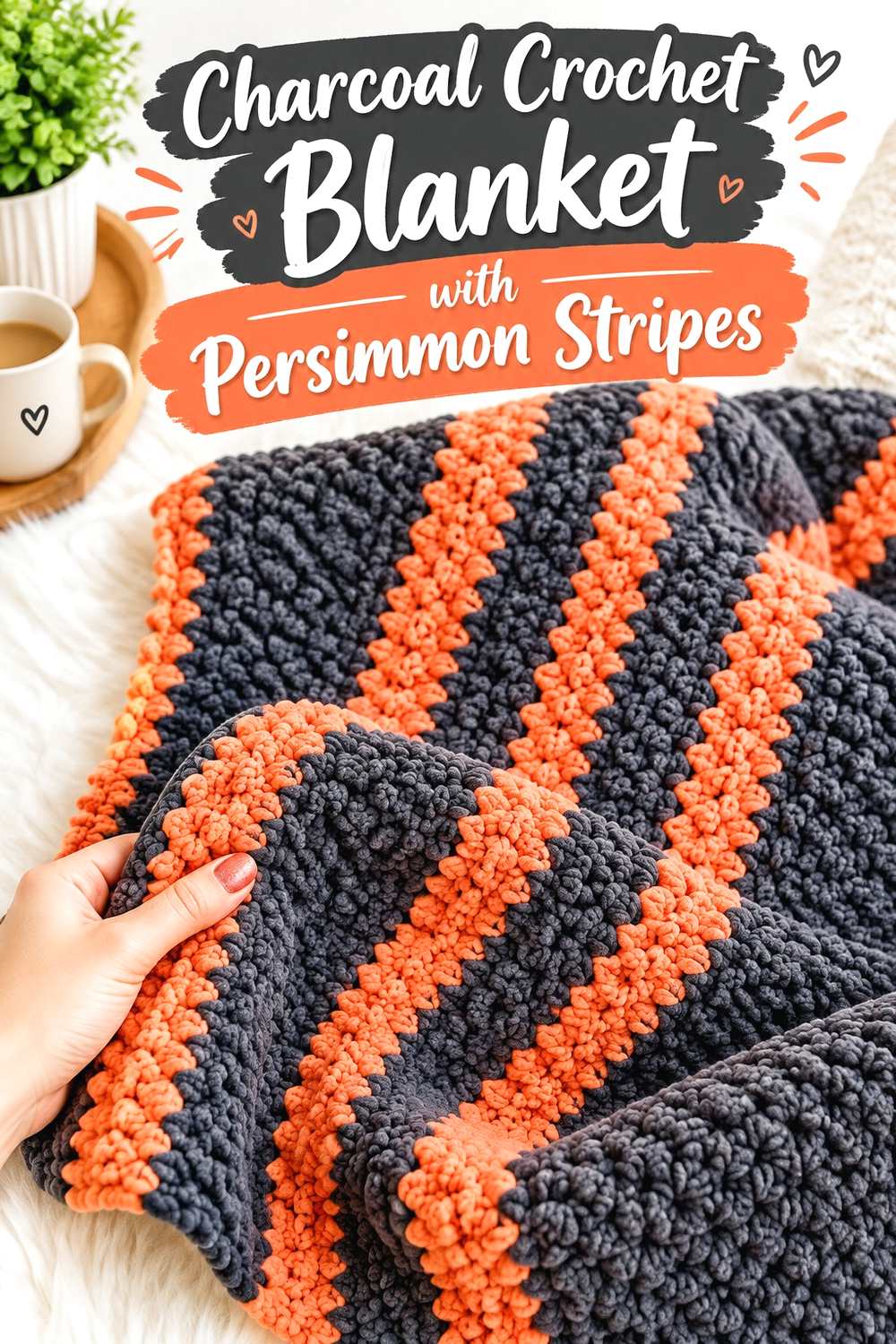
For a blanket, charcoal can create a calm continuous ground while repeated persimmon stripes prevent the dark field from becoming visually flat. The important decision is spacing: persimmon should repeat deliberately instead of appearing once near one end.
Persimmon Stripes Need Repetition Across the Charcoal Crochet Blanket
Use persimmon at intervals that make sense across the entire blanket surface. Repetition gives the warm color a clear role and prevents a single persimmon section from appearing unrelated to the rest of the design.
Charcoal Borders Can Contain a Strong Persimmon Blanket Pattern
If persimmon already appears frequently inside the blanket, a charcoal outer border can provide a clean finish. Bringing the darker ground color back at the edge also makes the interior stripe sequence feel contained rather than abruptly stopped.
Creator Credit: Bella Coco
5. Charcoal Crochet Storage Basket With A Persimmon Rim
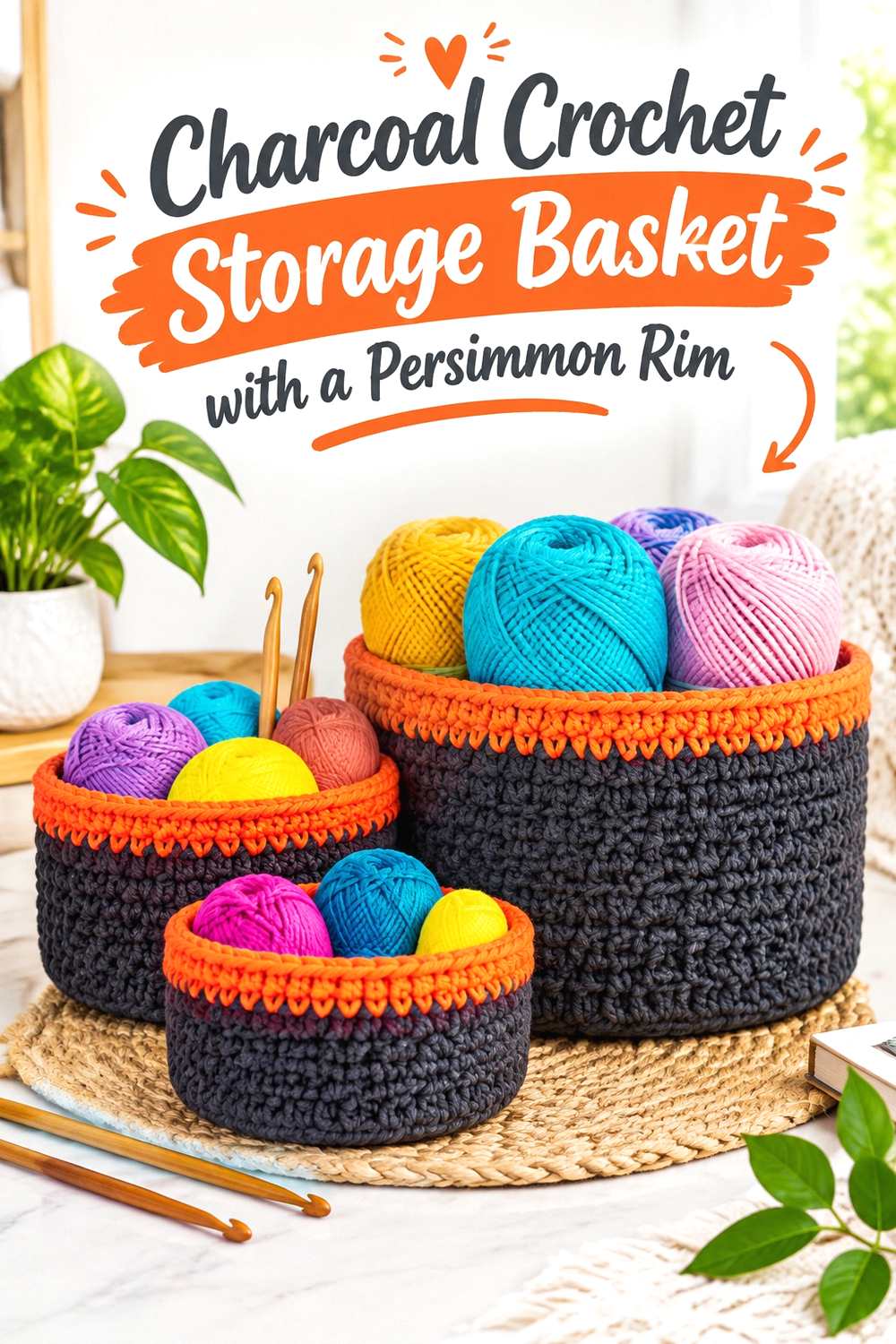
A basket offers a natural division between its main body and upper edge. Charcoal can cover the base and sides, with persimmon restricted to the rim or handle area. That makes the accent easy to see while preserving a strong, simple silhouette.
Charcoal Keeps the Crochet Basket Body Visually Consistent
Use charcoal continuously around most of the basket rather than switching colors repeatedly up the sides. A solid main field is easier to coordinate with storage surroundings and leaves the upper persimmon detail with a clear purpose.
Persimmon Can Mark the Crochet Basket Rim Without Taking Over
A persimmon rim creates a clean finishing line because the color naturally follows the opening. If handles are part of the basket concept, repeating persimmon there can connect the top details without introducing another color.
Creator Credit: naztazia
6. Persimmon Crochet Bucket Hat With A Charcoal Brim
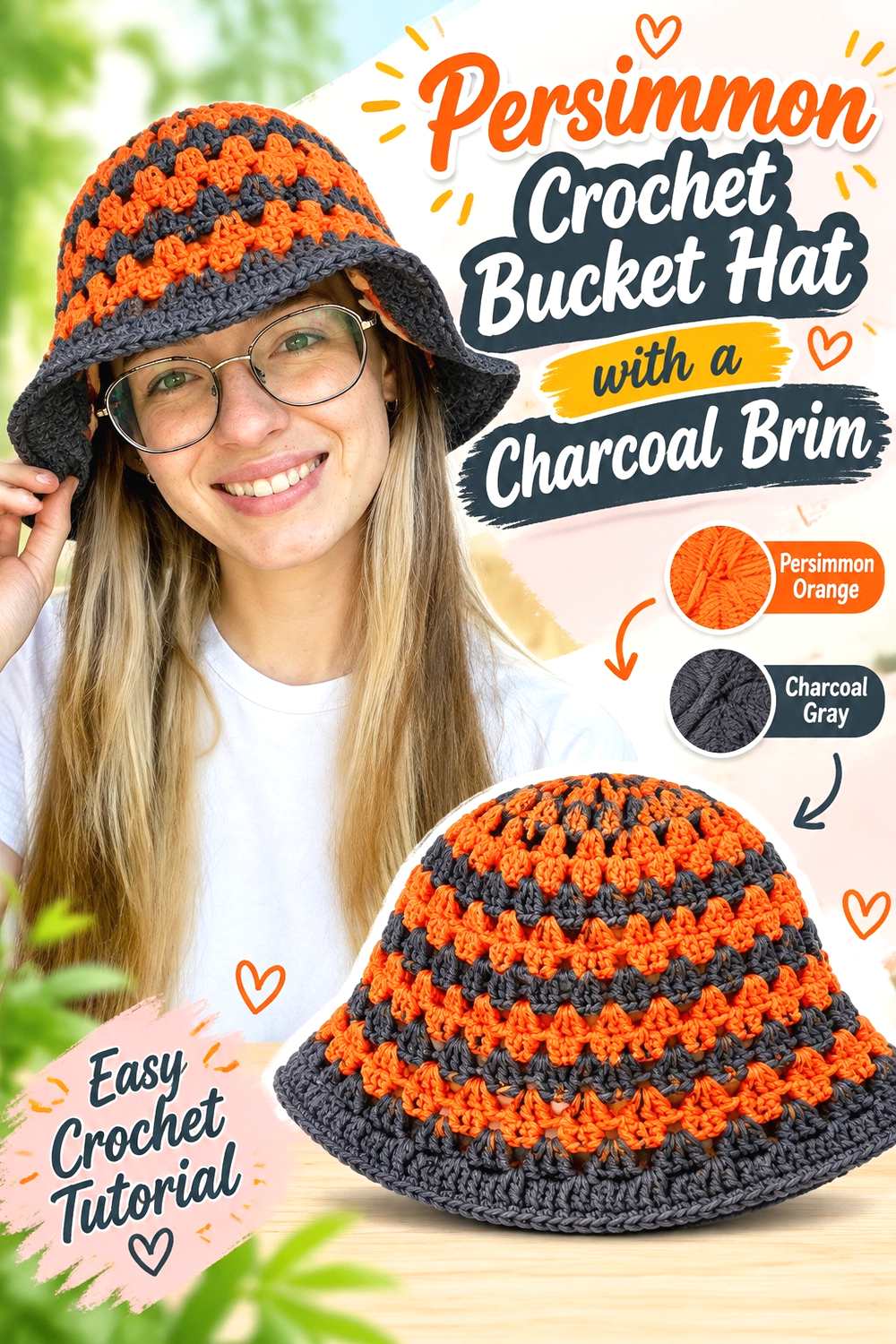
Use persimmon across the crown and sides so it remains immediately recognizable as the hat’s main color. Charcoal can then occupy the brim, producing a strong color break exactly where the hat changes visual direction.
Persimmon Should Carry Most of the Crochet Bucket Hat Crown
Keeping the crown persimmon avoids cutting the top of the hat into multiple dark and warm bands. If you want additional charcoal above the brim, use it sparingly so the crown still reads primarily as persimmon.
Charcoal Gives the Persimmon Crochet Hat Brim More Definition
A charcoal brim can form a crisp lower frame around the warmer crown. Check the transition where the brim begins; a clean color change generally reads more intentionally than several narrow alternating bands at that point.
Creator Credit: PassioKnit Kelsie
7. Charcoal Crochet Headband With A Persimmon Twist

For a twisted or gathered headband, the central feature is already a visual focal point. Charcoal can cover most of the band while persimmon highlights the twist area, or the two colors can occupy separate overlapping sections.
Persimmon Can Emphasize the Crochet Headband Twist
Place persimmon where the fabric crosses, gathers, or changes direction if you want attention centered there. This uses the stronger warm color to reinforce an existing structural feature instead of introducing an unrelated stripe.
Charcoal Keeps the Persimmon Crochet Headband Accent Controlled
Allow charcoal to continue around most of the circumference so the persimmon focal area does not compete with multiple additional accents. If the contrast feels too abrupt, use a darker or more muted persimmon rather than adding a third shade.
Creator Credit: Littlejohn’s Yarn
8. Persimmon And Charcoal Crochet Placemat And Coaster Set
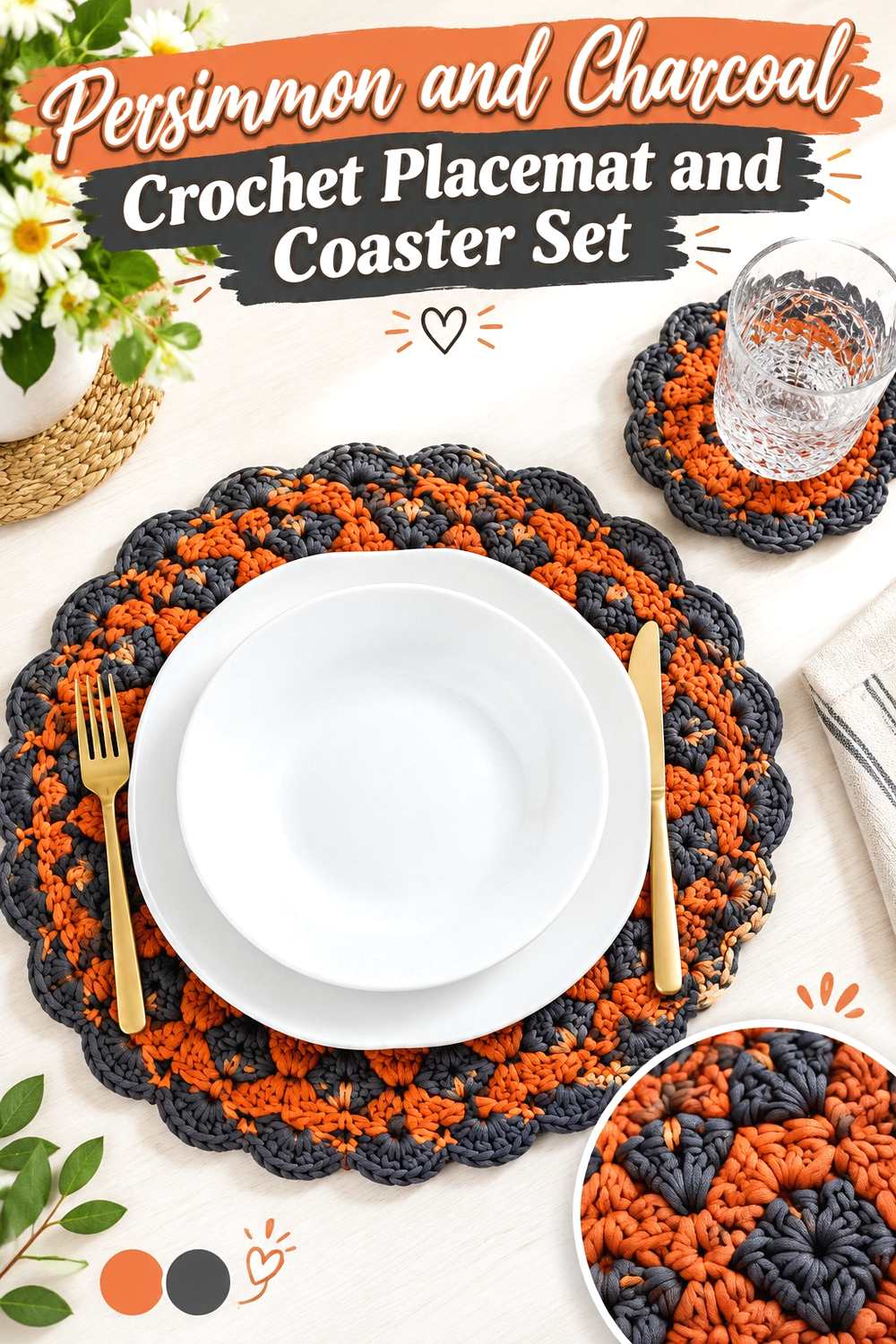
A coordinated table set gives you several opportunities to repeat the same palette without making every piece identical. Persimmon can dominate the placemats while charcoal edges them, then the coaster can reverse those roles.
Charcoal Borders Can Tie Persimmon Crochet Placemats Together
Repeating the same charcoal edge across several placemats creates a visual connection even when persimmon occupies most of each center. Keep the border width consistent enough that the pieces still look like part of one set.
Persimmon Can Reappear in Charcoal Crochet Coaster Centers
Reversing the color balance on the smaller coasters keeps the set from becoming monotonous. A charcoal-heavy coaster with a persimmon center still belongs to the same palette but gives the eye a different distribution to read.
Creator Credit: Brunaticality
9. Charcoal Crochet Vest With Persimmon Front Accents
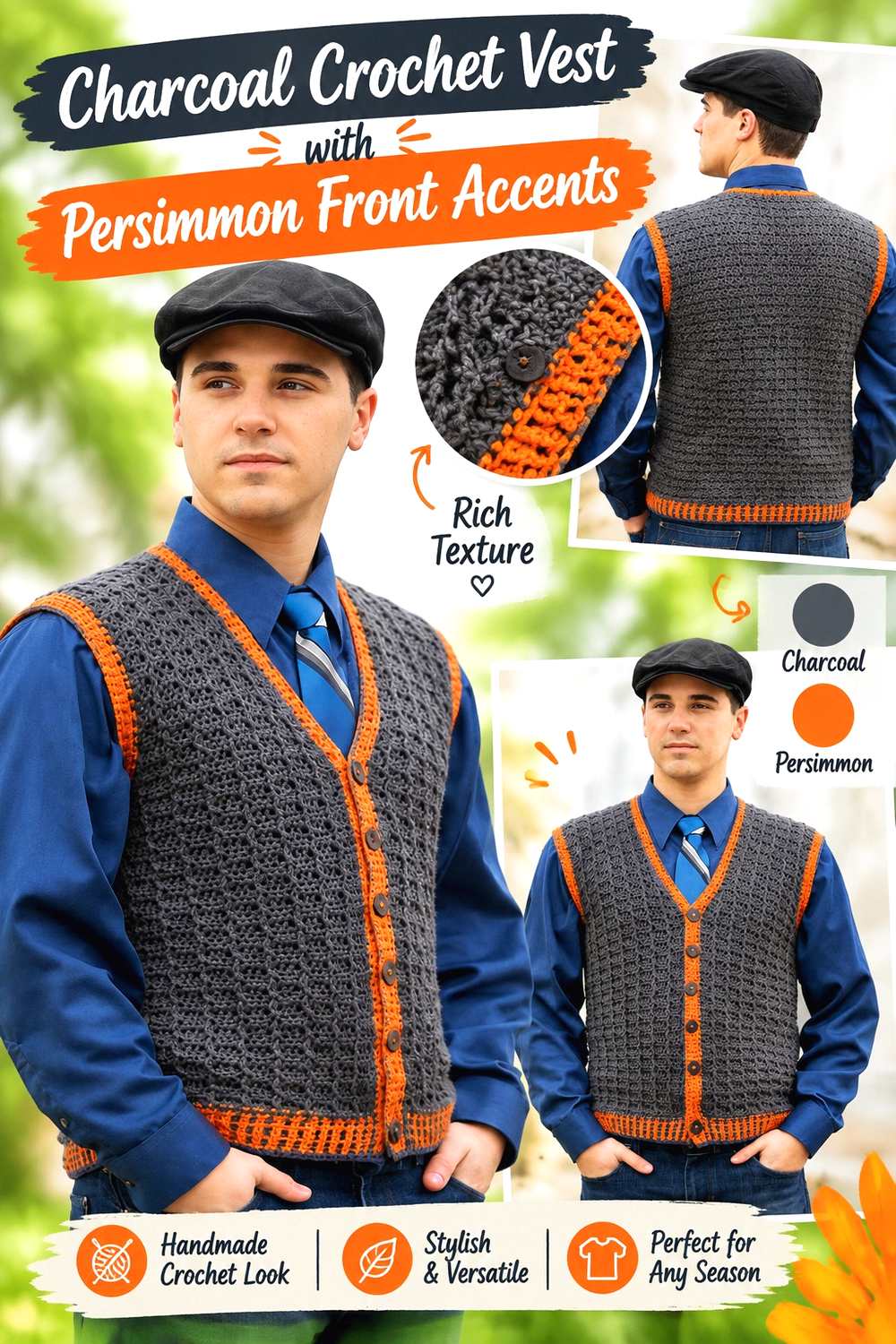
A vest can carry charcoal across the back and most of the front panels while persimmon appears near the opening, pockets, hem, or another repeated detail. Keeping the warm accent concentrated on the front gives it visibility without covering the entire garment.
Charcoal Keeps the Crochet Vest Panels Visually Connected
Use charcoal across large adjoining areas when you want a streamlined two-color layout. Large persimmon blocks on both front and back can shift the project toward equal color blocking, which is a different effect and should be planned deliberately.
Persimmon Can Trace the Charcoal Crochet Vest Opening
A persimmon edging around the front opening is useful because it follows the garment’s existing outline. Repeating a little persimmon near the hem or pocket area keeps that line from feeling isolated.
Creator Credit: Fuad Azmat / YARNutopia by Nadia
10. Persimmon Crochet Mug Cozy With Charcoal Edging
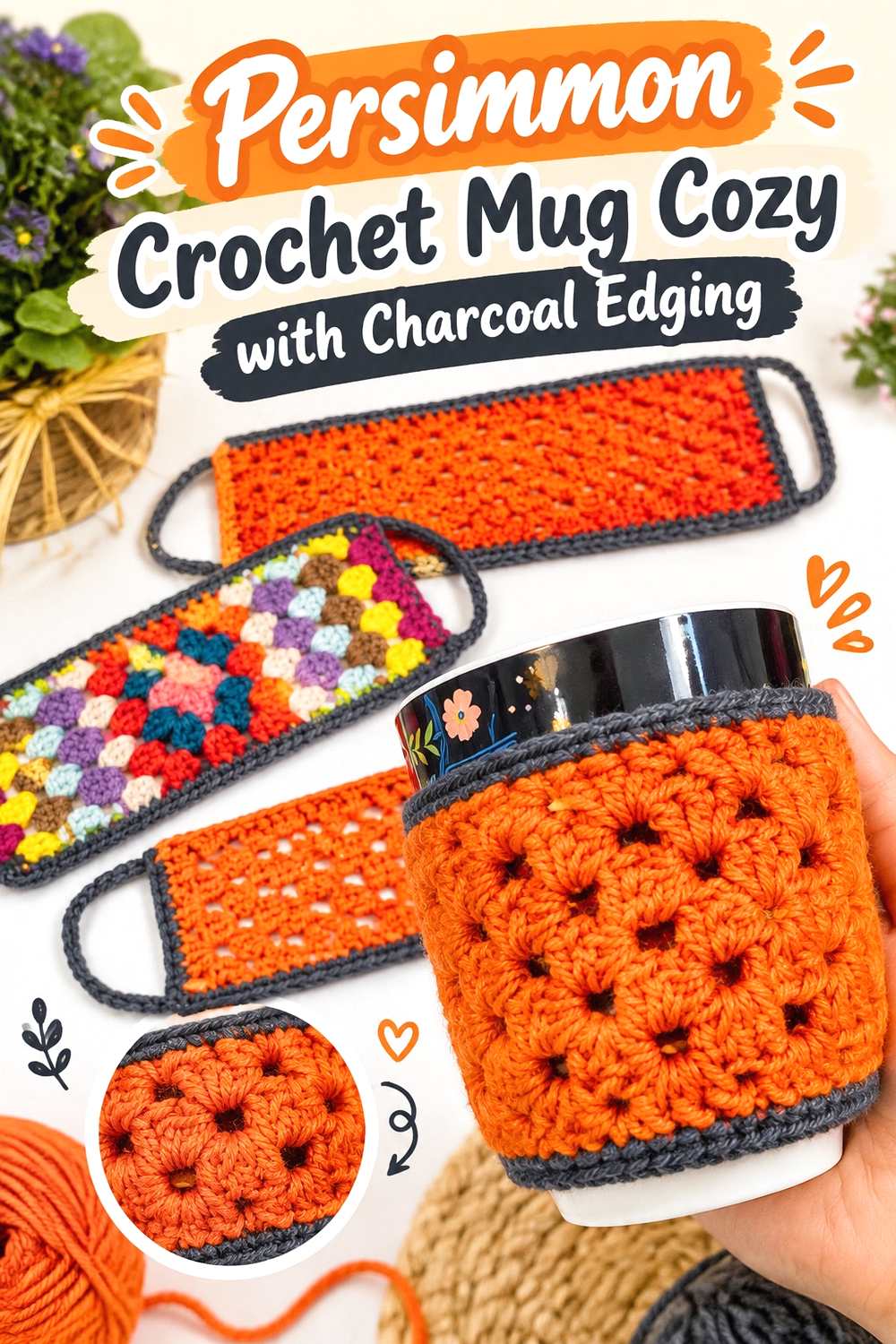
A mug cozy is small enough that too many alternating color changes can quickly look crowded. Let persimmon cover most of the cozy and use charcoal for the edge, fastening area, or another compact detail.
Persimmon Needs Enough Space to Read Clearly on a Crochet Mug Cozy
Use persimmon across a continuous band instead of reducing it to several tiny accents. Because the project wraps around a relatively small object, a simple main field usually keeps the stitch texture easier to see.
Charcoal Can Define the Persimmon Crochet Mug Cozy Closure
If the cozy includes a loop, edge, or fastening section, charcoal can highlight that functional area. Keeping charcoal close to the closure also concentrates the darkest shade rather than distributing heavy contrast everywhere.
Creator Credit: Katia Creates
11. Charcoal Crochet Scarf With Persimmon Ends
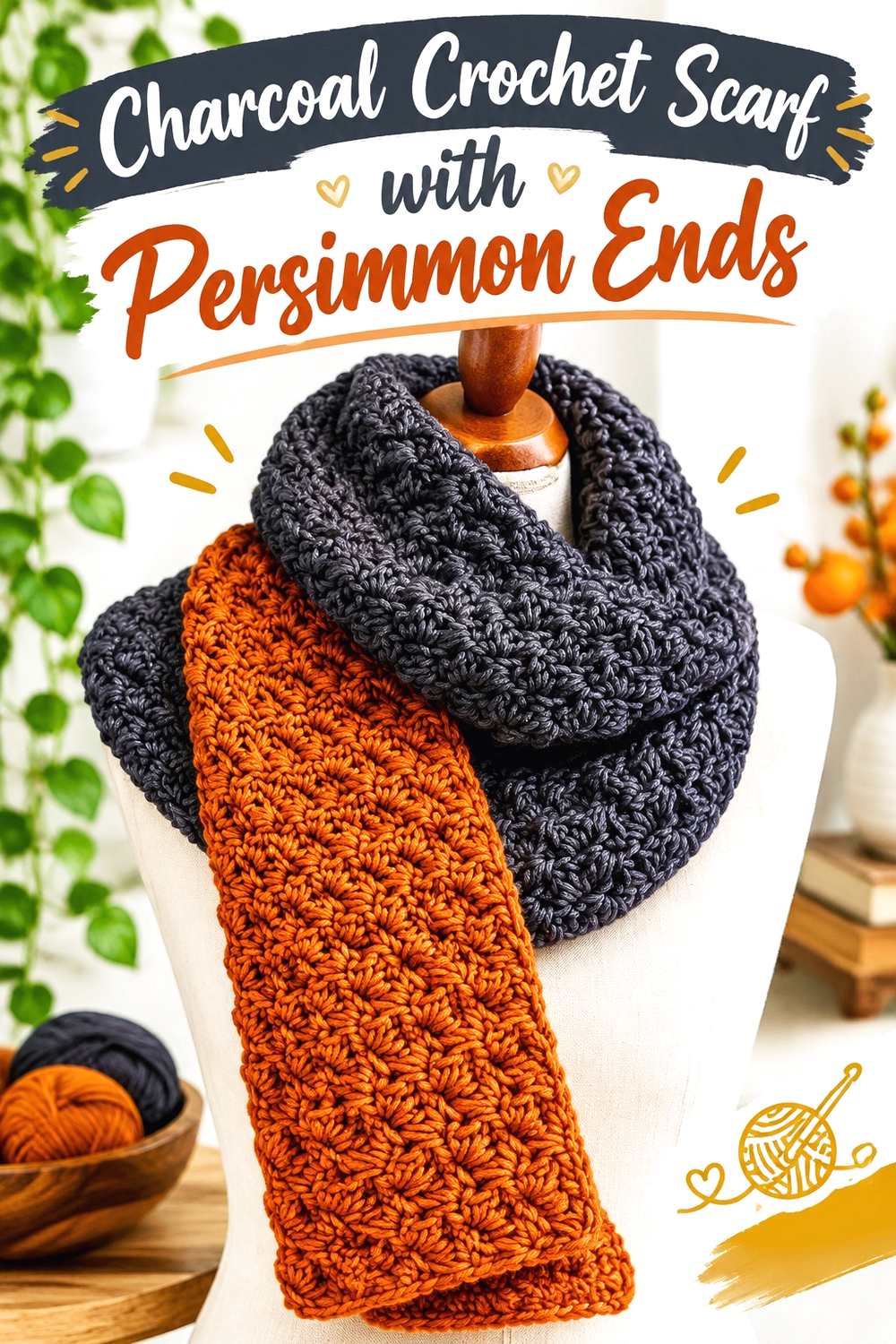
A charcoal scarf body with persimmon ends creates color emphasis exactly where the scarf naturally terminates. The ends can be solid persimmon blocks, shorter bands, or repeated sections that gradually introduce the accent.
Charcoal Keeps the Long Crochet Scarf Body From Becoming Too Busy
Scarves provide a lot of linear space, so repeated high-contrast stripes can dominate the whole design. A charcoal central field keeps the length visually continuous and gives the persimmon sections more impact.
Persimmon Ends Give the Charcoal Crochet Scarf Intentional Repetition
Use persimmon at both ends rather than only one if you want a balanced finish. The two warm sections do not have to be large; their repeated position is enough to make the color placement look planned.
Creator Credit: Hooked by Robin
12. Persimmon And Charcoal Crochet Poncho
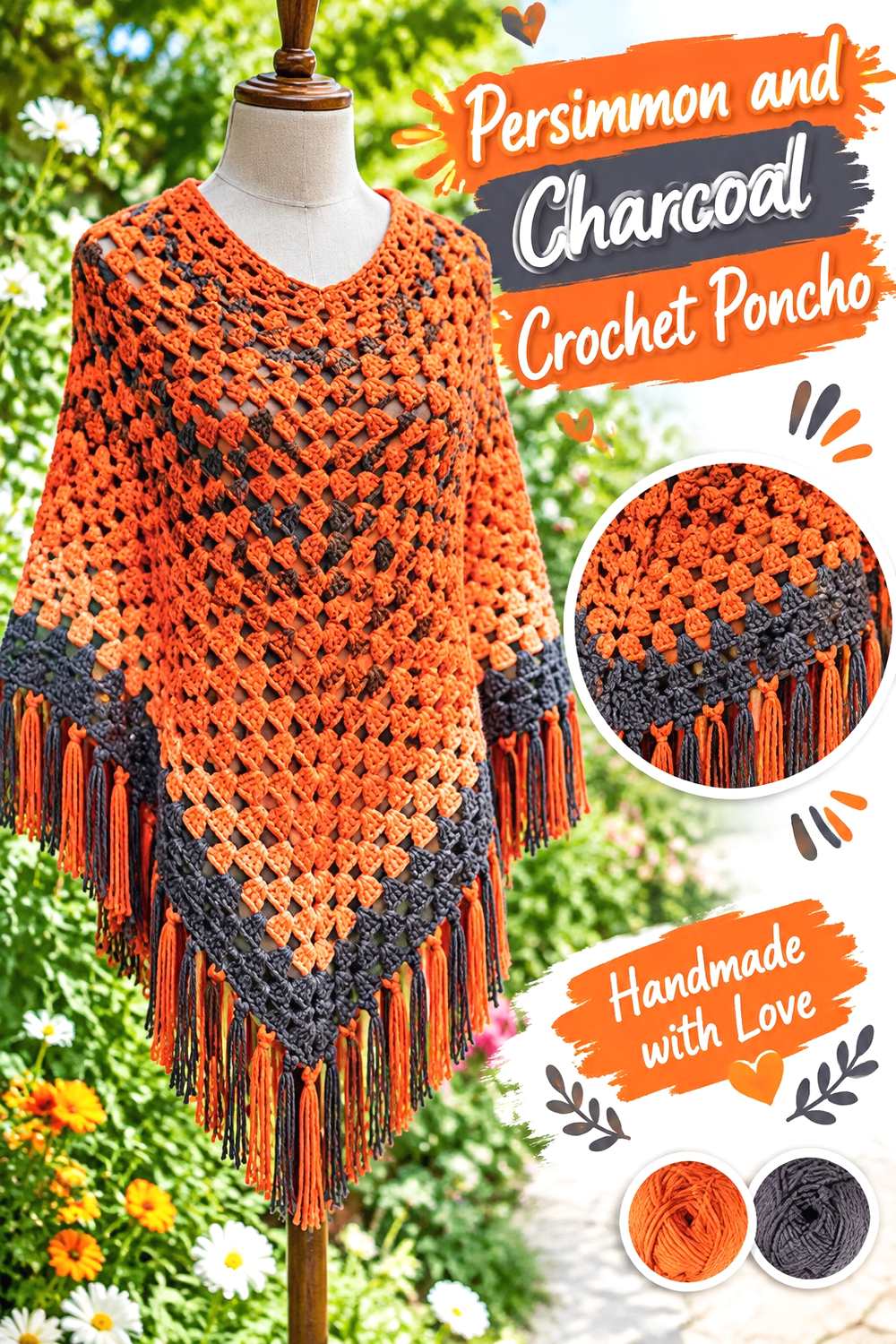
A poncho has enough visible area for broader two-color planning. One approach is to keep persimmon across the main body and charcoal near the neckline and lower edge. Another is to use larger opposing panels so each color occupies a clearly defined section.
Charcoal Can Frame the Persimmon Crochet Poncho Neckline
Charcoal around the neck gives the dark shade a practical visual boundary to follow. If you also use charcoal at the lower edge, the two dark bands can frame the larger persimmon middle instead of interrupting it.
Persimmon Needs Broad Areas on a Two-Color Crochet Poncho
Because a poncho presents a wide uninterrupted surface, tiny persimmon stripes can become lost against charcoal. Use the warm color in larger fields if it is meant to be a major part of the overall look.
Creator Credit: The Crochet Crowd
13. Charcoal Crochet Cowl With A Persimmon Accent Band

A charcoal cowl provides a dark neutral background that can handle one concentrated persimmon band. The circular construction naturally repeats that accent around the full piece, so very little additional color placement may be needed.
Persimmon Works Well as One Deliberate Crochet Cowl Band
Position the persimmon where it will remain visible when the cowl is worn rather than burying it in a fold. A single wider band often reads more clearly than several very narrow stripes.
Charcoal Lets Crochet Cowl Texture Stay Continuous
Keep most textured sections charcoal when the stitch pattern itself is an important feature. If both colors change too frequently inside raised or open texture, the color breaks may compete with the stitch definition.
Creator Credit: Fiber Flux
14. Persimmon And Charcoal Crochet Granny Square

A granny square allows the palette to be organized from the center outward. Persimmon can establish the center, while charcoal defines one or more surrounding rounds or the final frame. Reversing the order produces a noticeably darker motif even though the palette stays the same.
Persimmon Centers Keep Charcoal Crochet Granny Squares Warmer
Use persimmon toward the middle when you want the warm color to remain visible after multiple squares are joined. A charcoal center surrounded by more charcoal joining yarn can disappear into the overall layout.
Charcoal Frames Persimmon Crochet Granny Square Motifs Clearly
A final charcoal round can separate neighboring persimmon-centered squares and provide a consistent joining edge. Compare the yarns in grayscale first if the motif depends on strong center-to-border separation.
Creator Credit: TL Yarn Crafts
15. Charcoal Crochet Socks With Persimmon Cuffs
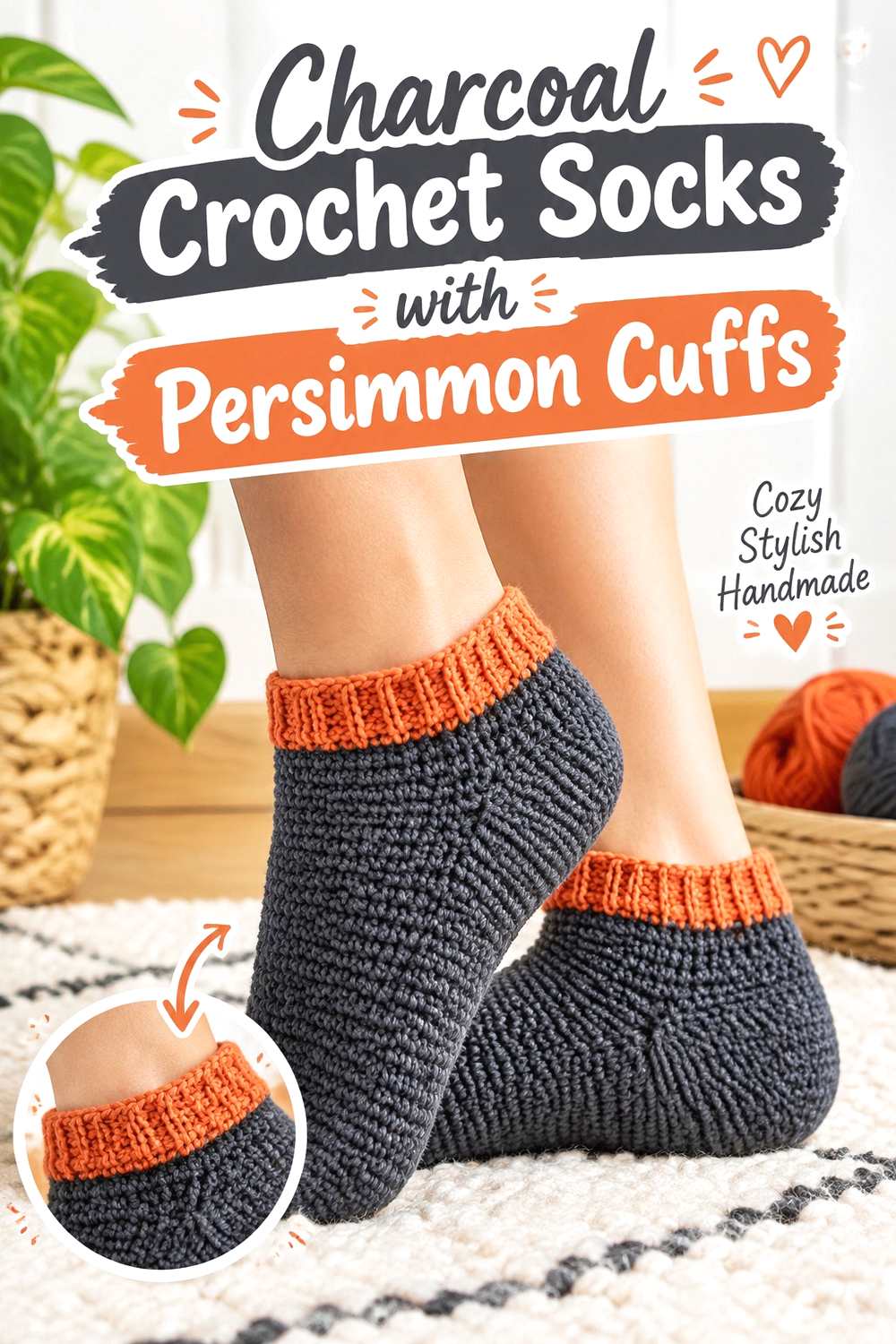
Charcoal can cover most of the foot and leg while persimmon marks the cuff. This keeps the warmer color concentrated above the shoe line and avoids frequent color changes across areas where shaping already creates visual interest.
Charcoal Gives the Crochet Sock Foot a Continuous Color Field
A single charcoal field across the foot keeps shaping details from competing with color blocks. If you want additional persimmon, consider a narrow repeat near the upper leg instead of dividing the foot into several sections.
Persimmon Cuffs Give Charcoal Crochet Socks a Clear Pairing Detail
Use the same persimmon placement on both socks so the accent reinforces the pair. Check that the yarn substitution still meets the chosen tutorial’s fit and material requirements before changing colors or yarn types.
Creator Credit: B.Hooked Crochet
16. Persimmon Crochet Beanie With A Charcoal Brim

A persimmon crown combined with a charcoal brim gives the hat a straightforward top-and-bottom division. This is particularly useful when the beanie has visible texture because the color layout does not require frequent changes through the textured fabric.
Charcoal Creates a Strong Base for the Persimmon Crochet Beanie
Use charcoal across the brim to define the lower edge and separate it from the warmer crown. If the brim is visually deep, consider keeping the rest of the hat fully persimmon so charcoal does not dominate.
Persimmon Shows Crochet Beanie Texture Without Extra Color Breaks
A continuous persimmon crown allows repeated stitch texture to remain readable. If you want a second charcoal detail, a pompom or small top accent can echo the brim without dividing the crown.
Creator Credit: Rich Textures Crochet
17. Persimmon Crochet Pumpkin With A Charcoal Stem
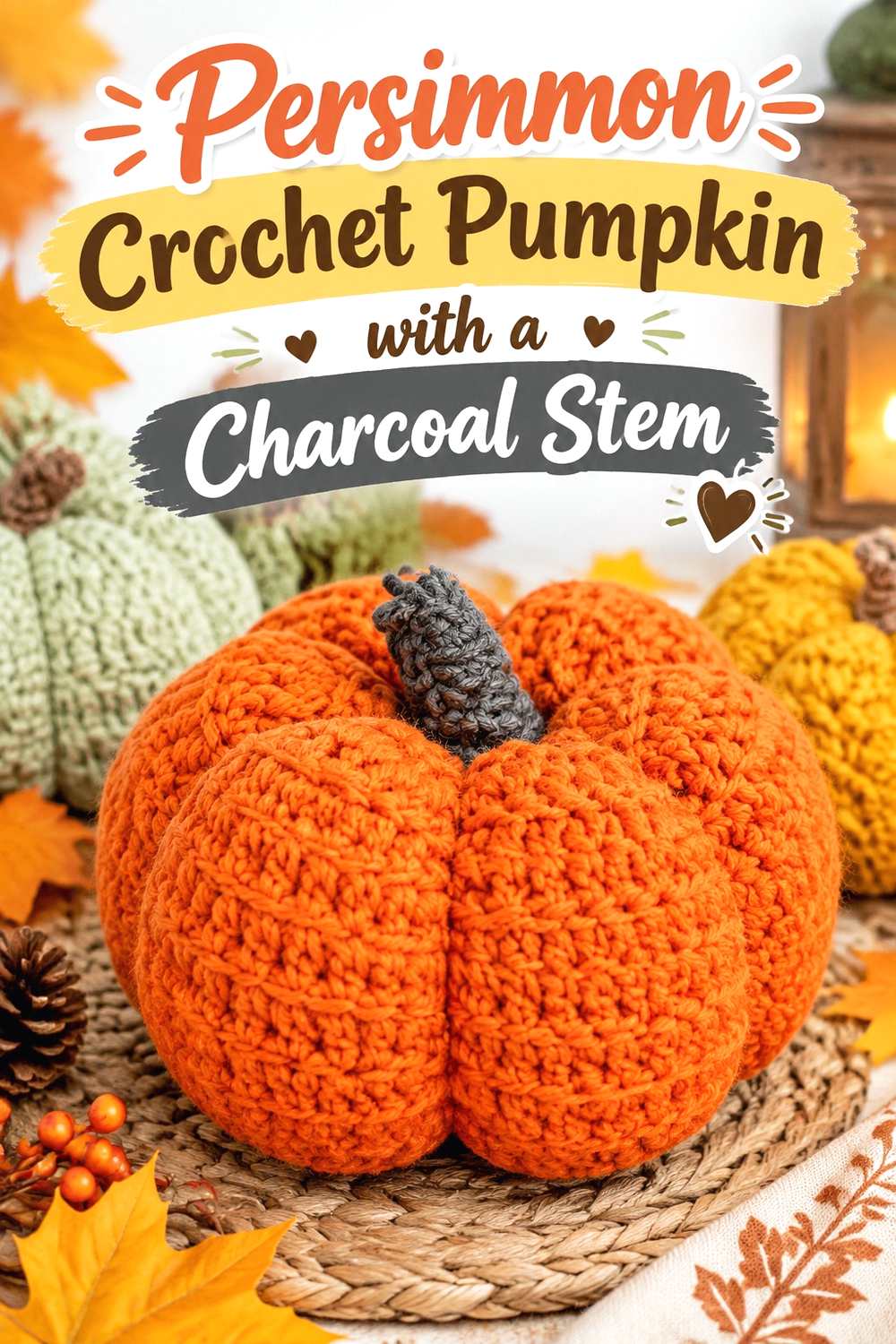
Persimmon is a natural choice for the main pumpkin body when the goal is a warm seasonal accent, while charcoal provides a less conventional stem or ridge detail. Limiting charcoal keeps the pumpkin recognizable as a persimmon-led decor piece.
Persimmon Should Cover Most of the Crochet Pumpkin Body
Use persimmon across the textured body so ribbing or segmentation remains continuous. Alternating persimmon and charcoal through every section would turn the pumpkin into a strong two-color graphic rather than a mostly warm seasonal object.
Charcoal Gives the Persimmon Crochet Pumpkin a Distinct Top Detail
A charcoal stem can introduce the dark shade without obscuring the body’s texture. If you also add charcoal around the lower edge or ribs, keep those additions restrained so the stem does not lose its role as the main dark accent.
Creator Credit: Winding Road Crochet
18. Charcoal Crochet Shawl With A Persimmon Border
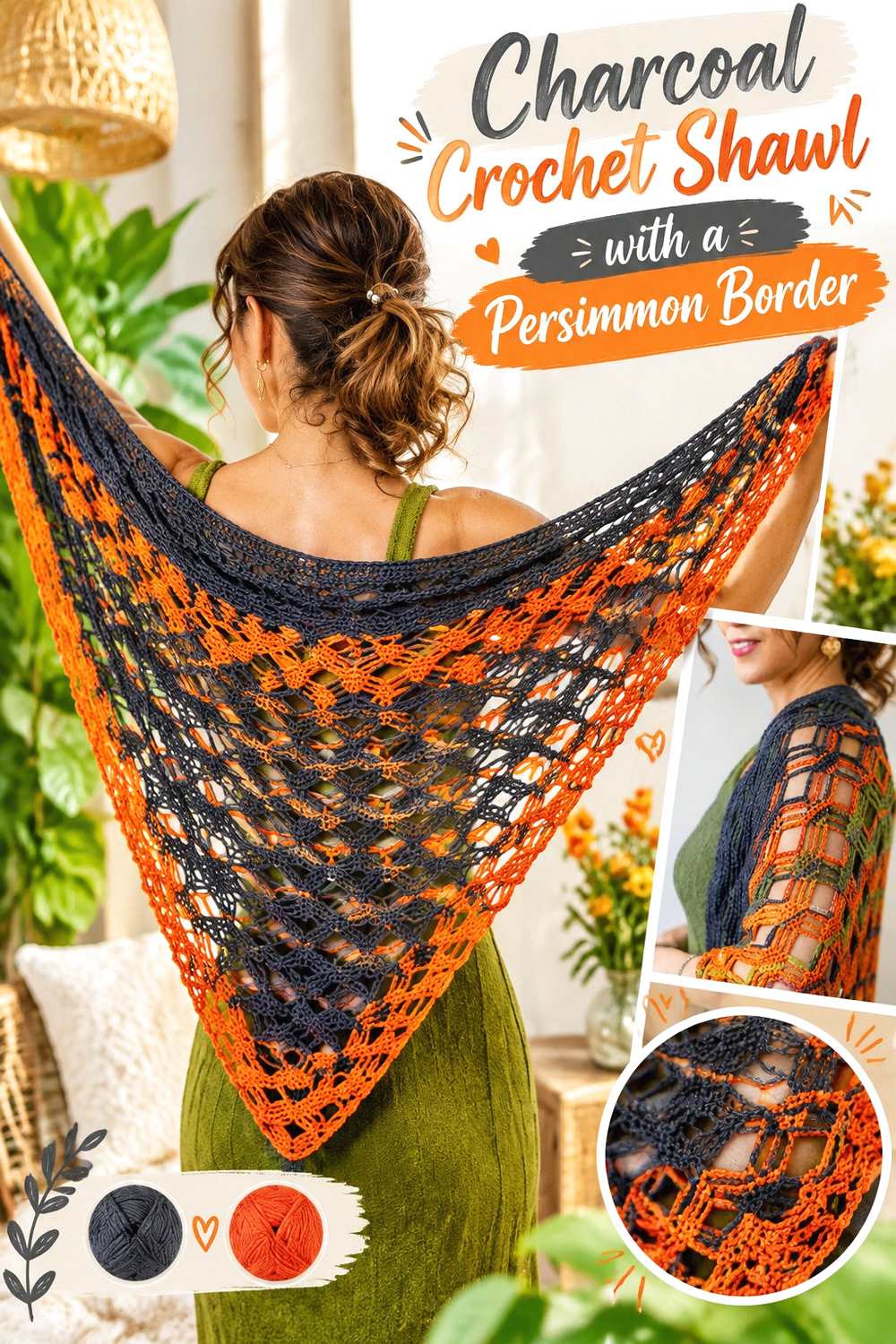
A charcoal shawl can use persimmon at the outer border where the expanding shape gives the warm color increasing visual space. This placement is especially effective when you want the shawl to remain predominantly dark but still show persimmon clearly when draped.
Charcoal Keeps the Crochet Shawl Center Visually Continuous
Use charcoal across the main field when the shawl includes lace, openwork, or another repeated stitch pattern. Frequent switches between charcoal and persimmon can make individual lace sections harder to distinguish from the overall color arrangement.
Persimmon Can Finish the Charcoal Crochet Shawl With a Clear Border
Move to persimmon near the outer portion if you want the warm shade to become more noticeable as the shawl grows. Check the border against the charcoal field before committing; if the values are too similar, choose a persimmon shade that creates clearer separation.
Creator Credit: ExpressionFiberArts
Conclusion
Persimmon and charcoal can produce very different crochet results depending on which color receives the larger share of the project. For a warmer overall look, start with the persimmon pillow, bucket hat, beanie, pumpkin, or mug cozy ideas and keep charcoal mostly around borders and details.
For a darker, more neutral-led result, the charcoal cardigan, vest, scarf, basket, cowl, socks, or shawl provide more controlled places for persimmon accents. Projects such as the tote, blanket, poncho, placemat set, and granny square are better suited to a more visible two-color conversation because their surfaces can accommodate repeated blocks, stripes, or motifs.
Whichever layout you choose, compare the actual yarns before starting. Preserving a clear dominant/supporting relationship and enough light-dark separation for the intended stitch texture will usually matter more than matching an exact shade name.
Frequently Asked Questions
Should persimmon or charcoal be the dominant crochet color?
Either can lead. Persimmon works well when you want a warmer overall piece, while charcoal is useful when you want the project to read darker and use persimmon more selectively. Decide before starting which shade should occupy most of the visible surface.
How can I tell whether persimmon and charcoal have enough contrast?
Place the yarns side by side and look at them from a distance. A grayscale photo can help reveal their light-and-dark relationship. If detailed motifs disappear in grayscale, consider choosing a lighter persimmon or darker charcoal.
Where should charcoal go in a persimmon-heavy crochet project?
Charcoal is particularly useful around borders, brims, cuffs, handles, joins, rims, closures, and other areas that already act as visual boundaries. Those placements allow the dark color to define the project without competing with the main persimmon field.
Can I use equal amounts of persimmon and charcoal?
Yes, but an even split creates a stronger color-blocked effect. It is most useful on projects such as totes, ponchos, blankets, or granny squares where the design has enough surface area to support two equally visible shades.
What can I substitute if my persimmon yarn looks too bright with charcoal?
Choose another warm orange-red or softened orange shade that keeps the relationship you want with charcoal. If you prefer a more muted result, preserve the warmth of persimmon while reducing saturation rather than changing to an unrelated hue.
Why can persimmon and charcoal look different after they are crocheted?
Crochet places the colors into repeated stitches, shadows, open spaces, and raised texture rather than displaying them as flat yarn strands. Swatching the two colors in the intended stitch pattern is therefore more useful than judging the skeins alone.