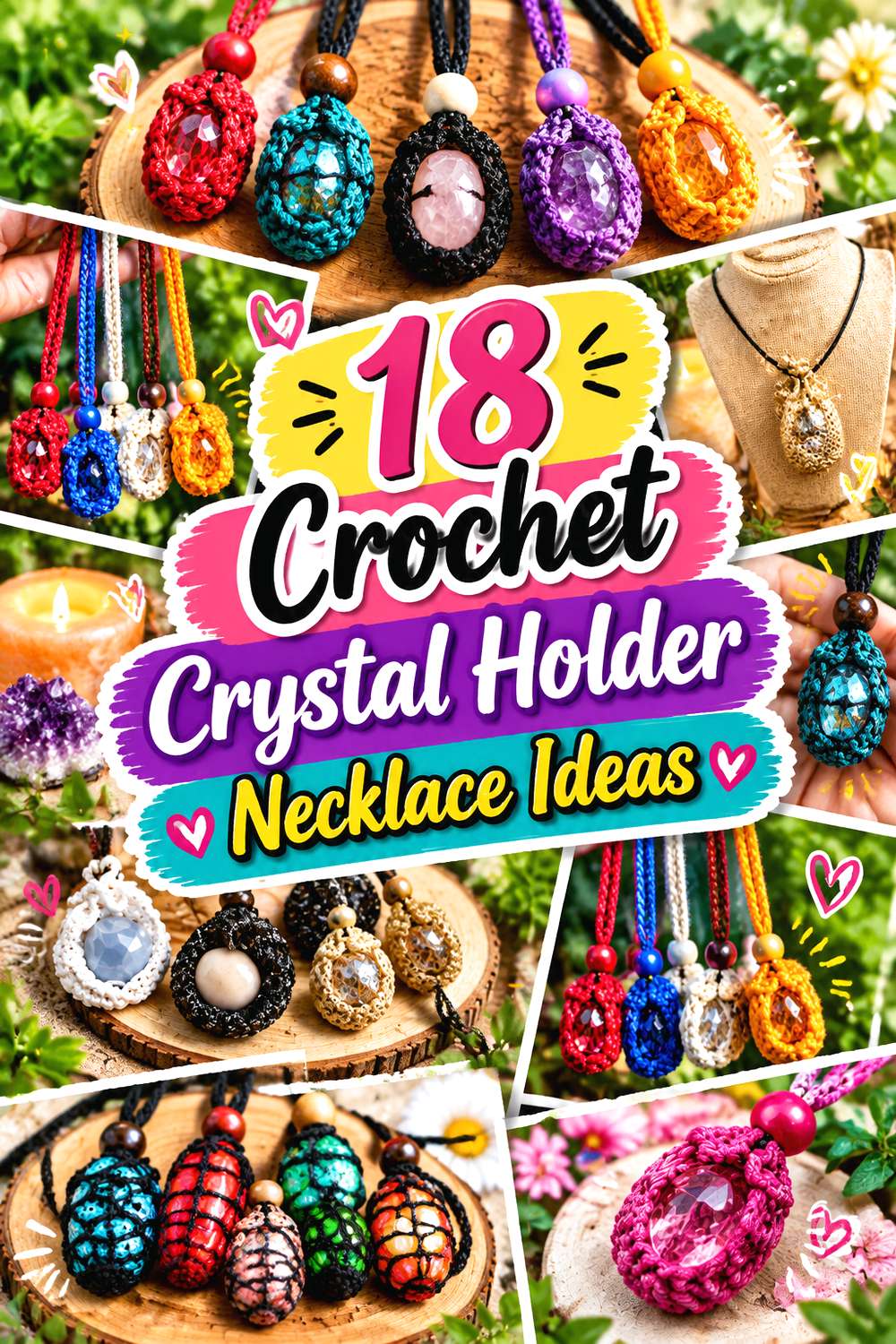
18 Crochet Crystal Holder Necklace Ideas
A crochet crystal holder necklace can put the stone almost completely on display or conceal it inside a miniature pouch. That difference changes more than appearance. Open nets need to fit the crystal’s narrowest points carefully, while covered holders shift attention toward closures, fabric density, colorwork, beads, and the overall weight of the pendant.
These 18 ideas cover several genuinely different directions, including adjustable gemstone cages, gathered mesh keepers, tapestry and felted amulet bags, thread-scale pendants, granny-square pouches, drawstring holders, and embellished miniature bags. Some tutorials were designed specifically for crystals or gemstones; others teach wearable amulet or treasure pouches that can be responsibly adapted after checking the opening and loaded weight. Use the comparisons below to decide whether visibility, exchangeability, enclosure, compact scale, or decorative crochet matters most for the stone you want to carry.
Quick List
- Crochet Adjustable Open-Net Crystal Holder Necklace
- Crochet Sliding-Bead Mesh Crystal Keeper Necklace
- Crochet Rounded Crystal Amulet Pouch Necklace
- Crochet Geometric Tapestry Crystal Pouch Necklace
- Crochet Felted Colorwork Crystal Amulet Necklace
- Crochet Fold-Over Drawstring Crystal Pouch Necklace
- Crochet Thread-Scale Crystal Pendant Pouch Necklace
- Crochet Beaded Pointed-Flap Crystal Amulet Necklace
- Crochet Spiral-Texture Rock and Crystal Pouch Necklace
- Crochet Openwork-Band Crystal Pendant Pouch Necklace
- Crochet Ombre Tiny Crystal Pouch Necklace
- Crochet Compact Treasure-Pouch Crystal Necklace
- Crochet Granny-Square Crystal Drawstring Necklace Pouch
- Crochet Minimal Gemstone Cage Necklace
- Crochet Diamond-Mesh Gem Keeper Necklace
- Crochet Cord-Hung Mini Gemstone Pouch Necklace
- Crochet Bead-Closure Crystal Keeper Necklace
- Crochet Beaded Drawstring Crystal Medicine Pouch Necklace
Choose Between an Open Crystal Net and a Covered Pouch
Start by deciding how visible the stone should be. An open cage or mesh holder lets color, inclusions, polish, and natural shape remain part of the necklace design. That works especially well for a single broad tumbled stone, but open spaces also make fit more important. A mesh that holds the widest part securely may still be too generous around a tapered end or narrow point.
Covered pouches reverse the emphasis. Tapestry, felted, textured, and flap-style holders make the crochet itself a larger visual feature and can conceal most of the crystal. Between those extremes are gathered mesh and granny-style pouches, which provide some coverage without making the contents completely invisible. No construction is automatically more secure: the finished opening, closure, fabric behavior, and specific stone still need to be checked together before wear.
Match the Closure to the Stone You Actually Want to Carry
A smooth tumble and a long raw point can behave very differently inside the same crochet holder. Compare the crystal’s narrowest dimension with any visible fabric openings, not only its overall width. If several stones will share one interchangeable necklace, check each one individually rather than assuming similar-looking pieces will fit the same way.
Closures also change how practical the necklace feels. Sliding beads make frequent stone changes convenient. Drawstrings gather a larger opening. Flaps add coverage but may become harder to close when the pouch is overfilled. A fixed or densely enclosed amulet bag makes more sense when you expect to leave one stone inside. Whatever the style, load the finished holder over a safe surface and check how the opening behaves when the necklace is lifted, turned, and allowed to hang naturally.
Plan for Pendant Weight, Cord Stretch, and Safe Wear
Crystals can add concentrated weight to a very small crochet project. A cord or attachment point that looks balanced while empty may lengthen, twist, or distort after the stone is inserted. Yarn fiber, stitch density, cord construction, and pendant size all influence that behavior, so assess the completed necklace in its loaded state before settling on the final wearing length.
Fine thread can keep a small pendant jewelry-like, while thicker yarn increases visual and physical bulk. Beads, fringe, flaps, and multiple cords add more weight of their own. Long necklace cords, beads, and small stones also require particular caution around young children and should not be treated as toys. For cleaning, follow the fiber or yarn label and any creator guidance; beads, mixed materials, and felted wool can make a one-method-fits-all care recommendation inappropriate.
1. Crochet Adjustable Open Net Crystal Holder Necklace
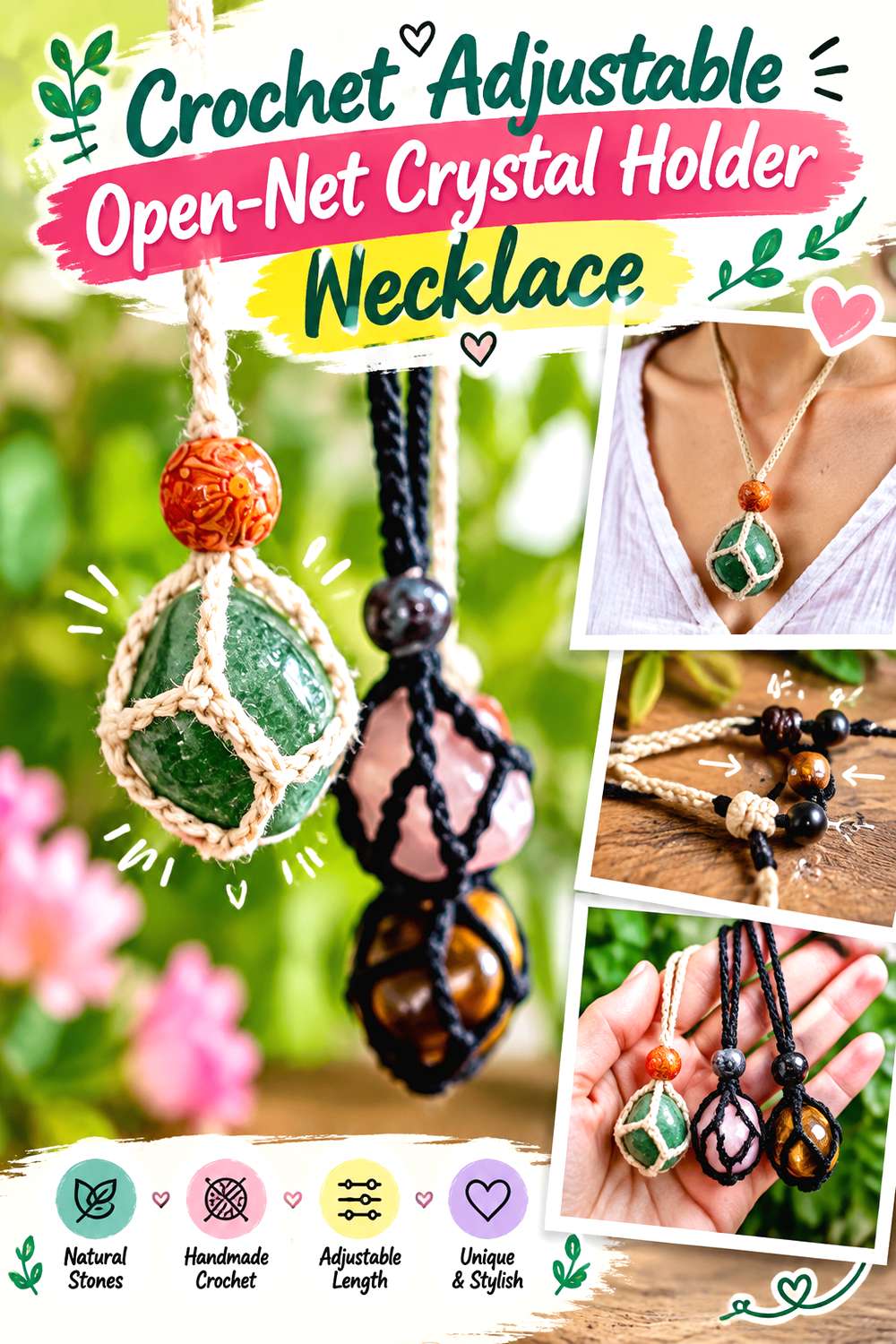
Heart Hook Home’s gemstone holder puts the stone at the center of the design. The source uses a very open crochet framework with a movable bead that tightens the holder around the gemstone, and the necklace can be reopened when a different suitable stone is wanted. The designer also emphasizes testing the secured stone rather than assuming the adjustable construction will fit everything automatically.
This idea makes the most sense when the crystal itself should provide most of the color and visual interest. It is less appropriate for tiny chips or stones with narrow projections that approach the size of the mesh openings. The spare construction also means yarn thickness has a noticeable effect on the overall jewelry scale.
Let the Stone Stay Visually Dominant
Because there is relatively little crochet covering the gemstone, thread color becomes more like a frame than a pouch fabric. A quiet neutral can recede behind a strongly colored mineral, while contrast makes the crochet network more noticeable. Neither approach changes the central fit question: inspect every narrow tip and edge to make sure the stone cannot find an unintended route through the open structure.
Treat the Sliding Bead as a Functional Component
The bead is not merely decoration in this design; it participates in securing the holder. Heart Hook Home specifically discusses choosing a bead that grips appropriately and checking the stone after tightening. If you substitute yarn, cord, or bead size, reassess that interaction rather than assuming a visually similar replacement will behave identically.
Original Tutorial and Creator Credit
Creator/Site: Heart Hook Home
2. Crochet Sliding Bead Mesh Crystal Keeper Necklace
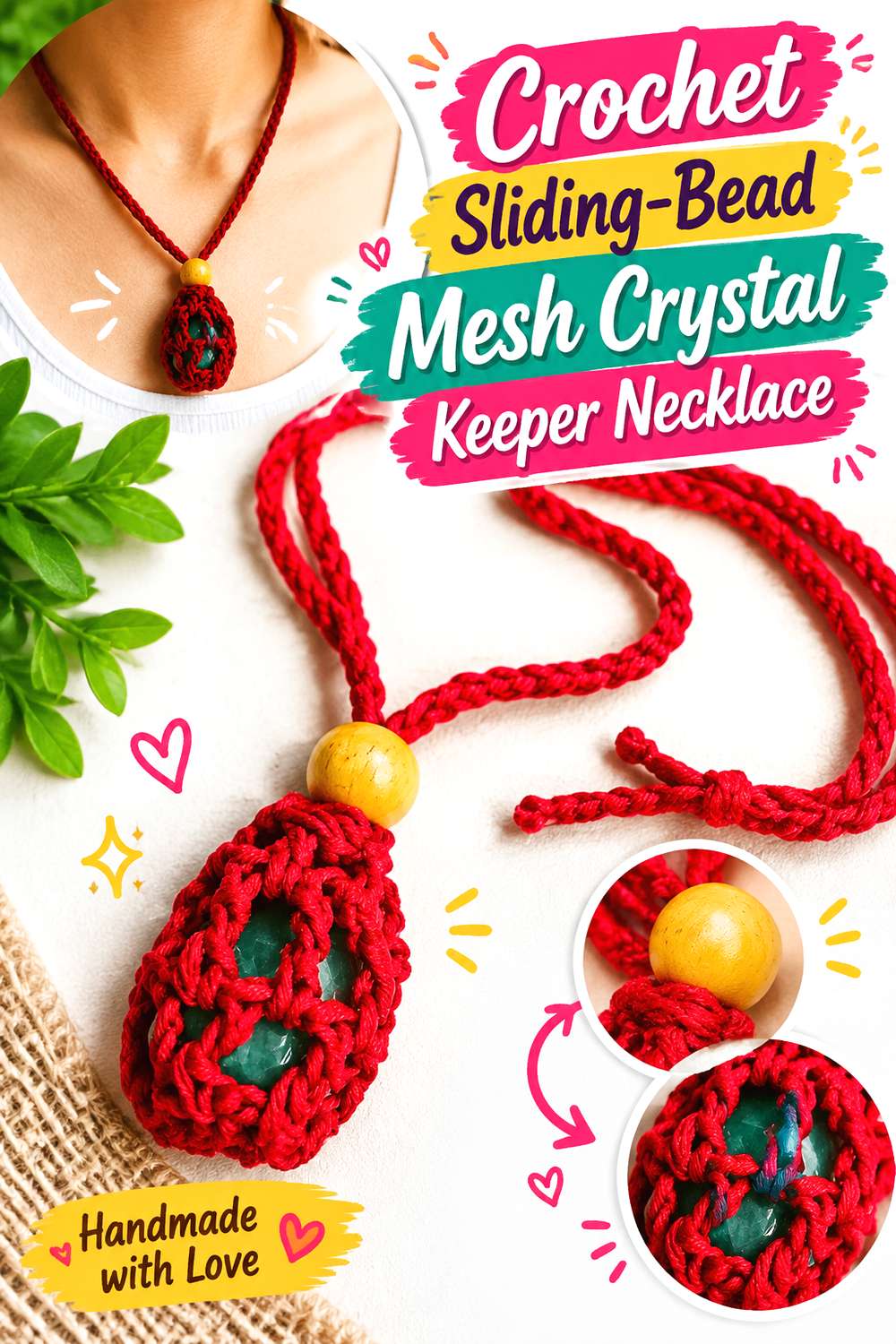
The Crafty Therapist’s crystal keeper forms a small rounded mesh container rather than a minimal four-sided net. Its necklace cord passes through a bead that can slide to open or gather the keeper, so the crystal can be changed without permanently closing the pouch. The original page presents it specifically for carrying a favorite crystal tumblestone.
This construction gives the stone more crochet around its perimeter while still leaving it clearly visible. It is a useful choice for readers who want interchangeability but prefer a recognizable little pouch shape rather than a nearly invisible cage. As always, “interchangeable” should be understood as dependent on the dimensions of each stone.
Compare Every Swap With the Mesh Again
Two polished stones of similar overall size may have different tapers, thicknesses, or narrow ends. When changing crystals, check the fit from the bottom and sides as well as the gathered opening. The fact that one tumblestone sat securely does not guarantee that a flatter or more tapered replacement will behave the same way.
Pay Attention to the Source’s Child-Safety Warning
The original tutorial includes an explicit supervision warning for children in connection with its necklace construction. More generally, a long cord combined with a movable bead and small stone is not something to treat as a child’s toy. Consider the intended wearer first, especially before changing cord length or making a smaller version.
Original Tutorial and Creator Credit
Creator/Site: The Crafty Therapist
3. Crochet Rounded Crystal Amulet Pouch Necklace
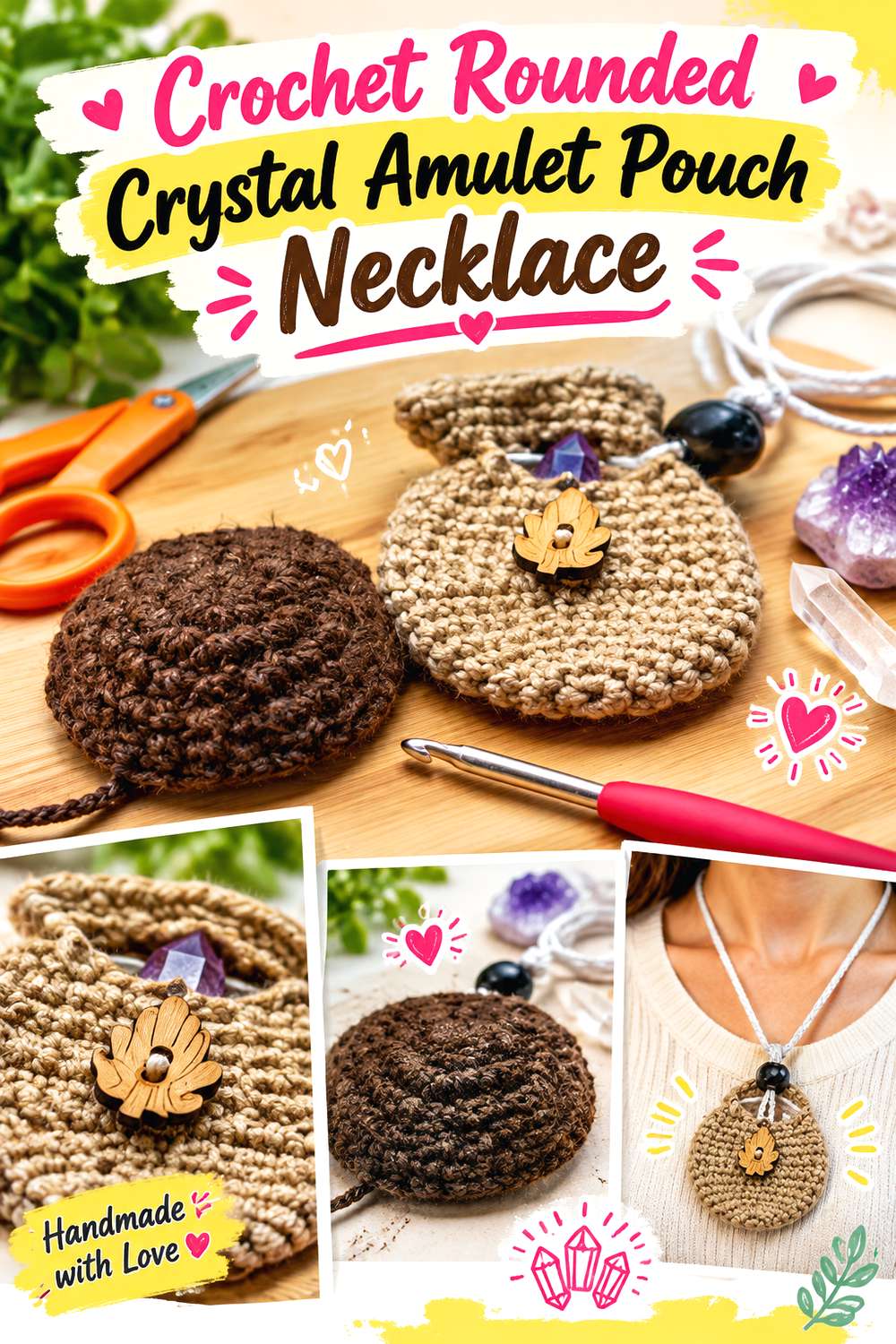
Coasty’s Creations moves toward a more enclosed miniature bag. The original crystal pouch necklace has a rounded body and provides options for the necklace cord and upper fastening, including a toggle-style fastener or bead; an optional button is also mentioned as embellishment.
Compared with a bare gemstone cage, this version gives the yarn more visual presence and places more crochet between the crystal and surrounding clothing. It suits someone who likes the look of an amulet pouch rather than wanting every surface of the stone exposed. The greater coverage also means the relationship between pouch depth and crystal thickness matters: overfilling can change the opening and silhouette even when the stone technically fits.
Decide How Much Crystal You Want to Reveal
A rounded pouch naturally hides more than a sparse net. Before choosing it for a particularly decorative crystal, consider whether the stone’s most interesting face will still be visible in the finished holder. If visibility is the priority, an open cage may serve the project better; if coverage and the miniature-bag look matter more, this construction has the advantage.
Choose the Fastening for Function First
The source offers more than one finishing possibility around the top. Whatever option you choose, test it with the actual stone rather than picking solely by appearance. A decorative button or bead should not obstruct opening the pouch, while the functional closure should keep the top from gaping noticeably as the pendant swings.
Check the Cord After Loading the Pouch
A stone can make the completed necklace hang lower than the empty pouch suggested. Let the loaded holder hang for a while over a safe surface and observe the cord and its attachment points. If they visibly lengthen or distort, revisit the material and construction choices rather than compensating only by making the necklace shorter.
Original Tutorial and Creator Credit
Creator/Site: Coasty’s Creations
4. Crochet Geometric Tapestry Crystal Pouch Necklace
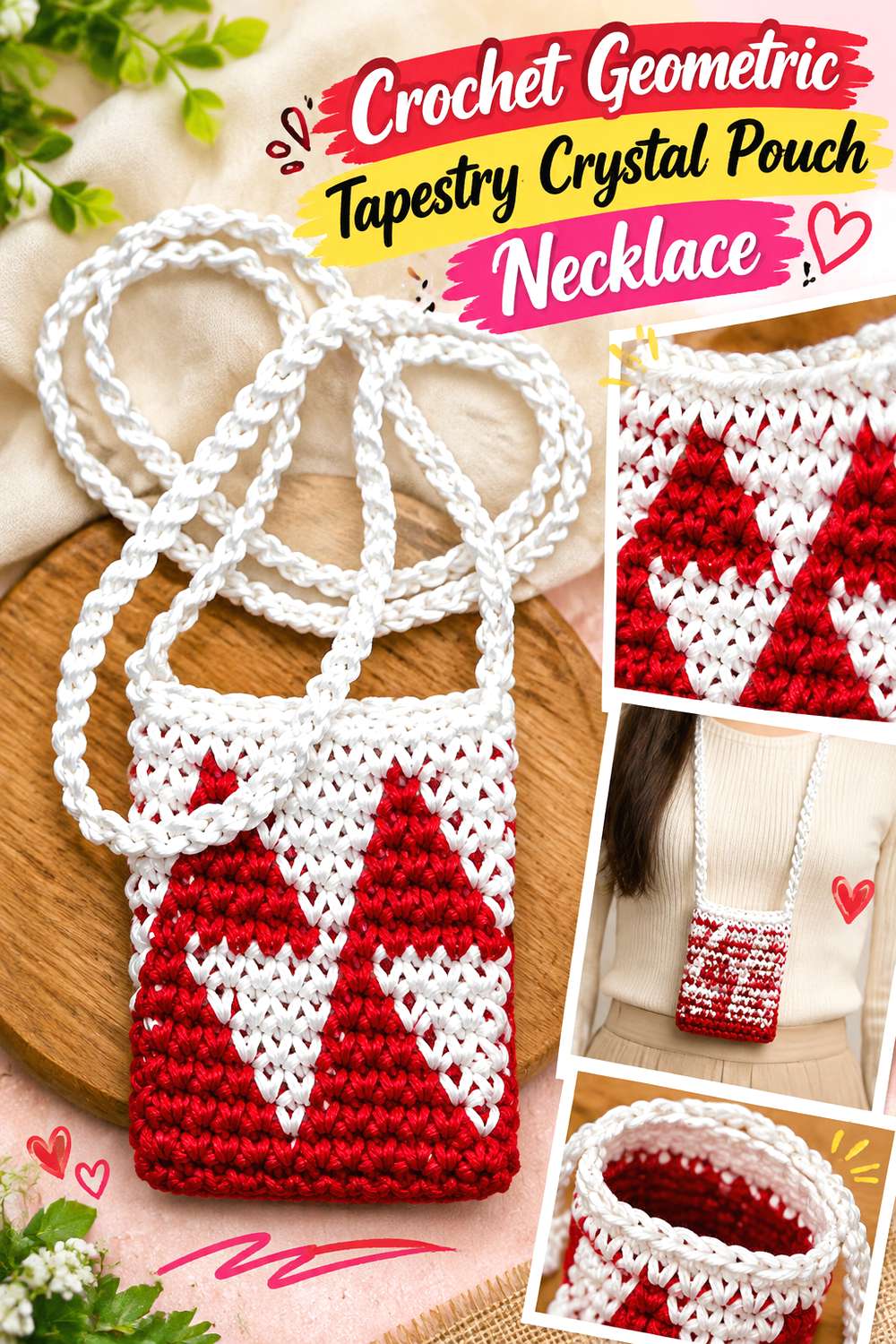
Carol Ventura’s necklace pouch takes the design in a completely different direction: dense tapestry crochet and geometric colorwork become the focal point instead of the stone. Her original project is a necklace pouch or amulet bag worked as a compact color-patterned form with an attached crocheted necklace.
For crystal use, this approach works when carrying the stone matters more than showing its surface. The denser fabric also gives you a small canvas for motif planning. Because the textile itself has more structure and visual weight than an open net, check that the stone fits without stretching the motif out of proportion or turning the pouch into a visibly overstuffed shape.
Keep the Motif From Becoming Distorted
Tapestry colorwork reads best when the intended geometry remains clear. A thick stone pressing hard against the front can spread stitches and alter the apparent proportions of the motif. If the design starts looking pulled or rounded in unexpected places, the crystal may simply be too bulky for that particular finished pouch.
Balance Cord Scale With Dense Fabric
A detailed thread-scale pouch can look disproportionate on a very chunky substitute strap, while an extremely delicate cord may not be the best pairing for a heavier crystal. If you change materials, compare the complete loaded necklace rather than evaluating the pouch and strap separately. The visual balance and physical load path both matter.
Colorwork Can Replace Crystal Visibility
This is one of the stronger choices when the stone is meaningful but does not need to function as the necklace’s visible centerpiece. Instead, color contrast and motif placement provide the decorative effect. That also makes the design useful for a crystal whose shape would be awkward in a wide-open net, provided it still fits the pouch and closure comfortably.
Original Tutorial and Creator Credit
Creator/Site: Carol Ventura
5. Crochet Felted Colorwork Crystal Amulet Necklace
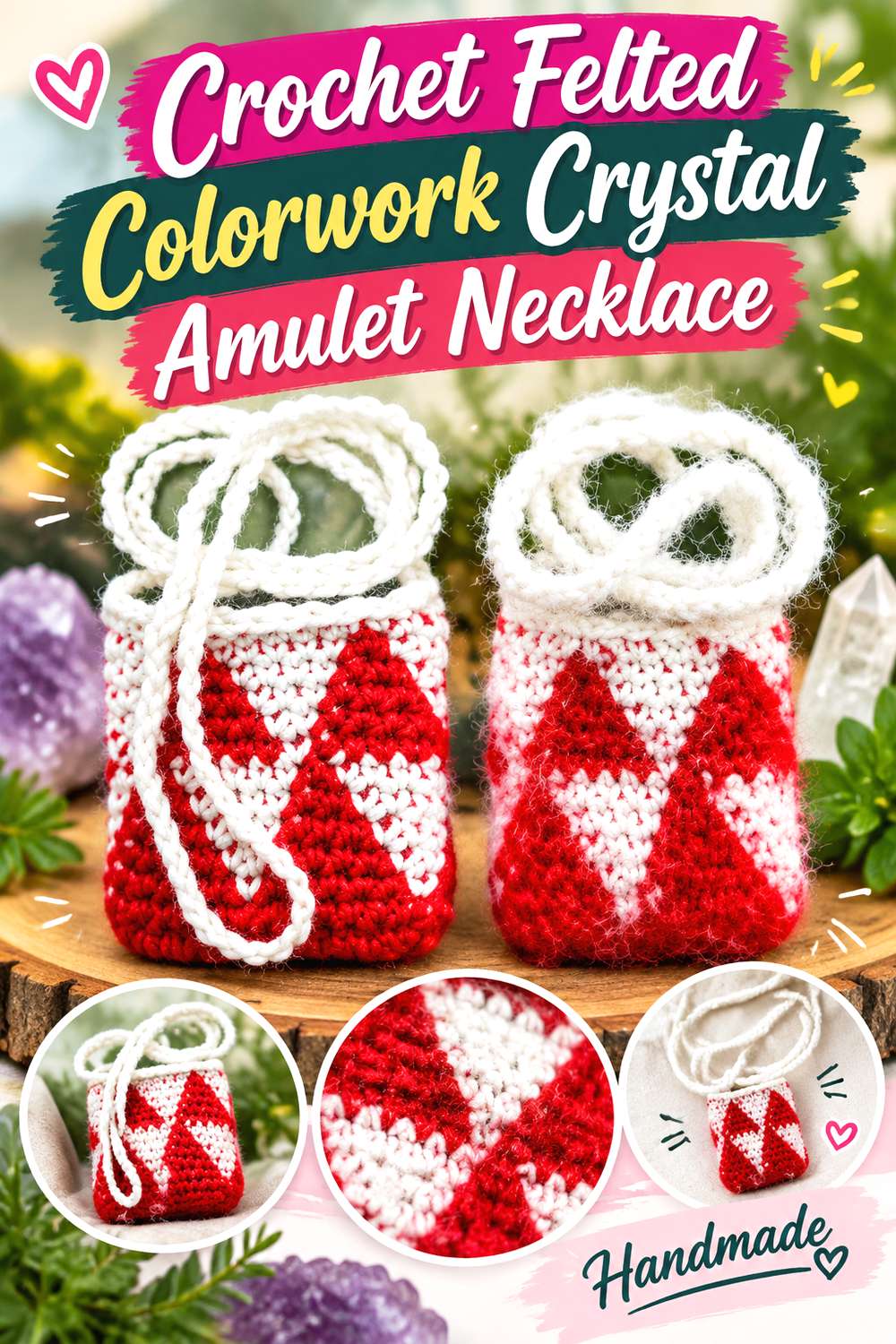
Carol Ventura’s felted amulet-bag variation changes both the surface and sizing logic. The project is crocheted in wool with a looser fabric before felting, then transformed into a denser-looking felted pouch. Ventura notes that the same necklace-pouch concept is used while the finishing process changes the fabric.
For a crystal holder, that produces an opaque miniature bag where the stone is largely hidden and the fiber surface becomes the main visual feature. The important difference is that the pre-felted dimensions are not the dimensions that ultimately matter. Choose and assess the crystal against the fully finished bag rather than assuming the opening seen during crochet will remain unchanged.
Final Size Comes After Felting
Felting can alter width, height, density, and the feel of the opening. Results also depend on the wool and finishing process, so avoid making unsupported assumptions about an exact percentage of shrinkage. Follow the creator’s project guidance, complete the finishing stage, and only then judge whether your intended crystal passes through the opening comfortably.
Opaque Fabric Changes How You Check the Contents
An open cage allows you to see immediately whether a stone has shifted. A felted pouch may not. After inserting the crystal, inspect the closure and feel how the object sits rather than relying on visibility. If the pouch becomes strongly misshapen, that is a useful sign that the stone and finished bag may not be well matched.
Consider Care Before Adding Extra Embellishment
Felted wool already has a specialized finishing history. If you later add beads, buttons, or another cord material, the finished necklace becomes a mixed-material item. Care should therefore follow the fiber and creator guidance rather than a generic crochet washing rule. Decorative additions can also change how comfortably a small felted pouch hangs.
Original Tutorial and Creator Credit
Creator/Site: Carol Ventura
6. Crochet Fold Over Drawstring Crystal Pouch Necklace
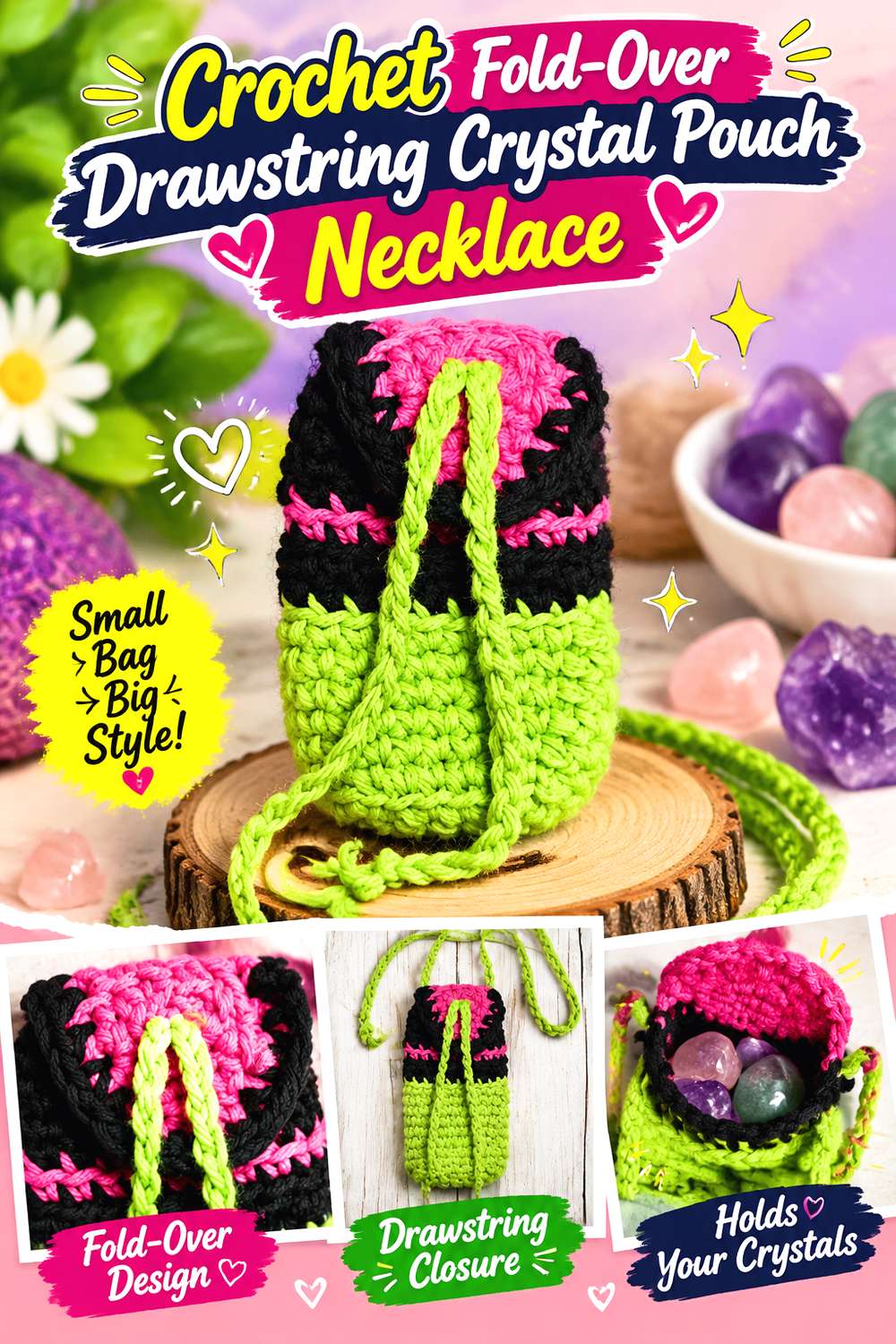
Goddess Crochet’s 2015 medicine bag was created after a request for a small pouch for carrying crystals. Its design combines a drawstring area with a fold-over cover, plus a small loop at the back that can be attached to a cord or keyring.
That layered opening distinguishes this project from simple mesh keepers. It provides a more covered, bag-like profile and gives the top of the pouch two visually separate elements. For necklace use, the trade-off is bulk: a fold-over cover, drawstring, attachment point, and stone all occupy space in a compact project, so it is worth checking whether the finished pendant feels proportionate once everything is loaded.
Give the Flap Room to Fall Naturally
A crystal that fills the pouch right to the opening can push against the cover and prevent it from lying the way the design intends. A slightly flatter or smaller stone may preserve the silhouette better. If the flap is pulled outward or the drawstring cannot gather properly, the problem may be the contents rather than the crochet.
Inspect the Rear Attachment Under Load
The back loop concentrates the hanging load into a relatively small area of the pouch. Check it with the intended crystal inside and observe whether it twists, stretches, or visibly pulls the back fabric. A necklace conversion should use the original attachment concept rather than adding a heavy stone to an arbitrary stitch elsewhere.
Coverage Makes This Better for Concealed Carrying
Unlike a gemstone cage, the fold-over version can keep much of the stone out of view. That may be desirable when the crocheted pouch itself should be the accessory. If you want the color and surface of a favorite mineral on display, however, this deliberately covered construction may hide more than you want.
Original Tutorial and Creator Credit
Creator/Site: Goddess Crochet
7. Crochet Thread Scale Crystal Pendant Pouch Necklace
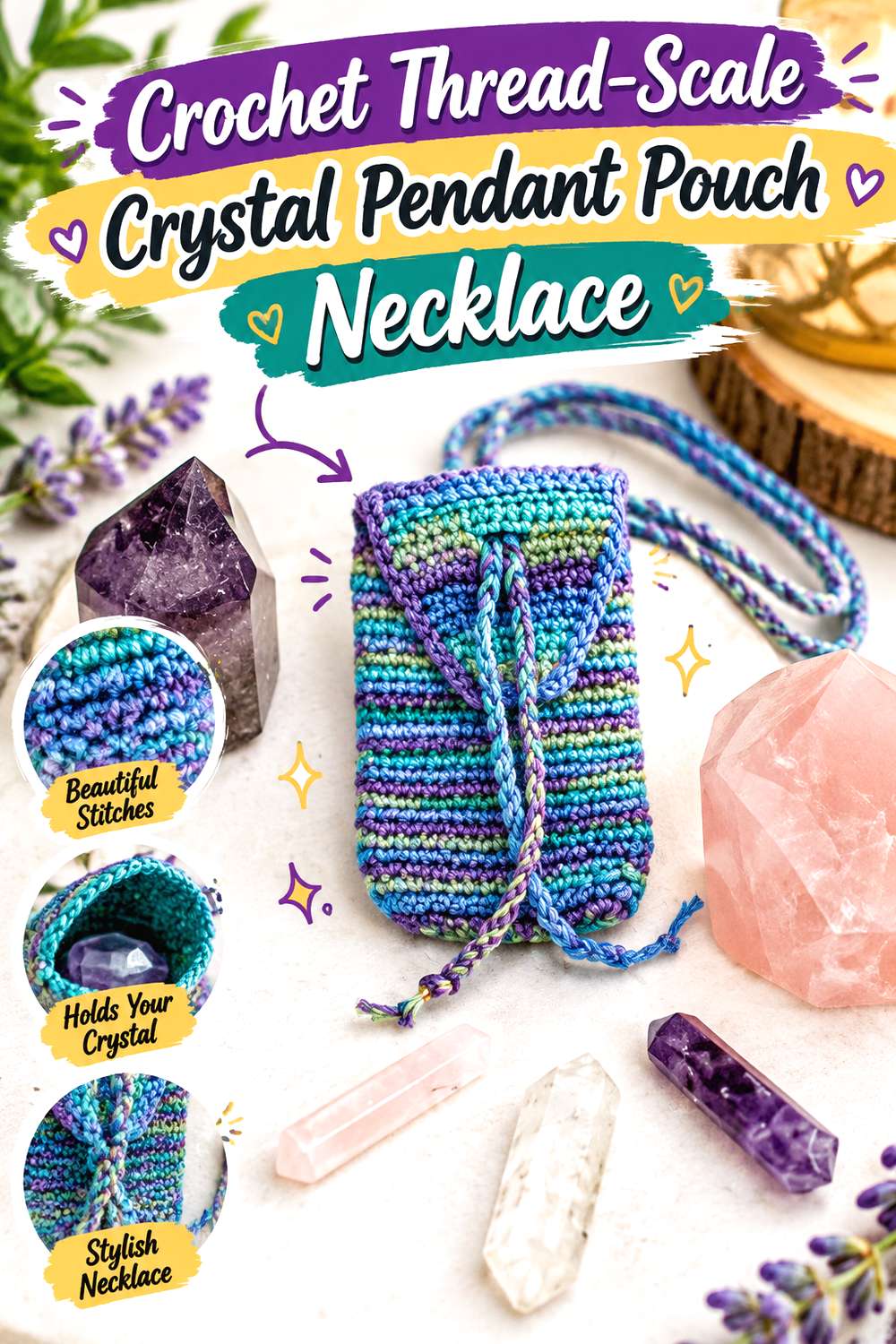
Goddess Crochet’s later medicine-bag design is much more pendant-like in scale. The original tutorial uses fine crochet thread and includes a small loop on the back so the bag can be put on a chain or cord; the creator explicitly notes that crystals are among the small items the pouch can carry.
That makes this version useful for someone who wants a covered holder without the visual bulk of a thicker yarn pouch. Instead of building the necklace cord directly into the bag, the rear loop also creates a clear transition between textile pouch and separate necklace material. That flexibility is practical, but the loop still needs to be evaluated under the actual weight of the chosen stone.
Fine Thread Creates a More Jewelry-Like Scale
At this size, replacing fine thread with a substantially thicker yarn can change the character of the project quickly. The pouch may become larger, stiffer, or simply more bag-like than pendant-like. If you want a different fiber, judge the finished dimensions and fabric rather than assuming the source proportions will carry over.
The Separate Cord Gives Styling Options
A back loop means the pouch can visually pair with a cord or chain instead of requiring the neck strap to match the crochet body. That offers useful styling freedom. It also makes the connection point easy to inspect: after adding the crystal, look for concentrated pulling where the loop meets the pouch before deciding the combination is suitable for regular wear.
Avoid Overfilling a Tiny Pendant
Small pouches tempt makers to use whatever stone will just squeeze through the opening. That can leave too little room for the closure and make the bag sit awkwardly. A crystal that enters only with force is not necessarily the right match. Leave enough ease for the pouch to retain its intended shape and close normally.
Original Tutorial and Creator Credit
Creator/Site: Goddess Crochet
8. Crochet Beaded Pointed Flap Crystal Amulet Necklace
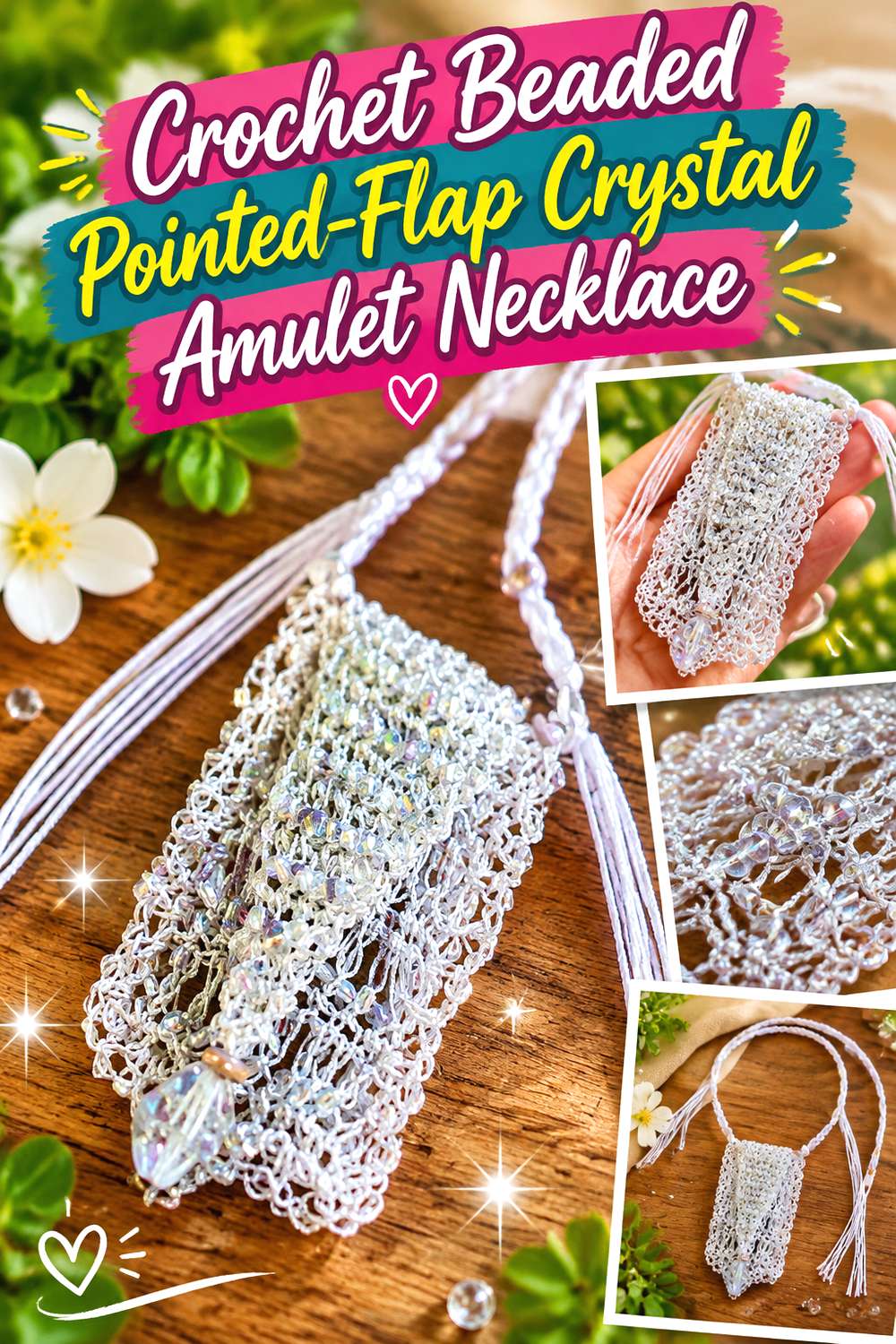
Crochetology’s amulet bag is designed as jewelry from the outset. Fatima’s project combines a tiny bag body, pointed flap, necklace strap, beads, and fringe, producing a decorative pendant in which the crochet and embellishments are as noticeable as anything carried inside.
Using it for a crystal is an adaptation rather than a source-specific claim about its contents. It works best when you want a covered amulet-style necklace, not an exposed gemstone cage. The pointed silhouette and beadwork create a more elaborate finish than the restrained thread pouches elsewhere in this list, but they also introduce extra weight, movement, snagging potential, and mixed-material care considerations.
Let the Embellishment Carry the Visual Interest
Because the contents are mostly concealed, you can treat bead placement, thread contrast, and fringe as the jewelry design. That makes this holder a useful option for an understated stone. Before adding extra beads beyond the tutorial, though, remember that embellishment adds mass to an already small pendant and can change how the necklace settles.
Preserve the Pointed Flap Shape
A very thick crystal can push the pouch front outward and leave too little room for the pointed cover to fall naturally. Test the silhouette with the stone inserted. If the flap is constantly held away from the opening, a flatter crystal—or a different holder style—may produce a cleaner result.
Fringe Needs a Clothing Check
Loose fringe and projecting beads can catch on open-knit sweaters, zippers, textured jackets, or other jewelry. If the necklace will be worn frequently, try the empty finished piece against the clothing styles you commonly use before deciding on additional fringe length or beadwork. Cosmetic modifications should not interfere with the pouch’s structural seams.
Original Tutorial and Creator Credit
Creator/Site: Crochetology
9. Crochet Spiral Texture Rock And Crystal Pouch Necklace
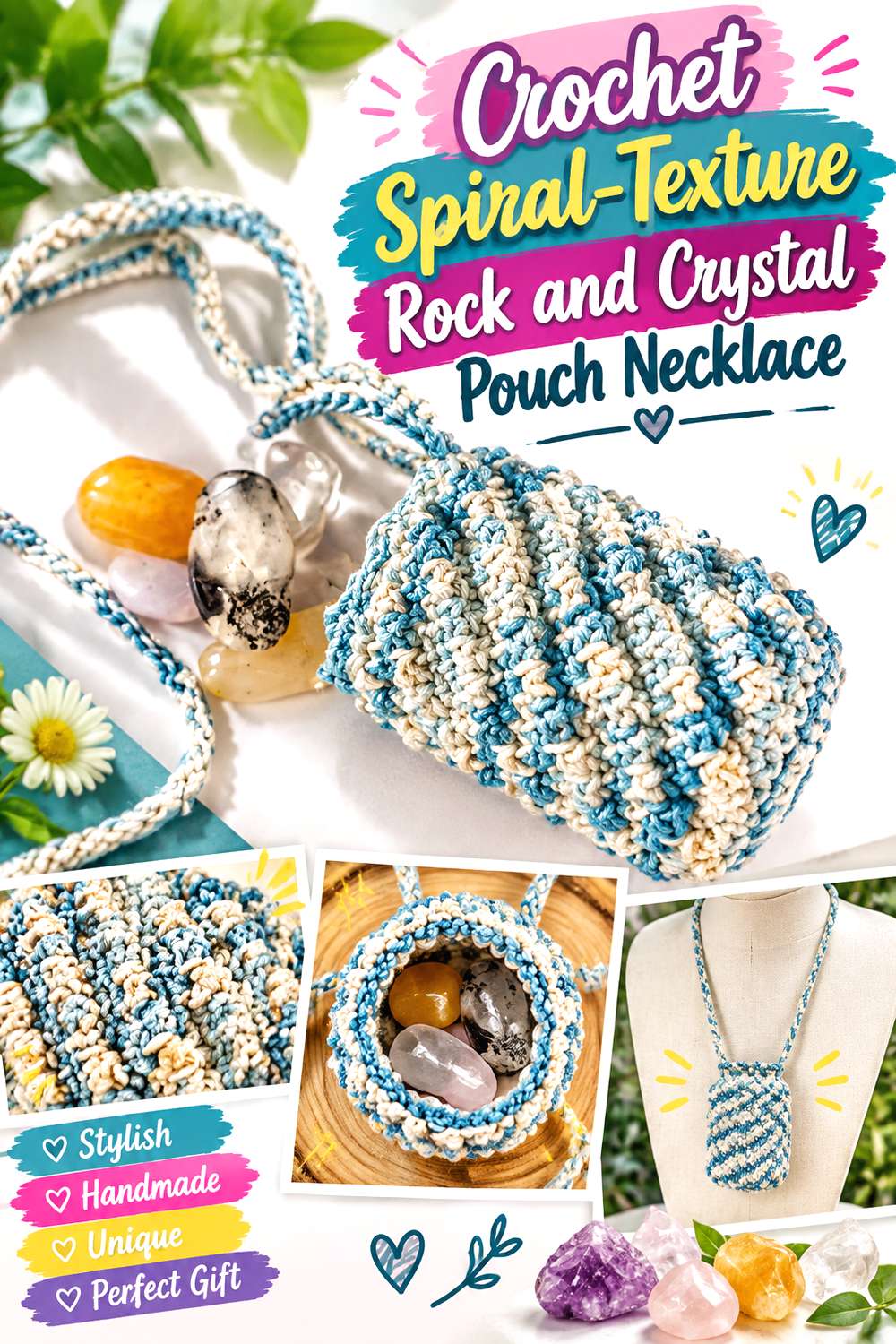
Shala Kerrigan’s earlier Don’t Eat the Paste pendant pouch was made for rocks and features a pronounced spiraled surface texture. The source combines that tactile pouch body with a necklace-style carrying arrangement, making it a particularly close fit for readers who want to carry a stone without exposing it through large mesh openings.
The spiral texture gives this idea a distinct identity without depending on fringe, colorwork, or a flap. For crystal use, the pouch is most convincing when one compact stone settles into the body instead of several small pieces shifting around. A holder that appears roomy while empty can still distort once a dense object presses against the textured fabric.
Texture Adds Depth Without Turning Into Lace
Raised or directional texture can make a small pouch visually interesting while leaving the crystal mostly concealed. If you substitute much heavier yarn, however, the same surface treatment may become disproportionately bulky. Compare the texture to the total pendant size rather than choosing yarn solely for softness or color.
Check the Top While the Necklace Is Suspended
The opening may behave differently when gravity is pulling the stone toward the bottom. Fill the completed holder over a safe surface, lift it by the necklace, and inspect the upper edge. If the top widens or changes orientation in a concerning way, consult the original construction and reconsider the stone rather than assuming dense sides automatically make the pouch secure.
One Fitted Stone Can Be Easier to Manage
Several loose chips can move independently and place pressure on different parts of the pouch. A single stone whose proportions suit the body is easier to evaluate for both comfort and containment. If carrying a collection of small pieces is the goal, a more fully closing drawstring pouch may be the more logical direction.
Original Tutorial and Creator Credit
Creator/Site: Shala Kerrigan / Don’t Eat the Paste
10. Crochet Openwork Band Crystal Pendant Pouch Necklace
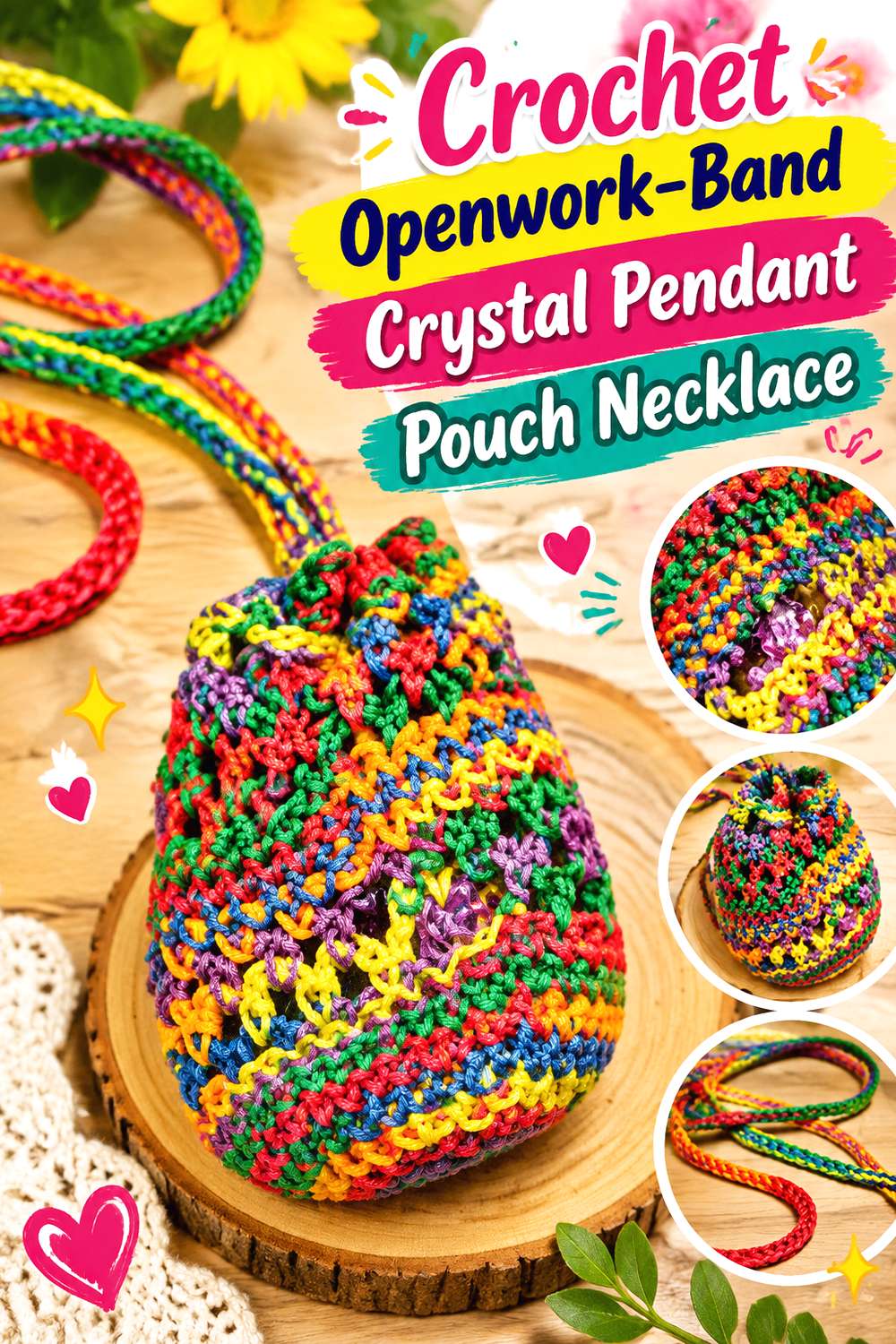
A second Don’t Eat the Paste pendant pouch uses a different balance of dense fabric and openwork. The original project is explicitly described as a small pouch for holding rocks and crystals and includes a strap long enough for necklace use. Its body incorporates a more open decorative band before returning to denser crochet near the upper portion.
This makes a useful middle point between a completely solid pouch and a gemstone cage. The stone is still largely enclosed, but openwork introduces glimpses and visual lightness. Because the fabric changes density, it is important to evaluate the stone against the more open section rather than judging containment only by the solid base.
Treat the Open Band as the Fit-Limiting Area
The densest part of a holder is not necessarily the part that determines whether a crystal is suitable. Look closely at the largest openings and compare them with the stone’s narrowest edges. If a point can protrude deeply through the lace, choosing a smoother tumble or a denser pouch can be more sensible.
Fine Thread Keeps Openwork Delicate
This project’s jewelry-scale character depends in part on its fine material. Moving to a much thicker yarn can enlarge both the pouch and its holes, potentially changing the relationship between the stone and fabric. If substituting materials, make the decision from the actual finished swatch or pouch rather than yarn-category assumptions alone.
Check the Upper Edge Before Wearing
The original design provides a necklace-length strap, but the opening remains the point through which the contents were inserted. After loading, inspect how that edge sits while the necklace hangs and moves. If it spreads because the pouch is overfilled, a smaller crystal is usually a cleaner solution than forcing the original form.
Original Tutorial and Creator Credit
Creator/Site: Shala Kerrigan / Don’t Eat the Paste
11. Crochet Ombre Tiny Crystal Pouch Necklace
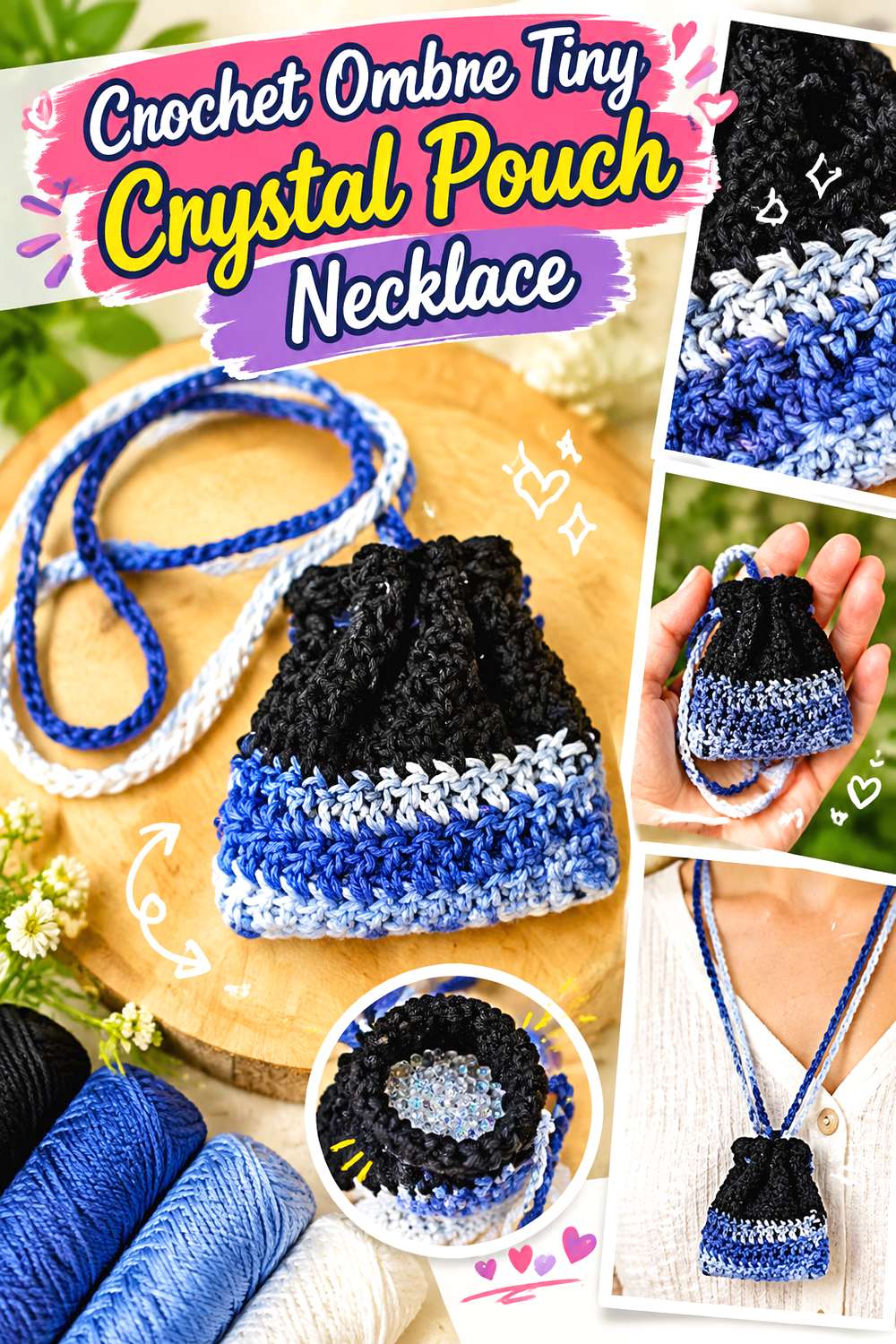
HanieBCreations’ tiny ombre pouch tutorial specifically lists crystals among the small items the necklace can hold. The design is compact enough to function as a miniature wearable bag while the color transition makes the crochet itself more prominent than in a plain one-color holder.
This idea works well when you want an enclosed crystal pouch but still want the yarn treatment to create a noticeable jewelry effect. It is also meaningfully different from tapestry colorwork: rather than a geometric motif, the visual change comes from graduated color. Keep the contents modest so the small pouch retains the proportions shown in the tutorial instead of becoming a stretched container for an oversized stone.
Use Color Placement to Emphasize the Miniature Scale
An ombre treatment can make a tiny project look more intentional without adding beads or fringe. If changing yarn, check where the color transition actually lands on such a small piece; a long-gradient yarn may show little change before the pouch is finished. Solid or deliberately selected shades may provide more control when scale is limited.
Judge Capacity by Shape, Not Just Volume
A crystal can occupy the same approximate volume as another object but still fit poorly because of a long point or thick edge. Insert the intended stone and check whether the upper opening closes without strain. If the fabric is pushed outward sharply, the necklace may look less like the source’s compact pouch and more like an overloaded bag.
Recheck Comfort After Adding the Stone
The tutorial’s pouch can carry several kinds of small items, but crystals may be relatively dense for their size. Let the filled necklace hang and note whether the strap stretches or the pendant swings more than expected. The visual scale of a tiny pouch can otherwise make its loaded weight easy to underestimate.
Original Tutorial and Creator Credit
Creator: HanieBCreations
12. Crochet Compact Treasure Pouch Crystal Necklace
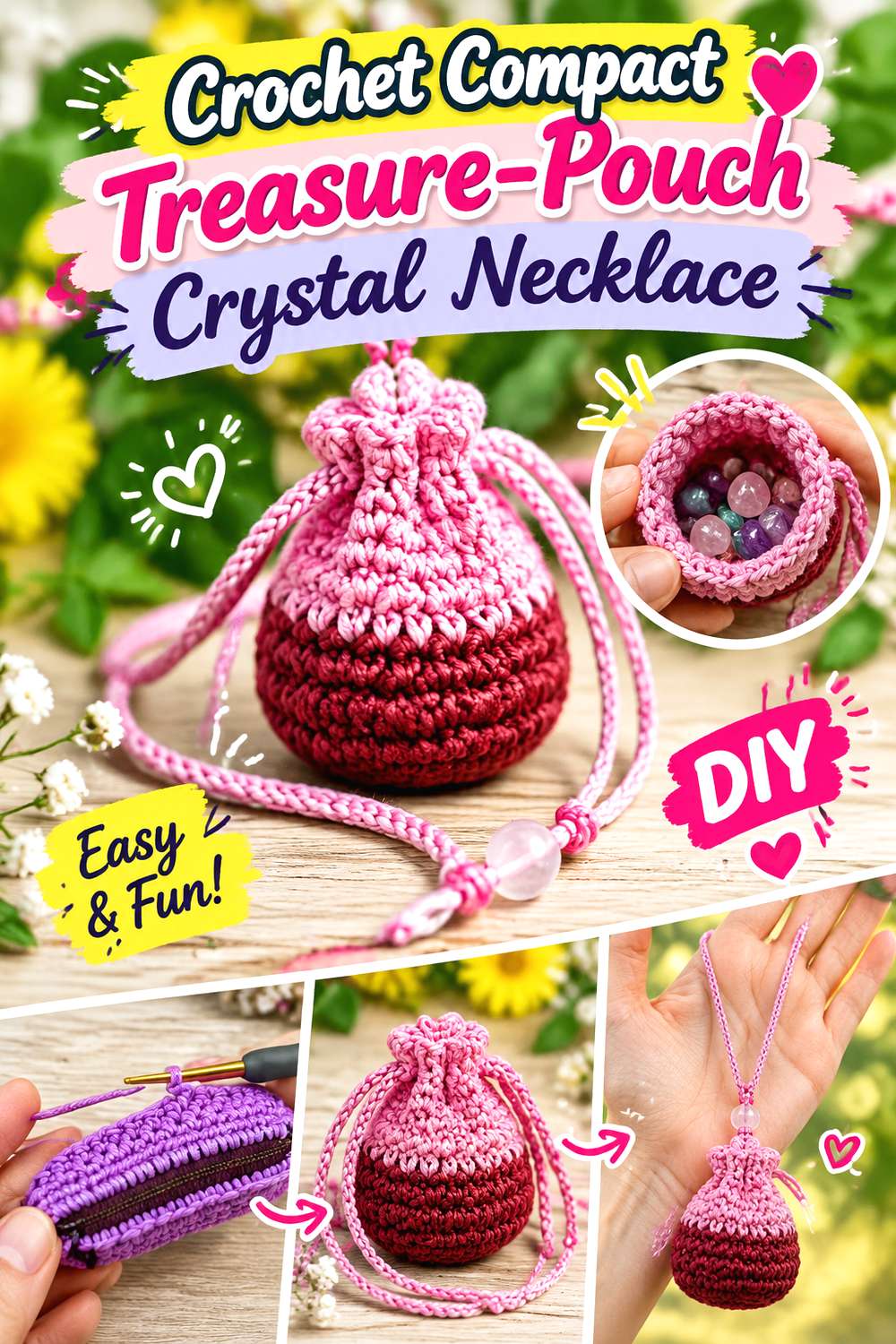
HanieBCreations’ earlier pouch-bag necklace is presented as a wearable place for small valuables and personal items. Unlike the creator’s later crystal-specific ombre version, this source is not limited to gemstones; using it for a crystal is an adaptation of the original necklace-pouch purpose.
That makes it useful as a more general treasure-pouch direction. The concept suits someone who wants the option to use the pendant for a stone one day and another small object another day, provided each item fits the finished opening appropriately. Because the project was not designed around one particular crystal geometry, the adaptation should begin with fit and loaded-weight checks rather than assuming every stone belongs inside.
Keep Versatility From Becoming Overfilling
A multipurpose pouch can tempt you to treat its maximum physical capacity as its ideal necklace capacity. Instead, preserve enough room for the opening and body to sit naturally. If the pouch bulges significantly or the closure changes shape, remove contents rather than asking the crochet to act like a rigid container.
Reassess Every Type of Contents
Coins, small keepsakes, and crystals can place weight in different areas. Whenever you change what the necklace carries, check both the opening and how the pouch hangs. A stone with a narrow edge may need more scrutiny than a similarly sized rounded item even if both fit inside.
Separate Decorative Choices From Structural Ones
Changing color or adding a small surface embellishment is different from altering the attachment points, opening, or strap. Keep structural changes conservative unless you understand how they affect load. For a dense crystal in particular, the original tutorial’s pouch and necklace construction should remain the reference rather than an improvised attachment.
Original Tutorial and Creator Credit
Creator: HanieBCreations
13. Crochet Granny Square Crystal Drawstring Necklace Pouch
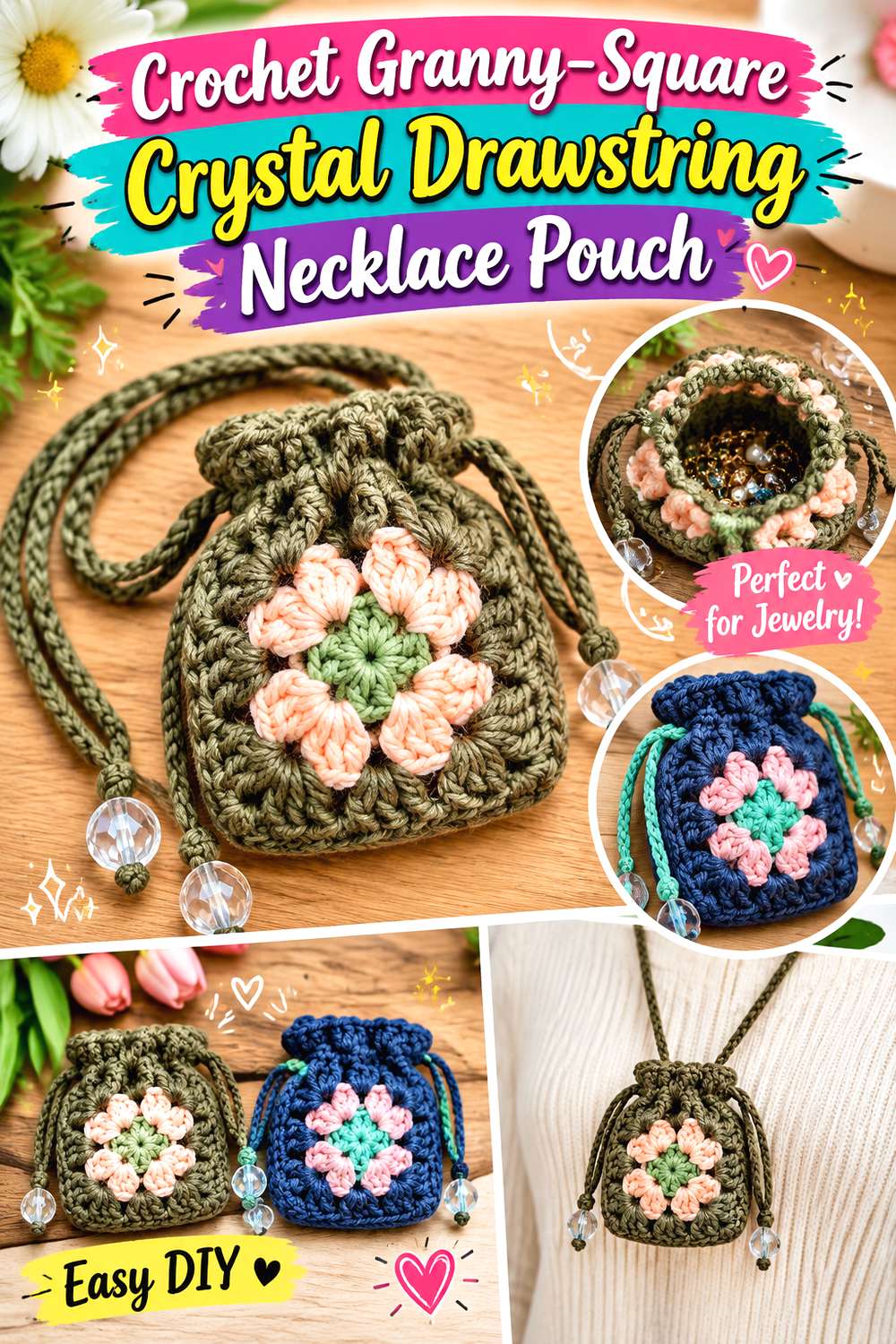
The Cozy Tangerine’s tutorial makes a crystal pouch from a variation on a granny-square concept, using separate front and back elements that are joined into a miniature bag and finished with a long crocheted drawstring. The source is explicitly a crystal-holder tutorial, though using the drawstring as a necklace-length carrying cord should still be evaluated for comfort and load.
The square silhouette sets this project apart from cylindrical and rounded pouches. It also provides more obvious opportunities for color blocking because the front panel reads as a small motif. The main functional question is the openness of granny-style fabric: the stone has to suit the spaces in the panels as well as the finished opening.
Panel Joins Become Structural Edges
When a pouch is assembled from separate pieces, the joining line around the sides and bottom does real work. Examine the finished edge with the crystal inserted, especially if the stone has corners or projecting points. A decorative-looking border still needs to maintain consistent containment as the pendant moves.
Match the Granny Spaces to the Crystal
A broad tumble may remain comfortably behind the panel openings, while a narrow point or collection of small chips may interact very differently with them. Stretch the finished fabric only gently and inspect the stone from both faces. If the narrowest areas can travel deeply into an opening, a denser pouch is the safer design direction.
Treat Necklace Use as a Loaded Adaptation
The tutorial demonstrates a long chain drawstring as part of the pouch construction. Before wearing it around the neck with a dense stone, assess length, stretch, and how the load is transferred through the drawstring area. A cord that looks decorative on an empty pouch can behave differently once the crystal is added.
Original Tutorial and Creator Credit
Creator: The Cozy Tangerine
14. Crochet Minimal Gemstone Cage Necklace
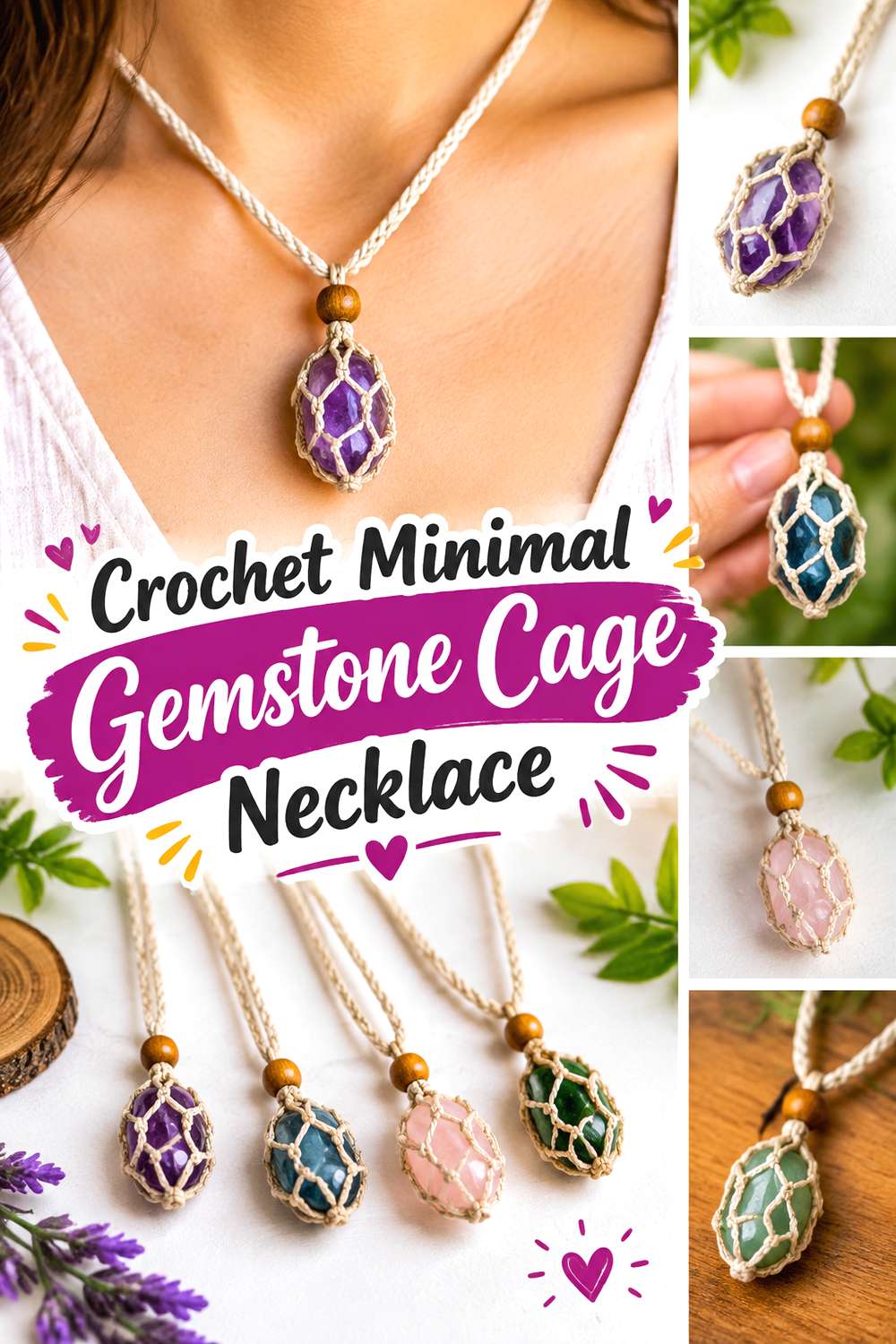
Nora’s creative corner offers a direct gemstone-holder necklace tutorial with a notably pared-back jewelry concept. The video is specifically presented as a crochet tutorial for a gemstone holder necklace, keeping this project firmly on the open-display side of the list.
This style is useful when you want the finished piece to read primarily as a stone pendant rather than a miniature bag. Compared with ornate amulet pouches, there is less textile surface competing for attention. That simplicity makes stone selection important: irregular crystals with narrow projections require closer checking than broad, rounded pieces because the exposed holder provides fewer layers of crochet around them.
Choose the Stone Before Judging the Cage
A minimal holder does not have much spare fabric to compensate for a poor match. Complete the tutorial around the type of gemstone it is intended to hold and inspect the result from every side. If a narrow end seems capable of working free, choose a more suitable stone or a more enclosing project rather than relying on appearance.
Keep Material Changes Proportional
Increasing yarn thickness can turn a delicate cage into a visually heavy frame and can also enlarge spaces between structural lines. If you want a bolder necklace, judge the actual relationship between yarn and gemstone rather than assuming a thicker substitute simply makes the same project more substantial.
Original Tutorial and Creator Credit
Creator: Nora’s creative corner
15. Crochet Diamond Mesh Gem Keeper Necklace
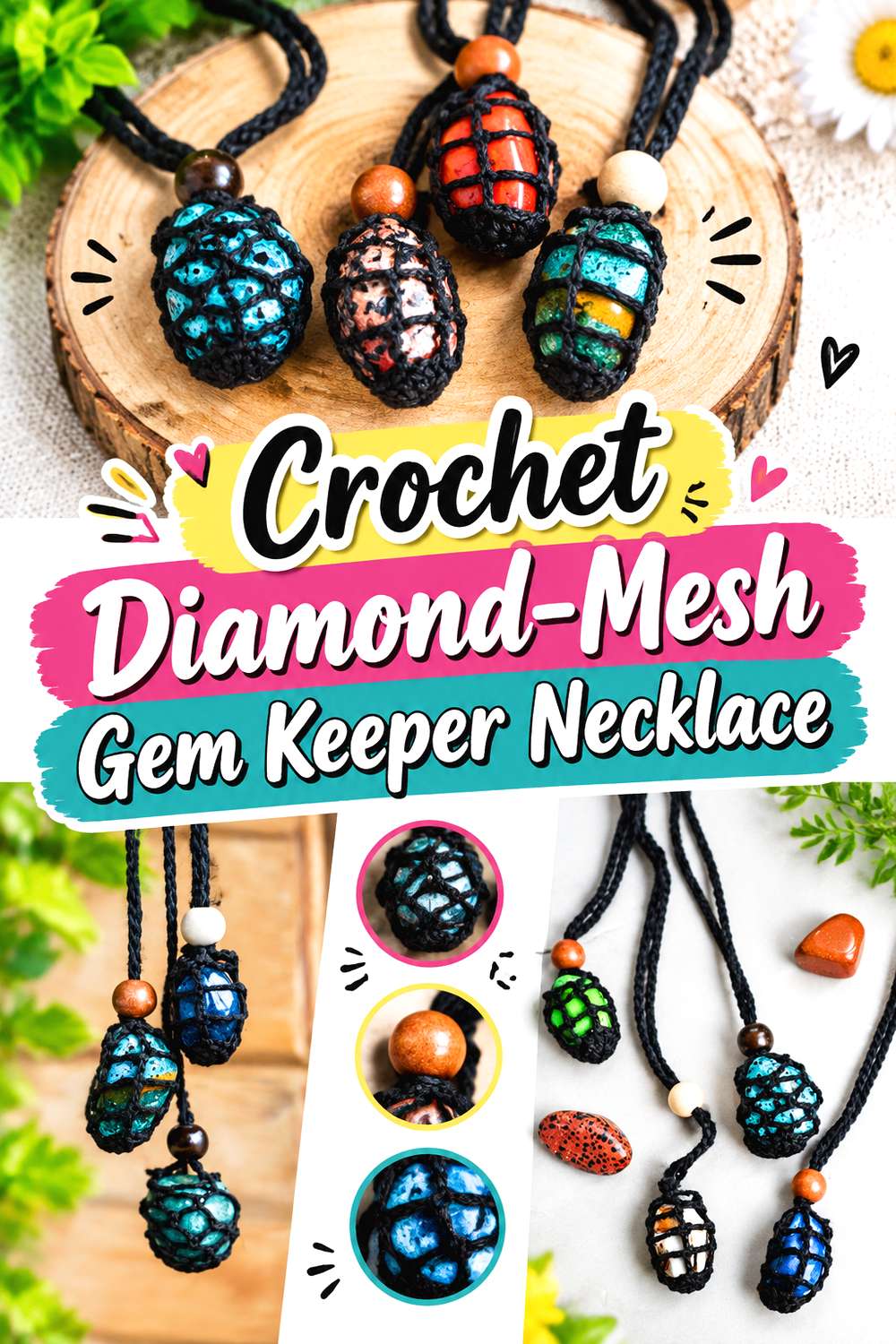
Whistle and Ivy’s gem keeper design is notable because the source discusses three variations and specifically identifies a diamond-mesh option as accommodating a wider stone. The project is intended for polished rocks, gems, or crystals and uses crochet thread so the stone remains a major visual feature.
For this list, the diamond-mesh variation deserves its own place because it offers a broader, more patterned cage than the extremely minimal open holder. The mesh itself becomes visible jewelry structure rather than disappearing completely behind the stone. That added openness should be matched to a suitably broad crystal; a wider cage is not automatically a better cage for a narrow or strongly tapered specimen.
Width and Security Are Separate Questions
A fabric that accommodates a wider stone can solve one fit problem while creating another for narrow tips. Compare the crystal with the largest openings of the selected variation. If the stone has a broad middle and sharply tapered ends, the mesh may still need more careful checking than a relatively uniform oval tumble.
Fine Thread Keeps the Geometry Visible
Whistle and Ivy discusses choosing thread in part to showcase the stone. A much thicker yarn would make the diamond structure more dominant and could alter both opening scale and overall pendant size. If your goal is a stone-forward necklace, preserve that relationship rather than treating yarn substitution as purely a color choice.
Original Tutorial and Creator Credit
Creator/Site: Whistle and Ivy
16. Crochet Cord Hung Mini Gemstone Pouch Necklace
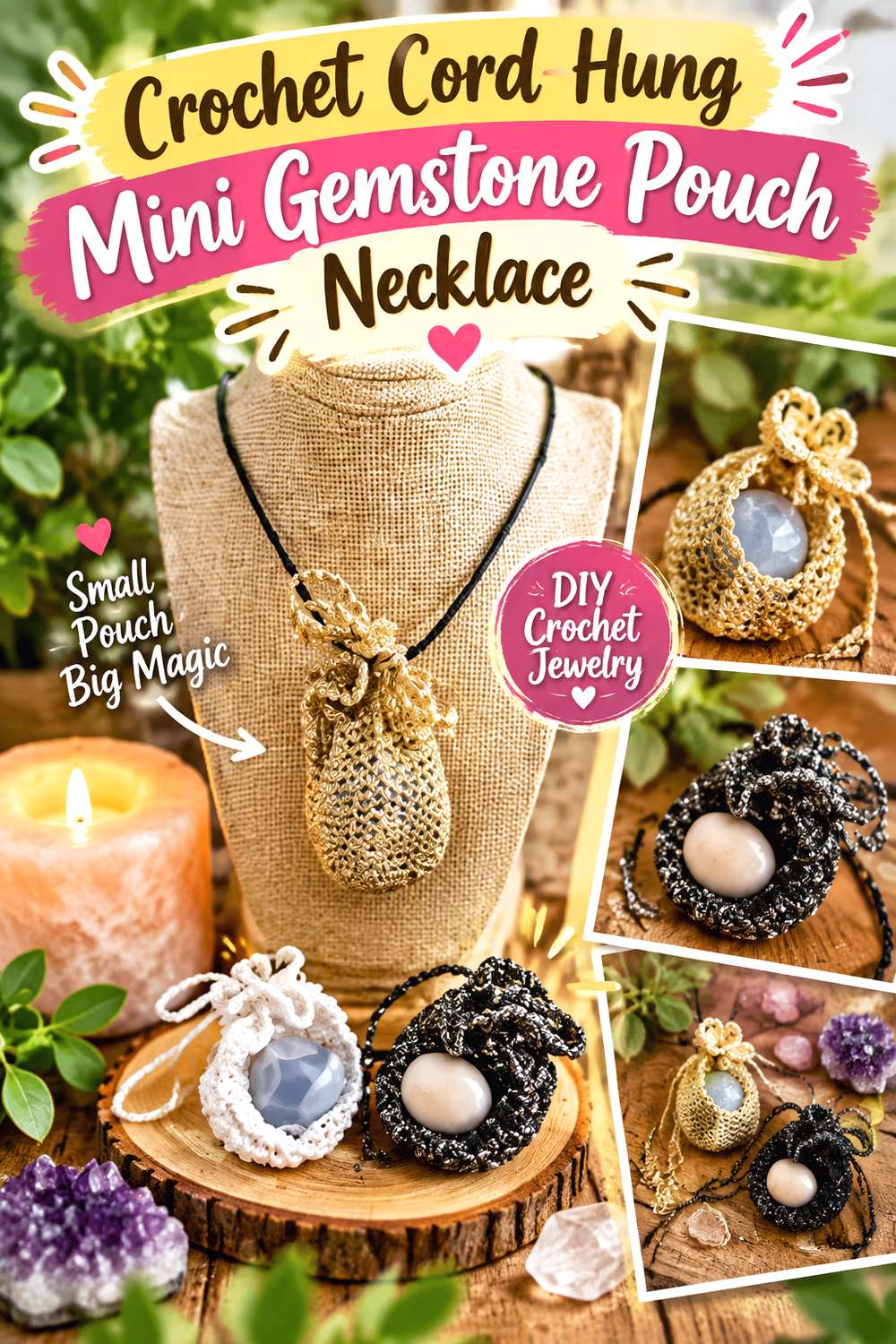
Crochet Designs Sharon – 4Oneness teaches a miniature pouch specifically presented for use as a gemstone necklace or keychain. The video shows the pouch as a separate little container that can be placed on a leather cord or another necklace cord rather than requiring the entire neck strap to be crocheted as one continuous structure.
That separation is this idea’s biggest practical distinction. It lets the crocheted pouch stay small and textile-focused while the necklace cord can be chosen independently. For crystal use, make sure the cord and its connection to the pouch suit the final loaded weight, and avoid enlarging the pouch casually if the goal is to retain its compact jewelry proportions.
Separate Cord and Pouch Materials Deliberately
A textile pouch on a leather or other non-crocheted cord creates contrast in texture and potentially in care needs. Choose the cord for more than color: thickness, flexibility, and the way it passes through or connects to the pouch all affect how the pendant hangs. Mixed materials may also need to be cleaned differently.
A Small Pouch Benefits From a Single Clear Purpose
Although the source also presents the project as a keychain option, a gemstone necklace adaptation should be assessed specifically in its wearable configuration. Insert the intended stone, attach the actual cord, and evaluate the complete assembly. A configuration that works when hanging from a keyring is not automatically equally comfortable around the neck.
Keep the Stone From Dominating the Pouch Shape
A compact rectangular or pouch-like form can lose its intended silhouette when a very thick crystal is forced inside. The stone should sit without causing extreme bulging at the seams or preventing the opening from functioning. If the necklace looks stretched before it is even worn, choose a smaller or flatter crystal.
Original Tutorial and Creator Credit
Creator: Crochet Designs Sharon – 4Oneness
17. Crochet Bead Closure Crystal Keeper Necklace
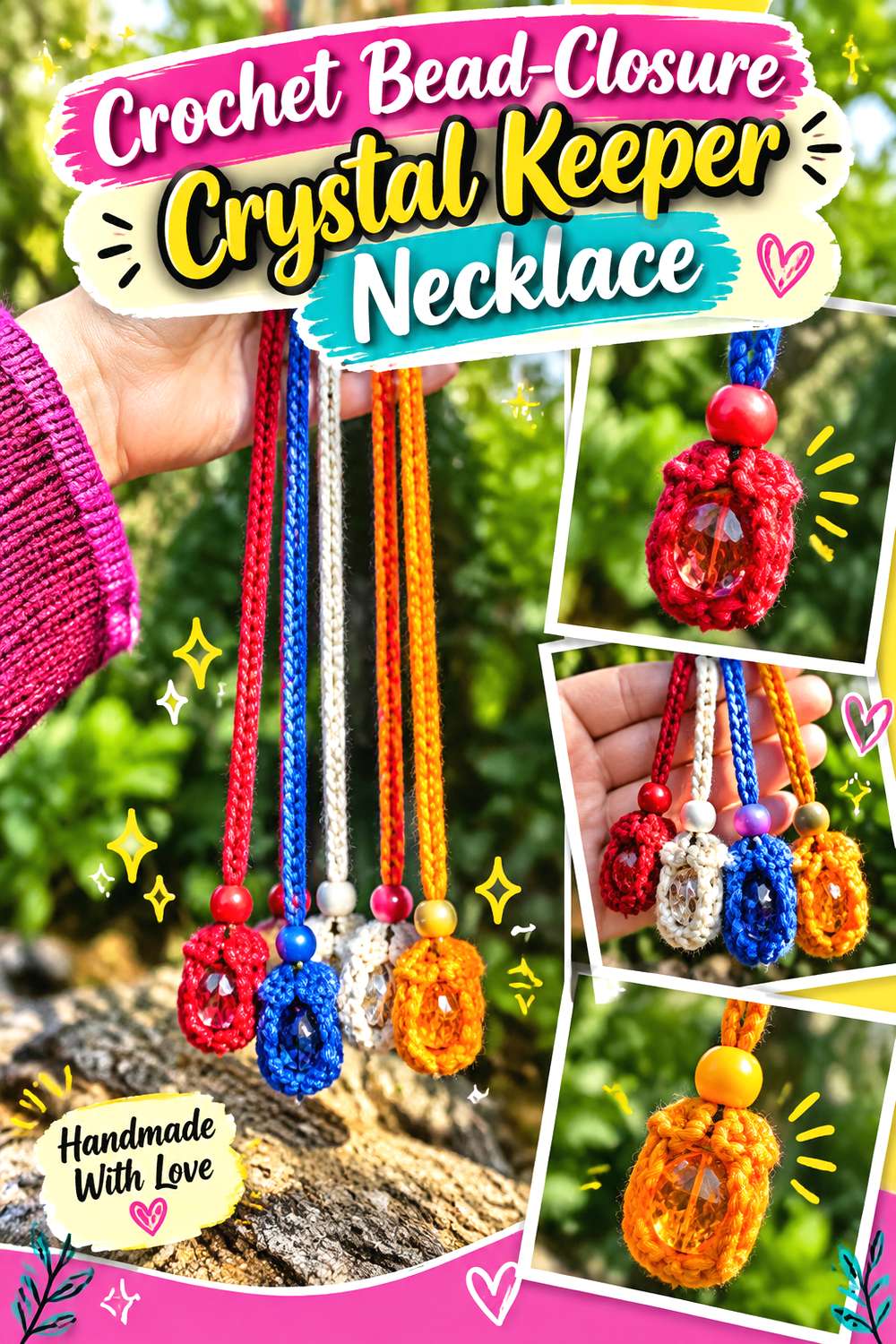
Ponderosa pieces 🙂 publishes an interactive crochet ePattern specifically titled “Crystal Keeper Necklace.” The source lists cotton yarn and a bead that fits the necklace chain among the materials, so the bead-and-cord relationship is part of the original design rather than an added editorial embellishment.
This project is useful for readers who like the crystal-keeper concept but prefer following an interactive pattern format with progress tracking and stitch support. The exact construction should be taken from the original pattern rather than inferred here. For planning purposes, focus on whether the bead moves and holds as intended with your chosen yarn and whether the finished keeper suits the actual crystal you want to wear.
Test the Bead With the Finished Crochet, Not in Isolation
A bead may fit the chain physically but still slide differently once the necklace is loaded and handled. Use the material relationship specified by the source as your starting point, then check the completed holder over a safe surface. If the bead shifts too freely, do not rely on the stone’s weight to keep everything closed.
Let the Original Pattern Control Construction Details
Ribblr presents this design as an interactive ePattern with row-by-row guidance and stitch tutorials. That makes the source the appropriate place for exact counts, sequences, and assembly. When adapting color or crystal choice, preserve that separation: decorative planning can be flexible, but construction details should come directly from the designer.
Original Tutorial and Creator Credit
Creator/Site: Ponderosa pieces 🙂
18. Crochet Beaded Drawstring Crystal Medicine Pouch Necklace
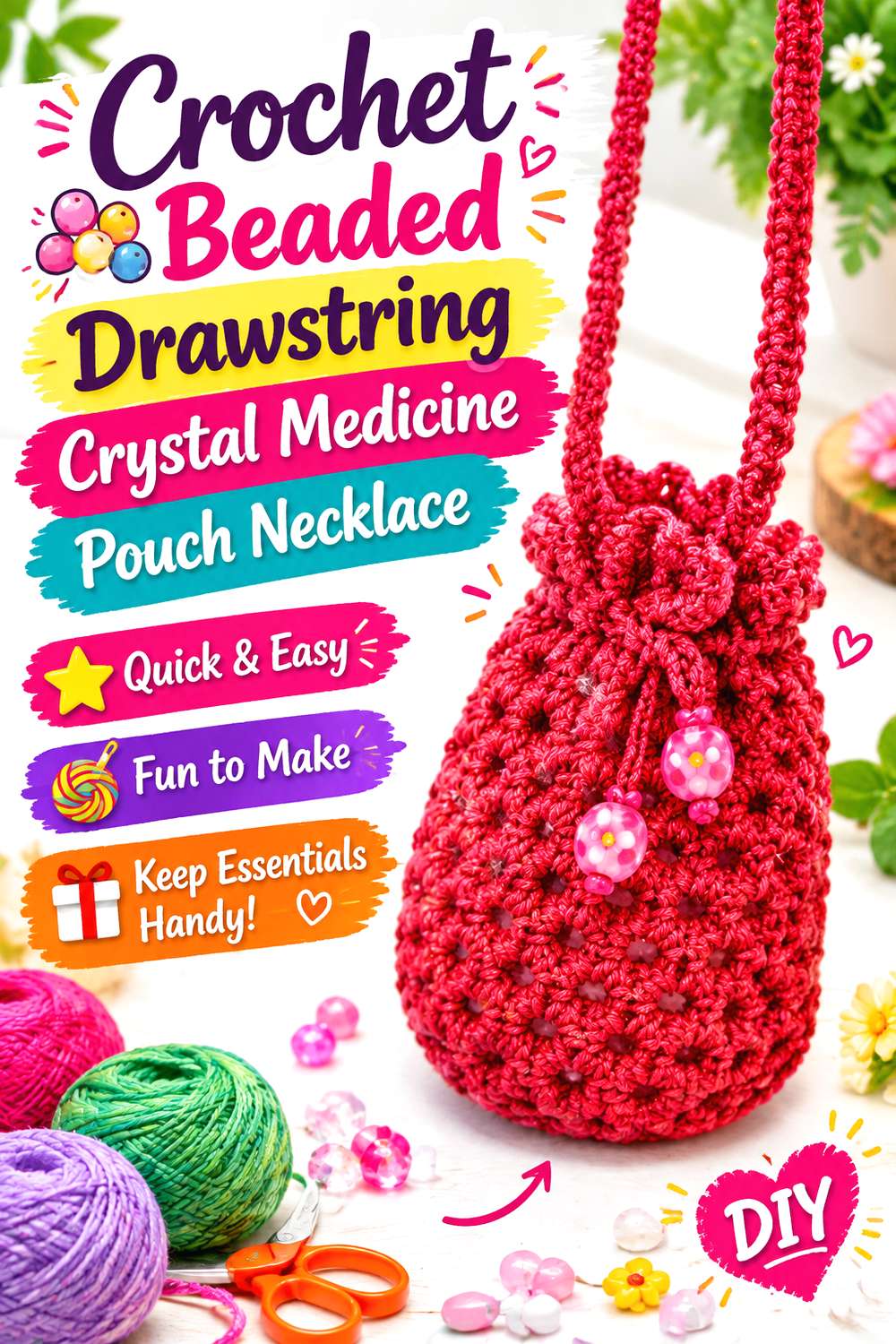
CraftBits’ crochet medicine pouch is designed to hang around the neck and combines a pouch body, necklace strap, drawstring, and glass beads; the page also suggests optional beaded decoration along the lower edge. Using it specifically as a crystal holder is an adaptation, so the stone should be chosen only after the finished pouch and closure are evaluated.
This idea earns a separate place because the necklace structure is integrated with a visibly beaded drawstring rather than relying on a single sliding bead, flap, or open cage. It can produce a more ornamented covered pendant while still allowing access through the gathered top. The extra components make loaded weight and snagging more relevant than with a minimal thread pouch.
Let the Drawstring Close Without Fighting the Crystal
A thick stone positioned too high in the pouch can prevent the drawstring from gathering normally. Check the top with the crystal seated at the bottom rather than pushing the contents upward to maximize capacity. The closure should still behave as intended when the necklace is lifted.
Beads Add Both Decoration and Mass
The source places beads on the drawstring and offers additional bottom embellishment as an option. If you add more decoration, assess the complete pendant rather than the empty pouch. A small amount of extra bead weight can change the swing and feel of a necklace that already contains a dense stone.
Follow the Source’s Material-Specific Finishing Guidance
CraftBits uses nylon yarn and includes a note about its tendency to unravel, along with finishing advice specific to that material. If you use the source materials, follow those instructions directly. If substituting another fiber, do not automatically transfer a nylon-specific finishing method to yarn for which it may be inappropriate.
Original Tutorial and Creator Credit
Creator/Site: CraftBits (Shellie Wilson)
Comparing the 18 Crochet Crystal Holder Necklace Styles
| Holder direction | Crystal visibility | Best reason to choose it | Main checkpoint |
|---|---|---|---|
| Minimal cages and open nets | High | Keep one featured stone visually dominant | Narrow tips versus openings |
| Gathered mesh keepers | High to moderate | Swap compatible stones without a fully closed pouch | Bead position and opening |
| Rounded or drawstring pouches | Moderate to low | Add more crochet around the crystal | Closure under loaded weight |
| Tapestry and felted amulets | Low | Make textile design the main visual feature | Finished dimensions and bulk |
| Beaded or flap-style amulets | Low | Create decorative jewelry beyond the stone itself | Snagging, added weight, flap fit |
| Thread-scale pendants | Low to moderate | Keep a covered pouch relatively jewelry-like | Opening size and attachment point |
| Granny-panel holders | Moderate | Use a square motif and stronger color blocking | Panel holes and joined edges |
| Separate-cord mini pouches | Low | Mix a crochet pendant with a different cord material | Cord connection and mixed-material care |
No single style is automatically the right choice for every crystal. A broad polished tumble can work naturally with open mesh, while a narrow raw point may be easier to contain in a denser pouch. If the stone is meant to remain visible, begin with fit and mesh scale. If the crochet itself should be the main feature, tapestry, felted, beaded, or flap-style amulets provide much more surface for textile design.
Conclusion
These 18 crochet crystal holder necklace ideas move from nearly invisible gemstone cages to fully covered tapestry, felted, beaded, and drawstring amulets. The most useful choice depends less on color than on the stone itself: width, taper, weight, surface shape, and how often you plan to remove it all affect the best construction.
Open designs keep the crystal visually dominant, while covered pouches make room for texture, colorwork, motif placement, beads, and more elaborate closures. Whatever style you choose, assess the completed holder with the actual stone before regular wear. Use the linked original tutorials for exact construction details, especially before changing scale, yarn, opening size, closure, or necklace-cord construction.
Frequently Asked Questions
Can any crystal shape go in a crochet holder necklace?
No single holder shape suits every crystal. Rounded tumblestones are generally simpler to evaluate in open mesh because they have fewer narrow projections. Raw points, shards, very flat stones, or pieces with strongly tapered ends can push farther through crochet openings. Compare the crystal’s narrowest dimension with the holder, not only its widest point. If an open cage leaves you uncertain, a more enclosed pouch may be the more appropriate design.
Is crochet thread better than thicker yarn for a crystal necklace?
It depends on the intended scale. Fine thread can keep a small holder visually closer to conventional jewelry and can reveal more of the stone in open designs. Thicker yarn creates a more substantial textile look but may also enlarge the holder, openings, and cord. When a tutorial specifies thread or a particular yarn weight, treat that as part of the design information and verify how any substitution changes the finished fabric before committing to the necklace.
How do I know whether the crystal is secure enough?
Finish the holder according to the original tutorial, insert the intended stone, and close it completely. Over a soft or protected surface, observe the necklace while it hangs naturally and gently changes orientation. Look especially at the stone’s narrow tips, the largest mesh openings, and the top closure. If the stone can move far into an opening or the closure gaps noticeably, reconsider the pairing rather than relying on a decorative bead or tight-looking center section.
Which style is best if I want to change crystals often?
Adjustable cages and sliding-bead mesh keepers are the most obvious directions because their openings are intentionally accessible. Even then, interchangeability is not unlimited. A second crystal may have a different taper or narrow point despite appearing similar in overall size. Recheck the fit each time you change the contents. If you rarely plan to remove the stone, a more enclosed amulet pouch may provide the appearance and coverage you prefer.
Can I make the necklace cord longer or shorter?
Often you can change wearable length, but do not treat cord length as independent from construction. Some tutorials integrate the necklace into the holder, while others use a separate cord or rear attachment loop. A longer crochet cord may also stretch differently once the crystal is added. Follow the creator’s attachment method first, then evaluate the loaded necklace for comfort, proportion, and distortion before deciding whether an altered length works for your version.
How should I wash a crochet crystal holder necklace?
There is no universal washing method for all 18 styles. Care depends on the yarn or thread fiber as well as beads, buttons, leather or other cords, felted wool, and additional embellishments. Remove the crystal when the construction allows it, follow the yarn label and creator guidance, and account for every mixed material in the necklace. Felted projects in particular should not be treated as if they were ordinary unfelted cotton crochet.
Are crochet crystal holder necklaces suitable for children?
Long cords, beads, closures, and small stones introduce hazards that require caution around children, and one of the sourced crystal-keeper tutorials specifically includes a supervision warning. Do not treat a necklace-style crystal holder as a toy. Consider the child’s age, the cord, detachable parts, and the contents, and follow any safety guidance supplied by the original designer rather than assuming that making the project smaller makes it appropriate.