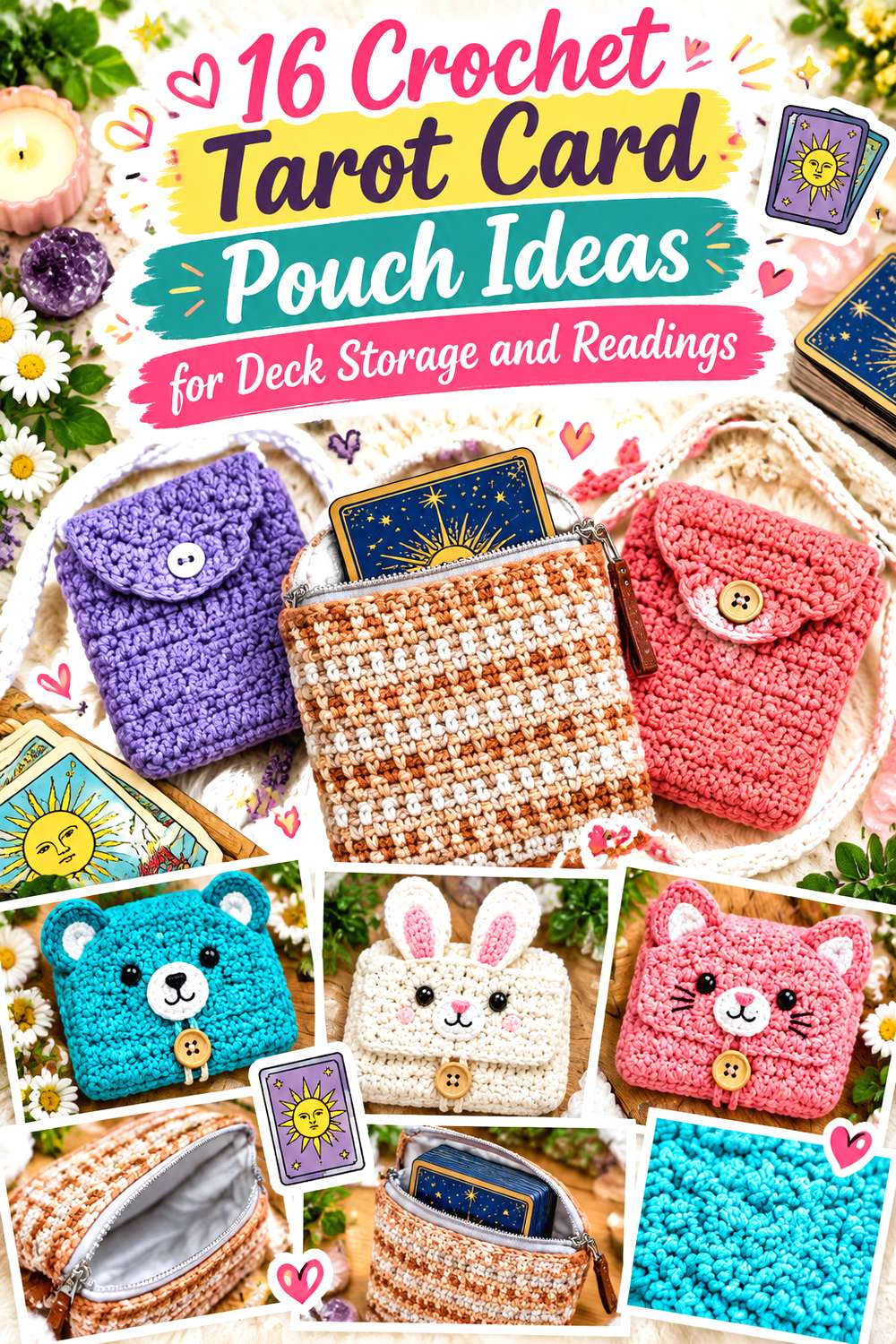
16 Crochet Tarot Card Pouch Ideas for Deck Storage and Readings
A crochet tarot card pouch can be a close-fitting sleeve, a gathered drawstring bag, a fold-over wallet, or an entire reading surface that wraps around the deck when you are finished. Those differences matter because tarot and oracle decks vary in width, height, thickness, packaging, and how often they travel.
This collection focuses on genuinely different constructions rather than color changes alone. Some of the original tutorials were designed specifically for tarot cards, while others teach playing-card, wallet, or zipper-pouch constructions that can inspire a tarot-sized adaptation. Each idea highlights the feature worth borrowing, the sizing or finishing point that deserves extra attention, and a direct original tutorial for the creator’s exact construction details.
Quick List
- Crochet Crescent Reading-Mat Tarot Pouch
- Crochet Sedge-Stitch Roll-Up Tarot Pouch
- Crochet Tapered Tie-Wrap Tarot Mat Pouch
- Crochet Minimal Flap Tarot Card Pouch
- Crochet Gathered Drawstring Tarot Deck Bag
- Crochet Soft Wrap Tarot Card Pouch
- Crochet Classic-Format Tarot Pouch
- Crochet Granny-Motif Drawstring Tarot Pouch
- Crochet Suzette-Stitch Button Tarot Pouch
- Crochet Scalloped Envelope Tarot Pouch
- Crochet Basketweave Tarot Deck Wallet
- Crochet Seamless Button-Flap Tarot Pouch
- Crochet Magnetic-Snap Foldover Tarot Pouch
- Crochet Animal-Face Tarot Card Case
- Crochet Lined Zipper Tarot Deck Pouch
- Crochet Side-Opening Tarot Card Sleeve
Start With the Deck, Not a “Standard” Size
Measure the exact deck you intend to store before choosing a construction. Card height and width are only the beginning; the thickness of the complete stack affects side seams, flap reach, drawstring placement, and how comfortably a deck slides through the opening. Decide whether the publisher’s box, guidebook, or another small accessory will live in the pouch too.
When adapting a tutorial made for playing cards, credit cards, or another object, treat its construction as inspiration rather than using its original stitch counts unchanged. A useful general checkpoint is to compare the partly made fabric with the actual deck whenever the construction allows. If a stitch pattern uses a repeat, preserve that repeat while changing the overall dimensions. Leave practical ease for removing the cards without making the case so loose that the deck shifts excessively.
Keep Card Edges in Mind When Choosing Fabric
A tarot pouch does not need to be rigid, but the character of the crochet fabric changes how the deck handles. Dense, comparatively smooth fabric can create an uncomplicated path for card corners. Raised texture gives a pouch more visual and tactile interest but can add considerable bulk, especially where a flap overlaps the body.
Open motif work deserves a different check: make sure loose strands, joining points, and large spaces cannot catch card corners during insertion. A fabric lining can create a smoother interior, but it also reduces capacity, so allow for it before finalizing a close fit. Fuzzy yarn can feel luxurious around a deck yet create more friction than a smooth yarn. These are material trade-offs rather than fixed rules; follow the original designer’s material guidance where it is important to the construction.
Choose a Closure for How the Deck Will Be Used
A pouch that stays on a reading table has different needs from one routinely carried inside a backpack or tote. Drawstrings provide an adjustable gathered opening, but the cord channel should move freely. Buttons give a clear fastening point, although placement should be checked with the complete deck inside so the flap is neither strained nor loose.
Soft ties keep rigid hardware away from the cards and work naturally with wrap-style cases. Zippers offer a fully enclosed opening and pair especially well with a smooth lining, but they add sewing and need enough clearance around card corners. Magnetic snaps make a streamlined fold-over case, yet the snap remains a hard object. If you use one, make sure its attachment and reverse side are appropriately separated from the card surfaces.
1. Crochet Crescent Reading Mat Tarot Pouch
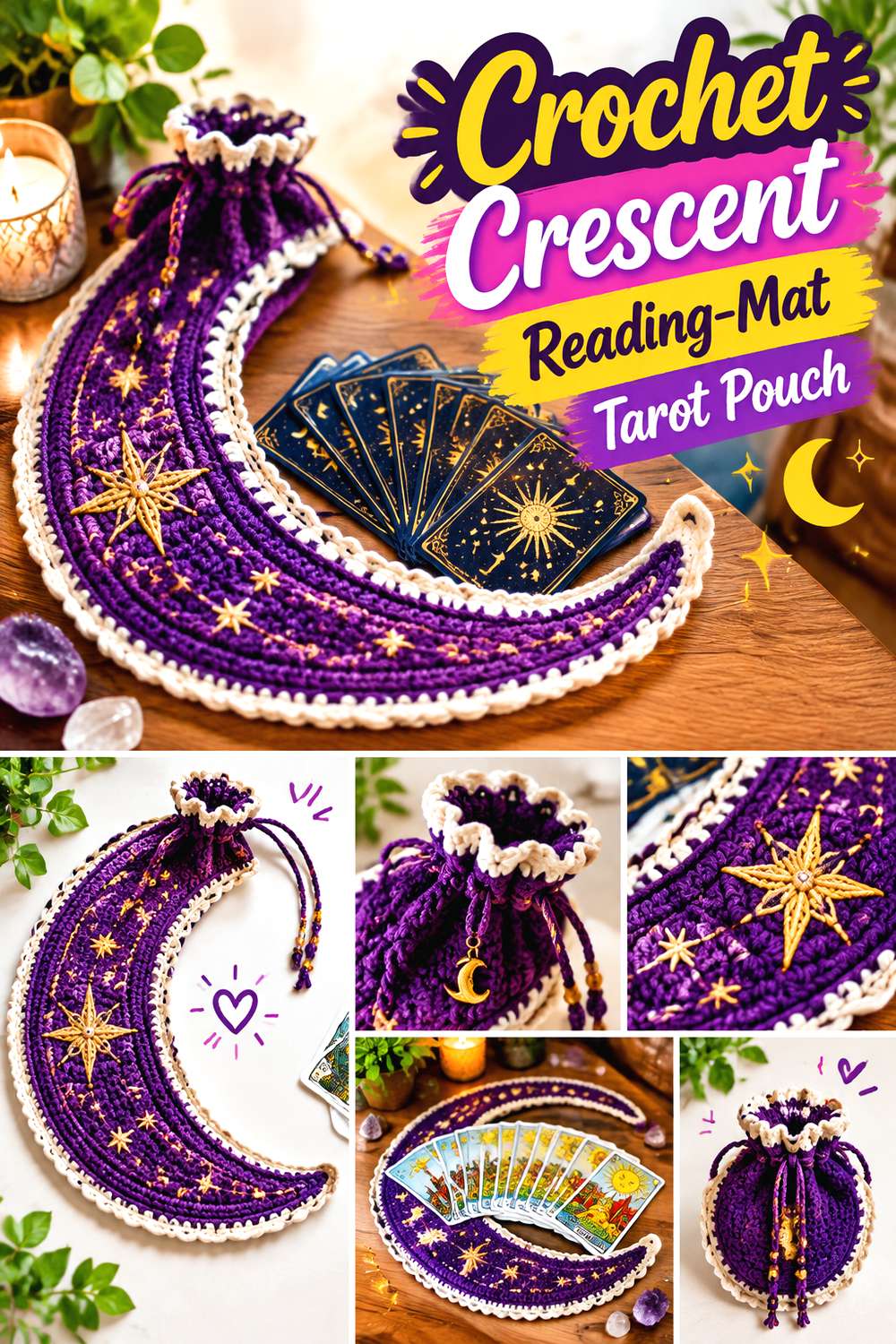
This multifunctional idea combines deck storage with a surface that opens out for a reading. Sabrina Cordon’s Selenic design has a dedicated card pocket, an extended mat section, a tapered end, and crescent-moon colorwork, so the storage piece becomes part of the visual setup instead of disappearing once the deck comes out.
It is particularly appealing when you normally take a deck somewhere and would otherwise pack a separate small cloth. The trade-off is folded volume: a mat inevitably places more crochet around the cards than a slim sleeve. That makes yarn thickness and embellishment choices more consequential.
Size the Pocket Around the Entire Stack
Do not judge pocket capacity with only a few cards. Use the full deck in the form you normally store it and check both the opening and the depth before regarding the fit as settled. If your deck is substantially different from the designer’s example, consult the tutorial before modifying its construction.
Treat the Mat as Part of the Closed Case
A decorative reading surface also becomes several layers of the stored bundle. Before adding heavier borders, tassels, or additional appliqués, fold everything into its closed position. An embellishment that looks balanced on an open mat can become an awkward lump once it is wrapped around the deck.
Keep Colorwork Tidy on Both Faces
The crescent motif makes this pouch visually distinctive, but a tarot case also benefits from a clean card-facing surface. Secure color changes and yarn ends so they do not create loose loops where card corners can snag. If you alter the motif, keep the finished fabric’s density and flexibility in mind as well as the image itself.
Original Tutorial and Creator Credit
Creator/Site: Sabrina Cordon — Yarn Bean Fiberworks
2. Crochet Sedge Stitch Roll Up Tarot Pouch
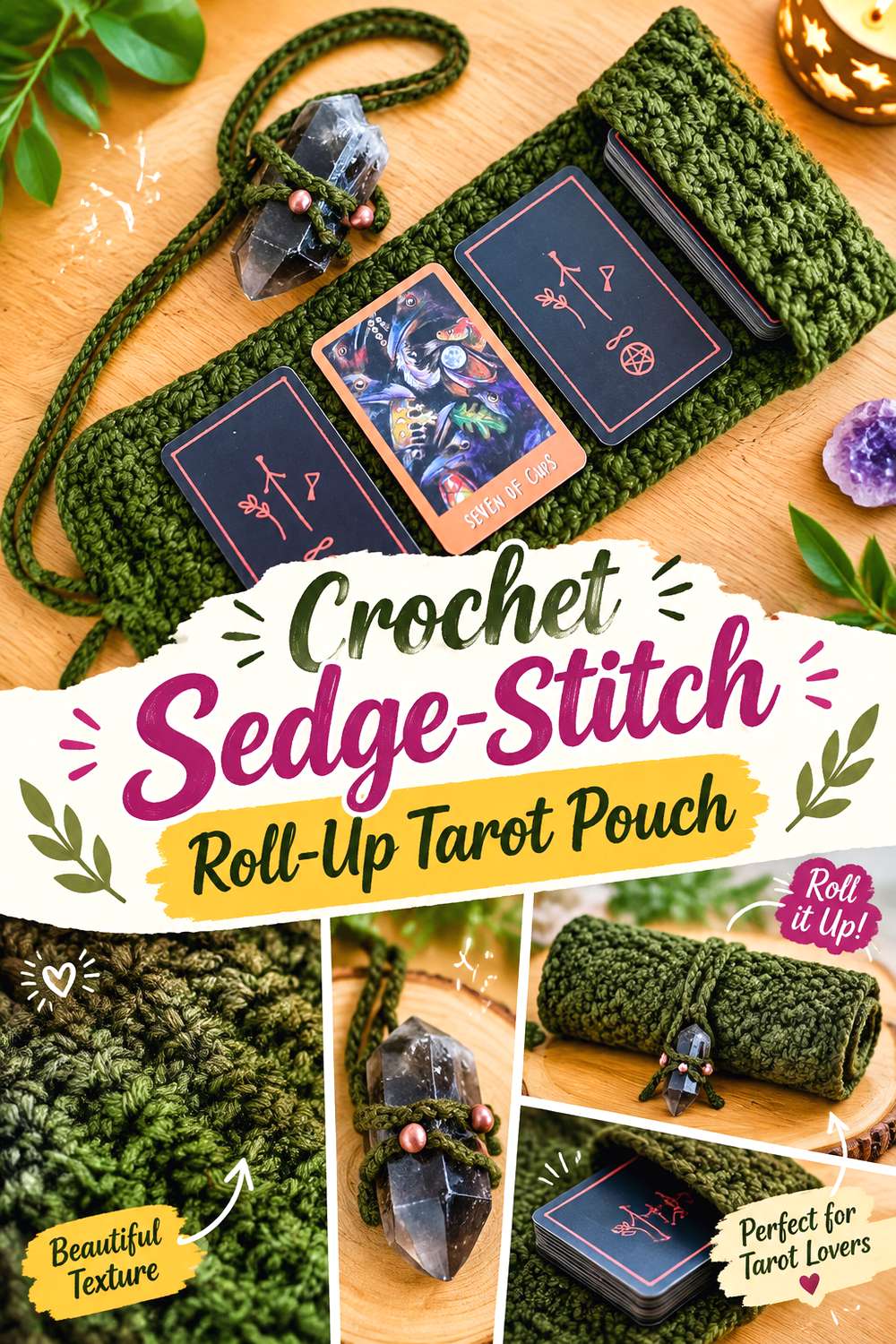
Witch of Brush Hollow’s original tarot case uses textured sedge-stitch fabric and is presented as a flexible recipe because decks do not all share the same dimensions. The card pocket is incorporated into a piece that rolls out into a small reading mat, making adaptability the central feature rather than a fixed commercial-deck size.
Compared with the crescent design above, this idea has a quieter visual language: the repeating texture carries the surface rather than pictorial colorwork. It suits a reader who wants one flexible textile to store the deck and provide a compact place for a spread without turning the case into a heavily embellished accessory.
Let Your Deck Establish the Width
A made-to-measure concept only works if the deck remains the reference throughout the project. Include the thickness of the stack rather than measuring a single card face. If you store the cards in their box, decide at the beginning whether the box also needs to fit.
Watch Raised Texture at the Fold
Sedge stitch gives the flat mat dimensional character, but texture occupies physical space once the piece wraps around itself. Test-fold the fabric before adding a thick border or large decorative feature. A portable roll should still close comfortably without squeezing the deck.
Add the Fastening After You Understand the Bundle
The tutorial leaves room for finishing choices, which makes closure selection a useful final design decision. Whether you choose a soft wrap cord, button, or another suitable treatment, position it while the intended deck is inside. This accounts for the depth that disappears when the case is tested empty.
Original Tutorial and Creator Credit
Creator/Site: Witch of Brush Hollow — Tarot Readings from a Bitch
3. Crochet Tapered Tie Wrap Tarot Mat Pouch
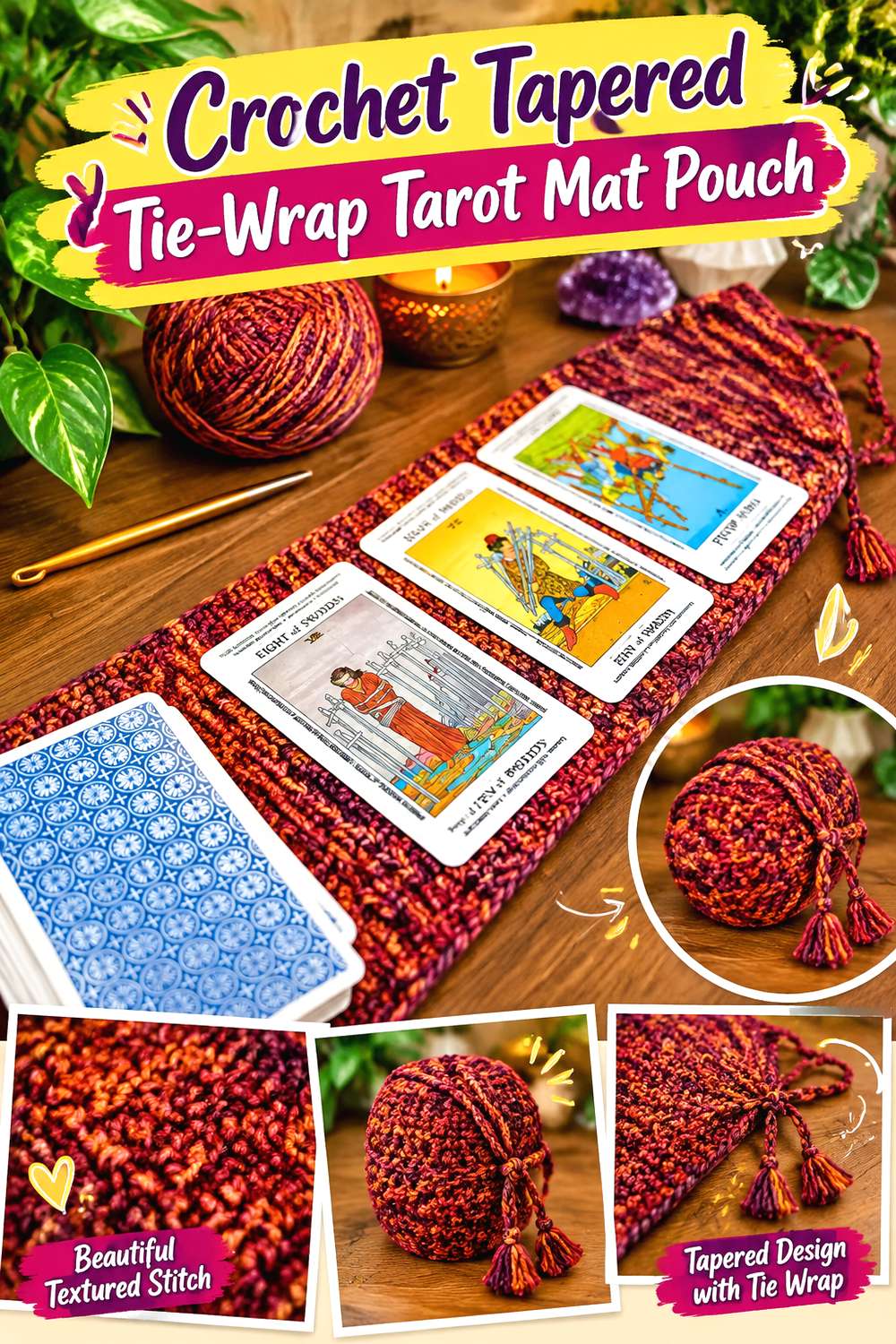
Kate Curry’s tutorial for Darn Good Yarn takes another mat-first route. The long crocheted piece forms a deck pocket and finishes with a narrowing end; the source also discusses different ways the folded mat can be secured.
This version is worth separating from the other mat pouches because the elongated, tapered geometry creates a different closed silhouette. It works well as inspiration when you like the deliberate action of unwrapping a deck and creating a small workspace from the same textile. Because so much fabric surrounds the cards, it is more appropriate for someone who values the reading surface than for someone seeking the smallest possible travel case.
Decide How Much Reading Surface You Need
More mat is not automatically more useful. Lay several cards on a table in the arrangement you most frequently use and observe the area they occupy. That gives you a realistic reason to enlarge or reduce a mat rather than adding length that only increases the folded bulk.
Fold First, Then Pick a Fastener
A tie, braid, or button behaves differently around a thick stack than it does on an empty crochet rectangle. Finish enough of the project to simulate the real folded package, insert the intended deck, and then evaluate how the closure should meet.
Original Tutorial and Creator Credit
Creator/Site: Kate Curry — Darn Good Yarn
4. Crochet Minimal Flap Tarot Card Pouch
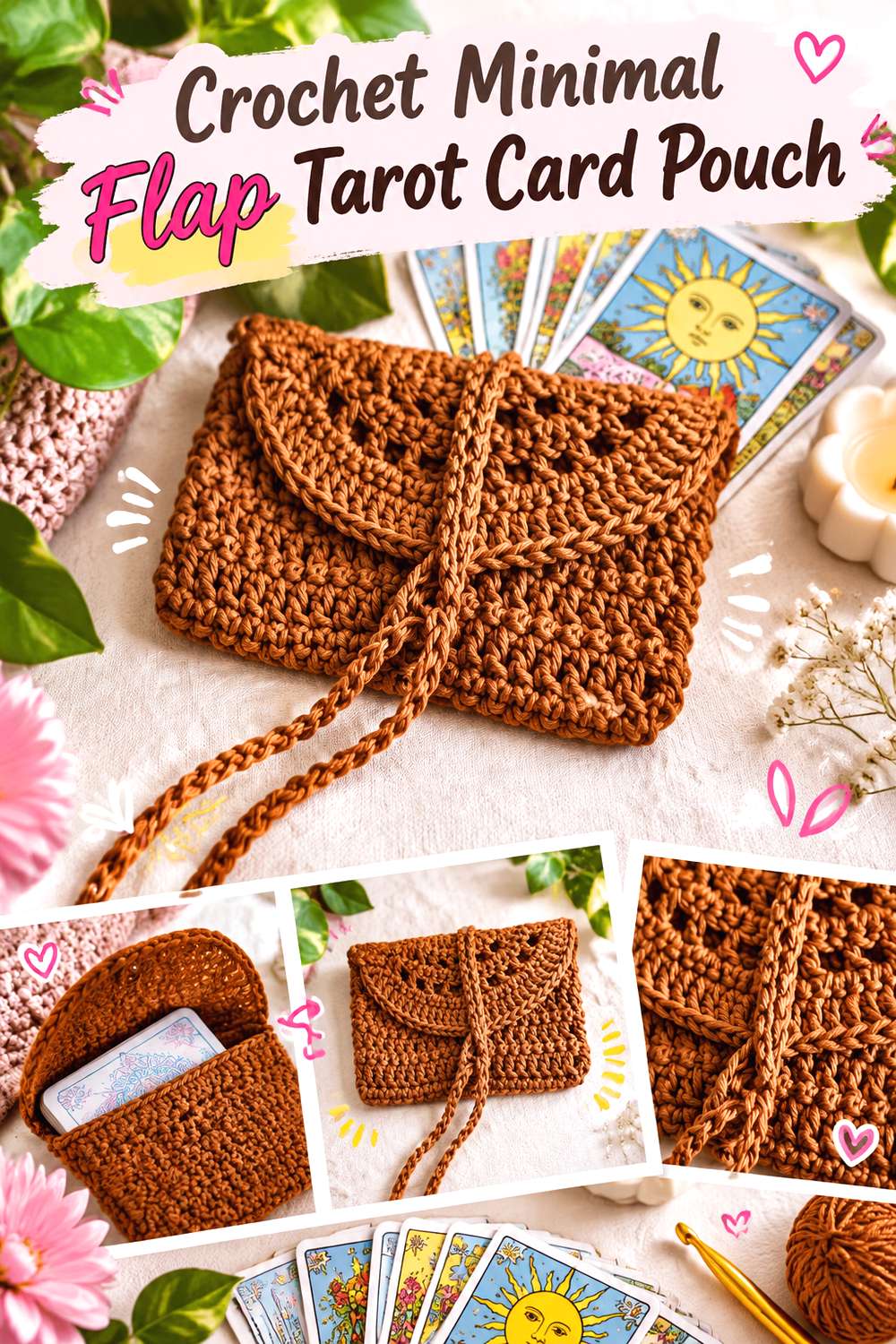
Ashten Stitches demonstrates a compact pouch specifically intended for tarot cards, keeping the fabric and overall shape straightforward rather than combining the deck holder with a larger mat. The source describes the project around single- and double-crochet fabric, giving the finished pouch a deliberately uncomplicated character.
This is the direction to consider when storage is the main job. A minimal pouch takes less room inside a larger bag and gives you a neutral base for a small personal detail—perhaps a contrast edge or removable charm—without requiring colorwork, several motifs, or a large closure system.
Aim for a Smooth Slide, Not a Squeeze
A close fit can feel secure, but tarot cards should not need to be bent or pushed past the opening. Test the whole stack. If card corners repeatedly drag against the edge, adding a little practical ease will often make the case more pleasant to use than pursuing the tightest possible silhouette.
Reinforce Attention at the Opening
The top edge receives frequent handling because it is pulled apart every time the cards come out. Check that yarn ends are secure and that added edging does not unintentionally reduce the usable opening. Simplicity puts more emphasis on tidy functional finishing.
Original Tutorial and Creator Credit
Creator: Ashten Stitches
5. Crochet Gathered Drawstring Tarot Deck Bag
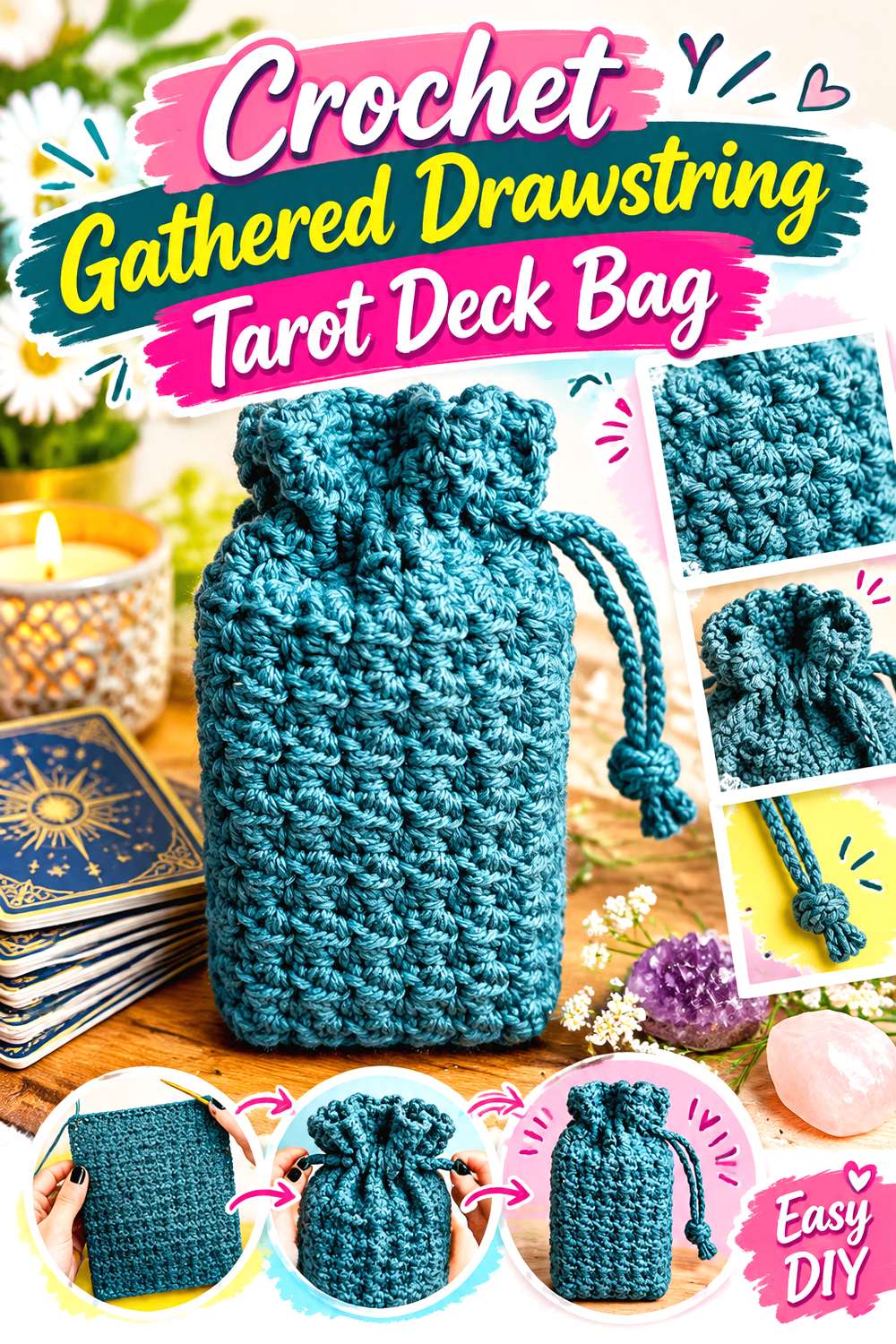
Tarot with Ruby’s tutorial teaches a basic crochet drawstring bag designed for tarot cards. Its key distinction is the gathered top: there is no flap to align with a button, and the cord can open the mouth widely before drawing it closed around the deck.
A drawstring case has an informal, soft-sided look and accommodates modest variations in how full the bag feels. That does not mean the body can be undersized, however. Width and depth still need to suit the complete card stack; the cord should secure an already appropriate bag rather than force a too-small opening to close.
Give the Cord an Unobstructed Channel
Before cutting or decorating the drawstring ends, open and close the loaded pouch several times. The cord should move without catching on yarn tails or overly tight spaces. Very fuzzy yarn or an oversized cord can create more resistance than expected.
Keep Decorative Ends Outside the Deck Zone
Beads, charms, tassels, and large knots can make a drawstring pouch feel more personal, but position them where they remain outside the card path. Hard embellishments should not press into card edges when the pouch is stored in another bag.
Original Tutorial and Creator Credit
Creator: Tarot with Ruby
6. Crochet Soft Wrap Tarot Card Pouch
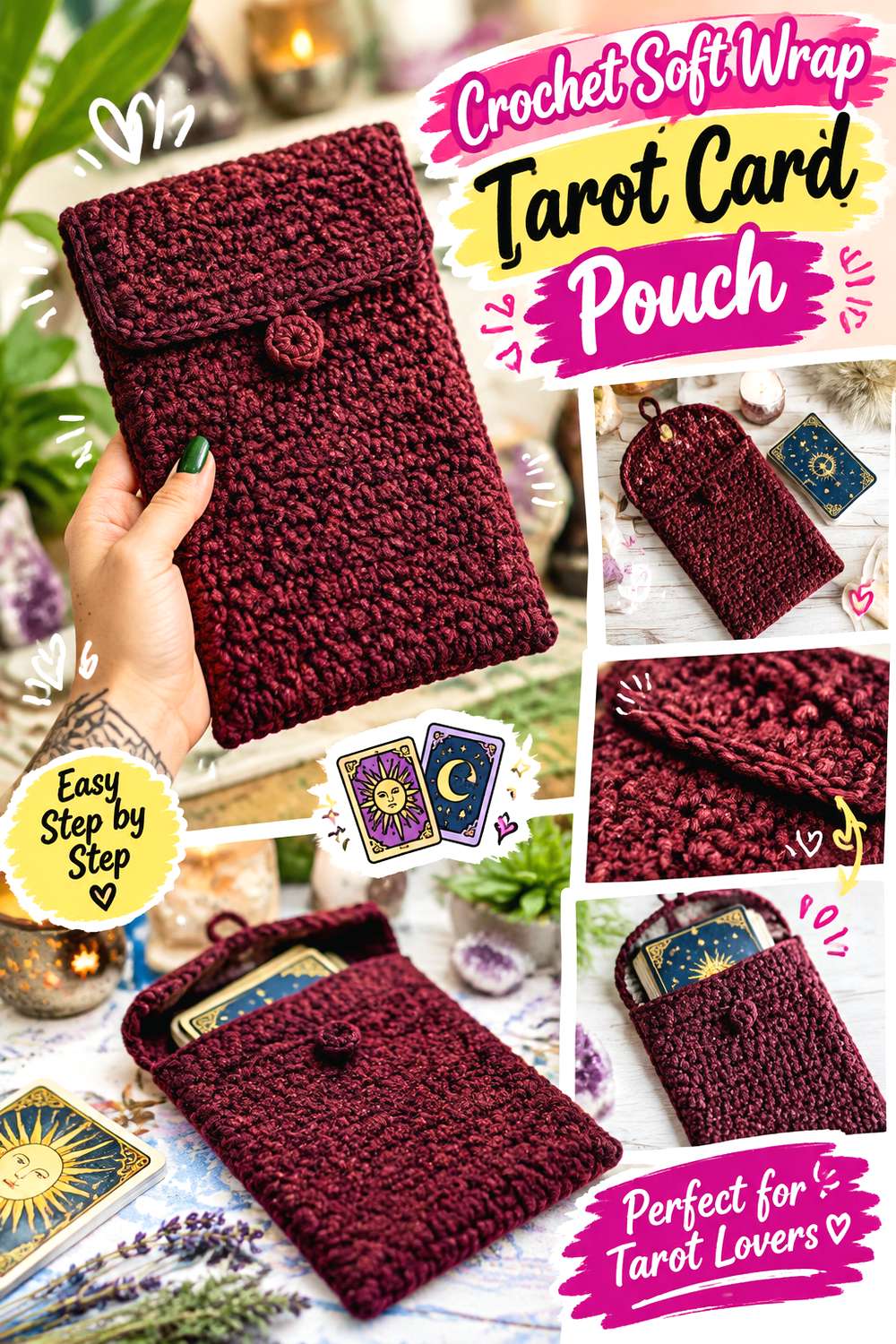
Stephanie Mitchard’s tarot-wrap tutorial moves away from a conventional bag entirely. The demonstrated wrap uses a soft mohair component together with another yarn, creating a flexible bundle that encloses the deck rather than placing it inside a rigid-looking pouch.
That tactile softness gives the project a markedly different personality from crisp cotton wallets and close-fitting card sleeves. A wrap can also avoid buttons, snaps, or other hard components beside the cards. The main trade-off is thickness: overlapping soft fabric can become surprisingly substantial when several layers are folded around a full deck.
Check Soft Yarn for Card-Friendly Friction
A fuzzy yarn can feel pleasant in the hand while gripping cardstock more than a smooth yarn does. Before substituting fibers, rub a swatch lightly against a spare card or similar piece of cardstock. If the surface catches noticeably, consider how often the deck will slide against that fiber.
Judge the Wrap While It Is Closed
Do not evaluate yarn thickness only from the open piece. Fold the fabric around the deck and look at the entire bundle. Heavy borders, multiple strands, and bulky ties can turn an intentionally soft wrap into a much larger package than expected.
Original Tutorial and Creator Credit
Creator: Stephanie Mitchard
7. Crochet Classic Format Tarot Pouch
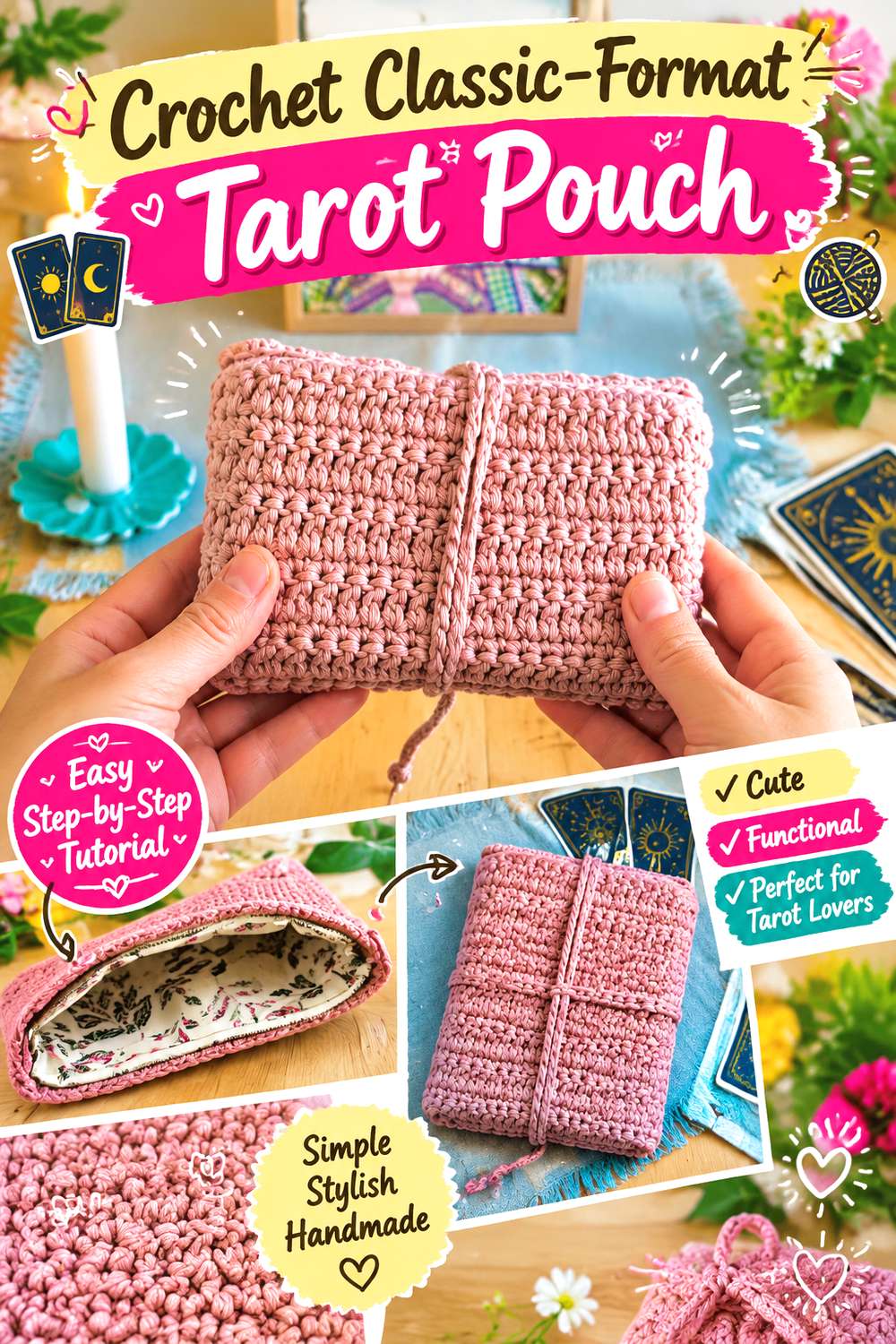
Angélique of Atelier Pèlerine has a dedicated “Jaipur” tarot-pouch tutorial. The designer’s accompanying pattern information identifies the pouch as a design for tarot and oracle cards and discusses a classic deck format, making this a purpose-built option rather than an adaptation from a bank-card wallet.
This direction makes sense when you want an intentionally neat card case without the footprint of a reading mat. It also provides a useful contrast with improvised “make any pouch bigger” approaches: starting from a project designed around cartomancy still does not remove the need to compare your own deck with the intended fit.
Test Every Card Before Final Finishing
A tarot case has little room to disguise a sizing error. Insert the complete stack before committing to a final closure position or decorative finish. A partial deck can underestimate both depth and the amount of fabric needed to pass around the corners comfortably.
Scale Materials With Caution
Changing yarn or hook can alter size, but it can also change stiffness, edge thickness, and the amount of room seams occupy. When you need a larger oracle pouch, use the designer’s actual adjustment guidance where available instead of assuming thicker yarn is automatically the cleanest solution.
Original Tutorial and Creator Credit
Creator: Angélique – Atelier Pèlerine
8. Crochet Granny Motif Drawstring Tarot Pouch
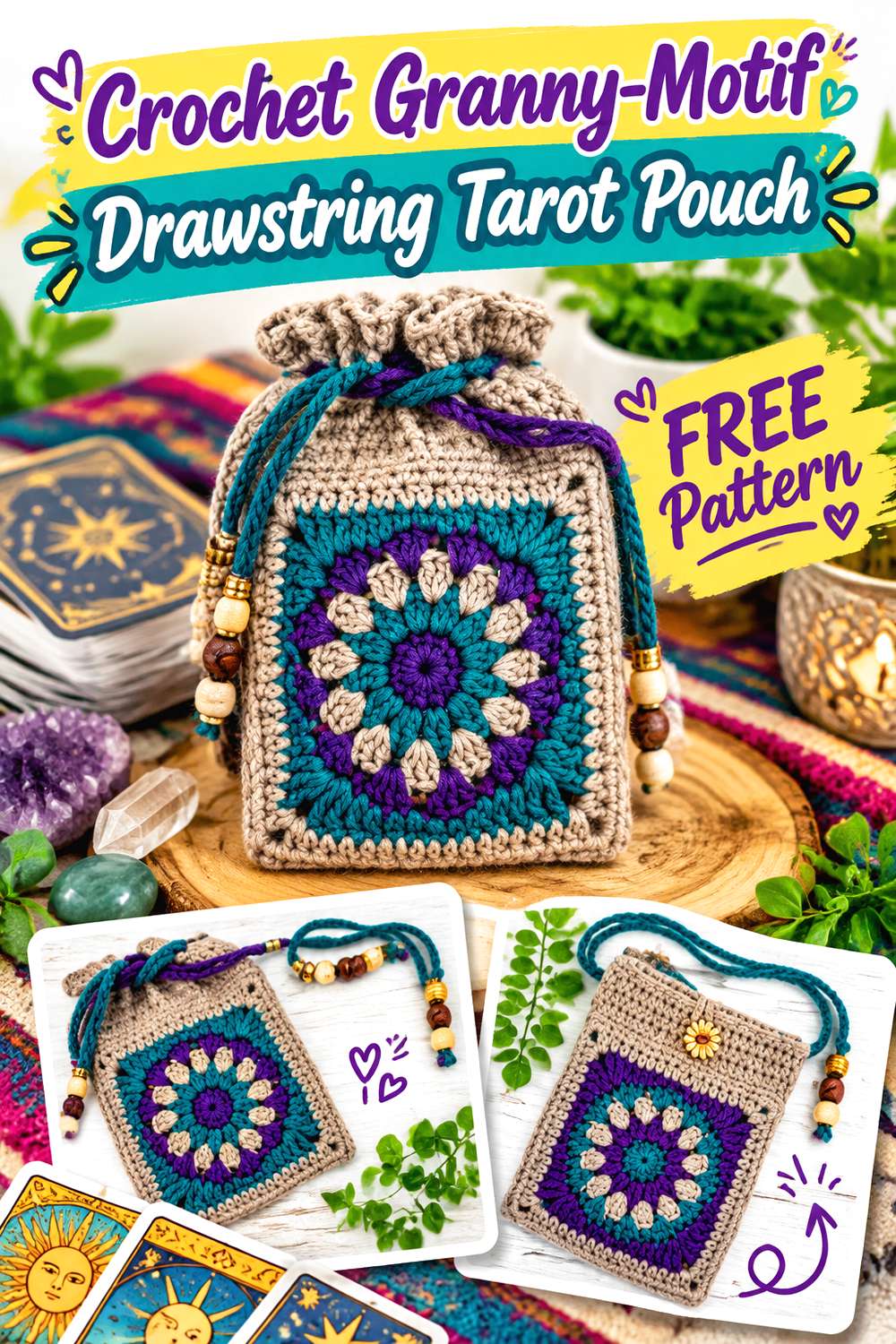
Lisa Fox’s Calliope Festival Pouch offers a colorful motif-based construction with a drawstring option that the designer specifically lists as suitable for tarot cards, dice, and small treasures. The project begins from a granny-inspired motif rather than a plain rectangular card pocket.
That makes color placement and motif joining part of the structure rather than an afterthought. It is a strong choice when you want the pouch to look decorative even when no cards are visible. The additional visual interest brings additional checkpoints: motif dimensions must agree, joins need to remain tidy, and open spaces should be considered from the perspective of card corners.
Block Motifs Before Judging Capacity
Motif pieces can look slightly different in size or shape before they are settled. Follow the designer’s blocking guidance before making major conclusions about how neatly the sides will join. Consistent panels produce a more predictable opening and interior.
Let One Element Lead the Color Story
A multicolor motif already provides plenty of movement. Repeating a small number of shades in the cords and top edge can keep the finished pouch coherent without making every feature compete for attention.
Inspect Gaps and Joins From the Inside
Hold the completed fabric up to the light and look for loose strands or join areas that could catch a corner. If you decide to add a lining for a smoother card path, allow for the room it will consume inside the pouch.
Original Tutorial and Creator Credit
Creator/Site: Lisa Fox — Green Fox Farms Designs
9. Crochet Suzette Stitch Button Tarot Pouch
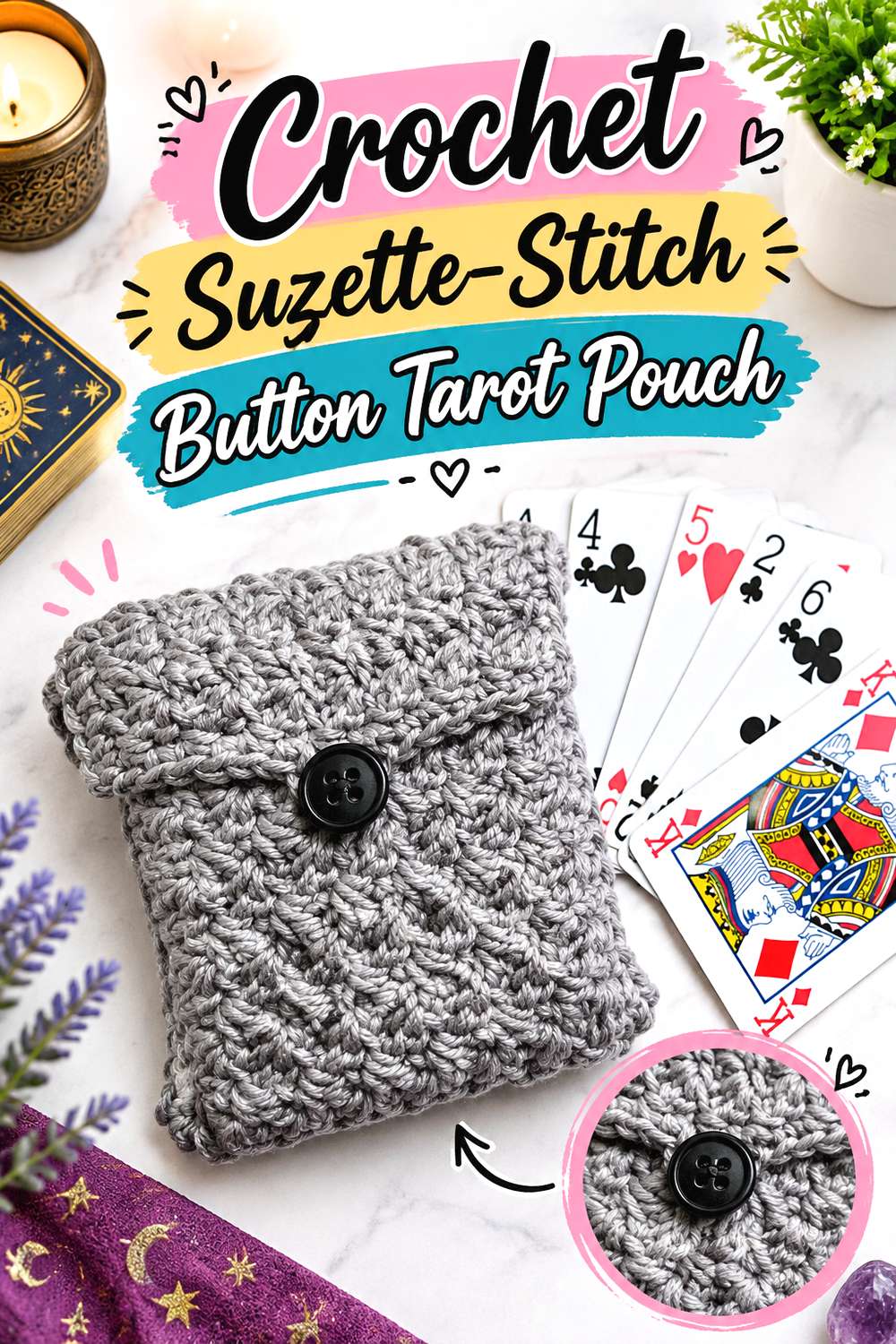
Sweet Bee Crochet’s original project is a playing-card pouch rather than a tarot pattern. Its textured Suzette-stitch body and buttoned closure, however, provide a practical construction reference for someone comfortable recalculating the case around a larger tarot deck.
The important word here is adaptation. Do not take the source’s playing-card dimensions or stitch counts and simply assume a tarot deck will fit. The value lies in the fabric character and closure concept. Reworking those proportions around your own deck can produce a tidy, tactile case with more surface detail than a basic single-crochet sleeve.
Rebuild the Dimensions Instead of Scaling Blindly
Measure width, height, and stack depth, then determine how those requirements interact with the Suzette-stitch repeat used by the original design. Arbitrarily adding the same percentage to every measurement may not preserve either the repeat or a sensible flap proportion.
Place the Button With Cards Inside
The flap has to travel across the thickness of the deck before reaching the button. Fit the pouch while fully loaded and mark where the closure naturally meets instead of setting the button position on an empty case.
Original Tutorial and Creator Credit
Creator/Site: Rebecca — Sweet Bee Crochet
10. Crochet Scalloped Envelope Tarot Pouch
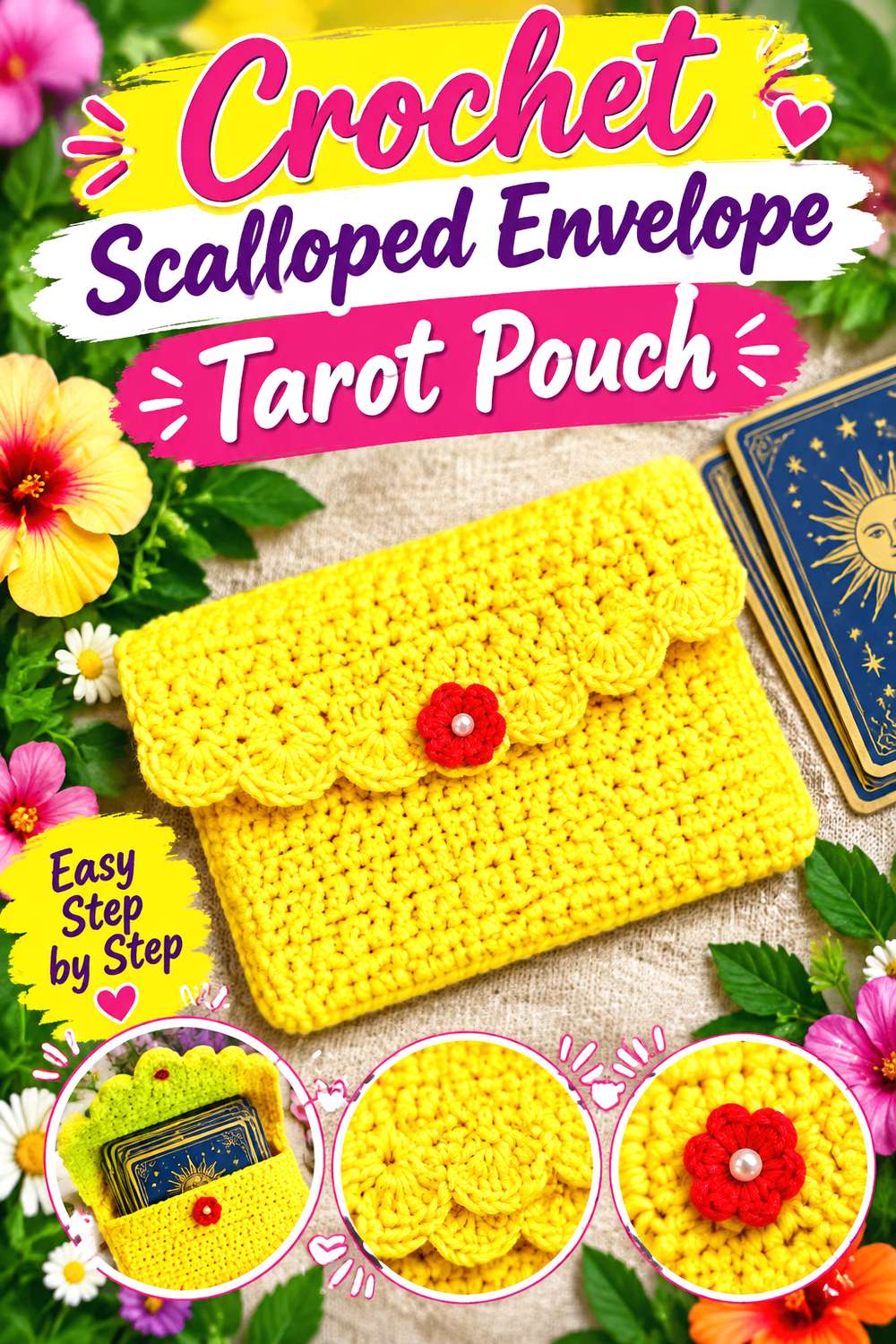
Pink Bows & Twinkle Toes designed its original card case as an envelope-style mini wallet with internal pockets, a button closure, and scalloped detailing. It is sized for credit cards, so this idea requires substantial resizing before it becomes a tarot case.
What makes the construction interesting for tarot is the layered envelope geometry. Instead of a simple tube, you get overlapping sections and a visibly decorative flap. A tarot deck is much thicker than a handful of wallet cards, so the adaptation should be planned around three-dimensional capacity rather than merely making the original rectangle taller.
Allow for Every Overlapping Layer
Several folds can consume more interior room than the exterior dimensions suggest. Before finishing the crochet version, mock up the intended fold around your deck with scrap fabric or paper. That makes it easier to see where extra depth is needed.
Keep the Scallops Out of the Card Path
Decorative edging should frame the case rather than curl into the opening. Test the loaded flap before adding more elaborate edging, and shape or block the finished detail as appropriate for the chosen fiber.
Original Tutorial and Creator Credit
Creator/Site: Pink Bows & Twinkle Toes
11. Crochet Basketweave Tarot Deck Wallet
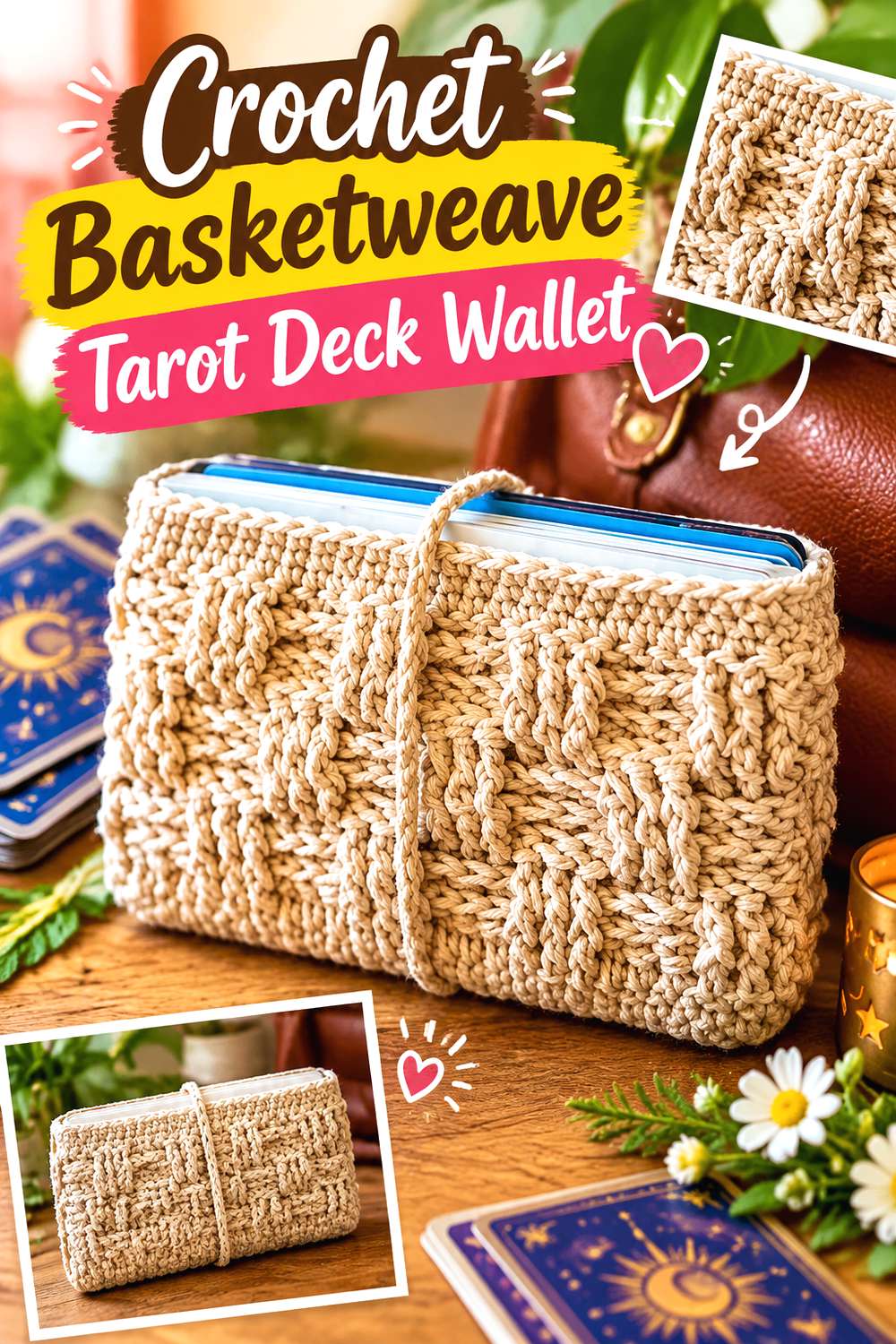
Heart Hook Home’s Basketweave Card Wallet surrounds a small card collection with pronounced post-stitch texture and a long loop-style closure. The source is designed for everyday wallet cards, so a tarot version requires new dimensions, but the raised basketweave surface creates a noticeably different pouch concept from flat, minimal sleeves.
This is a texture-forward choice. The fabric becomes part of the design’s identity, which is useful when you prefer a tactile case without adding separate appliqués. The same texture that creates visual depth can also create physical bulk, so it is better suited to someone who values stitch definition over the slimmest possible deck package.
Preserve the Basketweave Repeat
Post-stitch textures depend on organized repeats. When widening the wallet for tarot proportions, determine which changes maintain the design’s rhythm rather than adding isolated stitches solely to hit a measurement.
Expect the Surface to Occupy Space
Raised stitches can make the wall of the case thicker than a flatter stitch worked in the same yarn. Wrap a swatch around the deck to assess how much volume the texture creates before deciding on extra edging.
Fit the Closure Loop With the Real Deck
A long crochet loop should secure the case without behaving like a compression strap. Establish its useful length only after the tarot-sized wallet is loaded, and remember that a yarn loop may relax somewhat with repeated handling depending on the fiber and construction.
Original Tutorial and Creator Credit
Creator/Site: Ashlea — Heart Hook Home
12. Crochet Seamless Button Flap Tarot Pouch
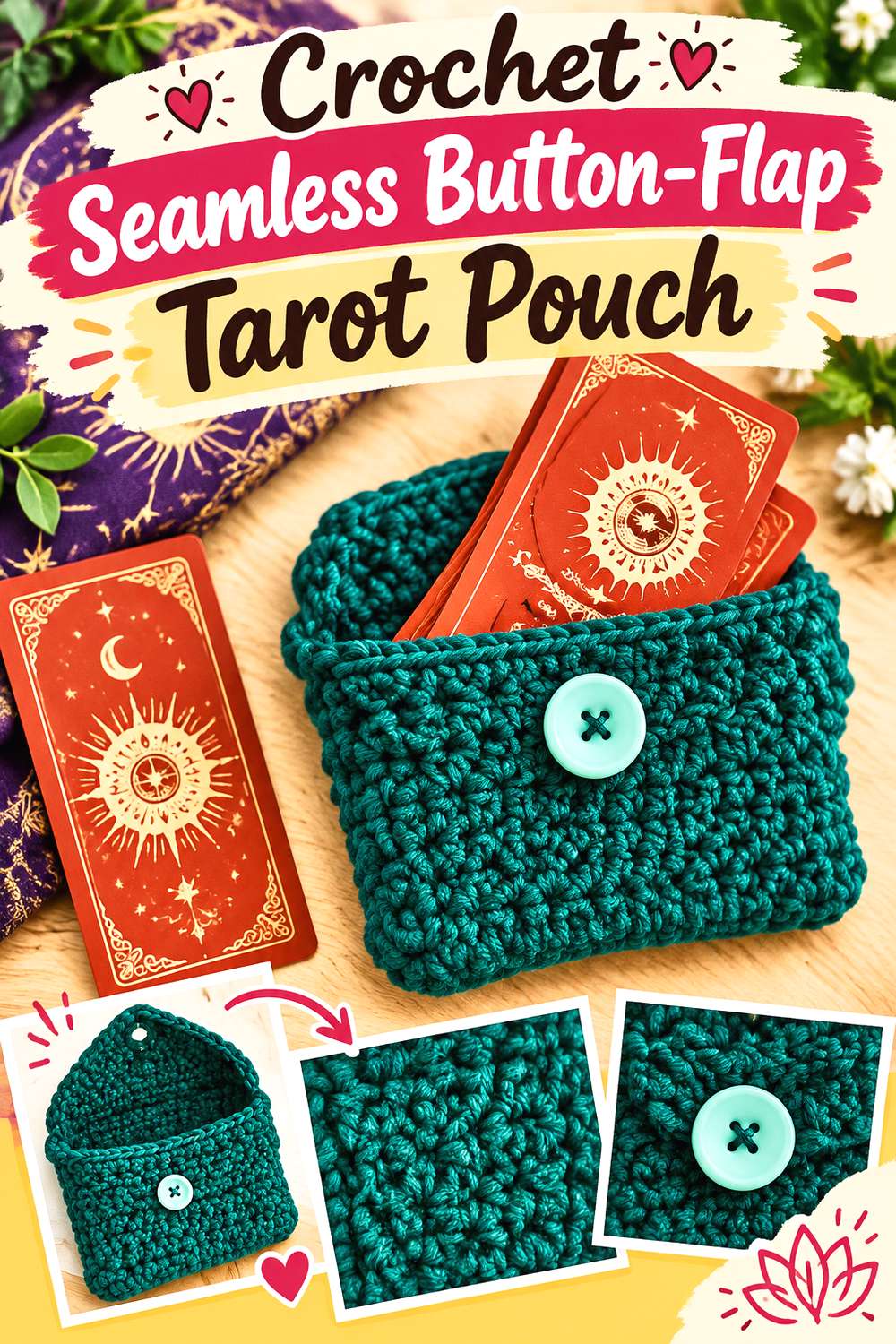
Pam Carr’s Practical Card Holder for Carroway Crochet is worked in the round and finishes with a fold-down button flap. The original is intended for smaller everyday cards rather than tarot, but its largely seam-free body makes it a useful adaptation when you want to avoid thick sewn side edges.
Turning this into a tarot pouch requires more thought than simply extending its height. When a case is built in the round, circumference controls the relationship between flat width and the depth available for the stack. Resize from the actual deck while using the original tutorial to understand how the body transitions into its flap.
Think in Circumference, Not Just Flat Width
An in-the-round pouch has to wrap around both card faces and the stack’s thickness. A flat measurement that looks sufficient may still become tight once the deck has depth. Check fit as soon as the adapted body is large enough to hold the cards.
Shape the Flap Over a Loaded Case
The flap must cross the upper edge and accommodate the deck before reaching its fastening point. Insert all the cards and let the flap fall naturally before deciding where the button belongs.
Original Tutorial and Creator Credit
Creator/Site: Pam Carr — Carroway Crochet
13. Crochet Magnetic Snap Foldover Tarot Pouch
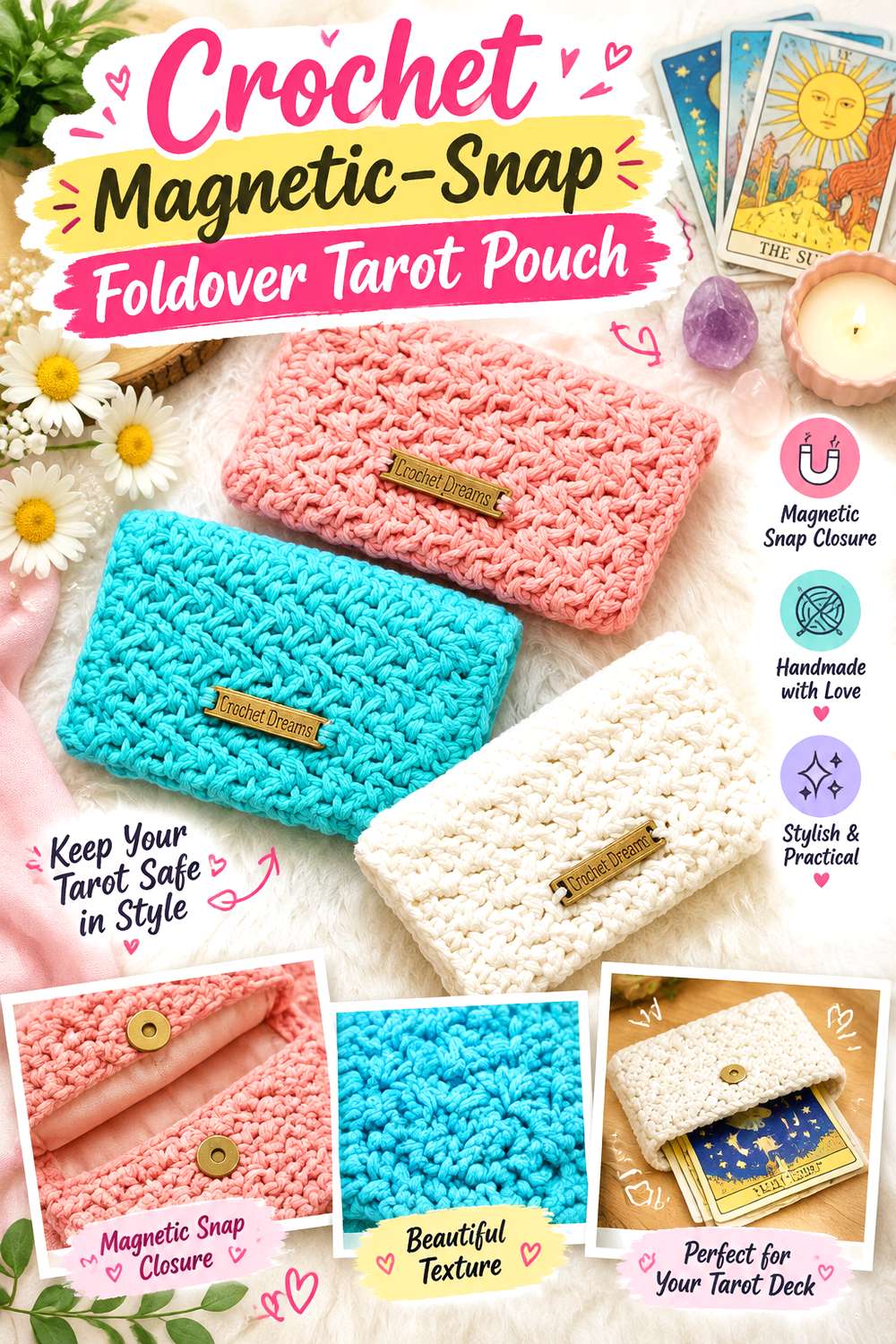
Crochet Dreamz uses a different construction strategy: its original card holder starts as a crocheted rectangle that is folded into shape and fitted with sew-on magnetic snaps. The project was designed for credit cards, so the tarot version here is an adaptation concept rather than a ready-to-use tarot pattern.
The appeal is clean geometry. A plain piece of fabric can turn into a polished case without a visible exterior button or dangling cord. The caution is equally clear: the snap is rigid hardware. For a collectible deck, its position and the amount of fabric between the fitting and card surfaces deserve careful attention.
Isolate the Cards From the Hardware
Inspect both sides of the installed snap. No sharp attachment point or firm backing should project directly into the card compartment. If you are uncomfortable with hard hardware beside a valued deck, choose a soft closure concept instead.
Establish Fold Lines Around the Deck
Tarot proportions will change where the original rectangle needs to fold. Wrap your resized piece around the actual stack and mark the natural overlap before attaching hardware or permanently closing seams.
Original Tutorial and Creator Credit
Creator/Site: Crochet Dreamz
14. Crochet Animal Face Tarot Card Case
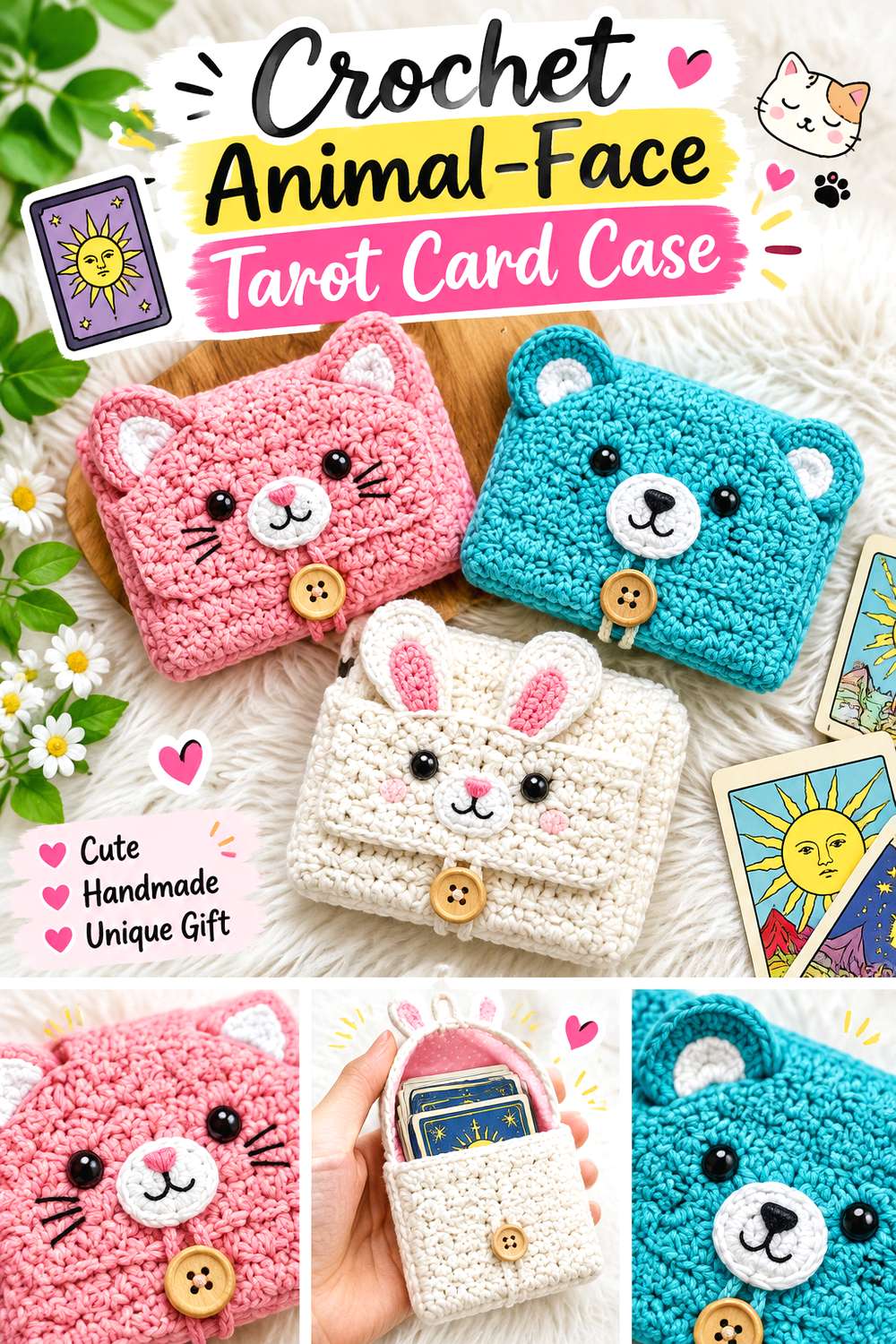
Mimi Channel’s video demonstrates crochet card cases decorated as animal characters. The original scale is for smaller cards, not a full tarot deck, so translating the idea requires both a larger base case and a fresh look at the proportions of the face.
This option deliberately moves away from celestial imagery. Ears, facial features, and dimensional details can give a tarot case a playful identity, which may suit whimsical or illustrated decks particularly well. Those additions should remain secondary to the function of the opening: decoration that interferes with card insertion will quickly become frustrating.
Redesign the Face at the New Scale
Do not enlarge eyes, ears, or muzzle pieces by the same percentage merely because the pouch body has become larger. Establish the tarot-sized case first, temporarily position the facial pieces, and judge the character as a composition before attaching them.
Keep Appliqués Clear of Moving Cards
Yarn tails, ear bases, knots, or other attachment points should not project through the interior where card edges travel. If the case will be carried in another bag, also consider how protruding ears or dimensional features will behave under pressure.
Original Tutorial and Creator Credit
Creator: ミミチャンネル かぎ針編み
15. Crochet Lined Zipper Tarot Deck Pouch
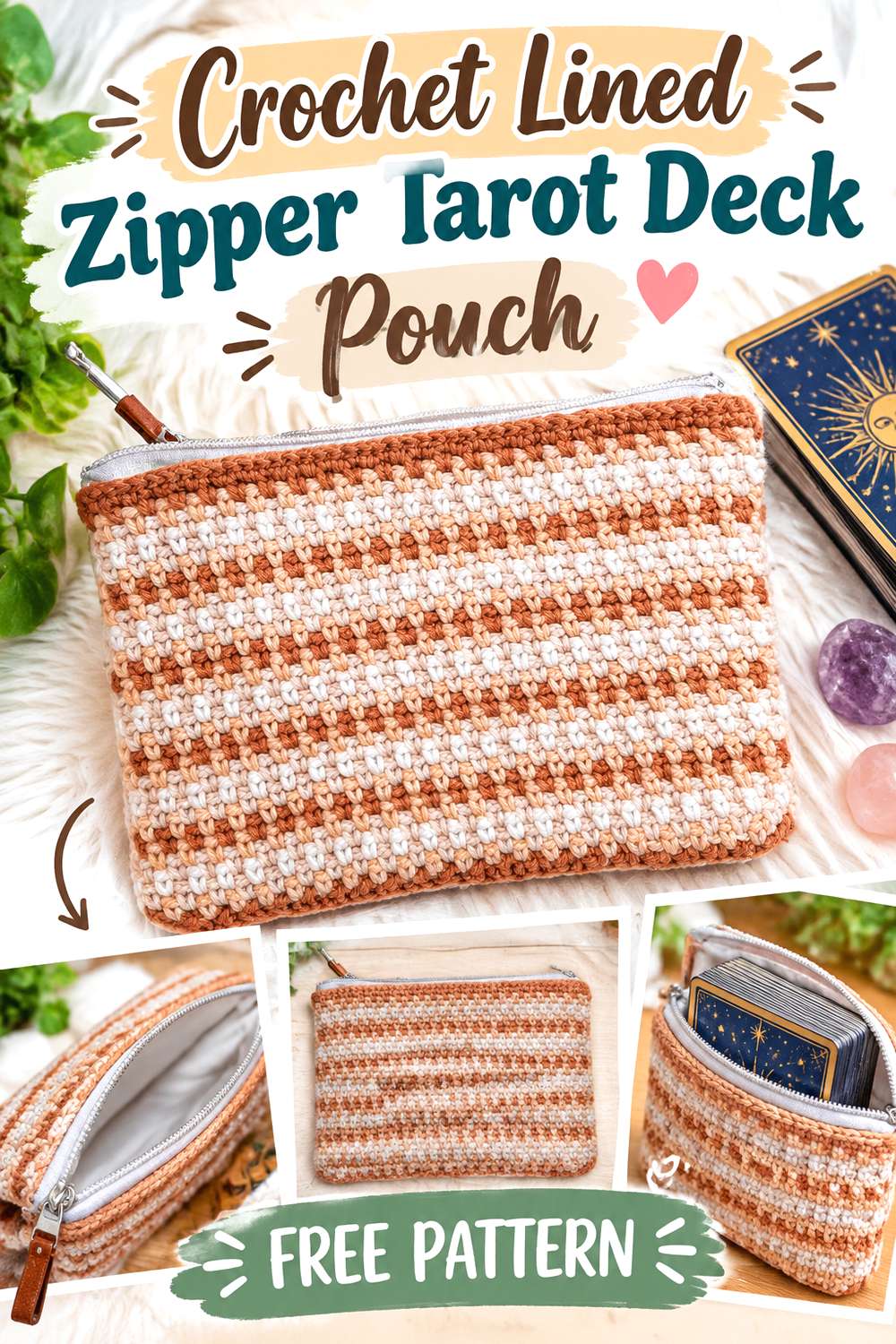
Sarah Ruane’s Ned & Mimi zipper-pouch tutorial combines moss-stitch crochet with a fabric lining and zippered opening. It was not created as a tarot case, but the source explicitly discusses size adjustment, making the construction a useful starting point for a fully enclosed deck pouch.
This is one of the most structurally different options in the collection. A smooth lining can cover yarn floats and crochet texture on the inside, while a zipper closes the entire upper edge. The trade-offs are additional sewing, more components, and the need to maintain enough clearance that card corners do not rub against the zipper teeth.
Include the Lining in Your Capacity Plan
Do not crochet an exact deck-sized shell and then expect a lining to fit inside without consequences. Fabric and seam allowances reduce usable interior space. Plan those layers while establishing the tarot dimensions.
Set the Zipper to the New Opening
A tarot adaptation may need a different width from the original pouch. Determine the finished opening first, then choose or adjust a zipper appropriately rather than forcing the crochet to fit hardware purchased for another size.
Give Card Corners a Smooth Interior Route
A lined pouch works best when seams, zipper ends, and fabric folds stay clear of the cards. Before final sewing, place the deck inside the pinned or basted assembly and confirm that it can enter and leave without catching.
Original Tutorial and Creator Credit
Creator/Site: Sarah Ruane — Ned & Mimi
16. Crochet Side Opening Tarot Card Sleeve
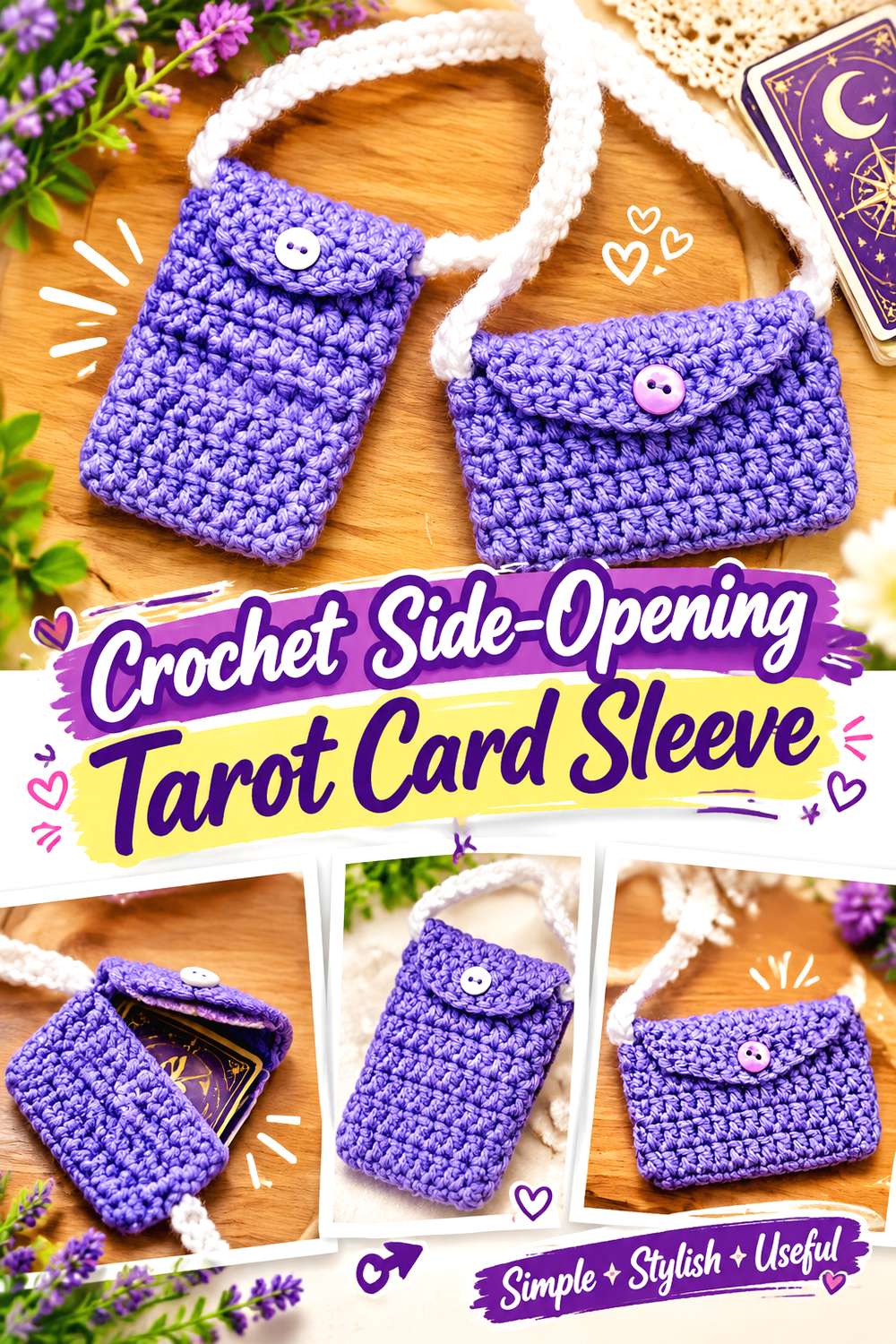
The Simple Card Pouch tutorial from Creativity, Patience, and Hope provides horizontal and vertical versions for standard-sized everyday cards. A tarot adaptation can borrow the horizontal concept to create a sleeve that presents the long side of the deck toward the opening rather than always loading cards from the narrow end.
Orientation may sound like a minor change, but it alters how the deck enters the case and how much edge is exposed when the pouch is open. A side-loading tarot sleeve can feel more like a small book cover or envelope than a tall bag. Because the original proportions belong to standard cards, establish entirely new tarot dimensions before construction.
Decide Which Edge You Prefer to Handle
Some readers naturally grasp a tarot deck across its long edge; others prefer sliding it vertically into a case. Mock up both orientations with paper or scrap fabric before committing. The more intuitive opening is likely to be the one you actually use consistently.
Give a Wide Opening Enough Security
A long side opening provides generous access, but it also exposes more of the deck when unfastened. Make sure the adapted closure controls that opening appropriately if the pouch will travel. For home storage, a lighter closure may be sufficient.
Original Tutorial and Creator Credit
Creator/Site: Creativity, Patience, and Hope
Which Crochet Tarot Pouch Construction Should You Choose?
| Style | Particularly useful when | Main thing to check |
|---|---|---|
| Reading-mat pouch | You want storage and a small reading surface together | Folded bulk |
| Compact sleeve | Minimal storage space is the priority | Comfortable card clearance |
| Drawstring bag | You prefer a soft adjustable opening | Cord movement |
| Wrap pouch | You want little or no hard hardware | Overlapping layer thickness |
| Motif pouch | Color and decorative stitchwork matter | Joins and interior gaps |
| Button wallet | You want a defined flap closure | Button position when loaded |
| Zipper pouch | You prefer a fully enclosed opening and lining | Zipper clearance and interior capacity |
| Character case | The holder should be decorative in its own right | Embellishments staying outside the card path |
No construction is automatically the right one for every deck. Oversized oracle cards and unusually thick decks benefit from designs that are intentionally resized around the actual stack. A frequently transported deck may justify more attention to closure security and interior finishing, while a deck that rarely leaves a reading table can prioritize decorative texture or an integrated mat.
Conclusion
These 16 crochet tarot card pouch ideas cover far more than variations on one drawstring bag. The choices range from crescent-motif reading mats and soft wraps to compact button cases, textured basketweave wallets, a whimsical animal holder, and a fully lined zipper pouch.
Choose according to the deck first: its dimensions, thickness, how often you remove it, and whether it travels with other objects all affect the most useful construction. Then consider the experience you want—minimal, decorative, adjustable, hardware-free, or multifunctional. When an idea adapts a playing-card or wallet project, establish fresh dimensions rather than copying the source counts. For exact stitches, assembly sequences, and designer-specific adjustments, use the credited original tutorials.
Frequently Asked Questions
How should I measure a tarot deck for a crochet pouch?
Measure the height and width of the cards plus the thickness of the entire stacked deck. Measure the configuration you actually intend to store: loose cards, the publisher’s box, or cards with a guidebook will all require different capacity. When possible, check the developing pouch directly against the deck before completing the closure. Yarn, gauge, and stitch pattern can all affect stretch, so measurements from another person’s case are not a guarantee of identical fit.
Can I use a crochet playing-card or credit-card pattern for tarot cards?
Yes, but use it as a construction reference rather than treating it as a tarot pattern with a few extra stitches. A tarot deck may differ substantially in both face dimensions and stacked depth. Determine the repeats required by the stitch pattern, establish new finished proportions from your deck, and reconsider flap and closure positions after resizing. For complicated shaping, follow any adjustment method the original designer supplies instead of improvising changes that may disrupt the construction.
Is a lining worth adding to a crochet tarot card pouch?
A lining can provide a smoother interior, cover colorwork floats, and separate cards from open crochet spaces. It is particularly relevant to motif work or a zipper pouch. It is not automatically necessary, however, and it occupies interior room. If you want one, include the lining and seam allowances in the sizing plan before finishing the crochet shell. The fiber and embellishments you use may also change how the completed pouch should be cared for.
What yarn should I use for a tarot pouch?
There is no single best fiber for every construction. Smooth yarn can make repeated card insertion easier, while firm fabric can help a pouch retain a defined silhouette. Springier yarn produces a different fit, and fuzzy yarn may add softness but also friction and bulk. Start with the yarn recommended by the original tutorial when possible. If substituting, compare gauge, thickness, stretch, and surface texture rather than matching only the yarn-weight label.
Are buttons, snaps, or zippers safe around tarot cards?
Any rigid closure should be positioned thoughtfully. Buttons and snaps can create pressure points if their backs sit directly against the deck, while zipper teeth need enough clearance that card corners do not scrape them during removal. Soft ties and drawstrings avoid some hard components but have their own snagging and stretch considerations. Before regular use, load the complete deck and inspect the interior from the card’s perspective rather than judging the closure only from outside.
How can I keep a crochet tarot pouch from stretching out?
Avoid making the body much larger than necessary and choose a fabric that feels appropriately stable for the deck’s weight. Yarn fiber, gauge, stitch density, seams, and closure style all influence how a pouch changes with handling. A lining can stabilize some constructions but also alters fit. Over time, check the opening, drawstring casing, button loop, joins, and seams. For washing and care, follow the yarn label and any guidance provided by the original designer rather than assuming every crochet pouch can be treated the same way.